When writing fantasy, be it high, low, grim dark, romantic, steampunk, urban or whatever, a writer can’t just throw words at a page and see what sticks. Well, that is not entirely true, that is in fact quite often the writing process, and I as tend to start out on any story or novel flying by the seat of my pants, throwing words at a page is exactly what I do. But after the throwing has calmed down and we can see what stuck, a little world building is generally in order. If only to create an internal logic to your sandbox.
Way back in 2021, when I took a short dialogue between two unknown participants and turned it into a short story for a Harvey Duckman Anthology the world building involved was minimal. This is not to say there wasn’t a lot of research done for that short story (mostly into Cricket in the 1900’s), but there is a difference between research and world building. In terms of a short story you may need to research all kinds of things , and you almost certainly will if you set about writing a novel. I posted here about research at the time when the short story was published in one of the original Harvey Duckman Anthologies.
Unlike research, world building for a short story is generally a some what minimalist affair. This is to say you that if you only construct the world to tell that one short story the internal logic of the world only needs to hold together for maybe 5000 words at the most. Thus you can throw in a few random things without really fleshing them out. The world is but a stage, the stage decorations can be made of papier-mâché and wireframes because no one is going to be looking behind them any time soon. The same doesn’t hold for a novel however. For a novel, stage decorations don’t quite do it.
In that original short story the narrating character, Mandrake, tells you he is a arcanist by royal appointment to the court of St James, and the subtext is that he resides in a mid Victorian period where magic exists. As I wanted a little structure to that magic, rather than just ‘wriggling of fingers’ I called the magic he practiced ‘post-Newtonian’. It was a single line idea that expanded a little in the short story but only in regards to things I needed Mandrake to be able to do to tell that story, and to add depth to the stage dressing… Such as Newtons laws of magic.
Sir Isaac Newton, as you are doubtless aware, was one of the great minds of the 1600’s, indeed one of the greatest minds of human history. The polymath most famous for his laws of motion and gravitation, was also a mathematician, astronomer, theologian physicist and to somewhat lesser acclaim now, was also considered at the time to be the last great Alchemist and the successor to Dr John Dee. It is this last bit that fascinates me most, because if magic were real, Newton would almost certainly have been the royal arcanist of his time. More to the point if magic was real, Newton would almost certainly of tried to codify it.
I threw Newton at that original short story for this reason. Using ‘Newton’s Laws of Magic’ gave Mandrake’s magic a basis that felt ‘real’ at least in terms of the story. It also allowed for the idea of ‘gentlemen magicians’. Which is to say members of the landed, old money, classes as dabblers in the arcane, in much the way that they dabbled in science. While Newton was clearly a gifted genius, many of his fellow ‘scientist’ in his day were little more than privately wealth individuals faffing about. Often employing those lower in the social orders to write papers for them to put there name to. It gave me the tension between the upstart court magician of no breeding and ‘the gentlemen magicians’ of his day.
The short story held together well. The world of papier-mâché and wireframes stage dressing did its job. the only problem was it did that job too well. I liked the characters and the ideas behind the stage dressing. I decided to play with the idea of a novel with the same characters, taking on that story and seeing where it led. So the short story became rewritten as the first couple of chapters of a novel the world expanded in depth and feeling over the course of three years of writing.
A novel however needs more than papier-mâché and wireframes. A novel needs a much more fleshed out world, even if the reader doesn’t need to see it as such.
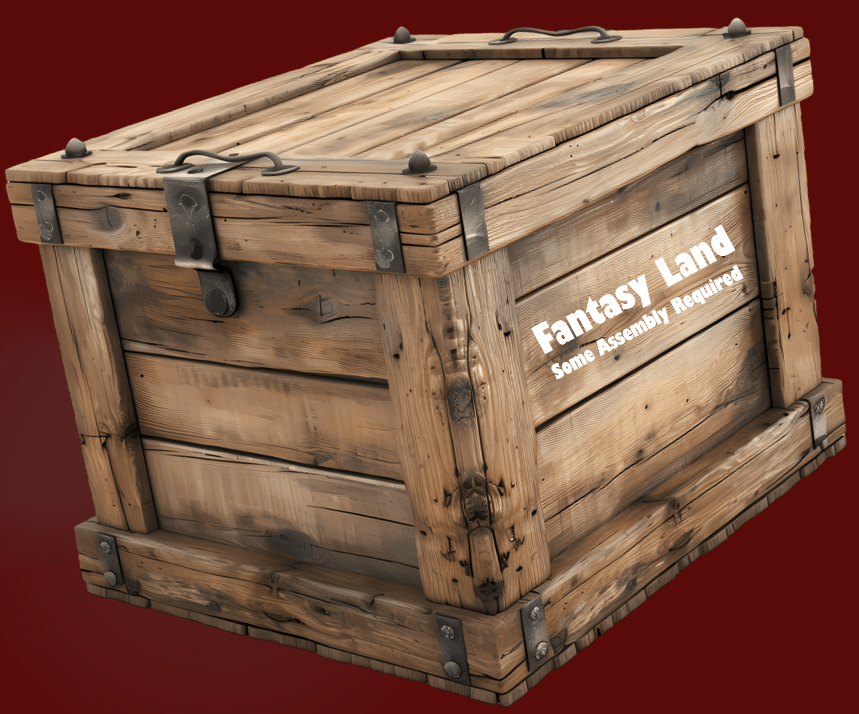
Fantasy land: some assembly required…
In Mandrake’s world, magic had to have always always existed. IT made no sense for it suddenly to appear out of thin air like…. yes okay but you see my point. Newton did not invent it, he merely codified aspects of it. This gave me Post-Newtonian magic, or arcana. A structured kind of magic, that can be studied by gentlemen of independent means and of course practiced by journey men arcanists who are probably the ones with most of the innate talent…
But that ‘post’ implies the existence of ‘Pre-Newtonian Magic’, less structured wilder magic, held in forgotten grimoires, or the ‘folk’ magic of witches. Pre-Newtonian magic was persecuted by the church, books and witches were burned, most of those witches being women because sadly some things you don’t need to envision… But ritualized magic and religion are two sides of the same coin which allowed me to build more parallel history into the mix.
Newtonian magic gave Mandrake’s world structure, it also gave me Gottfried Leibniz , Newton’s bitter rival to play with. The German polymath who had incidental links to the House of Hanover which were handy, he also wrote extensively which allowed me to throw an interest in the fae realms into the mix by making it Leibniz ‘hobby’. Also a certain Germanic attitude to the arcane, with which to invest Prince Albert. But i needed more.
The history of magic in Mandrake’s world needed to progress, so I had British arcanists becoming more accepted after they help win the battle of waterloo in a day. No need for the Prussians to arrive on the third day, old Boney was already on his way back to St’Hellan. Magic meets Victorian inventiveness and also Victorian values. The struggle between the Whig’s and the Tory’s, the great reformers and the great conservatives, was rife in the 1800’s. A witchcraft bill being put before the house made sense. As unfortunately did the continued oppression of female magic, though that is somewhat intrinsic to Mandrake’s personal story.
Mandrake live in a world where the Fae realms exist, magic in many forms, glamours, rituals, covens and necromancy. But it is still the mid-Victorian world of steam and cogs. The world building is layers on top of real history. There are plots against the crown, but there were plenty of those in real history too. There are those who seek to bring Ernest of Hanover to the throne rather than ‘that doxy at Buckingham palace’ and they are not made up either. Most of Mandrake’s world is based on research, what makes it a fun place to play with is where real history and people meet the invention.
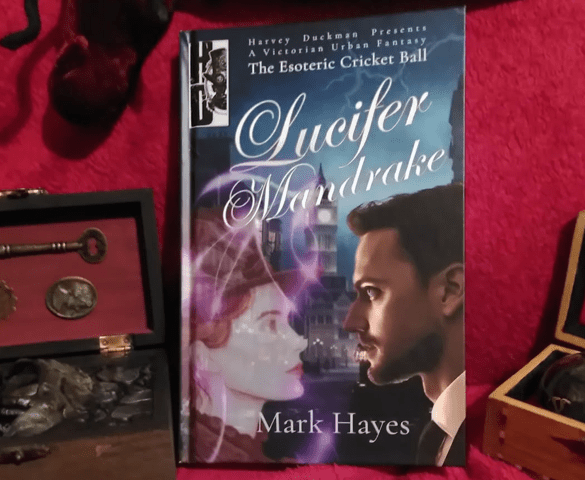
So welcome to the world of Lucifer Mandrake. A world of magic and steam power, betrayal, plots, necromancy, fairies, secrets, transformation and the unexpected. I did not know what I was writing until I got going, it didn’t end up where I expected it to either. But then the really good stories never do.
Writer
A messy, complicated sort of entity.
Quantum Pagan. Occasional weregoth
Knows where his spoon is, do you?
#author #steampunk
http://linktr.ee/mark_hayes






 The Passing Place