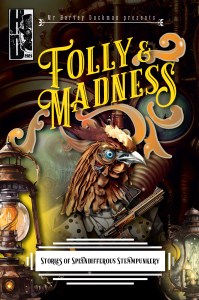
Back in August 2021 I wrote a post about the value of research to a fiction writer, and specifically in regard to a short story I had written called ‘Mandrake’ that was at the time had just being published in a Harvey Duckman anthology. This was the first time I ever mentioned the name Lucifer Mandrake on the blog and at the time I had no more than fleeting intentions of ever taking that short story and the characters within any further. February saw the publication of the Lucifer Mandrake novel I first vaguely posited way back then. It’s been a long road since then, but I thought I would revisit the concept of research…

Research is one of the most important aspects of the fiction writers toolbox, I am aware this may seem counterintuitive, after all its fiction. We just make it up don’t we? Well yes. But when ‘just making things up’ research is often far more important than you might imagine.
If you want the reader to invest in the world your characters inhabit you need it to be convincing. So, when writing something set in the mid Victorian period, even a fantasy where the ‘rules’ of how the world works have been tweaked, you still need the period details to be right. Mid-Victorian England is a very solid place and time. Your readers will know a lot about it, some of the things they know may not be entirely accurate, some may be down right wrong, but if you ever have to defend your historical accuracy in your version of Mid Victorian England, where magic is real and someone is raising members of the house of lords as zombies (some one is bound to notice the undead in the upper chamber of parliament eventually), you need to get the actual historical details correct. Or if they are wrong have them wrong for reasons of plot not oversight.
Doing that kind of research might sound a little tedious, but it isn’t for me because I love research. This may be because when I am doing research I’m not acctually having to write. Writing is work, and like most writers I know, we may love to write but the old gods and the new know we will try and avoid it as much as possible. Research is perfectly valid procrastination… We are not avoiding work we are working, its not our fault that this working involves a large cup of tea, a slice of cake, lounging on the sofa and leafing through Brewster’s book of Phrase and Fable* or Stotts Original Miscellany, The Oxford History of the Classical World, or the one bound in brown leather that is probably not human skin….

*It may be possible to be a writer and not have an edition of Brewster’s on the shelf. But I am not sure how. Mine is the fifteenth edition which replaced a battered twelfth edition when it fell apart after many years of use. They are now on the twentieth edition so mine is a tad dated. The first edition came out in 1870. It is the bible of English Literature…
Aside getting your setting and history right however there is another reason why research is important. It is a rich vain of story, colour, character and background to explore and more importantly steal. No matter how clever and interesting you think your plot may be. No matter how interesting your characters and the world you imagine, actual history and people are far more complex and interesting. For example, if you are going to write about an attempted assassinations of Queen Victoria it is probably wise to look up attempted assassinations of Queen Victoria. At which point you will learn more about the character and nature of the queen and her husband by reading her diary entry about one such attempt
Just before the second shot was fired and as the man took aim, or rather more while he fired, dear Albert turned towards me, squeezing my hand, exclaiming “My God! Don’t be alarmed”. I assured him I was not the least frightened, which was the case.
The diary of Queen Victoria June 10th 1840
A lot of the nuances of character of my version of Alexandrina ‘Victoria’ Saxe-Coburg, and Prince Albert as they appear in The Esoteric Cricket Ball (the Lucifer Mandrake novel) were informed by these words. Given they feature a lot in the latter third of the novel, while trapped in magical amber in a liminal void, and very much not existing in their public persona’s, getting the relationship between the prince and the queen right mattered. Getting it close to the real royal couple, or a facsimile there of, also felt important.
Lucifer Mandrake, in case this has passed you by at all, is a Victorian gentleman arcanist, by royal appointment to the court of St, James. (except they are not entirely a gentleman, Lucifer is on occasion Luci, though they are always themselves) They have many secrets, and a rather firm opinions on the subject of cricket… The latter being of some important to the original short story because a fair portion of it took place in the Lords pavilion. It was also important in establishing the character of Lucifer because Cricket in the 1850’s was very much the sport of hooligans, thugs and horary Henrys. Their abhorrence of Cricket gave Lucifer a window into their psyche, while also helping to explore certain aspects of the quasi-Victorian society inhabited by Lucifer Mandrake and his compatriot Sir William Forshaw (who unlike Mandrake is a bit of a cricketing enthusiast).
Cricket is, as any right-thinking Englishman knows, the pursuit of louts, drunkards, ruffians and gamblers. Yet, despite all this, somehow the sport of cricket itself remains terminally dull.
Mandrake and Forshaw are, to an extent, analogous to a Homes and Watson. Though I say this only because its the most obvious comparison as to how their relationship works. That relationship, one character being exceptional and unusual in some way, the other acting as the conduit of the more mundane everyman, is one that existed in fiction long before Arthur Conan Doyle first put pen to paper (Poe’s Dupin in The Murders on the Rue Morgue for one thing). But it is the one readers are most likely to make a comparative link to. This I will admit was entirely my intention, Mandrake even lives in Baker Street for god sake… Though the Holmes and Watson analogy was not set up for the reasons the reader might assume, but you would have to read the novel to find out why that is.
The point of this post is however to champion research for the writer. With it you can ground a story in reality. Doing so enables you to leave reality behind convincingly with your flights of the imagination. The number of small details research threw up I incorporated into the Mandrake novel would possibly astound you. Even seemingly innocuous details such as when they drained the marshlands east of Hackney can influence how the story goes. The London of today is not the London of yesteryear and you can not set a story in London without London itself being a character. You might need to know when buildings were built, when rivers were channelled under ground, when the underground was first planned, when the major train stations of London came into to being. All these things add to the world you are making your sand pit, the characters in that sand pit and the story you’re trying to tell.
So buy a copy of Brewster’s, and start doing some research… And of course you may want to buy a copy of Lucifer Mandrake : The Esoteric Cricket Ball to see if you can find the bits I fudged….






 The Passing Place