
Introduction by Mark
Regular readers will be aware I have a workaday interest in quantum theory. In particular what fascinates me are ‘spooky’ particles as they can be interpreted to explain a spiritual connection to, well, everything. Having a degree that is partially in philosophy and being drawn to the pagan helps with this. It is why I have come to consider myself to be a Quantum Pagan. As this all more or less fits together as a personnel belief system. Which is to say, it just kind of makes sense to me.
As I read today’s guest blog by the eclectic energetic entity that is Jessica Law, (yes I do read them before I publish them) I was reminded of spooky particles, and this got me thinking of how in essence modern quantum theory could actually be applied to the concept of the snail telegraph, or as it is also known pasilalinic-sympathetic compass, but then I am a romantic…
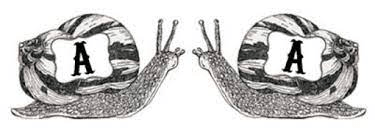
The Snail Telegraph by Jessica Law
The snail telegraph: why on earth did people think it would work?
There’s a live-action adaptation of the Japanese manga “One Piece” out at the moment, in which the characters use living “Transponder Snails” – molluscs with a telepathic connection – as telephones to communicate with each other. What viewers may not know is that this whimsical bit of surrealism is based on a real-life experiment even more bizarre than fiction.
Like a lot of strange things, it all started in the 1850s. The electric telegraph had recently been invented and was revolutionising long-distance communication. However, the system was still unreliable and expensive to maintain, so inventors across the world were striving to develop a cheaper and more efficient means of communication. Into the fray walked French occultist Jacques-Toussaint Benoît with an idea that was greeted with a surprising amount of acceptance, given how utterly ridiculous it was.
His idea was that, when snails mated, they formed a permanent psychic connection maintained by a special fluid that created an invisible thread between them, no matter the distance or the obstacles in between. Each mated pair was allotted to a letter of the alphabet, then separated and glued to conductive metal plates at opposite ends of the room (poor snails!). Benoît’s theory was that if you poked one of the pair, for example the letter “f” snail, it would produce a corresponding “Escargotic Commotion” in its partner, the other letter “f” snail, allowing the user to spell out words over long distances.
This idea took him surprisingly far. The manager of a Paris gymnasium gave him rooms and funding to build a prototype of his telegraph, totally taken with the idea. Within a year, members of the press attended a demonstration of the contraption. Despite Benoît walking back and forth between the two devices throughout, and the machine spelling out “gymoate” instead of “gymnase”, reporter Jules Allix was utterly convinced and gave it a shining review in French newspaper La Presse, suggesting ladies could carry the snails like a watch on their waist-chains.
Sadly, Benoît fled the scene before a second, more thorough test could be carried out, and was later seen wandering the streets of Paris, before dying in obscurity in 1852.
Benoît’s bubble might have burst in the end, but what surprises me is how far his idea did get. Even if Benoît was deliberately deceiving people, the fact remains that a good portion of them believed him. Which made me wonder: was the idea that snails were telepathic unique to Benoît, or was it a widely-held belief at that time? And if so, why?
First, we need to view it in the context of some of the other ideas floating about during that period. One popular theory was Animal Magnetism – or you might have heard it called Mesmerism, after its inventor Franz Mesmer, an 18th-century German doctor. Mesmer theorised that all living things had an invisible life force with which they could physically affect other organisms from afar. This theory was a big inspiration for Benoît. But if the telegraph was based on Animal Magnetism alone, surely Benoît could have used any animal – including humans. What made snails so good at being psychic? And why on earth did they have to mate first?
As a Biology graduate and longtime pet snail owner, I have a few personal theories. The first is that snail sex is weird…
To start out with, snails kiss by joining mouthparts – but that’s where the cuteness ends. To avoid clashing shells, snails’ reproductive organs reside in their necks, and it’s from this location that the snails shoot calcareous “love darts” (basically limestone harpoons) into each other’s bodies. This might have led people to believe that a part of one snail was permanently embedded in the other snail after separation.
This is significant: in some circles, flesh transplantation was already thought to create a telepathic connection between the donor and the recipient. 17th-century esoteric cultists the Rosicrucians even exchanged skin grafts tattooed with the alphabet, in a style very similar to the snail telegraph. Indeed, it was this idea that Benoît based his experiment on.
But that’s not all. The snail’s love dart also evokes the myth of Cupid’s arrow: the strongest and most lasting romantic bond that could exist between two beings. Originally, it was probably the other way round: the snail’s courtship routine probably inspired the Ancient Greeks to dream up the tale of Cupid and his amorous ammunition. But what’s accuracy in the face of a great story?
These love darts contain a pheromone which stimulates reproduction, prompting the snails to join at the neck and exchange sperm. When they do, their necks appear to merge and they secrete a huge amount of foamy mucus, almost as if they are dissolving into one animal – or forming the invisible fluid that Benoît was convinced connected the snails forever more. Garden snails are hermaphrodites, so both snails go away fertilised and able to lay eggs, and the overall courtship routine takes hours and hours.
All of these factors probably contributed to the genuine and fairly common 19th-century belief that snail romance was a higher, more noble form of lovemaking than the comparatively cursory human process. One that could form an eternal bond that surpassed time and space. What a romantic way to view our common garden gastropods!
And really, was the concept any weirder than some of the ideas knocking around today? At this very moment, 3% of British people believe a single molecule of arsenic dissolved in water can cure their illness, and 12 million USA citizens think we are secretly ruled over by alien lizards. Only history can be the judge.

About the author ( by mark )
Jessica Law is a musician, singer, writer, children’s author, blogger, quite possibly a ghost inhabiting an anatomical dolls body, a roller of mini cheese, the morally ambiguous queen of the fay realm, obsessed with obscure Italian mythic poetry and is occasionally exhausted but still manages to have more energy than anyone else.
She also like snails…
You can find her music, which is both unique and wonderful in equal measure on Bandcamp.
Alternatively you can just shout at your smart speaker, tell it to play Jessica Law and it will. I have surprisingly never tried this, I will be rectifying this later… Apparently this doesn’t actually make Jessica sing to you, just recordings of her songs, but maybe there are some spooky particles involved and she will find herself compelled by unseen forces connecting us all to suddenly start singing if enough people shout play Jessica Law at their smart speakers at the same time. We should definitely try that all together at midnight on Saturday…
Jessica’s own blog, which see updates at least once every 2 years can be found here. And you can follow her on Instagram here. So why would you not want to read more and follow her…
Apparently she has also written and published a novel that she tells no one about. That I was utterly unaware of until she mentioned it in passing when she emailed me this blog. Honestly I despair sometimes… Its only available in eBook… but is on amazon , or smashwords .
It may become available in paperback after someone offers ( with tenacious Yorkshire determination) to typeset it for paperback as they, and at least one outlaw want to hold the book in their hands.










 The Passing Place
Pingback: Monomania et le gothique | The Passing Place