I had one of those conversations the other day with another writer on the subject of poetry. The essence of which was they held the opinion all writers should write poetry, I disagreed as I don’t. Except of course when I do. My poetry, however, tends to be prose, which many people don’t think of as poetry, the writer I was conversing with among them…
Poetry certainly can be prose, indeed one of my favourite poems is Lovecraft’s Nyarlathotep. HP Lovecraft, was a particular exponent of the craft, several of his stories are prose poems.
In any regard, I pointed the writer in this direction and else where. Then they asked if they could read any of mine, and if i had a favourite of my own work. As it happens I do, it is the prose poem below which I wrote for my friends on Hopeless Maine last year. I’ve reproduced it below ( and fixed a typo) because I like it, and it also fits my mood to do so.
A Tale No Man Knows
There is a spring, on the island of hopeless. A spring from which no man drinks. Over the centuries the spring has cut a steep gorge down to the sea that no man found. The gorge leads to a beach of shale and grit sand that no man would call pretty. The tide is relentless here. Seaweed rots and dead things wash up twice each day. The decaying shells of broken boats litter the forgotten shoreline, but no man combed this beach.
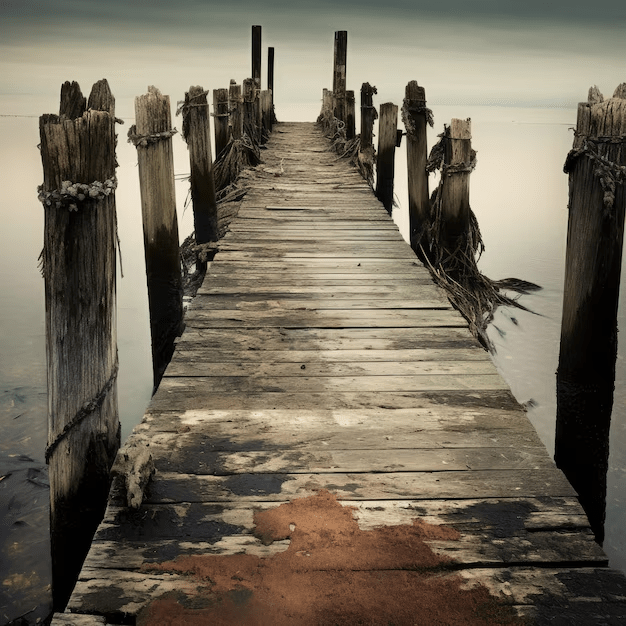
The remains of a hut sits just above the high tide line. The roof long collapsed, one wall shattered by a storm ages ago. It is a hut now only because what remains remembers what it was. Beyond the hut a small jetty slumps, made by the same hands that made the hut. No man would walk upon it now. Even seagulls think twice before perching upon its posts.
At the end of the jetty sits the remains no man could name. A skeleton held together by a memory no man has. Clothed in rags that are more holes than cloth. The skeleton sits and stares out at the unforgiving sea, as once in life it sat there and waits. While the wind blows along the forgotten shore, and rain and spray lash at what was once waiting.
Each day, as the tide recedes from its apex, the thing that dwells in the sea comes. She is a thing no man has named. No man could name. Once someone did. She come and sing to the remains on the jetty. Her song, a song no man has heard for a long time. Not since the remains last struggled from their dying bed, out of his hut and along the jetty to listen to her one last time.
She comes, the thing that dwells in the sea. She comes to sing to her lover. She comes and sings and no man hears her. Least no man remembers hearing her. She comes and sings and no man weeps.
The tide recedes, the tide swells, and each day the thing that dwells in the sea comes to sing to no man. And no man weeps. And that which was remembers all that once was. In the cove no man would call pretty, the shade of no man remembers her lover, who visits her still.










 The Passing Place
I love that kind of writing. However, I think a case could be made for your Folk of Gloucester contribution being a poem.
LikeLiked by 1 person
The piece for the Folk is very much covered by the ‘Except of course when I do. ‘ clause 🙂 After all, what is the point of having rules unless it is to break them
LikeLiked by 1 person
Ha!
LikeLike
Robert McFarlane writes prose poetry with his nature writing. Beautiful, in my opinion. But I agree with you, it’s definitely not the write style for all type of writing. Many types of novels for instance can benefit from short, to the point, unflashy writing. It can be distracting to have the writer so present at times – like film directors when their presence gets in the way of the story.
LikeLiked by 2 people
‘short and to the point’, well that is my Hannibal novels out the window then 🙂
LikeLiked by 1 person