“It is a day of days,” she said, as I approached: “a day of all days either to live or die. It is a fair day for the sons of earth and life – ah, more fair for the daughters of heaven and death!”
Our own Dear Edgar is, as you are probably aware, much beloved by those who favour clothing themselves in black, wearing dark eye-shadow and catching moon moths while they dance to ‘This Corrosion’. Some might say this is because he and his story’s have a reputation for more than a fleeting obsession with tragedy, love and death. That and his poetry, obsessed with tragedy, love and death…
This is of course an unfair summing up of Poe’s body of work, in some stories no one comes to a tragic appalling end…
There is however something of a theme to many of these early stories, linking love and death, and ‘Morella’ is no different in this regard. There is also however a subtle undercurrent that runs through this tale and the previous one ‘Berenice‘ linking love to decay and revulsion, which is, lets be honest here, a tad odd… More so when you consider that this was the time Poe’s life when he was on the cusp of marrying to the woman that was undoubtedly the great love of his life, who at this point was still half his age.
There is a certain tragic portent to this passing obsession with decay as his soon to be wife Virginia Eliza Clemm would go on to contract tuberculosis in 1842 and the wasting affliction that took her life within a few years at the tender age of 24. But as her loss was still a decade in his future Poe’s minor obsession with wasting diseases at this point probably had more to do with his brothers death a few years earlier.
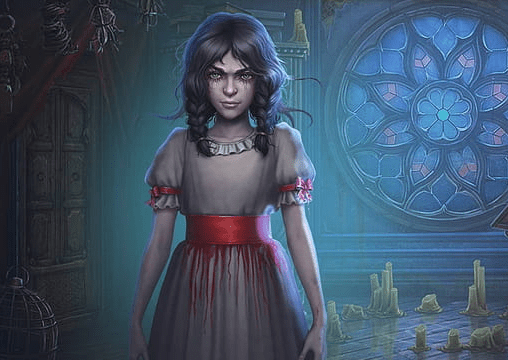
The Morella of the title is the highly respected by not exactly loved wife of the narrator. A woman of terrifying intellect obsessed with German philosophy. In particular Fiche and Schelling both of whom had some interesting idea’s about identity and intellect, though the former mostly just borrowed from Kant and the latter from the former, but that’s philosophers for you. Ever do they regurgitate the statements of there fore-bearers and add little of worth… (my philosophy degree may be biasing my opinion here…) In any regard, both gentlemen expound the theory that intellect and identity are part of the soul and thus capable in theory of transcending death, at least if there is some suitable vessel for them to inhabit…
This is somewhat at the heart of this particular story…
The narrator also makes ominous mention of his wife education in Presberg, the old name for Bratislava, now the capital of Slovakia, a place linked with witch craft and dark magic in Poe’s time ( because virtually all the Slavic states were, old magic from the old countries of eastern Europe…) Which suggests she is of old Slavic/Czech/Romani stock, therefore clearly dabbles in dark arts…
Morella’s husband, our narrator, admits while fond of her, he does not love her, but he does respect her greatly and considers her to be his teacher of sorts. It is a strange relationship but a happy one after a fashion. But As time goes on Morella steadily becomes more bed bound and absorbed in her books, she always starts to waste away of some unspecified aliment, before finally, she dies in child birth, but not before making some ominous predictions…
“The days have never been when thou couldst love me – but her whom in life thou didst abhor, in death though shall adore.”
The moment she dies is also the moment her daughter takes her first breath and thus the narrators life changes. He dotes upon the child, yet makes the strange choice not to give her a name. In his daughter he finds the love he never held for his wife and despite her dire predictions he finds joy in the child. But as she grows he begins to notice just how much like her mother the child is becoming, both in looks and mannerisms. the older she gets the more the child seems to be becoming the mother and the more the narrator begins to fear some dark pact or foul magic is at play…
As the years pass and he starts to see more and more of his dead wife in their child his fears grow until he determines the only thing he can do is have her baptised, and give her a name. But what name should he give her…
Well… Of course… There is only one name, fear it as he might, that the child could have. So he wishers it to the priest as he performs the baptism, and hears his wife’s voice once more as it is uttered…
“I am here.”

‘Morella’ is a truly gothic tale of dark romanticism and horror, and unlike ‘Berenice’ before it, it doesn’t suffer from the same overly verbose, overly written problems of the earlier story. ‘Morella’ is shorter, more accessible and yet somehow darker for it. Instead of forcing you to wade through his intellect, Poe just tells the story and it hooks you in and drags you with it far more for that. The twist at the end I shall not, for this is a tale to be read, it is possibly the best of the early stories and yet one of the briefest. So trust me in this, it is worth your time.

A TRUE UNKINDNESS OF RAVENS
Should your read it: Clearly you should, in a room full of cobwebs and spluttering candles (or a well lit airy room , your choice)
Should you avoid it: Unlike Lovecraft, Poe has no issue with giving female characters real agency, and while the Eastern European black magic trope, and witchcraft is somewhat passe it is far from offensive.
Bluffers facts: While there are other possibilities it seems likely that Poe derived the name of his female antagonist from ‘Morel’ a common name for black Nightshade a poisonous weed related to Deadly Nightshade or as that is otherwise known Belladonna. If this is as seems likely true, well that’s just the most Goth name ever, isn’t it…
It’s also the name of a pretty little medieval walled town near Valencia in Spain, but I prefer the former theory… What do you expect, I wear a lot of black.






 The Passing Place
Pingback: Dear Edgar #17 Ligeia | The Passing Place
Pingback: Dear Edgar #22 The Fall of the House of Usher | The Passing Place
Pingback: Dear Edgar 33 – Eleonora | The Passing Place
Pingback: Dear Edgar 35 ~ The Oval Portrait | The Passing Place