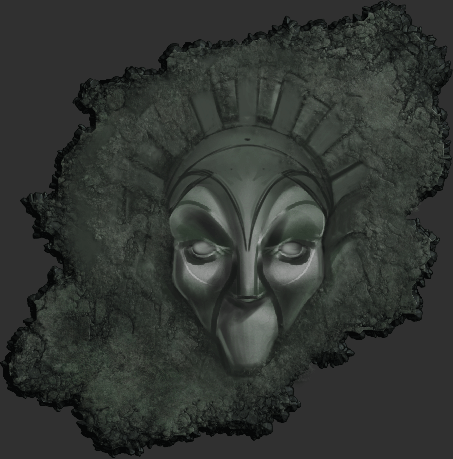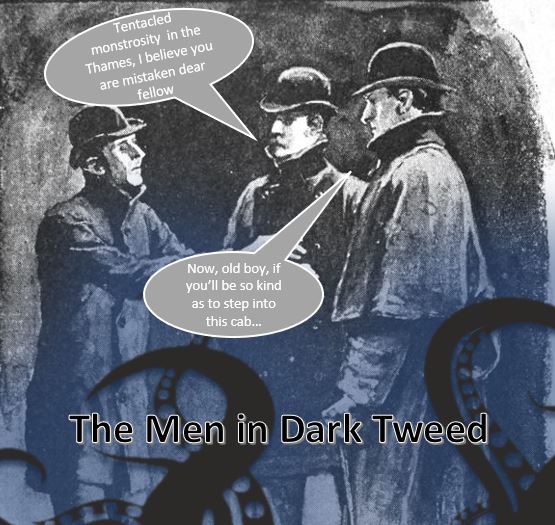
Masks

This is a post about masks derived from an old posts about masks from 2017. In 2017 I was still writing the first Hannibal Smyth novel, COVID was yet to be a thing and I was not the same person I am now… I reread that original post for reasons… and the middle section stood out. This is a reworking of that original post based on how much I have changed, six years and a lifetime later…

Everyone wears masks…

I know that this is a cynical viewpoint to hold but it doesn’t make it any less true. Some of us, however, wear more masks than others. Some of us wear masks over our mask because woe betides we let one slip then at least we have another mask to hide behind. That is the point of masks after all. They are there to hide behind, to obscure our true selves from those who might seek to know us.

It is, and always remains, a truism that the more insecure we feel, the more insular we become, and thus the more masks we wear. Masks of confidence to hide those insecurities. Masks of bluster to hide our lack of confidence, masks of cynicism to excuse the bluster…. and so on.

Then of course there are always those most pernicious of masks, masks of humour.

Oh but it’s so much easier to make a joke out of something than face a problem head on. We build masks of smiles designed to hide our depression from the world. We grin , we laugh, we make a joke of it all and never let the world see we are broken inside. Cracked porcelain facades just waiting to shatter.

We all wear masks even if don’t know we do. Masks protect us from what we fear by obscuring our true selves from all, an all that includes ourselves. For our darkest fear of all, is the fear of letting all the masks slip, just once, not in front of anyone else, but in front of a mirror so that we can seeing ourselves for who we truly are are.

I have always found it hard to let my guard down, to let a few, just a few, of those masks fall away because I really, really, don’t do people. From my perspective everyone else seems to know how to interact with people. Everyone seems so much better at being a person that I am, and if they are hiding behind masks, they are seamless disguises… Yet I know this isn’t true either.

Don’t misunderstand me when I say ‘I don’t do people’. I don’t mean I cannot deal with people, can’t interact with them, or can’t seem to be one of them. It’s just I’m one of those people you meet in the kitchen at parties, the one who sits on the edge of everything talking quietly to those who might listen or just to himself. And I am not unhappy about this, this is not one of the causes of my occasional bouts of depression. On the edge of things is where I prefer to be. I wear black a lot, its suitable for all occasions. It lets you merge into the shadows just a little if you keep to the edge. (And yes I also have every Sister’s of Mercy album, what of it?)

Basically, I am not good with people, I have found I don’t like them as a rule, people in general that is, I like individuals. Which is why I have a few really good friends and very few casual acquaintances. Small talk has never been a skill I really managed to learn, and its why I have a mortal dread of actually talking to people about my novels. I have never found a way to reply to that most awkward of questions ‘what’s it about…?’ not least because I expect I will look like a bumbling fool when I do. 

Six years ago I really needed to find a ‘confident writer guy’ mask to wear, but I was not even sure I know how to make one… Yet somehow I have cobbled one together of the intervening time. I have grown as an individual, I am older, wiser and in many ways happier. I have a larger circle of people I would call friends, if i was the kind of person who would call people who’s continued existence I cherish ‘friend’, I may have even done so…

I have fewer bouts of darkness and the masks, well some have slipped a little…

Occasionally, just once in a while, but occasionally all the same, I can stand before the mirror and take off the last mask.

Occasionally when do, I even open my eyes.

Posted in big questions, depression, opinion | Tagged , , , | 3 Comments

Are you ready for the apocalypse? by Liz Tuckwell

Introduction by Mark :

Elizabeth Tuckwell is a fellow Harvey Duckman writer and the aunt of an old friend of mine. These two things are not connected and we were unaware of the second connection till the old friend read a Harvey that contained stories by both of us and pointed this out. the world is small and full of coincidences…

Elizabeth is also in all likelihood not a distant decedent of Frier Tuckwell of Kirklees Priory cira 1107. Neither was he that Frier Tuckwell, who is entirely fictional, but was played brilliantly by Phil Rose in Robin and Sherwood between 1984 and 1986. Frier tuck was also played with some gusto by Mike McShane in 1991 Robin Hood: Prince of Thieves, a movie that featured a great scene in which from a tree in Northumberland you can see Nottinghamshire. Some one recently cut down that tree in an act of vandalism which quite rightly made everyone angry.

However, I would posit that the fate of a single ‘famous’ tree that was once in a movie with Kevin Costner, pales in comparison to the felling of the rain forests of Brazil for palm oil plantations, and perhaps, just perhaps, having the same amount of rage about Palm oil as we do about the felling of a sycamore tree beside a wall some roman order built 1800 years ago would be more likely to help avert the common end of civilisation… Which brings me to the question Liz asked herself when writing the guest blog below… *

*wow that was convoluted even for me wasn’t it…

Are you ready for the apocalypse? I’m not.

I recently watched an episode of the TV series of The Day of the Triffids with my niece. She loves the book and told me she’s read it at least eleven time after I gave her a copy of the original Penguin Paperback with the cute line drawing of a triffid. The Day of the Triffids is a cosy catastrophe. It’s also relevant today as one of the two main causes of the the catastrophe is Man’s greed.

It has one of the best openings of any novel ever.

“When a day that happen to know is Wednesday starts off by sounding like Sunday there is something seriously wrong somewhere.”

Anyway, it struck me while watching it, that electric cars would be pretty useless after an apocalypse. Where are you going to be able to charge up your car? I have an electric car.

It then got me thinking about apocalypses generally and I realised how useless I would be. I don’t have food or even more importantly, water, hoarded. I’m not an expert in any martial art. I can’t shoot and don’t have any stockpile of weapons, which I usually think is a Good Thing. I’ve never read a book or watched any YouTube videos about survivalist tactics.

And even worse, I live in London and even I know that when the apocalypse comes, you really don’t want to be in a large urban area.

And then there’s the Zombie Apocalypse. I really would be even more useless because I don’t like looking at zombies. They turn my stomach. I’m assuming this wouldn’t help while you’re trying to bash their brains out. The only three Zombie films I’ve watched to the end are Shaun of the Dead, World War Z and 28 Days Later. I started watching the sequel to 28 Days, 28 Weeks Later. I’ve never watched The Walking Dead or Fear The Walking Dead or any of the classic zombie films such as Night of the Living Dead. I have therefore gleaned no useful tips.

So, I’ve come to the conclusion that come the apocalypse, zombie or otherwise, I’m doomed. Are you?

Liz Tuckwell is a regular contributor to the Harvey Duckman Presents anthologies and the author of Moonsleep and Other Stories, a collection of darkish fantasy and horror short stories.

Posted in amreading, amwriting, big questions, Harvey Duckman, indie writers, indieoctober, indiewriter, opinion, reads | Tagged , , , , , , | Leave a comment

Dear Edgar ~14: Four Beasts in One

‘Glory of the East,’ thou art in danger of mastication! 

This is clearly either on of the finest sentences ever written, or a really odd typo to find in the middle of an Edgar Allen Poe story. So lets go with the former, and appreciate it for what it is, a really bizarre but somehow wonderfully understated sentence.

The ‘Glory of the East’ in question is Epiphanes king of Syria. As to why his is ‘in danger of mastication!’ well he chose to dress himself up as a cameleopard, half camel, half leopard in order to enact the public execution of a thousand Jewish prisoners before an adoring crowd. An act that so enrages the domesticated animals of the city of Antioch that they riot through the crowd and chase the king in an effort to eat him. Hence the rather imprecise cry from the crowd, which should have been.

‘Glory of the East,’ thou art in danger of being masticated! 

Now, as I chose to start this entry of Dear Edgar with a short discussion on just one sentence in the middle of a story, rather than speaking about the story as a whole, you might infer that I was struggling to say anything about this story…

You would be right…

The problem with this story is it is a whole lot of nothing, interspersed with long meandering rambles of word soup descriptions that at no point hold your interest. If it is comedy the joke misses it target, if it is a window on to antiquity it fails to inspire. It is dull and torrid and just not very interesting. If Poe had not written this then the impact on the echelons of human achievement would be nil. As it is the only reason it gets read and is remembered is because of its author.

Which is why, as you may have noticed if you are following this series of blogs, Dear Edgar has been on hiatus for a couple of months, because after the high point of Shadow: A Parable, I read this and could not find a word worth saying about it. I left it a while then read it again, and then left it a while longer and so on… And still I can’t find much to say about it because it is a whole lot of nothing. It was also the last story published of his published in the Southern Literary Messenger for six years and this was also the beginning of the end his association with the magazine on an editorial front. Though a couple of his poems were published there in then January of the follow year.

In essence this story is told to you by the narrator who invites you to look at events in the past. think of this as an antiquarian giving you a power point lecture, who randomly sings a couple of hymns at you along the way. I say power point, actually its more like a bad slide show, and the narrator is either drunk, or had a failing memory. Possibly both.

Don’t get me wrong, I am sure Poe researched the period, and certainly Epiphanes is a historical figure, who did quite horrendous things to captured enemies and is documented as doing some quite mad things in general, so none of this is actually that much of a stretch, but it is just dull for the most part. An intellectual exercise that recreates on the page what you could find in hundreds you tube speculative history documentaries, but without the narrative charm.

THE DEADEST OF RAVENS, ONE THAT IS TRUELY NEVERMORE…

Should you read it: No… Just no…

Bluffers fact: Epiphanes, was a name adopted by many kings of the Hellenistic period. In Greek it means  ‘God Manifest’ or possibly just ‘the Glorious one’. So no ego’s there…

Posted in amreading, book reviews, Dear Edgar, Poe, reads, retro book reviews | Tagged , , , , , | 1 Comment

Short Review Friday

In a effort to get on top of the list of books I have read, intend to review, but have not reviewed yet pile, here is a short review lacking my normal wittering preamble, you will probably not be disappointed to discover…

The Forging of Lady Ghast by Roz White

This is very much a book of two half’s. I enjoyed both, but the second half stands out as the half of the book I enjoyed most. In fairness to Roz, this makes sense, and is a good thing.

Having said that it would be remiss of me not to explain why the first half of the book didn’t entirely ring with me personally. While I found the latter half of the book more to my taste as a reader there was plenty in the first half to keep me reading, the style and quality of the writing is excellent. My problem was simply I did not like Cora Ghast, the central character. She was, for my taste, far too much a woe is me, upper class, objectionable snob. As a character I found it hard to identify with her, or perhaps more importantly care what happened to her.

In effect Cora was a certain kind of cardboard cut out of a steampunk Lady with a capital ‘L’ , that I have always found irritating. Its a character that turns up in other writers work quite often, though generally as a secondary character, who just annoys me as they seem to be there more to represent the upper echelons of society as a back drop than as a character of real depth. Good writers can pull this off, and Roz manages to do so admirably, but it is still not a character with whom I find any natural affinity. And as a main character in particular I found her labour-some.

But I kept reading, because the story was intriguing and there was a lot going on…

The title of this novel is however ‘The Forging of Lady Ghast’ and there is a clue in the title. The main character is not whom she appears to be. And who she is in the beginning is perhaps exactly the annoying snobbish objectionable upper class woe is me character she needs to be, in order to go through the transformation the character undergoes in the second act.

This is because Lady Cora Ghast did not start out life as a lady. She married well, but now widowed she is forced to return to her roots which are among the seedier side of London. Her father is a major player in the criminal underworld of the city, whom unexpectedly (to her) welcomes her back into the fold, and helps her plan her revenge. It is then we start to see the real Lady Ghast, a far more interesting and likeable character. Some one you can invest in, cheer for and fear for. Which is why the second half of the book shone for me.

There is a lot going on in Lady Ghast’s world. A lot of threads are left deliberately loose at the end, and there is a lot of odd strangeness and oddities. Roz has given themselves a large sand pit to play in in later novels. And Forged a central character in this one that is involving and fun. There is also some very well researched snippets in here, a young HG Wells turns up briefly having go himself in a tricky situation over a woman and some debts… There are other little gems berried in here as well which made me smile.

All in all its a fun read I can recommend and the rest of the series is intriguing after this.

One small note, the typesetting on the paperback version is not ideal, if that is the kind of thing that puts you off a book then I advise you get the kindle version.

Normal wittering preambles will be back next time, probably, because the lack of a good witter about something to start with just seems wrong…

Posted in amreading, book reviews, reads, steampunk | Tagged , , , | 2 Comments

Pagan feasting

For want of a better definition I am a Quantum Pagan. Which is to say I have a workaday understanding of Quantum physics, and I believe both science and pagan spirituality to be in a quest for answers and the underlying truth of the universe. One approaches the questions of reality and the universe through the pursuit of testable facts, thesis, and theories, the other through the pursuit of faith, our connection to the natural world, ritual, and the commonality of ancestral experience.

I am not going to go deeply into the concepts and ideas of my personal faith in this particular blog, but I thought it worth mentioning at the outset, given the subject matter of this post. For anyone interested in the subject however I have written on the subject extensively but the most pertinent of my blogs on the subject can be found here , here and (he says with a rye smile ) here

In any regard, this blog is not about my personal belief system but something broader and a tad more traditional, as it concerns a layperson’s guide to the wheel of the year. This, if you are unaware, is an ancient framework to pagan belief systems that dates back to the dawn of human spirituality, or as it is otherwise known the 1970’s…

Yes, I am being slight flippant here as you may have guessed but it is ostensibly correct that in its current form ‘The Wheel of the Year’ or the four major and 4 minor sabbats that frame most general contemporary pagan belief systems, is an modern invention. All be it drawn from various interpretations of ancient rituals and feast days. This doesn’t make it or paganism any less valid however.

Unlike the ridged structures and beliefs of the mainstream monotheistic religions pagans are oft encouraged by their fellow pagans to find their own way in their spiritual life. That is not to say guidance is not offered, or that there is a lack of teachers. But what you practise and how you practise is far more a matter of the personal interpretations than the structured interpretations of a ‘church’. How a pagan seeks to connect to the divine, be it in a group or individually is not for anyone else to say. There is no hierarchy beyond that which exists within small groups.

I’m explaining all this because I’ve always had a vague awareness of the history and the wheel itself. I have always been somewhat sporadic in my paganism. Some feast I celebrate, Beltane Samhaim, Yule, mid summer… Others I merely nod towards at most. A sort of pick and mix paganism, that is not uncommon even among those who are more spiritually inclined than I. Paganism is a broad, forgiving and very personal church.

It does, for me, however require an openness and willingness to explore.

Which brings me to The Witches Feast by Lilian Brooks, a fascinating little book that is in part a history, in part reference guide and in part a cookbook with recipes for the various pagan feast of the wheel…

Lilian is a practising pagan and the writer of ‘The Whitby Witches’ novels, which is how she ended up writing this small none fiction guide to the wheel of the year, because her non-practising readers kept asking her questions about it in response to it coming up in the books, in particular the third novel which take place through a full turn of the wheel. She has also been sharing recipes on her newsletters and in the original editions of her novels. At some point doing the book probably just made sense in order to avoid the same questions coming up time after time…

Divided into nine sections, the introduction and then one for each spoke of the wheel, each section has an overview of beliefs and a history of the feast in question, along with ideas and suggestions for how you may wish to celebrate the feast and several recipes for food and drinks that fits the season and the feast in question.

While it doesn’t pretend to be an academic text as such, it does give broad strokes and fascinating snippets of information. It certainly serves as a good introduction to the wheel and the foundations of pagan belief systems. What you will take from the book will vary from person to person. But it does form a useful and entertaining resource, even if you have a grounding in paganism to begin with . also there are recipes for cocktails.

I may not be much of a baker, but I am always happy to try a new cocktail…

Posted in big questions, book reviews, books, pagan, reads | Tagged , , , , , | 3 Comments

Whispered Wisdom’s of the Wise

According to Pliny the Elder,

‘The only certainty is that nothing is certain’

I’m not sure about that… But it is a philosophical quote of which I am somewhat fond. Here then are some more.

Life is really simple, but we insist on making it complicated ~ Confucius

Wise men speak because they have something to say: fools because they have to say something ~ Plato

The best part of beauty is that which no picture can express ~ Sir Francis Bacon

Friends are the siblings God never gave us ~ Mencius

Appearances are a glimpse of the unseen ~ Anaxagoras

Enjoy your own life without comparing it with that of another ~ Marquis de Condorcet

And finally a word from Frank,the greatest of modern philosophers…

Without deviation from the norm, progress is not possible ~ Frank Zappa

Posted in amreading, big questions, pointless things of wonderfulness, quotes, writing | Tagged , , , | 2 Comments

The Kraken’s of Venice…

I’ve been quiet here all month, this may have worried some of you for one reason, and others for another, or (more likely) it may have passed you all by completely. Vanity thy name is… In any regard there have been a number of reasons, among them a desire to get some actual writing done on my part, and a whole lot of reading, as the to read pile has become more of a to read hedge. If I hadn’t made some headway with it I suspect I would have had a druid infestation by the winter solstice and they can be hell to shift, and the mistletoe gets everywhere…

Also the fumigators cost a fortune, and they never get the remove the wickermen, which is just a fire hazard.

In any regard I got on top of some of my reading over the last couple of weeks so this is the first of some reviews I am behind on…

When I was in the middle of writing Passing Place, the writing of it had almost broken me, and I took a break from my big serious novel. But as I needed to keep writing (because its a compulsion) I through I would try my hand at some frivolous steampunk more or less on a whim. The main reason being I’d been to Whitby Goth-fest a few weeks before and got chatting to a load of steampunk’s in the bar.

In several bars in fact…

In any regard, without intending to pursue a career writing steampunk, which is to say I was writing it more or less to cleanse my mental pallet a little and amuse myself without ever intending to do anything with it, I started both the first Hannibal Smyth novel and the first Maybe novel more or less at the same time. It would be a few years before either was fully realised. Passing Place had to be finished first for one thing, a relationship needed to crash and burn, a minor breakdown needed to happen, followed by the reinvention of my inner-self… In essence, life needed to happen. However for Hannibal and Miss Maybe to be fully realised something else needed to happen too. I needed to read some steampunk…

This is not to say I had not read steampunk before, but I had not read many recent steampunk novels at the time, Plenty of Wells and Verne but nothing recent. The most recent steampunk I had read was Michael Moorcock’s Oswald Bastable trilogy which I had read in my early twenties when those novels were already twenty years old. Once Passing Place was written and I decided to see what I could maker of this Hannibal Smyth character that was knocking around my subconscious, and decided it might be a good idea before doing so to read some recent ‘mainstream’ steampunk novels. Mostly to get a feel for the genre beyond the presumptions I was already making. So I did want I guess anyone else would do, and typed ‘steampunk’ into my kindle search engine to see what it spat out at me.

Of course if you do that you get a lot of randomness, among the randomness one book jumped out at me, Shelley Adina’s Lady of Devices. Partly because it was the first of a clearly successful series which at the time was six or more books. (now its seventeen books long and Shelley has several other successful multi book series as well, frankly its just an intimidating body of work…).

I read several of Shelley’s magnificent devices books over the course of a couple of months, as well as a lot of other steampunk novels (many of which were so forgettable I can’t really remember them). Shelly Adena’s novels however stuck in the mind. I doubt any reader would see a direct connection between them and Hannibal’s modern age steampunk. Though I would be lying if I said there wasn’t a little of Adina’s Claire Trevelyan in my Eliza ‘Maybe’ TuPaKa.

Claire Trevelyan and the other characters in Adina’s novels are the reason Shelly’s books stuck with me when others have been forgotten. They were complex, intricate, fully realised characters with motivations and feeling that that feel real, something many of the other steampunk novels I read didn’t have. Some steampunk writers have a bad habit of putting all their thought into setting and too little into character. There are a bunch of stock steampunk characters that less talented authors tend to use, the crop up more often than elven archers and axe wielding dwarves in fantasy. Shelly’s characters are never one dimension stock characters which is why they sit in the mind. You cheer them on, fear for them and wish them well, because they are real.

All of this brings me back to the reason for this post. Which was simply I bought Shelley’s latest novel on a whim, (because for some reason we are both part of the same Facebook group)and fell back in love with her characters.

The Clockwork City by Shelley Adina

Lady Georgia Brunel and her maiden Aunt Millicent are both women of a certain age, which is refreshing in of itself, in a genre full of ‘talented girls’ and ‘feisty young women’. A year after being widowed, which sounds like it was something of a blessing, Lord Brunel, Georgia’s adult son, has packed off his mother and aunt off on an extended tour of Europe, which is why they take a small villa on a side canal in Venice, with the intent of attending a few social functions and learning to paint water colours.

There are worse ways to get over a brutally bad marriage, than touring the most beautiful city’s Europe painting all day and going to social functions on an evening. And a month in Venice (a different Venice, where the islands move by giant clock workings designed by Leonardo DiVinci) makes perfect sense as a starting point… Which it would have been if not for the dead body of a British diplomat being discovered on the water steps of the villa, the morning after Georgia begrudgingly danced with him at a ball…

Things get hastily get complicated from that point onwards. The dead mans daughter fall in to the care of the ladies, her mother can not be contacted. The police suspect Lady Brunel of foul play, and Venician politics is a dark web of intrigue, kidnappings, assassins and plots that entangle the ladies at every turn.

For all the complicated plot, dark dealings and murky goings on, there is a gentleness about this novel, or perhaps a genteelness about it. The world may be full of blaggard’s, but it is also one on manners and gentle heroines trying to do whats right, because its the right thing to do. The main character are beautifully realised, and a delight to spend time with.

The complimentary characters are equally carefully fashioned, the ladies gondolier for example, is a quiet but quietly heroic fellow doing what he must to look after his charges. He and his extended family are the soul of Venice, while the politicians are disreputable, they represent the real Venetians who strive to make each day a good one.

Also, in this alternative, clockwork city, that changes every few days, there are kraken in the canal’s. Surprisingly friendly karken, of which I greatly aprove.

This is a delightful read, it keeps you turning pages, as it gently moves along, and then makes you turn them as things start to go badly for our two heroines. Because when things go bad, they go down hill quickly. And once that starts happening it hard to put the book down as you care about the characters, which is the real strength of the novel. It makes you care.

A small aside…

Generally, as those who read these blogs often will be aware, I only review small press independent writers and the self-published. I was genuinely surprised when I got to the end of this novel to realise this was a small press independently published book published by Shelley Adina’s own imprint.

As someone who spent an awful lot of time learning to professionally typeset, I find it delightful to come across a indie book as wonderfully typeset as this one. So many of them unfortunately aren’t. I read one recently that didn’t even have justified text which ruined a perfectly good read to an extent. This book on the other hand is better typeset and presented than most big publishers paperbacks.

I heartily recommend it, and also heartily recommend anyone self publishing to get a copy just to see how small independent publishing should be done…

Posted in amreading, book reviews, books, steampunk, writing | Tagged , , , , , , , , | 1 Comment

The Telling Deck: A Guest Post from Will Nett

The original Sir William Nettleton, served the court of Queen Elizabeth the first, and dreamed of holding the distinguished rank of as lord warden of the water closest, but sadly he never advanced beyond his post of holder of the royal wet cloth on a stick. Sir William managed to explored no where, didn’t discover a vegetable, was crap at bowls and when the Spanish armada was spotted off the coast of Plymouth he was sharing his bed with a lady of negotiable pleasure. In fear for his life he ran trouser-less to catch the coach to Exeter deserting the Plymouth hoe, upon whom Drake was playing with his bowls… Which casts the whole Sir Francis Drake legend in a new light i am sure you will agree*

*almost none of this is true… Almost none.

The current Willam Nettleton who can trace his roots back to Devon in January 1589, though for some reason he shortens his professional name to appear cooler and writes as Will Nett… Occasionally Will Nett sends me blog posts , they tend to be entertaining, well received, deceptively intelligent reads…

For some reason Will has been playing with Tarot cards apparently…

The Telling Deck

Fate shall roll its dice; fortune play its hand

A path ahead will open, to lead you through its land

I haven’t turned a card in almost three years, yet here I am sitting across from the dealer, about to resume. My anticipation is tempered somewhat by the distracting possibility that the dealer’s hair might turn into a load of snakes or something. That’s the sort of thing that happens when you get your Tarot read, isn’t it? For these are not the cards of casinos, canasta, and Copperfield.

Before me lies the Rider Waite deck; 78 tablets, comprising the Major and Minor Arcana, that will open the doors of perception to a self-confessed cynic.

The atmosphere is suitably charged. Lights are low. A cat is present. No-one is sure who it belongs to- if a cat can ever be said to belong to anyone- or indeed who belongs to it. It looks keenly from cards to participants and back again with the customary feline arrogance that suggests it knows every possible outcome that may unfold, before chasing a moth around the room with all the energy and enthusiasm as if the moth owed it £50.

She caresses the cards, this Solitaire of Fate, in a dance as old as water.

“Relax,” she says.

I don’t.

She should’ve said “Whatever you do, don’t relax,” ensuring that I would do precisely the opposite. An ice-cold slug of Tunel sits like heavy mercury in a glass at my hand. The cat will boot it over soon enough, and reign all Hell down on proceedings, just as soon as it’s finished with the moth.

I look under the table to see if the dealer has a club foot. Inconclusive. ‘Always look at man’s foot before you play cards with him and don’t play if he has a cloven foot’ some mead-addled serf once proclaimed, in a well-travelled piece of advice. Amenable as the dealer is, asking to inspect her feet feels a bit fetishy so we skip straight along to the deal. I fan out the deck face down and select 12 cards, as instructed.

She lays them out and I wonder if the cards have been scrubbed with sage, which I read somewhere is the standard cleaning practice for the Tarot. She tells me not to get distracted but now I’m thinking about the out-of-date parsley in the fridge. Or is it coriander? I can’t remember.

Focus, Will.

They’re a rum bunch of coves, the folk depicted on the cards. The Devil goes down the BDSM route by chaining together Adam and Eve. I think it’s Adam and Eve. The cat has run off with my glasses.  The Hanged Man looks surprisingly relaxed for someone upended and swung by his ankles from a gibbet. “He waits, the Hanged Man. And waits” she assures me.

Tick followed tock followed tick

The Page of Swords evidently gets his pantaloons from the same haberdasher as the comic book depiction of Iron Man.

The Fool is a foppish throbber so preoccupied with the carnation- the flower, not the milk- in his hand, that he’s about to stride straight off a cliff edge. Even his dog seems to be encouraging this latest endeavour, presumably to get rid of him once and for all.

The wise man does at once what the fool does finally

My own hand strikes me as somewhat predictable, although interpretations on what the cards mean to different people do of course vary.

The Hermit appears. 

The hermit is the person to whom the judgement of a society matters most

“He’s been out three times today,” she adds, before asking if I’m particularly reclusive.

I’m not, but I do occasionally wear a full-length mohair smock and rope belt when I’m shuffling around with my candlestick in my hand, very much in the vein of the hermit depicted.

The Three of Wands is off on holiday. Yep, that’s me; looking for the next beach, or airport, and the accompanying Knight of Pentacles represents slow, steady, stability.

“You’ll meet a woman with a foreign accent,” she teases, somewhat lasciviously. This isn’t as revelatory as one might think, given that in the last 12 months I’ve visited six foreign countries, and spend a lot of my professional life conversing with people whose first language isn’t English, but it intrigues, nonetheless.

The cards themselves are merely a vessel with which to operate; a ham butty or an old bike pump would be sufficient for a dealer of this apparent level of skill, as long as “it’s got your energy on it” I’m told. She’s drawing vibes from all around us, and strays off beam on occasion- I suspect the financial comfort discourse fuelled by the money card is offered to most as a reassurance of sorts- but it’s largely irrelevant to me. Or maybe it’s hugely relevant and I don’t know it yet. Disappointingly, Death doesn’t appear, but I’m shown the card out of curiosity.

And I looked, and behold a pale horse: and his name that sat on him was Death, and Hell followed with him

That’s right; the cat’s black.

I’m especially struck by the Tower, and its ejection via the tower window of what looks to be Jedward in their pyjamas. What then, to make of it all collectively, these curious characters drawn from the pen of ‘Pixie’ Smith, the artist who designed this deck, over 100 years ago, laid out on the kitchen table, reaching down through the ages?

She carefully shepherds the deck into a silk wrap and places it down in front of her, as I muse on events. I’m more entertained than anything else, but it feels surprisingly insightful; dramatic, even. Joan Didion once said; ‘I don’t know what I think until I write it down.’

This might just be the first time I’ve written about anything, and not known what I think about it afterwards.

Will Nett is currently working on his first novel, Hogweed; a screwball semi-autobiographical account of his Great grandfather’s obsession with Marguerite Wadeer. The tale sees Will tumbleweeding through much of Europe and North Africa, with fellow wanderer, Bip, as he slides slowly into an Underworld of criminality, madness, and religious zealotry.

His Amazon Page is here

Posted in amreading, amwriting, druidry, fiction, indie writers, pagan, reads, supernatural, writes | Tagged , , , , , , | Leave a comment

The Writers Life : An Honest Conversation

There is a prevailing attitude within the independent writing community. An attitude and approach that I see on forums, social media and elsewhere, all the time. It is an attitude which I have observed as having negative connotations both for the individual writers concerned and the wider writing community. An attitude that is all to do with managing perceptions and the desire to be seen to be successful. The latter is a very human desire I completely understand. The former however is very much a problem.

To understand why I say managing perceptions is problematic you have consider the perceptions that are being managed and the impact of doing so. Generally most writers want to give people the perception that we are successful, because of course we do. But what is success? How do we measure it,? More importantly, how do people try to manage its perception? And why is doing so damaging?

Simply put. Every writer wants you to believe they are more successful than they are because of the ‘fake it until you make it’ mentality wider society has been buying into for the last few decades. The problem is that we are then measuring ourselves against other writers who are likewise ‘faking it until they make it’. None of whom have ever really ‘made it’ because the measure of ‘making it’ they are seeking is effectively unachievable as it is based on false premises.

Determined to be as successful as every one else is pretending to be, writers chase the unattainable and fall short, as they were always going to do, of the mirage of success created by the community as a whole. This is damaging to the mental health of individuals who invest everything in false personas of success they build to face the world.

Here’s a couple of stark facts for the fresh faced new writers.

The average independently published book by a new author will sell less than 100 copies in its first year. Actually 50 copies will be quite a milestone. After that it might sell a couple of copies a month…

Another stark fact, your first novel will also be quite possibly the best selling book you ever write because it is the one all your friends and relatives will buy, something that will become less likely over time. ‘I’ve written a novel’ is a powerful statement ‘I’ve written another novel’ less so.

What some more stark facts?

There are over 12 million individual kindle titles available on amazon a high percentage of which are also available in paperback on print on demand…

An average of 1.4 million self published books alone are added to that figure every year, that is 7500 new books a day, every day. To put it another way, you are not a small fish in a large pond, you are a single tear drop in an ocean

The average earnings for full time writers across the profession in the UK is according to The book seller £7000 a year. That is writers whom’s main source of income is writing, and ‘the average’ which means many earn an income that is less than that… If you wish to gauge success on a purely economic standpoint, which is the societal normative in a capitalist society whether we like it or not, less than 10% of full time authors are successful, in terms of making a viable living wage out of the craft, and only the top 1% at best are actually making what you could call a good living from writing.

Meanwhile in regards to the vast majority of writers, for whom writing is a passion and a hobby, not how they keep a roof over their heads, there are no figures for average earnings, but we are not talking four figures per annum in the vast majority of cases. Indeed three figures would be nice I suspect.

Most authors do not measure success in terms of fiscal rewards. You can’t, because doing so is almost certainly going to lead to considering yourself a failure. Instead we measure success against other writers, our contemporary’s and our friends, because what other measure is there? Are we reaching an audience, do we have the same kind of following, do we sell books as well as they do?

This is a terrible thing to do, but we do it. It is terrible because other writers are friends, colleagues, contemporary’s. We are not in competition with them, we should be supporting each other. But if you are trying to gauge how successful you are being who else can you gauge it against? The temptation to assume everyone is doing better than you is inherent as well, all the worse because of those managed perceptions. Because we are all desperate to be seen as successful no matter how actually successful we are, or more probably are not, being. And this is damaging because we all end up assuming everyone is being more successful than we are, which is damaging to our own sense of self worth as individuals.

So, an honest conversation needs to be had. Or at the very least here is an honest conversation from me to offer some perspective

Here then are the stark facts:

So far this year I have sold 130 books (inc all kindle, paperback, hardback) on amazon

I have sold may be 30 more books at events (I have not done many events)

I have also had 46588 page reads on Kindle Unlimited

Once you include advertising and the expense for events etc. I have earned nothing, in fact its fair to say it has cost me more to sell these books than I earned.

These figures are admittedly all down on last year, because I have only released one new book which was an anthology (which never sell well) as opposed to the third book in a series and a non-fiction work I released last year. But I also have 11 titles available on amazon. (I am not including sales of multi author anthologies in these figures only my own stuff)

Yes I should do more events, yes more focused advertising might help and yes that all sounds grim. But it is honest, as is the fact that I know from comparing sales rankings that I am doing better than many of my contemporaries. I am actually being successful within certain parameters, it just doesn’t seem that way.

What is success, well for me it is readers, it has always been readers. You have to find your own way to judge your success. But as a community writers need to be more honest with each other. ‘Fake it until you make it’ is all very well except that builds false expectations against which we measure ourselves. And that is damaging.

Posted in amwriting, depression, indie writers, indiewriter, opinion, writes, writing | Tagged , , , , | 6 Comments

Dear Edgar #13 Shadow – A Parable

A strange party, in an isolated location, in a time of plague, is visited upon by a spectre…

If you know anything about the works of Poe and I was to describe a story in the manner above you would I suspect make the not unreasonable assumption I was talking about ‘The Masque of The Red Death’. In actually, I am describing a much earlier tale in Poe’s bibliography. A tale called ‘Shadow’ or to give it its full title ‘Shadow – A parable’.

This early story was written in 1835 and published alongside ‘King Pest’ in the September edition of the Southern Literary Messenger. Both ‘King Pest’ and ‘Shadow’ are set in a time of plague, though aside that and there publication in the same magazine the two stories could not be more dissimilar. Where ‘King Pest’ is a low brow grotesquely framed satire that dwells on lavish descriptions of ugliness, pestilence and the worst aspects of human nature. Shadow is a more reified horror, crafted of atmosphere and looming dreads, and is written bey a far more delicate hand. It is also all together a much finer, more accomplished, work, and one that deserves more recognition than its rather obscure ‘early Poe’ status.

The Masque of The Red Death, to which there are clear parallels wasn’t published or written for another eight years. You can see however the seed of the more famous work here. There are differences, the seven revellers of this tale seem less deserving of their fate than the attendee’s Prince Prospero’s Masque ball.

The seven have gathered for the funeral rites of a eighth, young Zoilus, who died with a reputation as a bit of a hell raiser, so his friends have gathered to morn him in a mausoleum and do so with songs, wine and revelry despite the pestilence sweeping the land that took Zoilus so young in the first place. But as the night continues the revelry start to fade to mourning, and as the company turns morose a figure in the form of a shadow forms by the entrance and…

This is a short story, by which I mean just that, it is very short, it is beautiful in its simplicity and structure. It doesn’t get lost, as so much early Poe does, in abstract and over description. It so short that rather than tell you about it I merely urge you to read it, as I can publish it here, so do.

Shadow ~ A parable , by Edgar Allen Poe

Yea, though I walk through the valley of the Shadow:
Psalm of David.

YE who read are still among the living; but I who write shall have long since gone my way into the region of shadows. For indeed strange things shall happen, and secret things be known, and many centuries shall pass away, ere these memorials be seen of men. And, when seen, there will be some to disbelieve, and some to doubt, and yet a few who will find much to ponder upon in the characters here graven with a stylus of iron.

The year had been a year of terror, and of feelings more intense than terror for which there is no name upon the earth. For many prodigies and signs had taken place, and far and wide, over sea and land, the black wings of the Pestilence were spread abroad. To those, nevertheless, cunning in the stars, it was not unknown that the heavens wore an aspect of ill; and to me, the Greek Oinos, among others, it was evident that now had arrived the alternation of that seven hundred and ninety-fourth year when, at the entrance of Aries, the planet Jupiter is conjoined with the red ring of the terrible Saturnus. The peculiar spirit of the skies, if I mistake not greatly, made itself manifest, not only in the physical orb of the earth, but in the souls, imaginations, and meditations of mankind.

Over some flasks of the red Chian wine, within the walls of a noble hall, in a dim city called Ptolemais, we sat, at night, a company of seven. And to our chamber there was no entrance save by a lofty door of brass: and the door was fashioned by the artisan Corinnos, and, being of rare workmanship, was fastened from within. Black draperies, likewise, in the gloomy room, shut out from our view the moon, the lurid stars, and the peopleless streets- but the boding and the memory of Evil they would not be so excluded. There were things around us and about of which I can render no distinct account- things material and spiritual- heaviness in the atmosphere- a sense of suffocation- anxiety- and, above all, that terrible state of existence which the nervous experience when the senses are keenly living and awake, and meanwhile the powers of thought lie dormant. A dead weight hung upon us. It hung upon our limbs- upon the household furniture- upon the goblets from which we drank; and all things were depressed, and borne down thereby- all things save only the flames of the seven lamps which illumined our revel. Uprearing themselves in tall slender lines of light, they thus remained burning all pallid and motionless; and in the mirror which their lustre formed upon the round table of ebony at which we sat, each of us there assembled beheld the pallor of his own countenance, and the unquiet glare in the downcast eyes of his companions. Yet we laughed and were merry in our proper way- which was hysterical; and sang the songs of Anacreon- which are madness; and drank deeply- although the purple wine reminded us of blood. For there was yet another tenant of our chamber in the person of young Zoilus. Dead, and at full length he lay, enshrouded; the genius and the demon of the scene. Alas! he bore no portion in our mirth, save that his countenance, distorted with the plague, and his eyes, in which Death had but half extinguished the fire of the pestilence, seemed to take such interest in our merriment as the dead may haply take in the merriment of those who are to die. But although I, Oinos, felt that the eyes of the departed were upon me, still I forced myself not to perceive the bitterness of their expression, and gazing down steadily into the depths of the ebony mirror, sang with a loud and sonorous voice the songs of the son of Teios. But gradually my songs they ceased, and their echoes, rolling afar off among the sable draperies of the chamber, became weak, and undistinguishable, and so faded away. And lo! from among those sable draperies where the sounds of the song departed, there came forth a dark and undefined shadow- a shadow such as the moon, when low in heaven, might fashion from the figure of a man: but it was the shadow neither of man nor of God, nor of any familiar thing. And quivering awhile among the draperies of the room, it at length rested in full view upon the surface of the door of brass. But the shadow was vague, and formless, and indefinite, and was the shadow neither of man nor of God- neither God of Greece, nor God of Chaldaea, nor any Egyptian God. And the shadow rested upon the brazen doorway, and under the arch of the entablature of the door, and moved not, nor spoke any word, but there became stationary and remained. And the door whereupon the shadow rested was, if I remember aright, over against the feet of the young Zoilus enshrouded. But we, the seven there assembled, having seen the shadow as it came out from among the draperies, dared not steadily behold it, but cast down our eyes, and gazed continually into the depths of the mirror of ebony. And at length I, Oinos, speaking some low words, demanded of the shadow its dwelling and its appellation. And the shadow answered, “I am SHADOW, and my dwelling is near to the Catacombs of Ptolemais, and hard by those dim plains of Helusion which border upon the foul Charonian canal.” And then did we, the seven, start from our seats in horror, and stand trembling, and shuddering, and aghast, for the tones in the voice of the shadow were not the tones of any one being, but of a multitude of beings, and, varying in their cadences from syllable to syllable fell duskly upon our ears in the well-remembered and familiar accents of many thousand departed friends.

And there you go… Aside the incredibly long third paragraph, and the amount of sentences starting with ‘And’ or ‘But’ and other grammatical oddities this is one of the most accessible, readable and enjoyable of the early Poe stories. It doesn’t try to force intellectual credentials upon the reader, it doesn’t read as if it trying to prove anything. Its just a nasty dark sinister little tale of seven people finding themselves entombed alive by a strange esoteric force.

A TRUE UNKINDNESS THAT BODES WELL FOR ALL TO COME

Should you read it: Clearly I am of the opinion you should and unless you skipped forward to this bit, you have.

Bluffers fact: The story makes mention of the ‘God of Chaldaea’. The Chaldean’s were among the first invaders of Mesopotamia, displacing the Babylons as the primary power of the ancient world for some time around the 10 century BC. Very little is known about them that is not conjecture, but their gods and the gods of the Babylonian are interchangeable. To wit, Marduk , Istar , Ea, Sin, Shamash, Ramman and Tammuz.

Sin is a moon god and I highly approve of worshipping Sin…

Before Dear Edgar I wrote a full blog series on Lovecraft that became this book

Posted in amreading, Dear Edgar, fiction, goodreads, Goth, opinion, Poe, quotes, reads | Tagged , , , , , , , | 3 Comments