20000 Leagues under the Sea: Jules Verne: Retro Book Review

If you want to know about a classic, and any book that survives in print long enough generally gets considered a classic, there are plenty of dry Wikipedia entries you could read.  No one reviews them in the way they would a modern book. Instead, they hold them in some strange veneration, and odd facts about their creation and their creators seem more important than the books themselves to the Wiki style info-posts. This reviewer then is going to avoid that trap and talk about the book as if it was a new release.

This was an idea formed on my old blog, which is also the driving force between my Complete Lovecraftian posts. I try to avoid weighing them down with facts dry facts. Though interesting ones are a different matter. I have tried to do the same with this Verne Classic, and given the current (and wonderful) steampunk vogue, the tale of Captain Nemo and his remarkable craft is one that bares revisiting.

20000-leagues-under-sea-remake

20000 Leagues Under the Sea:  Jules Verne

Something that you should bear in mind right at the start is if your reading Jules Verne, unless you’re reading it in French, you’re not reading the original text. In all probability your not reading the complete text either. There have been numerous translations and editions over the years. Almost all of which are abridged translations. There is a reason for the popularity of abridging Monsieur Verne’s opus,  a clue to which lays in the original French title which when translated fully actually read ‘20000 leagues under the sea: an underwater tour of the world.’ As my copy happens to be the unabridged one, unlike the abridged comic book version I read as a child, I read the full translation for this review.

In the unabridged versions of the novel, an undersea tour of the world is exactly what the book is. It’s a travelogue by submarine, which crisscrosses its way through all the oceans of the world. And like all good travelogues, while doing so it makes an effort to educate its reader. Verne does this by listing in very long and equally laborious lists the marine life of every sea through which the Nautilus passes, and the and conditions found in every corner of the oceans depths. If you are interested in knowing the state of marine science in 1870, this is almost certainly the book for you, because those lists makeup of large portions of the original book and any unabridged translations. This frankly which may put off a great many modern readers.

For the generation’s of tv viewers and internet surfers that have arisen since the publication of the original in 1870, the wonders of ocean life not some great mystery in the way there were to the late Victorians. We have seen the blue planet, wildlife documentaries and for that matter, Jaws. Verne was an avid amateur oceanographer, but the knowledge of the oceans in 1870 was limited. Something which shows to even the untrained eye.

To me, the travelogue is one of the charms of the unabridged version. There is something fascinating in discovering just how wrong Verne gets things. Bearing in mind that of its time this was a reflection of prevailing wisdom and knowledge of sea life. It somewhat hearts warming to know how far we have come. When as an average ill-informed reader with only passing knowledge of the nature of sea life gathered from osmosis by years of half watching David Attenborough on the BBC, I can spot the flawed logic and misinformed wisdom in Verne’s travelogue, it says something for our progress as a society.

There is, however, an important point to see in all that travelogue. Jules Verne did not write steampunk. A point which should be obvious, but 20000 leagues has been referred to more than once as proto-steampunk. It isn’t, what Verne wrote was Science Fiction. The kind of Science Fiction that doesn’t call itself SfiFi. It’s Solaris, not Star Wars. Gattaca, not Terminator. It has little in common with modern Steampunk fiction beyond its setting and brass ‘n cog technology. But when Verne was writing this he was describing the cutting edge and the world to come, not a world that never was. This was proto- Hard Science Fiction.

Yet what makes this really a classic of early sfi and a precursor to modern steampunk fiction is that its heart it’s a fascinating adventure story. Which is what the mostly abridged editions read by teenagers and adults are like. Certainly back in the dim distant past of my teenage years this was the case, when I first read a graphic novel version. The fascinating character of Captain Nemo ( which, as every schoolboy used to know, is Latin for no one) and his still incredible machine Nautilus remain a piece of magic that drags you into his strange underwater world. Submarines may be no longer a thing of fiction, this steampunk craft is still a beautiful creation in of itself. There are loads of movie versions, comic book adaptations and heavily abridged version still popular today. Nemo and the Nautilus crop up in all kinds of places. Not least Alan Moore’s ‘League of extraordinary gentlemen’ novels, in which Nemo is of Hindu origins, and becomes the father of a dynasty sub-mariner pirates. For all the problems with the Hollywood movie of the same name, ‘disavowed’ by Moore himself, the Nautilus is wonderfully realised. While steampunk is steeped in the whole sub-mariner ethos, in its icons and oddity.

So back to the original idea behind this review. Would it be published today?
I suspect if Mr Verne were to approach a publisher with his manuscript the first thing he would be gifted with would be a good editor with instructions to cut it down to its marrow. Take out the extensive travel log of lists, remove the natural history opus. Make it a steampunk pulp novel of about half its length and try to convince Mr Verne to put in, at least, a couple of prefatory female characters. “There’s not a corset or a bodice in there.” would be the cry. Rightly too in some respects. At its heart, it’s a great story filled with mystery and character. But it would struggle to be published as it was written without heavy editing was it new and fresh today.
In part, that is perhaps sad. If understandable.
If you’re going to read it, read it in full. Enjoy it for what it is. Because it deserves to be enjoyed. And you can always skip past the lists if you desire.
Though there is much to be said for the various abridged versions of the classic.

the unabridged version available on Amazon ( and many other places)
+http://www.amazon.com/Leagues-Under-Unabridged

 

ASOA pres8 banner

Posted in book reviews, pointless things of wonderfulness, retro book reviews, steampunk | Tagged , | 5 Comments

Hope Amid the Slaughter

There is the tiniest spark of hope in the face of a malignant cancer that is eating away at the natural world.

However, I must start with the opposite of hope. The West African black rhino has gone the way of the dodo, which is to say it has become extinct. This is not to imply it has gone the way of the Saber-tooth tiger or the T-rex, creatures which came to extinction as a natural end. For, while it is true to say the tree of life sometimes springs off a new branch and prunes back on an old one, that is not the way the West African black rhino went to the wall. Instead, they reached their end in the most insidious of ways. Wiped off the face of the earth by a predator unlike any other. One that hunts not for its own survival but for lesser reasons. The predator is known as man.

Remember that malignant cancer I mentioned at the start, that would be us.

images-1

We, the human race, have hunted the Rhino for sport, destroyed its habitat, then poached and finally killed off this great West African herbivore. We, as a species, have ended the existence of a creature with no natural predators. A majestic creature that can draw a line of descent back millions of years. Only to be killed off by a predatory species who have hunted them, not to eat, not to feed our young, or maintain our own survival. One which has hunted them because we covert only one piece of the rhino. The single piece of them which makes them so recognisable and unique among creation, their horns.

Yes, that’s it, for their horns.

The rest of the carcas is just left to rot. The hunters do not even butcher it for meat. Maybe it feeds a few hyena’s and buzzards but otherwise is just wasted flesh putrefying in the West African sun. Or at least, the hunters did, as I say, the rhinos are all gone now.

Why then do we hunt them for their horn? Why would one species hunt another just to cut off one small part of it?

Well, it’s simple enough really, the horn that nature gave the rhino to defend itself from other predators than us, looks a little bit phallic.

And there, in a nutshell, you have it. Humans with their wonderous imagination and greed looked at this wonderful creature, saw its single proudly jutting horn and decided that as it looked a little bit like an erect male member. And because of this vague similarity, humans decided that by crushing the horn into a powder and taking it as a medicine, a man could become a powerful lover.

Yes, there you have it, powdered rhino horn, the herbal medicine Viagra of choice…

Only, of course, it isn’t, it is at best a placebo effect. You could be taking talcum powder, and it would have the same none effect as long as you believed it was what it said on the bottle. But cultural history and ancient medical practices say differently. With the same kind of logic that prescribes a course of leeching for haemophilia.

To be clear, I have no axe to grind about alternative medicines. If they work for you, then all power to your ginger root. Crush that basil, parsley, and clover root,  mix it up and add a little walnut oil, then cure your warts. Get rid of your cough with elderberry powder mixed with seaweed. Cure your bad back with needles strategically placed in your left foot. Homoeopathy has a place. Thousands of years of folk medicine can’t all be wrong. Western medicine is far from always right.

But when these alternative medicines leads to the trade in bits of animal, particularly endangered ones, it is just wrong.

Powered rhino horn, something you can now buy for 1000 dollars an ounce and probably going up as I write, has cost the world this magnificent creature. All because each horn was worth tens of thousands on the black market, and humanity’s ability to put a price on the priceless is unending.

Such a horn on a living breathing rhino would, in case your in any doubt about my opinion here, be the only priceless thing here. Yet even with the extinction of the West African Black Rhino, the slaughter has not stopped, because it’s close relative the East African Black Rhino remains, for a little while, open to exploitation. So the poaching goes on.

In a bid to halt poaching, Rhino’s in Namibia are routinely dehorned by the Namibian government game wardens in an attempt to halt the slaughter. Of course, it means they are mutilating the poor creature, but it’s better than being slaughtered by poachers right? Except it isn’t, because if the poachers track a rhino for a couple of days, when they discover it has been dehorned they kill it anyway. Perhaps they do this out of frustration or just malevolent evil, or just to try and make the Namibian government stop dehorning as a practice.  It hardly matters why, when the result is still a dead Rhino festering in the sun.

Douglas Adams, that fine writer of guidebooks to the universe and answerer of ultimate questions, also once wrote a book called ‘Last Chance To See’, which is a wonderful read. In it, among other endangered species he visited the West African Black Rhino. So moved by this majestic animal was he, that he became a lifelong advocate for the preservation of the species. He once climbed Mount Kilimanjaro in a rhino suit in order to raise money to help preserve them. Sadly for us all, both Douglas Adams and the West African Black Rhino are no longer with us. The rhino outlasted Mr Adams by almost a decade. I suspect would be of little consolation to either of them. The charity he helped to found ‘Save the Rhino’s’ is still working today to say the remaining Rhino species, there is a link at the bottom to their website.

adamsquote6

So this brings me back to that slither of hope I motioned in the beginning. Which came to me in the form of my son who sent me the following message:-

“I give up on humanity, the African rhino is extinct”

My son was fifteen when he sent me this message, and to be frank a little pissed about the extinction of a species. So there you go, there is my slither of hope. My hope that the next generation may manage not be as destructive, murderous, and basically as shit as my own. It is only a small slither of hope, however, because I remember giving up on humanity myself at much the same age…..

Until that was the aforementioned Mr Adams inspired me to a little bit of hope when I first read Hitchhikers Guide to the Galaxy. The hope that we were not irretrievably stupid petty, greedy creatures. Which also remains a small slither of hope.

links

https://www.savetherhino.org

Posted in amreading, goodreads, politics, rights | Tagged , , , | Leave a comment

Old Bugs: The Complete Lovecraft #9

Lovecraft tells the tale of ancient star beings lurking under the oceans. Insect intelligence watching human from the outer planets. Strange monsters in the darkness waiting only to pray upon those who are foolish enough to call attention to their fleeting existence. The strange and the incomprehensible that were here before us and wait only for the stars to be right before they come again, from the dark cold places of the world. Often chilling, often uncanny, occasionally just a little on the weird side, but all with a kind of darkness at their heart, an understanding that, as Lovecraft put it…

Image result for fear is the oldest and strongest emotion of mankind

So when you read a tale by H.P.Lovecraft entitled ‘Old Bugs’, one probably assumes, quite naturally, that this is a tale about ancient insect intelligence’s lurking in the dark waiting to consume humanity, or something along those lines…

It may come as a mildly disappointing surprise to realise that the ‘Old Bugs’ in the title punctually refers to an itinerant alcoholic in an imagined 1950’s Chicago, earning his poison through odd jobs around a particularly disreputable speakeasy. You might think however that this does not mean it’s not still going to be usual Lovecraftian fare. After-all there is the question of what drove ‘Old Bugs’ to the demon drink in the first place, what horror had he witnessed that he needed to drown it in cheap rotgut moonshine…

Well, no, the only thing that drove ‘Old Bugs‘ to drink was, as described by Lovecraft, his own low character and lack of moral fortitude, and while there is a tale here, it is a morality tale about the evils of drink, with a twist that is telegraphed early on, and comes as little surprise. Indeed the most interesting thing about this tale is not the tale itself, but how, and why it was written, as well as the authors prejudiced that lead to it been written in the first place.

H.P. was a lifelong teetotaler who believed firmly in prohibition and the corrupting nature of drink. So firm was he in his convictions that ‘Old Bugs’ was written after his friend Alfred Galpin suggested in 1919 that they try alcohol, before the prohibition laws went into effect. It was not actually published until 1959 by ‘Arkham House’ long after Lovecraft’s death, which suggest in part that it was not written for public consumption. Indeed, the original manuscript contains a note at the end that was written for Galpin himself, ‘Now will you be good?’

This note, and the use of both Alfred Galpin, and his fiancee’s real name in the story point to the motivation behind its writing, which is entirely overt by the end. The question of why Lovecraft was so firm in his tee-totality and his belief in prohibition is more open to conjecture. He was known to declare on numerous occasion:-

‘I have never tasted intoxicating liquor, and never intend to.’ H.P.Lovecraft

The truth of this declaration has on occasion been a matter of debate, for his vehemence on the subject must have had some root (he wrote extensively on the subject of prohibition in private letters and elsewhere). Some have pointed to his breakdown as a teenager, and wondered if he actually flirted with drink in that period of his life. However the subject of prohibition was very much a central facet of American life in the formative years of his life before it finally came into effect in 1920, and the temperance league were a powerful and in somewhat attractive force. Oddly enough Lovecraft’s home state of Rhode Island was one of only two which opted out of ratifying the Prohibition Act, which points to it been a particularly hot topic in Providence.

The story itself, atypical though it is, has many of Lovecraft’s hallmarks. The slightly dispassionate nature of the prose. The unsympathetic nature in which he presents his characters, almost with a distaste for their lives and their weaknesses. That he holds his vision of his friend Galpin, projected thirty years in the future and having succumbed to the bottled demon, in contempt is obvious. Lovecraft is preaching here, but the tale hangs together, all the same, its moral message, while far from hidden, takes second place to the story itself. For which we should be thankful.

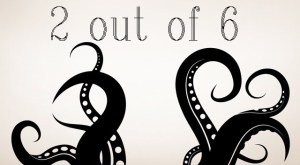
It has a twist that you can see coming, even if you do not know the history behind the tale’s telling.  But on the whole, it works. It is what it is, disappointing, but mostly because this is not what you read Lovecraft for. It is still well crafted and well written. Though you have to forgive the teetotal writers vision of a 1950’s where prohibition remained intact. Seen from the point of view of a future for him over sixty years in our past it has a certain twee quality to it. It’s not the 50’s as we know them, all Thunderbird’s, bright colours and rock’n roll. That aside it’s enjoyable in of itself, it just lacks the Lovecraft we open the pages of his books for. As such I am giving it only 2 out of 6, Though as a morality tale it is perhaps worth a couple more bottles than tentacles…


2out-6

Further Lovecraftian witterings 


Posted in Lovecraft, retro book reviews | Tagged , , | Leave a comment

Memory: The complete Lovecraft#8

There are short stories, and there are shorter stories, and then there are micro stories. ‘Memory’ is the shortest of all H.P.Lovecraft tales, a flash fiction masterpiece before the term flash fiction had even been conceived. It is also among one of the most beautiful, insightful and chilling. Written in 1919, it was published in 1923 in ‘The National Amateur‘, it takes up no more than a page, yet manages to convey a terrifying vision of eternity and humanities place within it, in a mere 353 words. The bleak nature of humanity’s existence, in a cold uncaring cosmos, is a consent theme in Lovecraft’s work. In ‘Memory’ he wastes not a single word while giving us an unsettling context to our place within that cosmos and eternity itself.

Image result for memory hp lovecraft

‘Memory’ is also one of the works of Lovecraft that is entirely in the public domain. So rather than talk about it, I shall instead urge you to just read it in full. It will not take you long, but if it does not send a shiver down your spine… Well, then you probably need to think upon it for a while.

Memory: by H.P.Lovecraft

In the valley of Nis the accursed waning moon shines thinly, tearing a path for its light with feeble horns through the lethal foliage of a great upas-tree. And within the depths of the valley, where the light reaches not, move forms not meet to be beheld. Rank is the herbage on each slope, where evil vines and creeping plants crawl amidst the stones of ruined palaces, twining tightly about broken columns and strange monoliths, and heaving up marble pavements laid by forgotten hands. And in trees that grow gigantic in crumbling courtyards leap little apes, while in and out of deep treasure-vaults writhe poison serpents and scaly things without a name.
     Vast are the stones which sleep beneath coverlets of dank moss, and mighty were the walls from which they fell. For all time did their builders erect them, and in sooth they yet serve nobly, for beneath them the grey toad makes his habitation.
     At the very bottom of the valley lies the river Than, whose waters are slimy and filled with weeds. From hidden springs it rises, and to subterranean grottoes it flows, so that the Daemon of the Valley knows not why its waters are red, nor whither they are bound.
     The Genie that haunts the moonbeams spake to the Daemon of the Valley, saying, “I am old, and forget much. Tell me the deeds and aspect and name of them who built these things of stone.” And the Daemon replied, “I am Memory, and am wise in lore of the past, but I too am old. These beings were like the waters of the river Than, not to be understood. Their deeds I recall not, for they were but of the moment. Their aspect I recall dimly, for it was like to that of the little apes in the trees. Their name I recall clearly, for it rhymed with that of the river. These beings of yesterday were called Man.”
     So the Genie flew back to the thin horned moon, and the Daemon looked intently at a little ape in a tree that grew in a crumbling courtyard. 

And that’s it, the whole of it, and in my opinion, for whatever it is worth in this cold uncaring eternity, is that it is a work of near perfection. And oh, oh, so cold… I could say more, but I believe the tale speaks for itself better than I ever could. Indeed, it would seem odd to write more words to describe and critic it that exist within the work itself. It is, however, joyful in its bleak wonder. The universe existed without us, it will exist long after we are gone, and the best we can hope for is that it remembers us, if only fleetingly as a moment of ‘Memory‘ in some demons mind.

It may come as no small surprise, therefore, I give this particular story a whole set of 6 tentacles out of 6…

6out-6

Posted in Lovecraft, retro book reviews, rites | Tagged , , | 1 Comment

Beyond the Wall of Sleep : The Complete Lovecraft #7

“I have an explanation of sleep come upon me.” – Shakespeare

From the first of the dreamland mythos in ‘Polaris’, we move straight on to a second and much lauded ‘Beyond the walls of sleep‘, it has inspired heavy metal bands including ‘Black Sabbath‘ and movie makers (though to call the 2004 movie of the same name’inspired‘ stretches the definition, IMDB gives it a woeful 2.4/10 )… and as so often with Lovecraft, it has inspired multiple writers. Stephen King even quotes from it in ‘On Writing‘, he non-fiction guide to the art of the novel. While King uses a passage from the tale to demonstrate how ‘not’ to write dialogue, never Lovecraft’s strongest suit, it’s done so with genuine affection for both this particular story and Lovecraft’s work in general.

Image result for beyond the walls of sleep

Written and published in 1919 (in an amateur publication called of all things ‘Pine Cones‘), Lovecraft himself said the story was partly inspired by an article in the New York Tribune in April of that year, from which he took the idea of the ‘backwards‘ Catskills population, which his narrator likens to ‘white trash in the south‘, and from the same article he took the family name of his lunatic ‘Slater‘. Quite what the real ‘Slater’ family thought of this is never recorded, but I suspect Lovecraft was reasonably sure they would never read his tale themselves considering his opinions…

As with ‘Polaris‘ Lovecraft is, you see, showing his prejudices, though as always he does so through his narrator. It is clear that they are opinions that Lovecraft shared to an extent himself. More amusingly, however, his narrator, a man obsessed with trying to understand dreams also displays his own (and possibly Lovecraft’s) prejudices against that other great interpreter of dreams Sigmund Freud with the wonderfully dismissive-

 ‘Freud to the contrary with his puerile symbolism.’  – Lovecraft

-Clearly, there is little respect due for the Austrian psychotherapist in the narrator’s view. Which establishes that he is a man of opinions if nothing else.

The narrator, unnamed as so often in Lovecraft’s fiction, tells the reader of his time working as an orderly in the state mental institution, and how he came into contact with a man named Joe Slater.Joe was incarcerated on the grounds of insanity after committing a string of murders. What interests the narrator about him is not so much the crimes Slater committed, but the murderer’s state of mind when he did so. Slater it seems has no recollection of the killings, only of ‘awakening’ for want of a better word, to find blood, quite literally, on his hands.

Slater’s history is a strange one, a member of a remote hill-billy type clan, he has little education and an intellect that is none the worse for it. Except when he has his episodes that is. For, occasionally, when he sleeps he becomes someone else entirely, and sometimes that ‘other‘ takes charge of the body of Joe Slater beyond his dreams. An event with occasionally bloody results. Little wonder then the courts found Slater to be insane, the narrator, however, thinks otherwise.

In someway’s this story is a reversing of the one told in ‘Polaris‘. Rather than the sleeper travelling in his dreams to inhabit another, in this case, the ‘other‘ comes to occupy the sleeper. In effect it is a tale of possession, but not by such simplistic tropes as the devil. Lovecraft is not one to deal with such prosaic demons. The narrator, also not one for naive concepts like simple insanity being the cause of a  man to seem as though he is two people. He studies Joe Slater enough to understand the ‘other’ personality that comes to him when he sleeps is just that, an ‘other‘. Least ways because he can not attribute the things the ‘other‘ describes and says to a backwards, backwoodsman. One which he considers to be a regression from the educated, civilised society he is part of.

A mere orderly though the narrator claims to have been, is also a scientist, of the slightly barking mad variety, in that he has invented a device which allows him to commune with the dreams of others. Sneak a peek inside the head, as it were. But what he find in the mind of Joe Slater is not in any way what he expects. And this leads to a strange communion between the narrator and this ‘other’ mind in the body of Slater. Leading him to see the universe in quite different terms afterwards.

It’s at this point the real strength of Lovecraft’s rights shines through. That glorious descriptive tone that eats away at you, draws you in and makes you see a universe that is at once so strange and yet somehow so real at the same time. The impossible becomes reality and ‘Beyond the walls of sleep‘ is a minor masterpiece in this regard. Much like ‘

Much like ‘Dagon‘, it is the kind of story that Lovecraft excels with. For all his flaws the unworldly is where his writing has its greatest strengths and most disturbing images…

I could explain more of what the narrator discovers when he communes with the ‘other‘. But unlike some other stories to explain further would take something away from the story itself. It is one that needs to be read and experienced with your own imagination. Like much of Lovecraft’s strongest work.

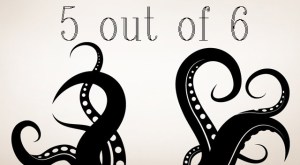
I do not love this tale in the same way I love ‘Dagon’. I think its slightly weaker, and has less impact, and for all its power, it wanes somewhat towards the end. But that said it is still a masterpiece in its only way. So I’ll score this at 5 out of 6, though I suspect some would rate it higher.


b89f9-5out2b6

Further Lovecraftian witterings 


Posted in Lovecraft, retro book reviews, rites | Tagged , , , | 5 Comments

Letting the other half govern (finally)

Back in 2013, on my previous blog, I wrote a post called ‘Women in politics, politics in decline’. It contained a lot of facts and figures, mainly because it started out before that as part of an essay for the Open University. As such it was also, I will admit, a little dry, though it tried hard not to be. It was mainly focused on a couple of important points, those been that while women outnumber men in the UK, they were woefully represented in government. And that our liberal western democracy was 49th in the world rankings for the percentage of female representatives in parliament which was at a shocking 17.9%.

As I have moved my blog over to ‘WordPress’, for umteen reasons that come down to me falling out with ‘Blogger’ as a platform. I have transposed the vast majority of my old blog over, and been working through it all and deleting the chaff, when I came across the post on female representation. At which point, naturally enough, I began to wonder if we had made some progress in this regard as a nation since last I looked. Yet with a certain degree of reservation, because ‘things can’t only get better’ no matter what D’ream claimed.
A short burst of Googling later, I discovered a strange thing. Things have improved, quite dramatically in fact. In the last national election, we ended up with a third more female parliamentarians. All the way up to 29% in fact, so almost an actual third of the total. I was impressed, sure it wasn’t just over fifty percent. We had not suddenly evened it all out and represented the greater half of our population properly in the seats of power. But still a dramatic move in the right direction. With a certain boyantness about me, I wondered happily how much higher up the world rankings that left us. Were we indeed now a leading light in the struggle for equality…


Labour's female MPs

Scotish women elected to parliament 2015


A short burst of Googling later, I discovered a strange thing… We were now 49th in the world… Yes, that’s right, despite a surge in female representation, as far as parliamentary equality in the world we are still 49th (well technically 48th as we are joint 48th with Nepal according to the IPU, but let’s not split hairs and let facts get in the way of the story… ) 49th, still. I was, I must admit, a tad disappointed and despondent at this revelation. While I am no one’s idea of a nationalist, I do like to have a degree of pride in old Blighty. I would have been pleased to see we had progressed in this table of equality. It’d be good to think we were at least trying to show the world a better more equal society… Yet there we are, still 49th…

And then … because I am a little slow on occasion… my brain caught up and I realised what this actually meant. Not for Britain and the British, but for humanity as a whole, and the smile came back to my fact at the subsequent revelation.

We as a nation have a third more female parliamentarians, yet have remained 49th in the world rankings of this statistic, which could only happen if the world as a whole had done much the same thing. Humanity, for once, had actually made some progress as a whole. I decided to check this as well…

A short burst of Googling later, I discovered a strange thing. Almost every nation in the world had gone up by a third (or at least the ones I had figures for from my original essay) Even places you would never expect, Iraq, Iran, and other Arab states. Bolivia, of all nations, was almost exactly equal to 50%. The likes of Cuba, Mexico, Namibia are not far behind, to name a few surprising ones in the top ten.

In a world where America has just sworn in a president who even his own party and supporters admit is a misogynist, the rest of the world has moved on by a country mile in the last few years (the USA is 100th in the list btw…). So what if the UK is 49th, but it’s 49th in a world making huge strides towards actual political parity for the female of the species. And while we may not be there yet, there is hope, there is progress and humanity is getting better at being run by it’s whole self, rather than the 49% of us without a uterus.

Once in a while, it’s good to see ‘Things are actually getting better…’ sing it for us D’ream…

Sing it for us D’ream…

Oh and yes, if your interested, Rwanda is still at the top of the table….


The original post has been moved onto this blog, so if you’re interested in reading it follow this link….


Posted in opinion, politics, rights | Tagged | Leave a comment

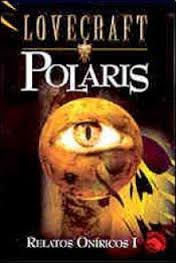
Polaris : The Complete Lovecraft #6

‘Polaris‘ takes it name from the north star, that single static point in the ballet of the night sky around which all else appears to revolve. The star so beloved of sailor and navigators in general due to its constancy. It is always there on a clear night, hanging over roughly above the north pole.
For Lovecraftian’s, ‘Polaris‘ is also the first of his Dreamlands stories, a sequence all of their own in Lovecraft’s mythos. This one written in late 1918 it was first published in 1920 in ‘The Philosopher’.
The story was itself alleged to be inspired by a dream, though this could have been part of the pitch from Lovecraft, who was no more above cheap theatrics than any other aspiring author. The claim’s of its dream inspired genesis, however, do play into the story itself. It is effectively a dream inspired tale about a dream, so where then does the dreamer end and the writer begin…
More academic credence among Lovecraftian’s can be placed on the claim it was inspired in part by Lovecraft’s frustration and guilt over not been selected to fight in world war one. H. P. was rejected for service as a combatant for much the same reasons as the character of Olathoe, who the natator of the story dreams himself to be. A point which others have made much of over the years.
It is also doubtless Lovecraft was inspired by his keen interest in astronomy. Choosing ‘Polaris‘ as the object of his narrator’s obsession and dreams, has much to do with both the stars fixed nature in the sky and the period of precession (more of which in s moment).

The tale opens with the narrator laying awake, staring at ‘Polaris‘ through his bedroom window, feeling at once uneasy and mocked by the ever-present star blinking at him in the sky. It is not until he falls into the grasp of sleep we discover why.
The narrator’s dreams are taking him to another time and place, one before the dawn of recorded history. A city at the heart of a fading Empire that existed, at least in the narrator’s dreamings, 26000 years ago. He knows this because of the star, hanging in its normal place above the horizon, that same ever present blinking north star ‘Polaris‘. 26000 years is, without coincidence, the period of precession. The strange wobble that the Earth had upon its axis that takes 26000 years to complete a rotation.
The ‘period of precession’ can be measured (see the link to Wikipedia here if you want the science), but to measure its requires a lot of complicated maths of the kind Lovecraft himself never mastered and was thus denied his childhood ambition to become a professional astronomer. However, astronomy’s loss is literature’s gain. However, it must be said not poetries.

The poem above is spoken by the star itself to the narrator, or at least, it is imagined in his dream. The reference to precession is apparent. The subtext is also clear in its intention, which suggests that the narrator dreams of his own past life, and revisits in his dreams the actions of that life, and the shame his soul feels because of them.
In his dream the narrator does not only dream of the inhabitants of the city, but that he knows them, with a feeling of familiarity that is almost sublime, and as each night passes that feeling becomes stronger. Until he does not merely observe the city but inhabits it himself in his dreams and becomes Olathoe. A weakling, feeble and given to strange faintings, cursing himself that he is left behind while his fellow citizens go off to war. (sounds familiar doesn’t it). Desperate to serve his city he takes a post as a guard, watching the high passes and poised to light the beacon that will summon the warriors should the invaders arrive. Wherein lays the shame he feels, for in the last he fails in this duty too.

As a tale, it is original in the form of a dreamers dream, yet leans towards myth. But there are issues with it that must be looked at with some context.
Of all the tales so far it is the first that has an unsettling feel to it in the wrong way. The invaders of the ancient city are named as Inutos, a name derived from the modern Inuit. They are described as small, yellow and barbaric, and as being a lesser race than the proud and seemingly caucasian people of the land of Lomar, of which the narrator dreams himself to be. The racism inherent in this description, is unfortunate, at the very least. Lovecraft, like many other writers of the period, chose to use Asiatic people as a threatening presence.
The context, which is perhaps forgiving here, is that his imagined city is placed by his tale in North America, and the migration of the Inuit people from Asia to North America happened somewhere within his timeline. To the people of that lost empire, they would be a barbarous invader. As the narrator identifies with the empire citizens his view holds some water, but not the description as it is given by Lovecraft, or indeed the lack of the narrators real-self seeing an issue with the way his dream-self feels and describes the foe.

It is, I will grant, a harsh criticism of the story. Some would see it as picking at a small scab in the context of the time it was written. It also has no impact on my score of 4 tentacles out of 6. (Unlike the poem). But while it is the first of the stories I have reviewed to raise my liberal eyebrows a little, it will I am aware not be the last. Regardless, however, it is a solid well-crafted tale and the first of the Dreamlands is a story I enjoy despite its issues.

Posted in dreamlands, Lovecraft, retro book reviews, rights, rites | Tagged , , , | 3 Comments

Worth more in scrabble…

“England and America are two countries separated by the same language!” attributed to George Bernard Shaw, or possibly Oscar Wilde, or purely apocryphal, as its one of thsoe quotes no one is entirely sure about even the QI elves aparantly….

U is worth 1 point in Scrabble, and it occurred to me this means that the word colour is worth 1 point more in Britain than it is in America. I know that’s an abstract way, to sum up, the difference between two variants of the same language, but it’s probably an important one. Well in international Scrabble tournaments at any rate.
Serious men in cardigans probably debate long into the night, which dictionary to use an adjudicator when the world championships take place.
I was assuming there is a Scrabble world championships because there is an elephant polo world championship. Which is proof if it was ever actually needed of humanities ability to make a competition out of anything. BTW care to guess the 2004 world champions of Elephant polo. Scotland….  If anyone can figure out how that happened, let me know…. But putting strange pachyderm sports to one side. It seemed a safe bet that a Scrabble world championship existed when I was first thinking about this post, and it turns out it does indeed.

a writers tool box….

So somewhere in the world serious men in cardigans must have met around a pop-up table and debated if colour or color should be the agreed word for the championship. After all, there is no doubt the influence it has on the scores. Perhaps if it takes place in the UK they use the Oxford English Dictionary,, and if it occurs in the US they use a Webster’s dictionary…. but if that’s the case imagine the difference it could make in the world records… Think about it a moment, U may only be worth 1 point, but a Z is worth 10. So you see what you need to realise is that realise is worth 9 fewer points in the UK than realize is worth in the US…  And that’s before some smart arse uses it on a triple word score, drops and s on the end and gets the fifty bonus points…
What if it takes place in Nigeria, as it did in 2015 (yes I looked it up, but not going to let facts get in the way). But which dictionary do they use then, and if a UK player takes on a US player …. does the US player have an advantage. Or does it all even out, those 10 point Z’s you can use in more places in American English, against all the 1 point U’s that suddenly have so many more uses in The Queens original variant?
So yes, it was a slow day at work, and my mind wondered a little…
Regardless, men in cardigans care deeply about these things I have no doubt.

Why is any of this relevant, (except to the men in cardigans)?
Well as I am sure your aware I have published two novels.
What do you mean your not aware of that, it’s not like I have never mentioned it before? The links are at the side of the page. Do you think this blog is just here as entertainment and occasional waffling on about scrabble and elephant polo …

Ahem, sorry, where was I?
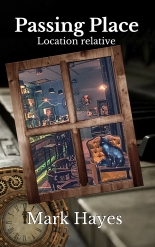
Oh yes, as your aware I have published two novels, and like most self-publicists I have done so in my own native language of English. The one with all the U’s all over the place and S’s in realise… I wrote them in English, which is somewhat universal as long as you know when a hood is a bonnet, and a boot is a trunk. The spelling of words, well that’s slightly Tom Ate Toe, Tom Art Toe. And in all honesty, a little confession here, it never occurred to me that I should actually make American additions of my novels with the American English spellings.

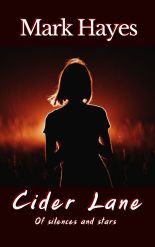
Let me say that again, because I doubt I am alone in this. It never occurred to me to make American English versions of Cider Lane and Passing Place…

I self-publish, which if you have read this blog before I am sure you know, and it’s a common mistake that happens to most if not all self-publishers. I know this because I have read a lot of Indie novels. The American ones are in American, the British ones are in British, and the Europeans ones all depend on which English teacher they had…
Yet it shouldn’t be, because in common with most of my indie author friends who self-publish I want my product to be as good as anything that comes out of a major publishing house. I had Cider Lane reproofed and reissued it to get rid of those annoying typos that crept past the proof-readers and myself that readers spotted, because when you hit a typo it jumps out at you  (The first time you read something, not the hundredth like most authors have their own books).

Yet by publishing in America in British English, I am doing the same to all my American readers. As is almost every indie author. Sure I would not change the title of my book from ‘Harry Potter and the Philosopher’s Stone‘ to ‘Harry Potter and the Sorcerers Stone‘. Because unlike the American publishers of J K Rowlings work I don’t believe Americans are unable to comprehend certain words and their meanings.
Cider Lane, however, is set in Summerset England, where they say Tom Art Toe, and a car had a bonnet and a boot, not a hood and a trunk. So the native vernacular should stay the same, but the spelling of words… that should be another story. After all, all it will take me is a few hours in a word processor set to American English to run through the manuscripts and then fix the typesetting if it needs it.

Hence, while it was a slow day at work, I was thinking about scrabble. And how for some of my readers colour should be worth less in Scrabble, and realise should be worth more. If I, and other British self-publishers, are going to sell our wares to Americans we should make the effort to cater to them. To meet them half way across the pond and change the words to ones that they are familiar with. Likewise, Americans publishing to the British-speaking world should do the same. After all, it’s only common courtesy.

We may be ‘separated by a common language’, as someone said even if no one is quite sure who its was. But we are united by a common Scrabble board, let the men in cardigans argue about which dictionary they use, because as writers we should use both…


Posted in books, opinion, pointless things of wonderfulness, writes | Tagged | Leave a comment

Self-Publishing Stigma

I did an interview in November last year, just after the release of Passing Place, in which I got asked this question:

  “Would you say there is a stigma to being self-published?“

Of all the questions I was asked, this one and my answer to it created the most comment from those who read the interview. Most of the feedback was of the positive kind, though it did raise an eyebrow or two and garner a couple of negative responses.
One went so far as to point at my answer was ‘Naive and symptomatic of the malaise that self-publishing has created within the industry.‘  A criticism which if I am perfectly honest, I am not entirely sure I even understand.

My answer to that question in the interview was as follows:-

 “Yes… I hate people saying ‘My friend Mark has self-published his second novel…’ because I know that people tend to think we self-publish because we cannot get a publisher. This is seldom the case and generally, people have their own reasons for going down a self-publish route. There are lots of great Indie authors out there and, lets be fair about it, some dross. There is plenty of dross printed by traditional publishers as well. On the whole traditional publishers want books they know will sell, rather than something that is a risk and would sooner publish another James Paterson, which is a carbon copy of his last novel co-authored by someone else, who actually did the writing, instead of publishing someone who may not sell. They want genre and they want tight lines. There are a lot of very good books that have sat in publisher’s slush piles for years and then never get printed because the author loses the will. Anyone who self-publishes put their work out there, they deserve more respect than to be dismissed as ‘just self-published.”

My view on the stigma of self-publishing has not changed.
Having read a few emails in response to my opinion as it was voiced in the interview, I decided it might be wise to expand on what my view is. Not least because the original reply was in an interview, written with a certain degree of humorous intent and not trying to explain my opinion as such. Also, it gives me a chance to respond to the criticisms some had of this small portion of the interview.

Firstly, and just to be entirely clear, I stand by every word I said about James Paterson novels. Which, I feel I need to add here, was a comment on his publishers, not the book themselves. I was accused of deriding the writer because I am jealous of Paterson and his success. Let me, therefore, be clear about this, yes I am. I would love to make my living by writing books, I am just not sure I would want to do it by sticking my name on books others have written.

Patterson, because of the big name he is, sells books on that name alone. The point I was making, however, was about the publishing industry. Not about Pattersons books themselves. Perhaps unsurprisingly, publishers are more inclined to publish books they know will sell with minimum effort from themselves. There is nothing wrong with this as those authors have earned that selling power by writing books people love. It is however also the reason James Paterson’s name gets flung onto books that were ‘co-written’ by ‘Joe Bloggs’. They stick a ‘with’ between the James Patterson in big print and the ‘Joe Bloggs’ in small print. Then they stick them on the shelves, using the big name to shift them. Patterson is not alone in this, he just tends to be the one who stands out because of his ‘masterclass’ video lectures which faceache seems determined I should pay for the privilege of watching.

In my personal opinion, I would prefer the publishing industry to work a little harder with unknown writers, rather than tag them onto a big name. Those ‘co-writers’ who have written the bulk of these novels deserve to have them published and championed in their own name. At the same time, however, let’s be honest here, the big sellers make the industry the profits it needs to invest in first-time authors, it’s just the way it is. And those ‘co-writers’ probably get paid rather better for these work under the Paterson banner than they would for work published purely under their own names so who the hell am I to judge.

Before moving on I will just add this gem of advice for all, don’t have a go at Paterson in an interview, his fans are surprisingly aggressive in his defence. Even when you don’t say anything bad about the man himself, or even his novels, just his publisher’s ethics…

But anyway…

The other chunk of correspondence was about self-publishing, and I also stand by my own reasons for choosing to do so over traditional James Paterson loving publishing houses.

1/ As much as I enjoy genre fiction, I do not want to write a book about Harold Potter boy wizard, or 50 shades of off-white, or a dusk-light trilogy. I don’t want to only write one particular brand of science fiction or a book someone will recognise as inspired by the commercial success of another. Those stories have been told, I don’t want to retell them, but big publishing houses prefer to stick with what they know will sell.

This is, of course, counter-intuitive as the original genre creators were new, different and unexpected hits, which made publishers willing to take a punt on them small fortunes.

2/ Once I had finally written that first book, I wanted to go and write something else entirely. What I did not want was to be tied into a series deal where I have to rewrite my first book again, just more so. Rinse and repeat, publishers like a series. This is not to say I won’t write sequels (one of my current projects is a sequel to Passing place) But I don’t want to have to write anything.

3/ I only want to write what I want to write, this is not my day job, it does not pay my bills. Sure that’s the dream, but until then I will stick to doing what makes me happiest as a writer. Self-publish allows me to do that because I only answer to myself.

In common with most indie authors I know who self-publish, I have never actually tried to get a publishing deal. I have submitted the odd short story to magazines but never submitted a novel to a publishing house.
Why? You ask… well simply put because I didn’t have to. Nor for that matter did I want to, for the reasons above. I am sure that had I submitted Cider lane it would have sat in a slush pile. Unless I was fortunate, to say the least. Even rejection letters are hard to come by. Finding a publisher willing to take a punt on a virgin novelist is rare and requires no small amount of luck. Cider Lane doesn’t really fit neatly into a little box of a genre. ‘Passing Place’ certainly doesn’t drop neatly into a particular genre, though sci-fi and fantasy are a fairly broad church, so it is an easier fit than my first novel.

4/ I have lost count of the times I have read faceache posts by angry writers. Many of whom seem one rejection letter away from the edge… They complain about publishers not been willing to take a chance on them. They complain about agents. They complain that they have been told their book is too long, too short, the wrong fit, the wrong book. Which is another reason that I like self-publishing.

I like the freedom self-publishing grants, and while it’s rewards are hard won, they are hard-won by yourself. And no one tells you that the novel you so love is too long, short, or does not fit.  It’s my vision, it’s my story, I will not be told to change it because it doesn’t fit your narrow definition of what a novel has to be.

I do however hate the label, ‘self-published’ I vastly prefer the word ‘indie’. Perhaps this has a lot to do with my love of the alternative music scene… And I know there is some dross out there, but the majority of ‘indie’ writers work hard to put out the best work they can, and are more interest in the work than the money.

Lots of them are producing interesting stuff, thrilling reads, and really different stuff you just don’t get in the mainstream publishing factory. I am not saying they deserve to be read, each reader must decide for themselves what they read, but they deserve the same respect as those who publish through publishing houses. The same amount of hard work goes into the writing. They have to work harder in some cases to have their books edited, work on proofing, and typesetting and everything else that goes into publishing a novel. My good old writing iceberg is all the bigger for the self-publisher…


There is a lot more I could have put on my iceberg, but you get the point I am sure.

My two novels represent about six years of work between them, to have them written off as unworthy because of a stigma attached to the self-published is both insulting to me and others who chose to self-publish,  and says more about the ones doing the writing off than the writers.

My original interview can be found here 

Further reading, just because I like this article by DW Smith from way back in 2010 here


adios for now

Mark

Links to my own social media, by all means, connect with me on them.

FACEBOOK    TWITTER   GOODREADS

Other posts on writing and self-publishing are collected here:

https://markhayesblog.com/publishing-and-writing/


Posted in opinion, publication, self-publishing, writes, writing | Tagged , , , | Leave a comment

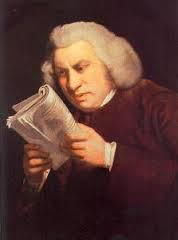
A Reminiscence of Dr. Samuel Johnson : The Complete Lovecraft #5

This is not our usual Lovecraftian fare. Indeed it is no more, and no less exactly what the title claims it to be, all be it a fictional account written by a narrator who claims to be over two hundred years old.
It is also, a rare and somewhat awkward piece of Lovecraftian comedy. Though much like its Shakespearean equivalent, it helps if you have read the background material if you wish to spot the jokes.
Written in 1917 and published in the same year under the pseudonym Humphrey Littlewit, Esq. It was written with no small wit intended. It pokes fun at both Lovecraft’s own style of writing, which had been referred to by contemporary’s as antiquated, and at the amateur press, which has a certain irony when you know that Lovecraft himself was a major player in the amateur press association, latterly is president for a short while.

0d743-download2b252832529

Its jokes are a little flat, however, though the observation of the wit of Dr Johnson, famous for creating the first dictionary as well as his rapier-like retorts is extremely well written. Though exactly why Lovecraft’s narrator doesn’t punch the good doctor on their first meeting but instead becomes firm friends, I am unsure.
It is clear that Lovecraft had a high degree of respect for Dr Johnson, as well as several literary lights which are mentioned in the story. I suspect he would not be enamoured at the portrayal of Johnson in series three of Black Adder, which is where I personally came across the doctor.

We do not expect comedy from Lovecraft, and he is not secretly a Terry Pratchett or Douglas Adams when he does try his hand at it.
In the end, this is a dull, even boring tale, but this may be only because it is not what I expect from a writer of horror and delver of the dark places of the human psyche.
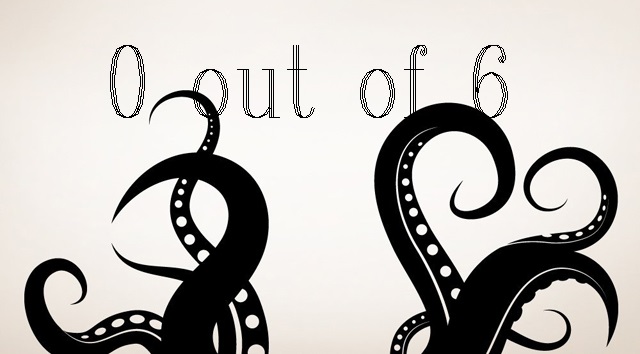
As such I give it a woefully tentacle free 0 out of 6… only to read if you’re the kind of completist fool who would write a blog on every piece of Lovecraft fiction….
However as a work of pomposity, and some vague humour I give it 4 Johnsons of 6…


Posted in Lovecraft, retro book reviews, rites | Tagged , , | 2 Comments