This is a fascinating read for anyone who is involved in the publishing industry on any level. I have my own views which I have expounded upon many times but it is great to get (and share) a fresh bit of perspective now and again from people whom’s opinions I value.
She is of course entirely incorrect in thinking books don’t just sell by magic, but then she doesn’t weave suggestion spells that make people buy books into their covers. That’s Tom’s department…
Electronic publishing began in earnest long before social media really existed and when many people weren’t online. Twenty years ago we relied heavily on egroups – mostly Yahoo groups to find each other and share books. Tiny publishing houses proliferated, and sold books directly to readers. Some of those houses grew enough to be able to afford artists for book covers, which is how Tom and I met.
When Amazon got into the ebook market, it was because that market already existed. Their early policies made it hard through to impossible for small houses to keep publishing via their own websites. Of necessity, we had to all sell through them, accepting a loss of control and lower income on each book in the hopes of reaching a wider audience, and of not being made obsolete.
Many of the more successful ebook houses at that time were selling smut, and the…
Anyone who knows anything about the Steampunk subculture will generally answer the question “What is steampunk?” with words to the effect of “Whatever you want it to be..!”
This is of course an absurdly unhelpful answer.
Luckily, while steampunk’s are often a shrinking violet of introverts (1)(2) they become quite animated and extrovert when they start talking about their collective passions and they will go on to talk about “Victorian technology, meets science fiction and has a bastard step-child that looks a little like a cross between HG Wells and Jules Verne, having gone wild with moustache wax, hats and corsetry.”
Sidenote 1: there is apparently no collective noun for introverts, so I had to invent one. This does however make sense, as the old joke goes, “Introverts rise up as one and stand in your own houses, then sit down again and get back to soldering tiny cogwheels on to a set of cufflinks…”
Sidenote 2: not all steampunk’s are actually introverts, nor are they all broken in some way, or using steampunk as an outlet against the crushing mundanity of life. This is just a stereotype, most of them are perfectly well rounded individuals without deep-seated emotional problems and/or a tentacle fixation… Probably they are just in it for the hats…
In any event, the question “What is steampunk?” is by its nature far too simple a question for the long complex answers you will get if you ask the wrong man in a top hat in Gloucester. You know who you are, and you’re a delight, don’t ever change… So, the answer “Whatever you want it to be…!” is as it turns out a good summery when it comes down to it. You don’t have to wear a hat, or corsetry, or sport a beard, waistcoats, petticoats, or indeed you can wear any of those even if you’re not of the gender to which any of these items are normally associated, frankly as long as your splendid to everyone else, everyone will be splendid to you.
As a rule, I tend not to worry about it too much…
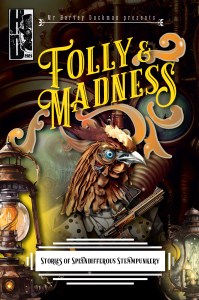
However, the Harvey Duckman Anthologies with which I am deeply associated have been asked to do a Steampunk only anthology to be released at a Teesside steampunk event in November. While steampunk has always been one of the main genre’s associated with the series we have never planned a single genre book before so this is quite exciting… Luckily for the editorial team there is a resident ‘expert’ on steampunk on the staff. Unfortunately for me I’m the resident ‘expert’, may the bearded skygod of your choice help us all…
This had led to me having to ask myself the question “Steampunk Fiction, what is it?”, somehow “Whatever you want it to be” doesn’t strike me as an overly helpful answer… Perhaps I need some bullet points…
Steampunk fiction, what is it? A brief guide :
Set from the early 19th century up to the early, pre WWI 20th century or in an equivalent society
Societies technology should be primarily based on steam power and/or clockwork
The hero’s and heroine’s should be Gentlefolk of a cultured middle class or above
The use of course language should be restricted, instead use ‘Gosh, Golly, Blast it man, I say…. etc’
There should be no discussion of things below the waistline and above the ankle, frankly ankles should be avoided if at all possible.
Hero’s should be dashing, heroines where required plucky.
Villains should want to tear down the empire. The preservation of which is the primary concern of the hero/ heroine.
There that’s all nicely sorted out then isn’t it, time for tea and cake, anyone for a slice of Battenberg?
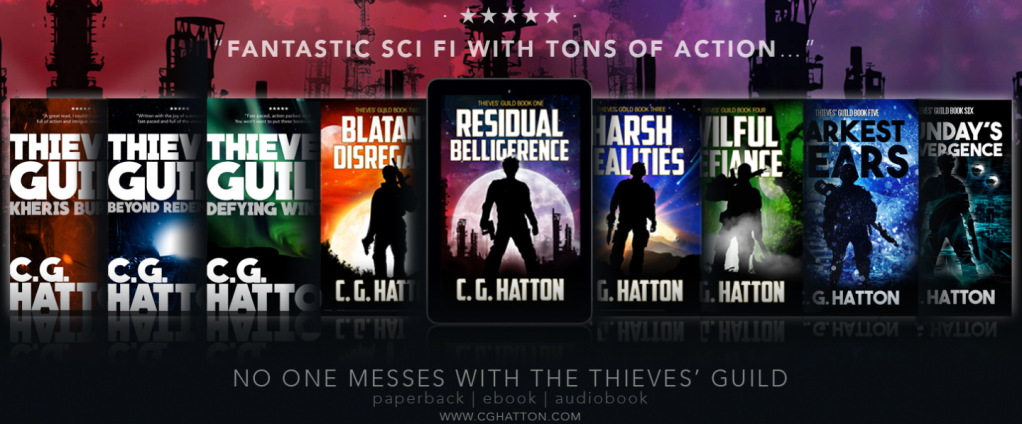
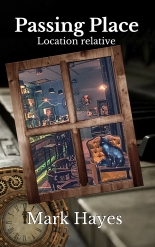
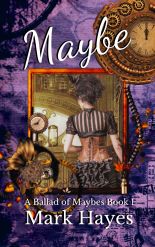
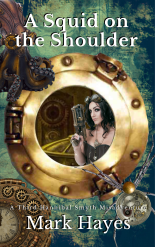
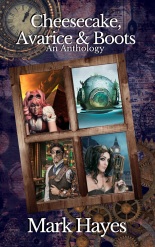
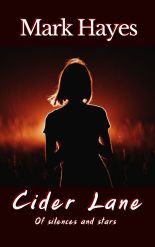
Except, its not. For one thing, one fairly large fly in the ointment in fact, I am for my sins primarily a steampunk writer. As you can plainly see from the picture above four of my novels and a collection of short stories are set in the same steampunk universe…. Two separate trilogies one set 150 years before the other… So do these rules apply? Well…
Hannibal is not a gentleman, he is a guttersnipe with aspirations. If he is dashing it is normally in the opposite direction to danger if he can help it. He uses coarse language all the time, I mean all the time, indeed he tends to pick up on rather a lot of foreign swear words while he is at it. He is more concerned with preserving himself than the empire, indeed he actively works against the interests of the crown much of the time. As for things above the ankle and below the waistline, well if I was to be polite I would say ‘he is a great admirer of the female form’ as its better than saying he is a lecherous swine. His trilogy is set at the back end of the 20th century and as for technology well Hannibal doesn’t really understand how anything works which is a convenient way to avoiding dull explanations of how the nano-clockwork spider in his eye actually works, what powers the airships, and how the engines work on Jules Verne’s submarine.
So our ‘Steampunk fiction, what is it?’ list basically doesn’t apply to my main steampunk characters series. Oh, and he hardly ever mentions cogwheels… Yet I am, I think it fair to say, pretty much as much a steampunk writer as it is possible to be. Most of my novels are steampunk, and I doubt anyone reading them would disagree with that.
And you know what, I am happy with that, just as I am happy with other people’s visons of steampunk being different from mine. My other series ‘A Ballard of Maybes’ ticks a far more of that list but still steps outside those boundaries. If someone what to write a steampunk story that fits in with that list then more power to them, indeed I look forward to reading it. But as far as the Harvey special is concerned and me in general, I want to be surprised and astounded by as many different visions of steampunk as possible.
Steampunk is a broad church, or sunken temple, or mad cult of star spawn worshiping loonies…
It can be airships on Mars, it can be sinister clockwork mice and druids on steamrollers, it can be a hand-job in Calcutta from a psychopath with great legs and razors for fingers, it can be a Polynesian engineer and the search for the fountain of youth with a walking corpse. It can be nothing above the ankle or below the waist with manners, tea and crumpets. It can in fact be anything, as long as it’s splendid and silly and wonderful. Even when its dark and grim…
So lets fix that guide a little shall we…
Steampunk fiction, what is it? A brief guide version 2:
“It’s whatever you want it to be..!”
So there you go, If you are interested in trying your hand at a short story fro this project consider that your brief… The Harvey Duckman’s Splendiferous Steampunk Special is open for submissions from now until probably September.
Harvey Duckman Anthologies in general, I should add, is always open for submissions…
You can find details of how to submit and the submission rules on the Harvey website. Note, occasionally we don’t actually apply rule 2 but it is there for a reason… probably.
When I write, I write to music. I have in fairness mentioned this before, but these posts seem surprisingly popular for what amounts to Mark’s favourite obscure bands and musicians, so what the hell here is another little collection of musical joy.
The music changes, depending on mood, and what I am writing. Often times the music influences the words, not so much on a individual basis but in sense of place, emotion and feeling. So sometimes the right music is needed for what I am attempting to write. As it hard to write intense emotion while listening to Aqua singing Barbie Girl…
I am glad to report I have still never deliberately listened to Aqua singing Barbie Girl…
Usually I choose what I listen to, and let it just slip in the background but on occasion I just stick on You Tube and let it throw music at me with the joy of algorithms. This can lead to odd choices and chance discoveries and occasionally unexpected joys of discovery, or rediscovery.
Just about every time the algorithm spits out anything by Unwoman for a start, though she is a fixture of my playlists these days… but sometimes one must wander through the temple
But then there are the more delightful and unexpected ones like this by The Edan House.
For those unaware of them, The Edan house is a collaborative musical project, best described as Progressive melodic goth, started by Stephen Carey (This Burning Effigy) that includes among many others Simon Hinkler (The Mission), Julianne Regan (All About Eve) Tony Pettit (Fields of the Nephilim).
I have two of their album and never remember to play them because who remembers to play albums these days, but they are fabulous.
Finally, since this is a post about joy that started with singer and cellist Unwoman I’ll round this off with another cellist though this one ‘play it wrong’ though does so in a delightful way.. With The Dead South, a band playing their own version of Bluegrass country, despite been from a little way north of the Mason Dixie line.
Oh did I say finally…
Well finally apart from this sort of ‘cover version’ of Jeff Buckley’s Hallelujah… Praising a slightly different deity. Because sometimes the star’s just are right…
To write a parody requires that an author treads a fine line. A good parody is as much a celebration of another’s work, as it is a shot across the bows. A good parodist strives towards their art with a love of the source material, rather than seeks to merely lampoon. Bad parody on the other hand tends more towards the mean spirited and on occasion seeks to be offensive for the sake of causing offence.
The latter of these is where some critics believe Dear Edgar’s ‘A Tale of Jerusalem’ falls, and it is cited as an example of why Poe earned a reputation as a mean spirited and harsh, even venomous, literary critic. Indeed, his reputation as a critic was far greater than his reputation as an author in his own right for the majority of his career. A reputation he certainly earned, and which made him less than popular among his peers. However to dismiss ‘A tale of Jerusalem’ as nothing more than a mean spirited parody is far too easy.
First off, a little context. You can’t call something a mean-spirited parody without knowing what is being parodied in the first place. This is something of an issue and rather prosaic, because the chances of a modern reader having read the novel being parodied are virtually negligible. Horace Smith’s 1829 novel, ‘Zillah, a Tale of the Holy City’, has been effectively out of print for over a century and a half despite it being a popular novel of it’s time. Popular enough to be a subject of Parody by our own Dear Edgar.
Thanks to the wonders of the modern age, the likes of The Gutenberg Project and industrial scanners ‘Zillah, a Tale of the Holy City’ has actually been brought back to life. You can track it down for free on google books if you so desire. You can even get ‘copies’ of the novel in paperback via the great south american river corporation, as some enterprising individual, of dubious moral’s, has recreated it using poor quality scans of the original printed text, thanks to the broad pretext of intellectual ownership allowed by public domain and copyright laws. Not that there is anything wrong with doing that but they could at least actually typeset the book and done a proper modern edition, rather than the bare minimum in the hope of a fast buck…
Despite its internet age availability, judging by the number of reviews its hasn’t received on any of the platforms it currently lingers in the half life of zombie availability, it is probably a safe bet to say that next to no one has read this once popular novel in years, in much the same way no one will be reading Dan Brown’s inexplicably popular novels of the 1990’s in a hundred years time…
Least-ways, we can hope…
Smith’s novel, ‘or more correctly novels as it is in four volumes of 380 odd pages a piece,’ you can reasonably say, hasn’t really stood the test of time. its parody however is still around because its author went on to write bigger and better things… It would however be unfair to review this short story without knowing the source material. Thus I have of course sat down and read all 1463 pages of Mr Smiths grand opus set in The Holy Land fifty years before Christ amidst the Roman invasion and later occupation…
Except of course I didn’t, it sounds dreadfully dull and frankly I’ll pass. In stead I decided to read a synopsis on line, which I couldn’t find as no one has read the book for over a century and a half, about the best you get is this…
“Zillah: A Tale of the Holy City” follows the adventures of a Jewish girl in Jerusalem during the 2nd Temple era.
Not a glowing indictment of a novel effectively longer than Wart and Peace is it… But back to Poe.
As is the way of parody Poe lifted the basis of his story directly from the novel. Characters, though names were altered, are recognisable to readers of the original, as indeed are whole sentences lifted from the original text… Of course having not read the original text I have no idea which ones but what you gonna do? However as the original was still a poplar novel when this story was first published the original readers were very much in on the jokes, in a way the modern reader is not…
That said, the basic story and importantly the subtext remains funny, in the way Monty Python’s Life of Brian is funny. Indeed it is not difficult to imagine Mr’s Cleese, Idle and Palin playing the three principal characters and doing so virtually word for word in a skit that would slot straight into the movie. How much of that is the original intent is another question, but the exert below highlights this…
“Thou forgettest, however, Ben-Levi,” replied Abel-Phittim, “that the Roman Pompey, who is now impiously besieging the city of the Most High, has no assurity that we apply not the lambs thus purchased for the altar, to the sustenance of the body, rather than of the spirit.”
“Now, by the five corners of my beard!” shouted the Pharisee, who belonged to the sect called The Dashers (that little knot of saints whose manner of dashing and lacerating the feet against the pavement was long a thorn and a reproach to less zealous devotees- a stumbling-block to less gifted perambulators)- “by the five corners of that beard which, as a priest, I am forbidden to shave!- have we lived to see the day when a blaspheming and idolatrous upstart of Rome shall accuse us of appropriating to the appetites of the flesh the most holy and consecrated elements? Have we lived to see the day when-“
“Let us not question the motives of the Philistine,” interrupted Abel-Phittim, “for to-day we profit for the first time by his avarice or by his generosity, but rather let us hurry to the ramparts, lest offerings should be wanting for that altar whose fire the rains of heaven cannot extinguish, and whose pillars of smoke no tempest can turn aside.”
The basic premise of this story is that it is set Jerusalem in around 50BCE. The King David’s at the time was under siege by this bunch of upstarts known as the Romans, and the Romans are doing what Romans do best and starving out the population. However Simeon, Abel-Phittim, and Buzi-Ben-Levi, three Gizbarim or ‘sub-collectors of temple offering’s’ or low level functionaries at the Temple, have managed to strike a deal with a roman to ostensibly to secure an animal for sacrifice. The Roman is to be paid thirty sheckle’s to send up an animal for sacrifice in a basket.
A sheckle at the time was a mid weight Hebrew coin made of silver. So that’s thirty pieces of silver… I suspect there is a subtext there, due to the large sign saying SUBTEXT, and that someone is planning to betray someone…
Our three ‘holy’ bureaucrats of course most vehemently deny to each other and anyone in listening that the ‘sacrificial’ beast they are purchasing with the temples money would in any way be used for anything other than sacrifice. It would be a betrayal of everyone trapped in the city if the three were planning to feast upon the flesh of an animal destined for holy sacrifice. Many are starving within the besieged citadel… No, it will go to the knife and its life’s blood be drained for the glory of the lord and then it will be roasted over a… sorry… ‘burned on a temple fire’. Eating the freshly roasted flesh of a sacrifice is certainly, they assure anyone who might be listening, not a perk of the job…
So our motley bunch of temple functionaries take the thirty pieces of silver, and send it down in a basket through the early morning mist to a Roman legionary below who takes the silver as agreed and sends up a beast back up in the basket to them…
Of course doing all this must also be risky for the Roman, he can’t be seen to be taking a bribe or feeding people in the city they are besieging. But as the three Bureaucrats have assured him it will not be eaten, ‘no definitely not’, ‘not it is for religious purposes only, honest’ . Well if you can’t trust low level bureaucrats who can you trust… Honest folk these Hebrew priests, clearly… But, well, best to make sure and keep them honest, so his Centurion doesn’t take the hump. There is after all one beast he can send up to the Jewish citadel in a basket and be safe from sanction…
The story ends with the three Gizbarim discussing what kind of beast the Romans have provided for them to ‘sacrifice’ for their thirty pieces of silver as they pull the basket back up through the morning mist…, A succulent spring lamb perhaps, or maybe its a fatted calf perhaps… ‘Oh, it will be a tasty… erm … fitting sacrifice, yes yes a fitting fresh tasty meaty sacrifice… What was that a bleat, a moo… or ….’
Roman’s, honest as the day is long, you pay them for an animal for sacrifice that’s what you get. Not a swine among them… In the basket however.
Now this is a short tale, its fairly verbose, all the more so as Poe incorporated phases and whole sentences from Horace Smiths novels, which added to the humour value for the original audience no doubt. But does it stand up to the test of time,this parody of a novel long forgotten by the world? Well surprisingly yes its does, its short, witty, full of subtext and the punchline hits home perfectly. It’s not overly subtle but its not intended to be, and as story you can read in minutes it is well worth your time. Sure you’ll forget most of it ten minutes later, but as a bit of pure entertainment it does it’s job, in the way the first two stories of the Evening Courier quintet don’t. On a basis level it’s just funny and silly, smart, well levelled fun at that.
Of course the question really is how much of that is Poe and how much is what he ‘borrowed’ rather directly from the long forgotten Horace Smith. But still it gets …
FOUR RAVENS OUT OF AN UNKINDNESS, OR, ALMOST A FLOCK…
Should your read it: If you have ten minutes to spare and want a story to make you grin and grimace in equal measure, yes.
Should you avoid it: There is an argument that has been made that there are aspects of racism within this tale. But frankly I don’t see it, it is no more racist than the life of Brian. So if Monty Python offends you avoid it… But really, come on now… Try and look on the bright side of life…
Bluffers fact: At one point in the story a list of Philistine deities comes up, one of which is Dagon, a half man half fish giant… No one has ever used that deity in a work of fiction since, I am almost sure… Apart from my old friend Howard… Lovecraft was of course a huge Edgar fanboy, and while he was fastidious with his research, he was not above borrowing from Poe in much the same way Poe borrowed this story from Smith…
French, it was the Lingua Franca of the early 19th century, the language of trade, of science , of advancement and enlightenment, much as it had been in the 18th century. It is also where we get the term Lingua Franca from in the first place.
Most everyone spoke at least a smattering of French, while professional men were required to be able to read and write it with reasonable fluency. This may also have been true of a great many ‘professional’ ladies, for French was the language of romance, love and you could charge an extra shilling or two for your charms if you could whisper sweet nothings like a Parisian born, or at least say Ola-La in a vaguely convincing way, which is a well established ‘fact’ thanks to all those scenes in hack westerns set in frontier brothels…
Those same hack westerns would led you to believe that only suspicious plantation owners and occasionally slight poncy individuals trying to appear clever, and working girls ever spoke any French, but actually it remains the third most widely spoken languages in North America. While in Poe’s time it was spoken far more widely. Thus when Dear Edgar’s ‘The Duc de L’Omelette’ was published in the Philadelphia Saturday Courier, the fact than it contained more than a mere smattering of the language would be less of a hindrance than we might otherwise assume.
This was also only a generation after the Louisiana purchase, much of the deep south and mid west up to and including parts of Canada had been French territory less than thirty years before. Though admittedly much of that territory had been French in name only and still rightfully occupied by indigenous peoples at the time.
So French in the 1830’s remained both widely read and the language of intellectualism. Thus putting a smattering for French in a short short, particularly if that smattering of french is where you put all the jokes, makes a story look smart and intellectual as humorous…
At least, I suspect, that is what Dear Edgar and the publisher of the Philadelphia Saturday Courier thought in 1832…
The Duc de L’Omelette is the tale of an aging French aristocratic, the original title being The Duke of Le’Omelette. As with Metzengerstein, it was first published without its authors name and the title was changed for later editions, Duc being the French for Duke. The main reason for the change of title was presumably because the original title was not pretentious enough.
The story begins with the Duc dying while dinning upon an Ortolan. After which he finds himself in a finely furnished apartment belonging to the devil. Cast as he is, straight down to hell. Now for a little context let us talk about what he was devouring when he died…
An Ortolan is a small migratory bird not much bigger than a sparrow. For centuries if they are unlucky they get caught crossing the Pyrenees on there way down to Africa for the winter by the local mountain folk in large nets. A practise which has led to a French delicacy from the people who brought you frogs legs and escargot The captured Ortolan’s are caged and kept in the dark. They react to the absence of light by gorging themselves on grain or millet until they are so fattened they could no longer fly if released. Not that they are released… Instead they are then drown in Armagnac Brandy, then roasted for eight minutes before being plucked. They are then served to be eaten whole by lowering the bird into the dinners mouth, feet first. The traditional dinner on such a fayre also wears a towel or napkin on their head while doing so. No one is entirely sure why the towel is required…
Also, spitting out the bones afterwards is permissible, but it is more proper to swallow them as well. Occasionally however there is some justice to the universe and a dinner on this delicacy will find themselves choking on a hard to swallow bone. This is of course terribly sad, because most of the dinners don’t…
This then was how the Duc died, choking on the bones of a small bird that had been force feed then drown in brandy for his culinary delight. He is surprised, all the same, when he finds himself in Lucifer’s palace contemplating the roaring fires of hell. Naturally his first thought is not of remorse for a life of sin, let alone remorse for eating the Ortolan that killed him. Instead he contemplates how he might best avoid his fate. Luckily for him it appears the devil has a taste for games of chance, specifically cards. Something the Duc has a fondness for himself.
The Duc is also something of a cheat, which is the kind of thing that can lead to damnation in the first place yet apparently Old Nick is not sharp eyed enough to spot he is being cheated.
Humour ensues…
Or rather it probably does if your were reading this story in 1832, had a good foundation in the French language, and didn’t need to use googles translate to figure out what was going on. I say this because most of the punchy lines are in French and translating them on the fly to make sense of it all somewhat robs the story of any impact. Like this bit below I have translated…
cet oiseau modeste que tu as deshabille de ses plumes, et que tu as servi sans papier!
this modest bird which you stripped of its feathers, and which you served without papers!
This story is by repute one of Dear Edgar’s better pieces of humorous endeavour. Which may well be true though I hope not as I personally struggled with it, mainly because of all those lavishly imparted lines in French. I can see why he has put them in there. I understand that the French language was the original Lingua Franca and the language of the intellectual in the early 1800’s. But I don’t read French, I don’t even have a schoolboys smattering, because I ditched the language as early as I could.
Dyslexia and foreign languages doesn’t mix well and there were better uses of my time at school I thought…
In the end the Duc beats the devil in a game of chance and pontificates with some arrogance upon doing so. Frankly though I didn’t care, which is the problem. Hoping between languages makes it the story awkward and drags my interest away. In the end it is neither not funny nor interesting, it is at best a mildly dull that is a tad fatuous… It’s main character is equally fatuous and that he gets away with cheating the devil at cards and thus saves himself from hell just doesn’t sit well as a story.
But besides all that when it comes down to it, while I am not a veterinarian by any means, I find it hard to sympathise with anyone who puts a towel on their head to eat a bird that’s been force feed and drown in brandy.
You can call me picky about this, but C’est La Vie…
ONE RAVEN OUT OF AN UNKINDNESS
Should your read it: Do you have a good grounding and comprehension in the French language, because if not. I would give it a miss.
Should you avoid it: Apart from the culinary habits of the french there is nothing offensive here and frankly it doesn’t go into any details, which is probably for the best, I mean who wants to read about drowning force fed birds in brandy…
Sorry about that.
Bluffers fact: The eating of Ortonlan’s, the ‘feast’ that killed the Duc, is illegal in the EU and as such in France. The french government enforce this ban with stiff fines, they never impose. It is illegal to buy a meal of traditionally prepared Ortonlan anywhere in France. It is however perfectly legal to buy a single glass red wine for and outrageous 500 Euro’s and to be give a complimentary aperitif that happens to come complete with a towel to wear on your head while you consume it.
50000 of these birds are captured each year in the Pyrenees…
CG Hatton is a writer of anti-military military scifi. I have waxed lyrical about her novels for years and I have been patiently waiting for book 7 of her main series and in no way tapping my foot… CG is not the first CG Hatton to write, a distant relation Cyril Gertrude Hatton was both a writer and a pirate who sailed the Spanish main in the 1600’s. Cyril was as much an explorer as a pirate, made his own paper from tree bark and monkeys droppings, upon which he wrote detailed descriptions of native wild life in the West Indies, and their uses in the interrogation of Spanish sailors.
Original photo of Cyril ‘Gertrude’; Hatton on the Spanish Maine 1632**
Historian and Piratologist Dr Anne Forsdyke, self-proclaimed authority on the first CG Hatton published a paper on the ground that ‘Yes Gertrude’ is a strange name for a bloke, thats because Cyril was an assumed name and Gertrude was her real name and she only passed herself off as a man to be accepted as a pirate. ‘
Other historians dispute this claim on the grounds that ‘No woman could ever be so blood thirsty…’
To this Dr Anne Forsdyke responded ,’ Oh? You think so do your matey.’ brandished a cutlass and gutted three of them before she was restrained by a brave member of the Geology department.
Miss Forsdyke is now doing fourteen to life in a secure women’s unit at Broadmoor and the mystery of Cyril’s middle name remains unresolved, But by strange and uncanny coincidence the ‘brave member of the Geology department was one Dr C G Hatton, who later went on to write military scifi. What follows is a guest blog post by her.*
*some of this introduction may be made up, but not all…
** Photo may be a fake as photography hadn’t been invented in the 1600’s , or proof of time travel…
WRITING ABOUT A FAR FUTURE WAR WHEN WAR IS RIGHT HERE NOW…
As anyone who knows me knows, when I finished LC’s first book, Kheris Burning, I almost didn’t release it.
It was too close to home, too close to what was happening for real. My story of kids living on the streets of a war torn mining colony in a far off future, with tanks on every corner and soldiers patrolling the bombed out buildings, suddenly felt way too close to what was happening in Syria at the time. It wasn’t intentional. I hadn’t planned it that way. I’d always known, way back even before writing Blatant Disregard, that LC had grown up in a war zone. When he came to finally tell his story, those one line flashbacks from Book Two came to life all on their own.
And now, as I am finally getting to grips with Book Seven, I have NG facing the reality of invasion… standing against an enemy that cannot be reasoned with, that will not accept failure, that cannot be beaten… as, in the real world, we all watch the unfolding events in Ukraine.
I don’t write about war to write about war. I write military science fiction, but my heroes aren’t soldiers, at least they don’t want to be. Personally, I struggle with rank, and orders, and uniformity, and conformity… (that’s why I’ve never been able to hold down an ordinary job for long) and so do they. I write the stories of the guys on the ground, who want to be invisible, who don’t want to fight, definitely don’t want to lead, but find themselves facing enemies at every turn with everyone else looking to them for answers, for a way to find safety and stability, against a foe that will not ever stop. And I love that they don’t hesitate to step up to it, albeit reluctantly.
It is true that sometimes reality is stranger than fiction. As writers, we sometimes don’t go looking for inspiration, but we find ourselves embroiled in storylines we started writing years ago, that resonate now louder than ever.
One of my favourite comments on Kheris, and one that made me glad to have released it after all, was that it is ‘both a joyously fun read, and a window into the darkest corners of the real world’…
I hope I can pull it off again with this latest book.
If you haven’t read Kheris Burning yet, I have some free Kindle copies to give away and some free promo codes for the audiobook from Audible. Give me a shout if you’d like one xx
An internet friend reminded me the other day of an important lesson we all need to take on board and remember. When I say all I am talking about 49.9% of the population though the core message applies to us all. It is a message I have addressed more than once in blogs over the years and on occasion in other writings both fiction and none fiction. It occasionally even comes up in subtext in my Hannibal novels, but in the most recent novel ‘A Squid on the Shoulder’ in one chapter it moved beyond subtext.
I reproduced some exerts from that chapter here, because the central message is I feel an important one. This first section is really just to add some Context to what follows:-
Yet once again, somehow, I’d survived when so many others had not. This struck me as absurd.
Why did I, of all people, keep surviving these things…?
I don’t believe in fate. I don’t believe in some higher power guiding our lives. Saving perhaps she who resided on the throne of Great Britain, who’d been the only higher power in my life. Old Clockwork Ticker mightn’t be a living goddess, as some mad gin-sodden fools like my old mum chose to believe, but she may as well have been. The empire Britain rules in her name shapes the lives of billions within its boundaries, so call her a higher power if you will, but old Sticky Vic doesn’t shower favours on the likes of me. As for god, well, if there is one, it has always struck me that his ineffable plan is too damn ineffable.
Hannibal is not in the best of places at this point, as you may guess. Things have happened and he is it is fair to say a little distraught. Which leads to an excess of engine room gin and some deep soul searching on the subject of what a chap does and doesn’t do. These excerpts are part of a longer narrative obviously but the bits I have pulled out express what I believe to be an important truth, which is why feel they perhaps need to see a larger audience than just those who read my often quite silly steampunk novels…
A lot of crap is spoken at times about chaps.
‘A chap doesn’t cry,’ they’ll say. ‘A chap doesn’t bare his soul and weep like a baby,’ they’ll add for good measure. But what they really mean is ‘A chap doesn’t do that in front of another chap…’ It’s part of the code. It’s part of what’s expected, because they are told, as we all are told, ‘A chap keeps a stiff upper and doesn’t blub…’
Hettie, as I have said before, was in many ways a chap. I mean, obviously, she wasn’t a chap, but she was more a chap than most chaps could ever aspire to be…
And another thing they say is ‘a chap doesn’t break down in front of another chap,’ no matter how much a chap has had to drink. No matter how black the day. No matter what burdens a chap is shouldering. No matter what.
A chap soldiers on and the most you should expect from another chap is for them to tell you to buck up and behave like a chap ought to, because it’s just the done thing. A chap, that is, a man, well…
What it comes down to is a man doesn’t cry…
Hettie didn’t say a word, just sipped her drink and sat across from me, head bowed, not encroaching on my despair. Like a good chap does. Even a chap who is not a chap…
Hettie also didn’t say a word when I started to weep.
Call it exhaustion, mental and physical, after all I’d been through in the last few days. Call it delayed shock. Call it the drink. Call it whatever you want. I sat there and I wept, tears streaming down my face, utterly distraught… And Hettie didn’t say a word, she just sat there with me, like a good chap does. Even a chap who isn’t a chap.
I wept.
And then Hettie put down her glass, picked up her chair, moved it next to mine, sat down again, put her arm around my shoulder and pulled me down onto her chest. And then she just let me get it all out, all that pent-up emotion, all the fear, all the horror, all the anxiety and dread. She let me just open the flood gates and empty the dam.
And all through this, Hettie didn’t say a word. She just sat there with me, like a good chap does.
Even a chap who isn’t a chap.
Because when it comes down to it, a good chap, a real chap… Well, a chap like that knows that all the horse shit that is said about what a chap does and doesn’t do is just that, so much horse shit. Chaps sometimes need to weep, and chaps sometimes need another chap, even a chap who isn’t a chap, to just sit with them and let them do so. Without all that ‘A real chap doesn’t do this’ nonsense.
And you, dear reader, perhaps expect me to make a joke round about now, some irreverent witticism, some callow remark, some off-colour observation about resting there on Hettie’s chest…
But no… Not this time.
Hettie sat with me, held me, and let me get all the welled-up guilt and sorrow of the survivor out of my system, and never said a word, because there was nothing to be said.
And afterwards, once I’d gotten it all out of my system, once I had moved past it all, once I was once more my usual callow self-involved self, Hettie still never said a word about it.
Because a good chap, even a chap who is not a chap, but is more a chap than most chaps will ever be, a chap like that knows when nothing needs be said. Instead, they just offer a smile of understanding, that nod of recognition that you need at that moment, and says nothing afterwards when that time is past, because nothing needs to be said. Instead, they’re just there for you, in that moment when you needed them to be.
And sometimes a chap who is a chap, and a callow, bitter, sarcastic, swine of a chap at that, sometimes a chap like that just needs to know that someone gave enough of a damn to let them not be a chap for a while and just be a hurt, scared human being hiding in the darkness from those fickle gods of fate that chose to torment our souls…
Excerpt from ‘A Squid on the Shoulder’ Chapter 6
This is just a piece of fiction. I don’t pretend it is in any way deep or profound It does however have an important message its heart, at least one that is important to me. That being that sometimes a man needs to be able to weep, or talk, or just throw down the walls that society expects them to have and not hide there fears and feelings.
I say a man, it all equally applies to women, but women tend to find such things easier, or at least society doesn’t expect them to ‘bottle it up and crack on’ in quite the same way.
If you find yourself being the Hettie for someone in this situation, that is to say the friend that someone turns to, then sometimes all it really takes to help them is being there. Being there to listen more than anything. Being there when they need someone to just be there, is the simplest and yet most important thing of all, You don’t necessarily need to say anything, though that doesn’t mean you shouldn’t if you think you can say something that helps.
And, if you ever find yourself needing a Hettie, no matter whom your Hettie or Hettie’s for that matter happen to be, never be afraid to reach out. Even if your Hettie is a grumpy ageing goth and Yorkshire-man who occasionally tries to string some words together in a meaningful way.
And never, ever, buy in to the idea that there are things a chap just doesn’t do…
In 1832 a now former Sargent Major in the United States Army had almost reached the age he’d claimed to be on his enlistment forms four year earlier. Why he lied about his age when joining the army is a bit of a mystery as he was 18 at the time but while he was at it he also lied about his name, the recruitment papers stating it as being Edgar A Perry.
During his time in the army Edgar managed to publish what became the first of several poetry collections. This first collection was about as successful as poetry collections from unknown poets tend to be which is to say it had a print run of 50 copies and there was only ever one print run. There is probably an attic somewhere in an old family home that still has 38 of them tucked away in a cardboard box…
Edgar A Perry left the army, by finding another man to cover the remainder of his enlistment term, and then promptly went to West Point to train as an officer cadet but not before he revealed he had lied on his original enlistment papers. His cohort of clearly got on well with him as they helped effectively ‘crowd-source’ a print run of a revised 2nd edition of his book of poetry, with many of them giving 75 cents each to get him up to the total of $170.00 he needed to do a new print run.
From which we can determine that the ‘crowd-sourcing’ poetry books is not a new idea, and 19th century US officer cadets are fans of obscure literature. That one of the poems lampooned West points commanding officers may have had something to do with this. Sales were again much what you might suspect for an obscure volume of poetry written by an obscure poet and another cardboard box of books is doubtless in an attic of a former Poe family home somewhere…
In 1832 however, now disowned by a father who was too busy spawning the plethora of Edgar’s half-siblings, and having buried recently his legitimate elder brother who died of complications brought about by alcoholism, the unsuccessful poet had his first real publishing success when he submitted a bunch of stories to a writing contest held by The Philadelphia Saturday Courier. Five of his stories were published over the course of the next year. This then was the beginning of the literary career of the most influential writer of the early 19th century. Arguably one of the most influential writers there has ever been, because the former Sargent major Edgar’s real surname wasn’t Perry, it was Poe.
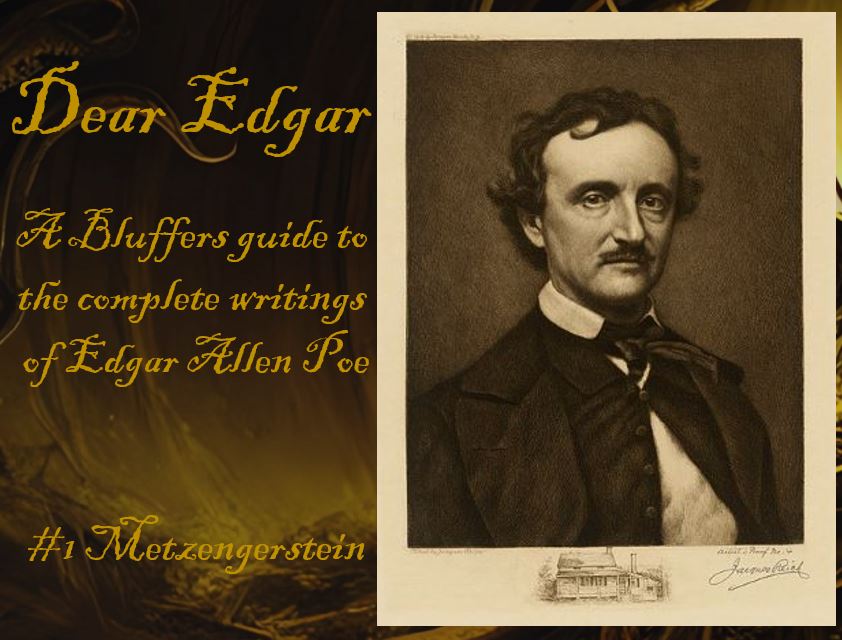
That first published story was Metzengerstein: A Tale in Imitation of the German.
‘Metzengerstein: A Tale in Imitation of the German’ is a bit of an odd duck. As is that full title the second part of which was added four year later when then a relatively successful Edgar Allen Poe building a reputation as a writer agreed to it being republished in the Southern Literary Messenger. German horror literature was popular at the time so the addition of the subtitle is one suspects a publishers gimmick and how much input Poe actually had with the subtitle is debatable. It certainly disappeared again when Poe added the story to his 1840 collection Tales of the Grotesque and Arabesque, or more correctly in Volume 2 which wasn’t quite as popular as the first volume. It not having the one about the collapse of a noble family line in it.
Noble lines are however very much central to the plot of Metzengerstein. The Metzengerstein’s of the title and their rivals the Berlifitzing’s. the two Hungarian noble houses have been at odds for generations, since at least one of them with more than a little Moorish blood in the mix… The exact cause of dispute between them is, we are told, lost to history. Though there is a tapestry which seems to suggest a beheading in battle or two may have been at fault. Which just goes to prove that the instagram of the medieval period was apparently as forgettable as the modern equivalent, because even with the tapestry right there no one can remember why the two noble houses hate each other…
There is however an old prophecy:
“A lofty name shall have a fearful fall when, as the rider over his horse, the mortality of Metzengerstein shall triumph over the immortality of Berlifitzing.”
A prophecy’s go its a tad vague, but then vague is generally what you expect form a good prophecy about two ancient noble houses. Though Poe moves heaven and earth to make this tale fit around the prophecy in the end.
The current Baron Metzengerstein, is a young reprobate called Fredrick, while his opposite number Count Berlifitzing is an old man clinging to life in the ruin of his family estates. The Berlifitzing family is at the end of long years of decline while the Metzengerstein’s have being long in the ascendancy. The current Baron however came to his title young and started laying wasting to the family fortune as fast as a teenager left alone in the family home for the weekend with a key to the drinks cabinet lays waste to the Pernod…
Then comes the night old count dies and the Berlifitzing family stables burn down the same night. the young baron, is examining an old tapestry while well into his cups and he sees one of a great unnatural seeming horse, at the murder and betrayal one of the Counts ancestors by one of the Barons.
Then things get a bit weird. Fredrick witnesses the tapestry burn, but only the bit with the horse in it. Then a horse is found that the Berlifitzing stable hands swear is not one of theirs, though it clearly appeared when the stables burnt down, and Fredrick develops something of a equiphilic attachment to the beast. Which may or may not be the old count reincarnated into an adult horse… And this eventually leads to the tragic end to the tale…
It is all a little odd, which is fine… But it is also a story that’s odd because it isn’t quite sure what it is, or to be more exact the reader can’t be entirely sure what it is. The other stories that followed it in the Saturday Courier, all of which he wrote at the same time, were satirical humorous affairs, and there is much of this tale that could be perceived as satire. Yet if that is the case it is a somewhat poe-faced satire, as opposed to Poe satire.
It is also a horror story with little in the way of horror to it. What horror there is, is visited upon or witnessed by the young Baron, whom is not a character it is easy to sympathise with. Sure it is harsh to say he deserved to bare the brunt of this climax to a multi-generational rift between noble houses, but he’s an unlikable brat who treats his servants like… erm… servants.
There is a case, made by those reading this tale from an academic lint, that this is all an allegory, to do with the relationship between family’s and generations, or that it is autobiographically inspire and to do with Poe’s relationship with his step-father… Except Poe reputedly despised allegory as a literary form, and as for the autobiographical element… well lets just say its a stretch shall we.
In the end its is much of a nothingness as a story notable mostly for being Poe’s first to see print and because Rudyard Kipling notes its inspire him to write ‘The Phantom Rickshaw’ which is in turn most notable as being the title story of a collection that included ‘The Man Who Would Be King’ which later inspired the movie of the same name… This is a somewhat thin claim to fame for a story.
Metzengerstein also inspired a song of the same name on the ‘Theatres des Vampires’ album ‘Horror Masterpiece’ which is… well Italian Industrial Goth Vampiric Black Metal is surprising as it may be to some readers not really my cup of lukewarm blood.
That said the next track on the album is a cover version of Aha’s ‘Take on Me’… Which is unique in its own kind of wonderfulness. Also my cousin Jane decided she hated Aha back when the original came out because Morten Harkat looked very much like me in the mid 80’s (when I wasn’t in black eyeliner and going down the Phonograthic) But lest not delve into the insanity of the late 1980’s and stick with Poe shall we..
In the end this is not Poe at his finest, but then I wasn’t really expecting it to be, first stories seldom are and all I really wanted was a bench mark. As is traditional I am going to score each tale, but as tentacles is so Lovecraft and last year as a measurement of awesomeness I will instead be marking Poe’s stories out of Ravens. In this case just a couple, which is not much of a gauge I know but you have to lay down a bench mark somewhere…
TWO RAVEN OUT OF AN UNKINDNESS
Should your read it: Well its not going to keep you up at night, make you laugh or make you particularly thoughtful so you can give it a miss I suspect
Should you avoid it: No reason to do so beyond it being a bit dull ( unlike Italian Industrial Goth Vampiric Black Metal which is probably best avoided )
Bluffers fact: While Metzengerstein was indeed published by the Saturday Courier after it was entered in its writing competition. It wasn’t actually the winner. It was also originally ascribed to that most notable of writers Mr A Nominous, unlike the rest of the Saturday Courier stories which carried Poe’s moniker.
About a year ago I published a book that started out as a series of blogs in which I read the complete works of HP Lovecraft. A project I started as ‘filler’ posts for the blog. I’d expected the project to take me a year, and be fairly untraumatic, it took five years and there were times I thought it would never be done…
But in the end ‘The Bluffers Guide of The Writings of HP Lovecraft‘ was born and the book has been surprisingly, and no more so than to me, well received. More than a few readers have asked if I have plans do more Bluffers Guides. The simple answer to which has always been no… But I find I sort of miss doing a big blog project and delving into the complete writings of an author was a fascinating exercise at times…
When I didn’t want to raise Lovecraft’s feted corpse so I could shout at him…
The problem is there are few writers who really meet the criteria, which is to say lots of short stories, few if any novels, a complex but wide ranging reputation, but also, importantly, someone I’m happy to devote time into reading. It also has to be someone that people will be interested in reading about, otherwise I am simply writing a blog to myself…
This lead me to Dear Edgar, the writer who most inspired Lovecraft and one who remains relevant today, while often misunderstand and mostly famous for a few of his short stories and one poem in particular about the most fashionable members of the crow family… There is a lot more to Poe than mysterious deaths on the streets of Paris, old clock workings in holes, gossiping organs and the downward descent of noble lines. He wrote humour,satire, gothic horror, science fiction , Romance, adventure, Parodies and even something called Ratiocination fiction…
Sixty six short stories published over a 17 year period from the age of 23 in 1832 to 1849 when he died relatively young at the age of 40. Though he died young, he led an interesting life, not without controversy. His work achieved real fame mostly after his death, before that he was popular mostly in Europe rather than his native US. The real tribute to him is however the influence of his body of work on those who came after him. None other than Sir Arthur Conan Doyle for example credits Poe with inventing the ‘detective’ novel. To this day The Mystery Writers of America Awards are called ‘The Edgar’s’ in his honour.
Jules Verne wrote a sequel to Poe’s ponderously named ‘The Narrative of Arthur Gordon Pym of Nantucket’ a early science fiction story. That other early giant of the Science fiction world HG Wells was equally enamoured with Poe’s fiction.
As for his tales of Gothic Horror, well someone called Howard Philip Lovecraft credited Poe constantly as being his greatest influence… So, if you are looking who to blame…
Frankly though when it came down to it, Dear Edgar is the most obvious choice for a writer to follow up old tentacle hugger… At this point I am looking forward to the journey, or course I sad that five years ago when I started reading the whole of Lovecraft… So I ordered a really nice folio edition of his complete works that should arrive tomorrow… And grabbed a cheap kindle version of the same a couple of nights back
I mean its not like Poe married his 13 year old cousin, had a record of depressions and other mental issues. Once failed to show up for an interview for political office because he was too drunk. died of substance abuse, possibly by suicide, and had a reputation as a scathing critic that led many of his contemporaries to despise him… So he’s a nicely uncomplicated character universally liked…
I am sure I won’t read the first few and then be given to quote the raven… But how often these blogs will turn up and how well this one goes is another story. After all Lovecraft only took 4 years and a lot of rage to get through…
The following is a excerpt from the cutting room floor after being sliced out of my WIP where it was to be the start of the second chapter. It may end up reworked and find itself back in there at some point, but I decided the story need to go else where, but as a central idea I am a tad enamoured with this one. But as King once said, sometimes you ‘have to kill your darlings…‘
The ‘I’ who is speaking in the excerpt is Lucifer Mandrake, magician to the Court of Victoria Sax-Coburg.
Auguries
I am sure you will have read in the less reliable periodicals of the practises of voodoo. In some part magic, in other a religion, oft attributed to the former slave populations of the Caribbean and southern states of the American republic. Lurid tales of priests, and in a certain kind of even less reliable periodical priestess, enacting strange dark rites, raising zombies to do their bidding, entreating with powerful spirits, and naked dancing with serpents… They also tell of those same priests casting auguries by biting off the heads of chickens and letting the blood run into offering bowls fills their own spital and ‘other’ bodily fluids.
The periodicals always say ‘other bodily fluids…’ while clutching at their pearls, I have found.
Such reports are of course wildly exaggerated and ‘colourful’ for want of another word. They expound on these questionable savage rites undertaken by members of a questionable religions of savage origin. No doubt such things delight the readers of such periodicals. It is after all the reason they read them. That and the artist impression of semi naked heathen women dancing with snakes that always seem to be used to illustrate the shocking nature of these acts… It’s astounding, don’t you think, that so many of these acts are undertaken by half dressed young girls, rather than well wrapped up matronly women of a certain age… But I would choose to let you draw your own conclusions as to why that is, and why certain periodicals feel the need to allude to this on the front sheet of there publications.
In actuality, of course, voodoo rites of augury are little different from those practised throughout Europe and indeed the rest of the world for centuries, right back to the roman empire and beyond. Admittedly priest of Voodoo do have a habit of using chickens in their rites of course. but the chicken itself is no more magical than any other source of augury. Voodoo priest use chickens, supplied by those who seek auguries, for much the same reason as Celtic priest used to use rabbits.
I myself have found it perfectly acceptable to use a frying pan and a quarter pound of lard. Place that over a naked flame and throw in a couple of sausages, a rasher or three of bacon, a fresh egg. As for spitting, the only spitting that goes on when I cast an augury is from the sausages.
In fairness, the one element that absolutely must be involved in order to cast an augury is blood. Which is unfortunate. Every thing else your average voodoo priest might do, or at least is reported to do, is window dressing and theatre, but the blood from the chicken, snake or whatever, does matter. Though a little nick and a couple of drops would be enough in all honesty. There is no need to bathe in the damn stuff, and I am quite sure in actually they know this and just nick a finger or something most of the time and keep the chickens for eggs in a coop round the back.
To be frank however, I prefer not to go around cutting myself every time I want to cast a simple augury. Which is why I prefer a frying pan, because if you throw in a slice or two of black pudding then away you go. This particular morning however, I did not like what I saw between the fried egg and the mushrooms, and I don’t mean suspicious black bits that were the charred remains of ancient bacon…
A storm was coming, dark things on the horizon, a great gnashing of teeth, dogs and cats doing unnatural things together. That sort of thing, nothing specific, just general ominous stuff. But whatever was brewing it wasn’t the Earl Gray…
However, on the bright side, while it comes down to the blood and the bacon sausage and eggs are merely trimmings, I like a voodoo priest with their chickens or ancient druids with brace’s of rabbits, need to eat and to be frank a good breakfast sets up for the day.
Lucifer Mandrake originally featured in Mandrake a story in Harvey Duckman volume 8. The charcters world is more Victorian Urban Fantasy than steampunk. It was rather fun and spawned the novel I am in the process of writing which may find it’s way into the world by mid summer.





















 The Passing Place