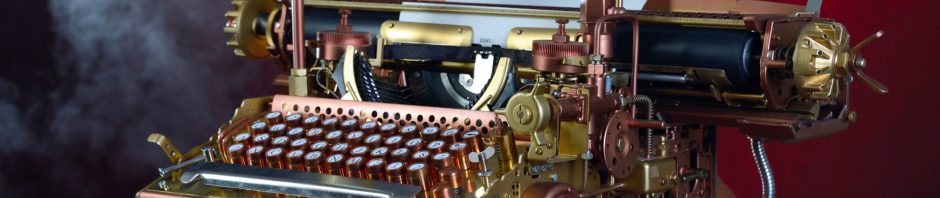
What is Steampunk? A Guest post by Matt McCall

Introduction by Mark.

At the back end of 2014 and running into 2015 I started writing a couple of steampunk novels by accident. What I was actually writing at the time was Passing Place, which is many things but steampunk is not one of them. At some point, in the midst of the forest in the cellar I got stalled, as often happens when I write. I needed a break from explorations of the meaning of existence and the flexible causality of the perfect sandwich, I needed to throw some frivolities at the page, steampunk seemed delightfully frivolous in this regard.

Steampunk is indeed delightfully frivolous, its one of the reasons I find myself drawn to it and the people who inhabit the subculture. It is also a fay thing that flits about and is hard to define…

So anyway, I spent a couple of weeks writing some frivolous steampunk to clear my mind, with no intention of actually doing anything with them, before forgetting about them completely and got back to Esqwith’s and the right way to drink brandy in Paris in 1922 after seeing the phenomenon that was Josephine Baker in her prime…

A year or so later, between edits of Passing Place I needed frivolity again, read back those early steampunk stories and found both Hannibal Smyth and Miss Maybe hanging out in my subconscious arguing about the whole concept of Steampunk, and more importantly what tense they should be written in. (weirdly the earliest incarnation of Maybe was originally written in 1st person, while the earliest Hannibal stories were in 3rd, neither was happy about this… as the novels would later attest.)

In any regard, my not for publication side project to get around writers block on the books I wanted to write has manage to spawn four novels so far with at least three more planned, this strange kind of chaos delights me. What delights me more however are the wonderful people I have met along the way since I accidentally started writing steampunk. It’s not airships and top hats, corsetry and parasols, or cogs and pith helmets that make steampunk the sub-culture that it is. It’s the people.

One of those people is Mat McCall, a bulldozer of joyous exuberance and invested enthusiasm who manages to drag unsuspecting people into a whirlwind of frivolity. I love this man… He has some thoughts on ‘What is Steampunk’ he is something of an expert on the matter, though he would never claim to be.

What is Steampunk?

Steampunk is a celebration of the 19thc origins of Science Fiction.

Although the name “Steampunk” is 20th century, the style and form of Steampunk goes back to the earliest 19th-century authors who created the genre of Science Fiction. Those first authors were writing in the dawn light of the Industrial Revolution, a time of infinite possibilities and infinite change. As time went on, their fiction became not only speculation but inspiration and warnings to future generations.

Science Fiction as a genre was not invented in the USA in the 1950s.

As a literary genre proper, Science Fiction came about in the early 1800s. Modern Science Fiction finds its progenitor in Mary Wollstonecraft Shelley, daughter of two prominent British philosophers and political activists and wife of the poet Shelley. She wrote what was described as a scientific romance, a cautioning letter to humanity regarding mankind’s hubris and foolishness on the doorstep of a new age of science; the industrial revolution. She created one of her generation’s most essential and enduring novels by mixing fact, contemporary science and fiction, and a healthy fear of what was to come.

Today if her book, ‘Frankenstein,’ was newly released, it would sit firmly between ‘Do Androids Dream of Electric Sheep’ and ‘I Robot.’ As it is, Mary Shelley’s ‘Frankenstein’ is the mother of all modern science fiction. And its imaginings and reimaginings, in books, theatre and most notably film, have had such a profound impact on our culture.

The first proper Science Fiction movie was Georges Méliès’ ‘Trip to the Moon,’ released 120 years ago, inspired by Verne’s 1865 novel, ‘From the Earth to the Moon,’ and HG Wells’ ‘First Men on the Moon’ of 1900. Science fiction has its roots deep within our culture, art, and imagination.

The first movie version of ‘Frankenstein’ was released 110 years ago and shaped our subconscious visualisations of one of the Steampunk world’s most important features: the mad scientist’s laboratory.

Steampunk celebrates the works and inspiration of those great creators, like Jules Verne, H.G Wells, Edgar Rice Boroughs, Hugh MacColl, and C.S Lewis. The filmmakers, from Méliès to Walt Disney, and right down to today’s authors, filmmakers and TV shows.

But what is or is not Steampunk?

There is no “canon” of work, no set of films or books, and no TV series that can be used to define what is and is not Steampunk. Steampunk is an inspirational vortex, a hurricane of creativity, drawing anything and all that appeals to the Steampunks into the eye of its ingenious whirlwind of imagination.

But is it all Fiction?

Well, yes and no. There’s an awful lot of science in the fiction and, there are many teachers, lecturers, educators, and people who just love to spread the word in Steampunk. The 19th c was an age of creativity on a scale unseen before, and a lot of what they invented most people have never heard of, from battery-powered jewellery to pneumatically powered railways, from Galvani’s experiments with reanimation to Hiram Maxim beating the Wright brothers into the air by 10 years. The real world of 19thc invention and science was almost as mad as the fictional world of Steampunk.

What you may see.

Steamers love dressing up. For some, a lovely Victorian dress or jacket and a fine hat worn at a jaunty angle are enough; for others, well, their own imagination is the limit.

As Steampunk as a movement spread, it encountered the cosplayers, who like to dress up as their favourite characters from comics, TV and film. You may have seen the Trekkies and, would be, Jedi at conventions, but Steampunk has no such limits.

There is no “you can’t wear that” or “that’s not in the films” in Steampunk, and so the Steamers have no limits to their creativity. We can take inspiration for our costumes from anywhere, from Lewis Carol to Batman, from the Dinosaur Hunters of 2000AD, and the ‘Land that Time Forgot’ to the real world of 19th C life; give it a Steampunk twist and wear it proudly.

Is there any logic to Steampunk?

Steampunks love the literature and style of the 19th and early 20th centuries, and Steampunks love science and invention, mystery, and adventure.

An excellent example of how things get drawn into the vortex of Steampunk; Conan Doyle created the greatest detective character of all. Writing in the late Victorian age, a lot of the forensic science Holmes used was cutting edge, virtually Science Fiction to his readers, so Sherlock Holmes is rightly drawn inexorably into Steampunk.  And along with his creation, so is the author, Sir Arthur Conan Doyle. Doyle was a spiritualist and ardent believer in the reality of the Cottingley Fairies; though the images were first published in 1917, they, of course, are drawn into the creative vortex of Steampunk inspiration.

So, do not be surprised to encounter a Steampunk-inspired Sherlock Holmes sipping tea and taking tiffin with a Steampunk-inspired Victorian fairy, or H.G. Wells’ Time Traveller having a drink with an Airship Pirate and a couple of Morlocks.

Who are the Steampunks?

We are writers, musicians, dancers, sculptors, model makers, costume makers, performance artists, artificers, inventors and an innumerable multitude of other specialities and skills. 

Because of the freedom of imagination within Steampunk, it has become the most diverse, inclusive, and encompassing of all communities. We welcome all ages, genders, abilities, disabilities, and ethnic backgrounds. We come from all walks of life, from the unemployed and students to academics, professional artists, and actors, from comics to lawyers.

Are there rules?

There is but one rule; Be Splendid. We value good manners and polite conduct at all times and try to encourage this by setting an excellent example for others. We value individuality, creativity, and artistic licence, by encouraging and supporting each other in our creativity, especially new members.

One other kind of rule; Steampunks do not take themselves seriously. This is all about having fun and escapism.

Can I join in?

We welcome all. You do not need to be an artist to join in. You do not need to be even ‘into’ anything particular. You don’t need to dress up in a fancy costume or know anything about Science Fiction. And if you love it, then Steampunk will awaken creativity in you that you never knew you had. Just bring yourself because you have so much more to give than you realise.

Simply come along and say ‘hallo.’ There are no barriers to Steampunk.

So why don’t I credit Jetta and modern Steampunk authors?

I would no more credit Jetta with inventing Steampunk than I would credit the guy that called an elephant an “Elephant” with the invention of the elephant. It’s not to demean his contribution as an author, but identifying and sticking a label on a thing, as would a moth hunter on a newly discovered moth, does not mean that that lepidopterist invented that particular kind of moth, no more than it means Jetta invented Steampunk.

As with Gibson, who did not invent Cyberpunk, other authors were writing similar dark future stories before he published Neuromancer, but Gibson named it and had a far broader and more profound impact upon the genre, and consequently all Science Fiction than Jetta ever has had on Steampunk.

Don’t believe me? Ask a dozen Science Fiction reading Steampunks; far more will have read Neuromancer than have ever heard of Morlock Nights.

For inspiration, most Steampunks go back to those early greats and the various filmic reinventions of their stories; Jules Verne, H.G Wells, Mary Shelley, et al., and that is why, although us struggling authors are contributing to the genre of Steampunk, and there is some damn good stuff out there, we will never be the actual sources of inspiration for the whole movement.

Steampunks are a community.

Steampunks are a community of like-minded individuals; we are all different, some very different, and we celebrate those differences. In fact, we encourage those differences. We do not judge people, nor single out or exclude people; such behaviour is simply not splendid, and that’s not Steampunk.

We are a refuge for the outsiders, the people that never fitted in with the ‘right crowd’ at school. The oddballs and we are very proud of that fact.

Steampunk is what Steampunks do.

Do not allow anyone to tell you what you can or cannot do, what you can wear, or what you can take inspiration from. A few years back, we had a lot of people arguing about what Steampunk is and what is not. Mostly these were people who had come into the community with fixed ideas of what they expected it to be and took to their soapboxes to tell us all we were wrong, and they were right. Very few of those people remain. There is no pure Steampunkiness, no right way to do it, and indeed, no one who claims to be an expert is an expert.

Afterword by Mark

Mat McCall is rubbish at self promotion… He writes wonderful novels and doesn’t even bring copies of them to steampunk events he is organising. He writes a long blog post like this about steampunk and doesn’t once mention his own down right remarkable novels in the process. The man is an idiot, I would not listen to anything he says , I’d go and read a book instead. I recommend one of his, The Dandelion Farmer for example… Or is you like heroic fantasy of the kind once written by David Gemmell you can’t go far wrong with Annis.

Posted in amreading, amwriting, books, Hannibal Smyth, indie, indie novels, indie writers, IndieApril, reads, retro book reviews, sci-fi, steampunk, Uncategorized, writes | Tagged , , , , , , | 1 Comment

Writing Groups, a guest blog by Liz Tuckwell

For reasons I will never understand authors insist on shortening their names. Elizabeth Tuckwell being one of them. Whats wrong with Elisabeth I ask you? Its a fine regal name, why would you shorten it to Liz? Says a man who was named Mark by his mum so no one could shorten his name…

This is true and why my sister is called Dawn. It’s also why we don’t have middle names… For some reason this logic came to an end when my Brother Stephen Archibald Grundlewick Muthusiala Hayes was born. He is also taller and distinctly blonder than either my sister or myself.

I have never wondered about this…

Miss Tuckwell who calls herself Liz so who am I to argue is a fellow Harvey Duckman writer, genuinely quite lovely and deserves a better introduction than I am giving her. She is also by strange coincidence the aunt of an old friend of mine from the west midlands branch of her family. They are weird with names too and change the family surname to Tredwell. What was wrong with Tuckwell I ask you?

Anyway, that’s enough blathering on, over to Elizabeth, who has far more interesting things to say.

Writers Groups By Liz Tuckwell

For Mark’s annual Indie Month, I thought I’d write something about my experience of writing groups. Writing is a solitary pursuit, but writers like to get together to discuss their craft and occasionally have a good moan about writing and publishing.  

I’ve belonged to a few different types of writing groups. 

One type of writing group is the critique group. I’ve joined a few of these. For example, I attended a Developing Your Novel course at the City Lit adult education centre in London and at the end of the course, some of us decided to set up our own writers’ group.  

We met monthly in a pub. Four people would send an extract for everyone to read and provide comments at the next meeting. I found the comments very useful although occasionally frustrating as not everyone in the group was a SF or fantasy writer so didn’t understand the tropes. In the last year or so, COVID hit, and we met on Zoom. When meeting in person, we’d always made notes on a hard copy and passed it on to the writer. With Zoom, we merely gave our spoken comments which I didn’t find as useful. We met for five years until the group membership grew too small to be worthwhile. People left through moving away or ill health or pressures of work/study.  

I did belong for a while to another writers’ critique group which met online. That group each put comments on a word document and shared it on screen, then sent it to the writer after the meeting. That was more useful in an online group although you were more at the mercy of technology and other writers’ tech savviness with that method. However, that group was small to begin with and unfortunately, a couple of people had to drop out, so it wasn’t really practical to continue. 

Another type of writers’ group is the more social one. When I became a member of the select group of Harvey Duckman Presents writers, I discovered a number of them met weekly in a pub in Teeside. Shortly afterwards, COVID came, and they started meeting online which meant Harvey writers from further afield were invited to join them. I enjoyed the weekly Zoom meetings, getting to know the other authors and gaining useful information and insights from them. I was sorry when the end of COVID meant most of the group resumed meeting in the pub.  

However, a few of us who couldn’t meet in person, have continued to meet online on Thursdays at 6 pm courtesy of Joseph Carrabis who hosts the meetings. If anyone is interested in the online group, drop me a line at liz@liztuckwell.co.uk. You’d don’t have to be a Harvey author to come along. 

I also belong to another type of writers’ group, the London Clockhouse Writers Group. This one is a bit different because you have to pay per meeting, is specifically for SF, fantasy, and horror writers, and you need to have had two short stories published to be eligible to join. Most but not all of the writers live in the South East. Meetings used to be in person but are now online. The leader of the group provides a list of submission opportunities coming up and gives more information about them. He also sometimes provide writing prompts and we each write a short paragraph and share them. We also share news of submission successes. For more information, see https://clockhouselondonwriters.wordpress.com 

In my experience, being part of a writers’ group is generally worthwhile. They can be helpful and good fun. However, you need to know what type of group you’re looking for. If it’s a critique group, you need to think about the size and what genres the other writers write in. In my opinion, a critique group needs to have at least six people to ensure its longevity. Whereas with a social group, you need to consider what size group you’re comfortable with. Just as importantly, you need to enjoy the company of the other people in the group which, you’ll find out pretty quickly. And nowadays, whether you want to meet in-person or online. 

If you want to find a writers’ group in your local area, Writers Online https://www.writers-online.co.uk/writers-groups has a search function to look for writers’ groups. If you want an online group, I’d just Google it. 

Liz Tuckwell has had several stories published in Harvey Duckman Presents anthologies. She’s also published a collection of short stories, Moonsleep and Other Stories and is currently working on an episodic novel about Tully, the hero of several stories set in an alternate Rome, in the Harvey anthologies. https://www.amazon.co.uk/Liz-Tuckwell/e/B00AMQ0RDW/

Posted in #amwriting, amreading, amwriting, Harvey Duckman, indie, indie novels, indie writers, IndieApril, indiewriter, writes, writing | Tagged , , , , , , , | 4 Comments

Hope is essential

There is a lot said about climate crises and the need to save the planet. Much of this misses the important point that the earth doesn’t need saving. The planet will go on orbiting the sun in its merry little way, wobbling on its axis and basically not care a great deal about those odd ape descendants making a mess of its surface. We are relatively new in earths history and if we all died tomorrow the planet wouldn’t be overly fussed.
What we need to save is the environment that allows us to exist on the singular island in infinity that supports human life… But if we don’t the universe will probably not miss us.
On the whole I find that comforting. This view is however why I’m not the one your should come to to speak with any authority on climate change and how humanity can best save itself through green living.
For that you need a Nimue…

Nimue Brown's avatarDruid Life

One of the big barriers to becoming more sustainable, is the widespread belief that it’s going to hurt us to do so. We are afraid we’ll have to give up all the nice things, all the good things and spend the rest of our days wearing itchy clothes made out of coconut shells and never being allowed to have holidays and only eating locally grown lentils.

Part of how we’ve got into this mess in the first place is a culture of selling each other stuff we don’t need while making ourselves feel miserable about the stuff we already have not being good enough. We waste an outrageous amount of physical resources and energy making things that all too quickly wind up in landfill. Meanwhile happiness is in short supply.

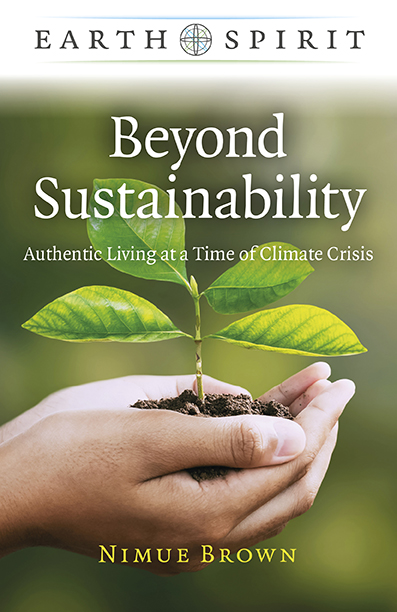
What I’ve tried to do with this book is look at the things humans actually find rewarding and how we…

View original post 226 more words

Posted in Uncategorized | Leave a comment

Now That’s What I Call Rubric: Guest Post by Will Nett

Sir Willian Nettleton, fathered a string of bastards over the course of his fifteen years of being ‘lost’ on safari before he finally returned to Cape Town when the gin ran out. He went on to die of consumption in 1837 on the journey back to Teesside…

He was however not the first Sir William Nettleton, the first served in the court of Queen Elizabeth the first, and rose to the distinguished rank of as lord warden of the water closest, but never advanced beyond his post of holder of the royal wet cloth on a stick. Sir William also managed to explored no where, didn’t discover a vegetable, was crap at bowls and when the Spanish armada was spotted off Plymouth hoe he was in bed with a lady of negotiable pleasure in Plymouth, so ironically at the time of the attempted invasion he was spotted on a Plymouth… We will leave that there.

The current Willam Nettleton who can trace his roots back to Devon in January 1589, though for some reason he shortens his professional name to appear cooler and writes as Will Nett… Occasionally Will Nett sends me blog posts , they tend to be entertaining, well received, deceptively intelligent reads… He normally does this when he has a new book coming out. If he has a new one out this time however he hasn’t bothered to tell me.

Please note I made most of the above up… Most of it.

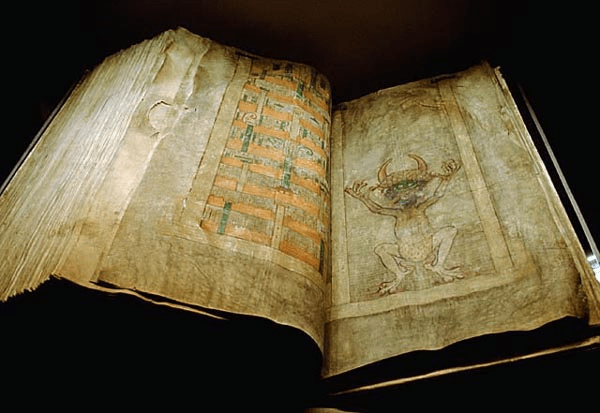
This gentleman with the Codex Gigas, gives us a sense of scale.
He is not Will Nett
The real Will can not pull off a moustache like this chap clearly can.

Now That’s What I Call Rubric: by Will Nett

I do NOT want to hear about your writer’s block; not anymore, you lazy pack of shirkers. Not now I’ve seen what’s capable when you throw on your cassock, moisten your quill tip, and settle in for an evening of furious penmanship. This is precisely what a largely-unknown Bohemian monk- possibly the appropriately named Herman the Recluse- did, around 1000 years ago when he sat down to write the book that appears before me now. The Codex Gigas is a 620-page behemoth that weighs approximately as much as my first car; a Ford Escort Ghia with fully-retractable aerial. It’s stored deep beneath the streets of Stockholm in Sweden’s National Library in Humlegarden Park, Ostermalm. The book, that is; not the car. The three-floor descent to access it seems apt as, notwithstanding the gargantuan effort involved in writing it, the work is probably best-known for its seemingly tenuous inclusion of the Devil, who gurns madly from page 290 like a loin cloth-clad Ftumch. (Google him if you’re under 40).

He’s squatting in his underwear with arms raised after a night of prodding and bullying our heroic author into finishing the 3-foot high tome, much the same way that modern day blog editors do now. Apparently written entirely in one evening, the author was of course largely undistracted by Love Island, social media and the goings on across the road at no. 91. Aside from the romantic ideal of an isolated monk hounded into action by a belligerent sprite such as Satan, are the facts of the matter. Specifically, that to have produced such an undertaking would have required the author to write continuously for 6 hours a day, for 6 days a week, for 5 years, which is only a slightly-less intense work rate than that of peak-era Stephen King. Given that the Codex author was a monk, he would likely have been occupied concurrently with his monastical duties; administering bowl haircuts; washing his arse in a stream; eating pebbles etc, and therefore it would have taken even longer to complete. All this considered, experts believe it may have taken anything up to 30 years to finish. Again, this is a rate of endeavor that most current authors, and certainly this one, could only dream of. The Codex went through the usual historical upheaval of various war-fuelled disasters, being fought over by the Hussites and Catholics, and was then sold on to various monasteries. It found it’s way into the private collection of Emperor Rudolf II in the late 15th century, where it remained until 1648 before being claimed as war booty by the Swedish army. It was thereafter kept in Stockholm for a largely uneventful 375 years, but for one comedic episode in 1697 when a fire at Tre Konor Royal cCastle saw the book thrown from a window to preserve it, which it duly did, but not before it crushed a member of the public who happened to be passing by.

The contents, all in Latin, are a smorgasbord of religious texts, from sections of the Vulgate Bible to Chronica Boermorum (Google that if you’re under 900 years old), and everything in-between; spell-casting tips; recipes; the Hebrew alphabet. Think of it as a medieval compilation album; Now That’s What I Call Rubric, if you will. Despite the legends surrounding the Codex, one of the most curious things about its author, effectively a ghost writer, is largely forgotten, and instead we’re still talking about the Devil after all this time.

The Codex is kept at the Swedish National Library (King’s Library), in Ostermalm, Stockholm.

Now get back to work.

Will Nett’s first book, My Only Boro: A Walk Through Red & White, is currently the subject of a treasure hunt that has captured the imagination of shovel-wielding sleuths from all over Teesside. Part of the detective work required is finding the specific tweets involved because the link Will sent Mark to put on this blog post doesn’t work…

Posted in amreading, amwriting, books, humour, indie, indie writers, IndieApril, opinion, pointless things of wonderfulness, reads, writes, writing | Tagged , , , , , , , , | Leave a comment

Unblocking the Dam: Guest Post by Kate Baucherel

Introduction by Mark

All the thoughts and considerations I write down in these blogs are of course endlessly fascinating… Occasionally other people’s thoughts are however far more interesting than mine. So here’s Kate Baucherel, fellow Harvy Duckman author, expert in anything with the words cyber or crypto in fount of them, black belt in some form of violent sport or other and occasional drinker of Guinness, with some interesting thoughts. I think this sort of thing should be encouraged…

Unblocking the Dam By Kate Baucherel

I don’t think I’d ever suffered from writer’s block. Sure, there are those times when you stare at a blank page and remember that it’s hard to edit one of those. You just start writing words to fill the space and they eventually resolve themselves into something with a life of its own that can be tweaked and moulded into a compelling story. The thing that caught me out just a few weeks ago was quite different. I’d always thought of writer’s block as a brick wall, something where you push through and the next idea is on the other side. This was different.

Five books in to a series, with characters all doing their own things and tackling challenges that change them, it should be a fairly easy ride. There’s a certain amount of housekeeping to ensure that the familiar tropes and character quirks are covered. An appearance by Donald the Cat is a requirement, as is a comment on the practicality or otherwise of smart fridges, and one day I will write down what coffee they all prefer rather than hunting back through the earlier books to check. There are threads to tug on from previous books. There is a need to make the story stand alone as far as possible with an identifiable background and a new and yet more evil scheme for our heroine to foil.

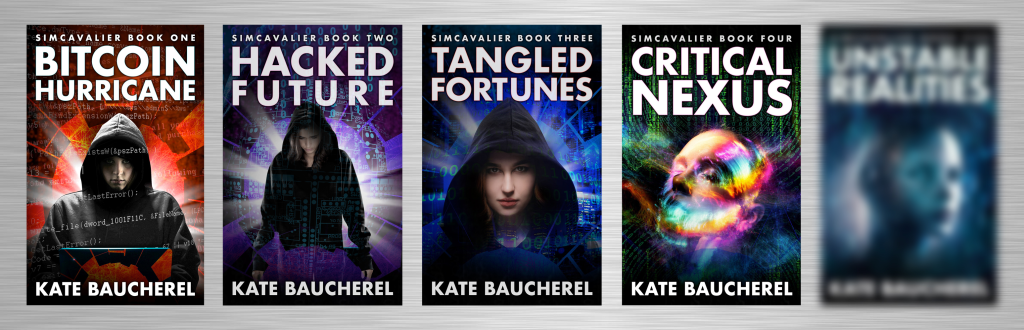
And then there’s the tech. The world is moving ridiculously fast and while the first in the series, Bitcoin Hurricane, took a matter of a weeks from concept to completion and extrapolated the tech that I’d been working with for a few years, this was different. In Unstable Realities we are diving head first into the metaverse, opening up virtual and augmented reality with a fully hybrid Olympic games as the backdrop. My work has already taken me into Decentraland and the Sandbox, immersive conference venues, flying around Second Life and projecting shows into my living room with The Round. I’m comfortable with virtual worlds, but not all my readers will be. Conveying the wonders of that environment was a challenge, alongside getting the technical elements as close to reality as possible.

So much material, so many ideas… and therein lay the problem. After rattling away a quite a pace, with a deadline in my sights, the writing stopped. The ideas were all there. I could play each of the scenes in my head with dialogue, detail and clarity, but I couldn’t write them down. The river was dammed.

How did it burst? With determination and a handy pair of transatlantic flights. I normally spend those trips watching a slew of movies. Outbound, I wrote, and wrote, and wrote. There was no washing to do, no cats to play with, no emails or social media to distract me. 6,672 words went down on the laptop between Amsterdam and Atlanta. Then a week of extra inspiration – talks by people developing or using the metaverse, from the creators of Second Life and ChatGPT to people building avatars and reality apps, and even a DJ who uses augmented reality and 3D effects in his show. Another 4,350 words appeared on the way home, writing in airport lounges and cafés (I slept across the Atlantic this time).

The final few scenes were the hardest to write. The climax had lived in my head for so long that getting it down on paper was tough, but it felt like the final break of the dam wall, words pouring out onto the page. “The End” was a sweet moment of calm. Now the book is floating towards the mouth of the river, through editing and proofreading and typesetting and audio recordings. It’s release into the Amazon ocean is expected at the beginning of May.

Keep up to date with SimCavalier news and pre-order details at the SimCavalier Café – sign up here. And don’t forget you can find the first four SimCavalier books at the usual retailers on ebook, audiobook or paperback, or come and say hello and pick up some signed copies at SciFi Scarborough, 22-23 April.

Afterword by Mark

I too will be at Scarborough Scifi between the 22nd and 23rd of April, I’ll be on the table next to Kate, wearing my New Rocks so I don’t look too short in comparison to the overly tall Mrs Baucherel, along side a couple of other Harvey authors who are at least not taller than me.

Posted in amwriting, indie, indie writers, indiewriter, opinion, reads, sci-fi, writing | Tagged , , , , , , , , , | Leave a comment

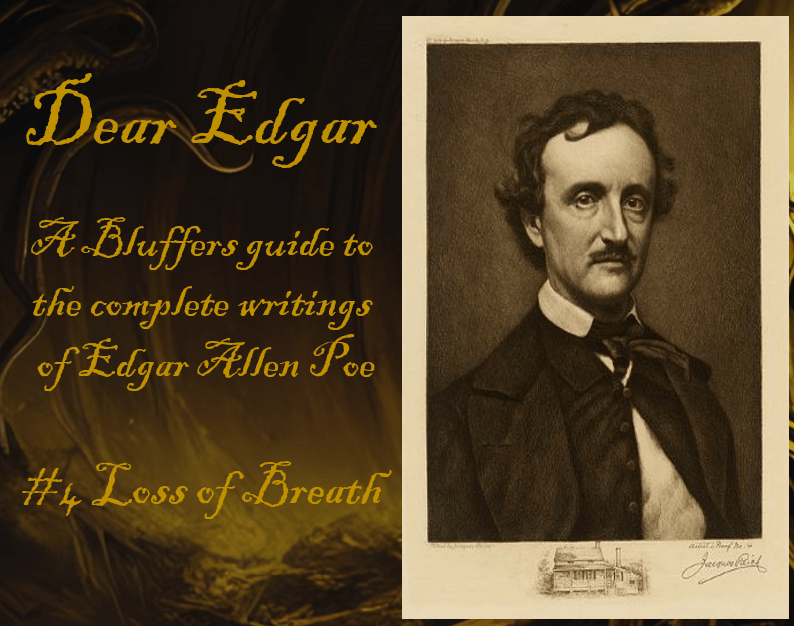
Dear Edgar #4 Loss of Breath

“What you have to bear in mind is, it was a different time…” ~ Anon

Don’t you just detest facile justifications like the one above..? I will admit, however, such justifications get easier to swallow as they gulf in years between a work being written and it being read grows ever wider. A story written in the 1920’s was certainly written in a different time, compared to a story written in the 1970’s. One is only fifty years ago, the other a century. One is my life time, the other double it. Attitudes change. What was and is acceptable, changes, I cringe when I see some stuff from the 70’s now, so add another half century and perhaps sometimes you do need to bear in mind that something was written in a different time…

I butted up against this problem a lot when I studied the complete works of Lovecraft, and if there was ever an author that required a reader to ‘bear in mind, it was a different time,’ it was old tentacle-hugger… Sometimes I gave him the benefit of the doubt, other times, no so much… A century ain’t far enough removed to allow basic racism, homophobia and misogyny a pass, no matter how wonderful some of his stories are. Up till now however this has not proved to be an issue reading our Dear Edgar…

Up to now that is, which doesn’t bode well when you are only four stories in. But this story opens with the narrator, Mr Lackobreath spending a good paragraph berating his wife of almost twenty four hours with a frankly rather vile torrent of verbal abuse. A torrent which could be forgiven in context of the story if it had any agency within it. If we needed to detest Mr Lackobreath for the story to work, or if there was any real reason for the existence of said passage. Frankly however there isn’t. What it is, is just a torrent of abuse issuing forth from a husband at his spouse of 24 hours because I presume Poe thought it was entertaining to have his narrator do this before he lost his breath…

It’s not…

It might have been a different time but frankly no one needs to read that paragraph. A paragraph that will be triggering for some people and is just not acceptable in this day and age. It might have been a different time, but that is no excuse and so I can not let it pass without at the very least giving a trigger warning…

All that said, 1830 is nigh on two centuries ago, if the ‘it was a different time argument holds any water at all then surely it hold some here and actually in terms of the story that ‘it was a different time’ is somewhat central to our understanding of why this story even exists. The Story is based firmly on a general mistrust of the medical profession and the outlandish quackery that was the staple of the profession at the time. As a premise this is almost lost on the modern reader. We live in an age of antibiotics, chemo-therapy, face-lifts and wonder drugs that we take for granted like ibuprofen, antihistamine’s and Insulin. Sure, there are some fringe elements of society sceptical about some aspects of modern medicine but most of accept the validity of most things medical in this day and age.

This is to say that the quacks in our modern age tend to be the ones who rail against medical wisdom rather than those who spout it. When Poe wrote ‘Loss of Breath’ however the reverse was very much the case. Modern medical practises were still very much in their infancy, and a whole lot of strange and wonderful treatments existed that no one would ever contemplate in our more enlightened age… Well, some of them we would but we would call it alterative medicine if we did…

If you doubt the quackery that was prevalent in the 1800’s and have a little spare time go read up about Doctor John Harvey Kellogg. Yes that Kellogg… Inventor and holder of the patient for the Kellogg Cornflake. I will apologise in advance however if reading about him put you off your breakfast cereal.

Among other things Kellogg was an ardent believer in water therapy, hot baths, cold baths and hose pipes where ‘the sun don’t shine’. Colonic irrigation might as well have been spelt Kellonic… He also believed firmly that the way to treat men who were ‘chronically addicted to masturbation’ was with adult circumcision without aesthetic, because the man who invented cornflakes believed that masturbation was the root of all evil, that it caused cancer of the womb, urinary diseases, nocturnal emissions, impotence, epilepsy, insanity, and mental and physical debility… And of course death… Of those who suffered from such ailments, he once stated without a wit of humour…

“such a victim literally dies by his own hand”

I shall not explain how he proposed to treated women in whom he diagnosed as afflicted with similar afflictions, including ‘nymphomania’ which is to say any woman who enjoyed any kind of sexual agency in her own right outside of the marriage bed, because frankly you don’t want to know. Just let me state it was horrendous.

Yes more horrendous that male genteel mutilation without anaesthetic… Much more horrendous… Occasionally research takes you down some dark dark alleyways and frankly I am never eating Kellogg’s cornflakes again…

In any regard when reading a story in which Poe lampoons the medical profession for all it is worth it’s worth bearing in mind that it was written twenty years before Doctor John Kellogg was even born… So imagine the strange and questionable practises on the fringes of medicine at the time…

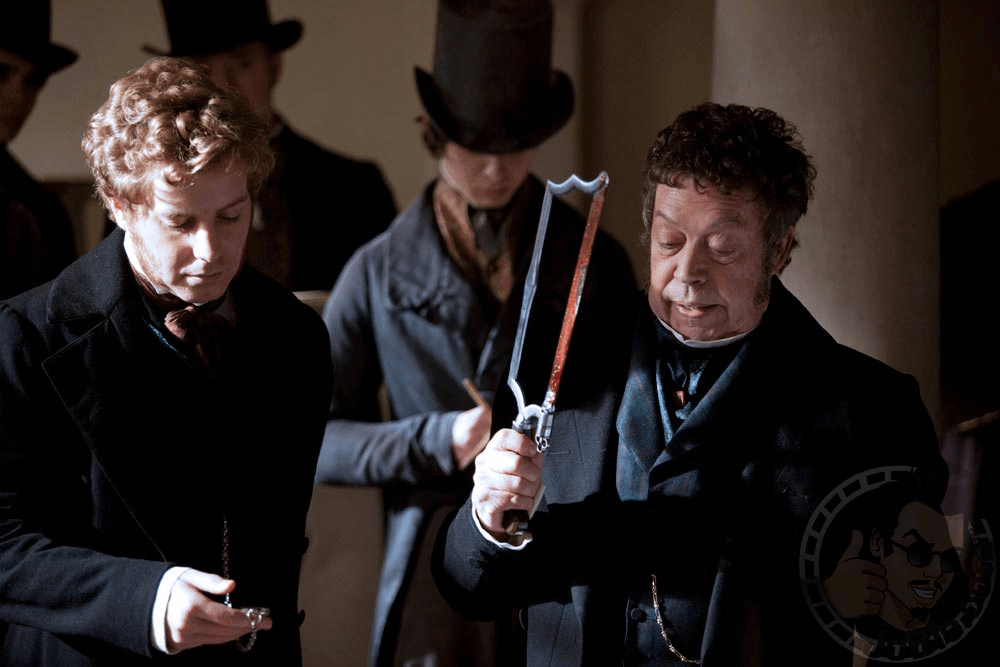
A time when electricity was only just becoming a thing an average medical scientist could play with… This story was written only 14 years after Mary Shelley wrote Frankenstein, and the idea of reinvigorating human tissue with electricity was an exciting new science full of all kinds of possibilities for the medical profession… At the same time surgery was an evolving science and some surgeons had complex moral compasses about the sacrifice of the few for the benefit of the many. Dissection was a great way to learn new skills if the corpse was fresh enough, which was why Mr’s Burke and Hare had being undertaking their own unique solution to the freshness issue in Edinburgh again only 4 years before Poe put pen to paper…

Suffice to say the medical community were not held in the highest of esteem in 1830, making them a fair target for Poe’s satire. In the case of the medical profession, it really was a different time… That however is also the essence of the issue’s I have with Dear Edgar’s ‘Loss of Breath’ It is all of its time and while that doesn’t excuse the horrendous misogyny of opening passage, it does explain all you really need to know about the rest of story. Mr Lackobreath in the midst of berating his with suddenly losses the ability to breath. He doesn’t die, he just can’t talk and doesn’t breathe. Of course at first his main issue with this strange affliction is that he can not longer berate his wife… And so he geos into hiding so she doesn’t realise what has happened to him…

What follows after is perhaps his due. As the narrator has a series of misadventures at the hands of the medical profession who keep assuming he is dead so dissect him , shock him, break his bones to practise setting them and a dozen other things. All the whole he is conscious and unable to breath. The problem with all of this is mostly its hard to care and the modern reader has a very different attitude to medical professionals than was common at the time. The humour in all this misses it’s target and its all just a bit pointless. But then it is very ‘of its time and its time has long passed…

Beyond that, there really is little to it, save perhaps as an exercise in understanding attitudes to the medical profession in the past a little better.

ONE DEAD RAVEN OUT OF AN UNKINDNESS

Should your read it: Frankly no, it contains little of interest and is just a little detestable.

Should you avoid it: It comes with a trigger warning and its not worth making any allowance for its being ‘of it’s time’ so yes, you should avoid it .

Bluffers fact:  Some more ‘fun facts’ about Doctor Kellogg… he once designed a mechanical camel… A vibrating chair, and was highly taken with electro therapy. Also, in 1906 he founded the Race betterment Foundation, a centre for the Eugenics movement in the USA, which promoted racial segregation is the US and believed immigrants and non-whites would pollute the white American gene pool… So while eating your cornflakes please remember the man who invented them was a racist favouring the kind of science most associated with the Nazi’s.

You don’t want me to tell you anything about the inventor of Coco-pops, trust me.

Posted in amreading, book reviews, Dear Edgar, fiction, goodreads, horror, Lovecraft, Poe, quotes, reads, retro book reviews | Tagged , , , , , , , , | 6 Comments

Eating the Livers of my Lovers: A guest post by Nimue Brown

Introduction by Mark:

The full title of this blog is ‘Eating the livers of my lovers and other poems I now have to write because Mark gave me a title’ Which was a writing prompt I gave to the ever wonderful Nimue Brown when she asked the world to do so. Having supplied this title I abdicate all responsibility thence*. The rest is all Nimue…

*I’m always delighted to use thence in a sentence, its one of my favourite words…

‘Eating the livers of my lovers and other poems I now have to write because Mark gave me a title’ By Nimue Brown

As it happens, the current work in progress on the poetry front is a ‘How To Love’ sort of collection. It’ll be my fourth How To title – ‘How to Unpeel a Monster’, ‘How To Make Bone Soup’ and ‘How to Adore a Horned God’ having already happened, and being available through my Ko-fi store

Click on this to go to Nimue’s Ko-Fi

Not that I write especially conventional love poems. There was one about skin worms, I thought that was fairly romantic. A lot of what I’m currently working on is about love of landscape, wild things and life itself. Being in love with life is a good thing, and you don’t
get to spend so much time being unrequited. As a polyamorous person I spend a lot of my time being besotted with people, but I’ve had scandalously few actual relationships. And I’ve not eaten anyone’s liver, not even a little bit.

As with How To Make Bone Soup, I’m much more likely to be consumed, in the normal scheme of things. Bone Soup is what you make when there’s nothing else you can use, and it’s a metaphor that has loomed large for me. There have been too many rounds where it’s felt like I was making stuff out of my own entrails, and then out of my own bones. At this point, dear reader, you’re probably getting the impression that I’m an alarming mess both as a person and as a poet, and as sales pitches go, I’m probably not doing very well here.

I’m a hard sell, speaking as my publicist. I jump around between forms – graphic novels, novels, poetry, non-fiction, songs, short stories – I’ll have a stab at anything. I hop around between genres – gothic, steampunk, pagan, murder mystery, fantasy, erotica. I get bored
easily, but it makes it hard to explain to anyone what I actually do. Consistency is not my strong point.

That said, if you’re a monster too, or a monster shagger, or some other kind of lost and haunted meatsack, I may well be for you. I’m here for the walking wounded, the haunted and the lonely. I write for the people who do not know where they belong and who feel too much and think too much to ever really be comfortable. I write weird and bloody things, and sometimes I write ridiculous happy endings where impossible beings are finally able to find solace in each other.

Clearly the livers poem would have to be about werewolves, because so long as you can regenerate, that works. While I haven’t written any werewolf erotica in years (and not under this name, so there’s no point looking) I used to, and the scope for violent passion is a lot
higher when you’re going to regrow yourself the next day. You can have consenting liver consumption in that sort of context, and beings so obsessed with each other that they need to ingest each other. And this is why I’m not allowed to write romance fiction.


Aside from the ko-fi store, you can find me blogging in a mostly non-fic and Pagan way over here

Click on this to go to Nimue’s Druid Blog ( really you should its fabulous )

And I contribute fiction over here 

Click on this to go to Hopeless. Warning once your arrive then you will never leave, but click anyway…

I’ve got a silly enough number of books out there that probably the best bet is just to Google me and see where the fancy takes you.

As instructed I Googled Nimue. This is a small selection

Afterword by Mark

Nimue under estimates my skills with the internet if she thinks I am not going to at least try and track down her werewolf smut… I mean, that was just handing down a challenge, plainly… But even if you can’t track down the werewolf smut, and I will…. Do yourself a favour an track down some of Nimue’s easier to find stuff that hasn’t been hidden behind former names, in a locked filing cabinet, underneath the British Library and guarded by sentient statues of otters.

I recommend everything Nimue has written but if pushed I particularly recommend ‘Hunting the Egret‘, or ‘Intelligent Design for Amateurs‘ I wrote blogs about them and everything…

Posted in amreading, amwriting, blogging, books, druidry, fiction, IndieApril, indiewriter, pagan, reads | Tagged , , , , , , , | 3 Comments

Ebooks, Publishers and going full circle

This is a fascinating read for anyone who is involved in the publishing industry on any level. I have my own views which I have expounded upon many times but it is great to get (and share) a fresh bit of perspective now and again from people whom’s opinions I value.
She is of course entirely incorrect in thinking books don’t just sell by magic, but then she doesn’t weave suggestion spells that make people buy books into their covers. That’s Tom’s department…

Nimue Brown's avatarDruid Life

Electronic publishing began in earnest long before social media really existed and when many people weren’t online. Twenty years ago we relied heavily on egroups – mostly Yahoo groups to find each other and share books. Tiny publishing houses proliferated, and sold books directly to readers. Some of those houses grew enough to be able to afford artists for book covers, which is how Tom and I met.

When Amazon got into the ebook market, it was because that market already existed. Their early policies made it hard through to impossible for small houses to keep publishing via their own websites. Of necessity, we had to all sell through them, accepting a loss of control and lower income on each book in the hopes of reaching a wider audience, and of not being made obsolete.

Many of the more successful ebook houses at that time were selling smut, and the…

View original post 416 more words

Posted in Uncategorized | Leave a comment

Steampunk Fiction, what is it?

Anyone who knows anything about the Steampunk subculture will generally answer the question “What is steampunk?” with words to the effect of “Whatever you want it to be..!”

This is of course an absurdly unhelpful answer.

Luckily, while steampunk’s are often a shrinking violet of introverts (1)(2) they become quite animated and extrovert when they start talking about their collective passions and they will go on to talk about “Victorian technology, meets science fiction and has a bastard step-child that looks a little like a cross between HG Wells and Jules Verne, having gone wild with moustache wax, hats and corsetry.”  

Sidenote 1: there is apparently no collective noun for introverts, so I had to invent one. This does however make sense, as the old joke goes, “Introverts rise up as one and stand in your own houses, then sit down again and get back to soldering tiny cogwheels on to a set of cufflinks…”

Sidenote 2: not all steampunk’s are actually introverts, nor are they all broken in some way, or using steampunk as an outlet against the crushing mundanity of life. This is just a stereotype, most of them are perfectly well rounded individuals without deep-seated emotional problems and/or a tentacle fixation… Probably they are just in it for the hats…

In any event, the question “What is steampunk?” is by its nature far too simple a question for the long complex answers you will get if you ask the wrong man in a top hat in Gloucester. You know who you are, and you’re a delight, don’t ever change… So, the answer “Whatever you want it to be…!” is as it turns out a good summery when it comes down to it. You don’t have to wear a hat, or corsetry, or sport a beard, waistcoats, petticoats, or indeed you can wear any of those even if you’re not of the gender to which any of these items are normally associated, frankly as long as your splendid to everyone else, everyone will be splendid to you.

As a rule, I tend not to worry about it too much…

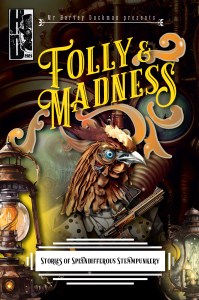
However, the Harvey Duckman Anthologies with which I am deeply associated have been asked to do a Steampunk only anthology to be released at a Teesside steampunk event in November. While steampunk has always been one of the main genre’s associated with the series we have never planned a single genre book before so this is quite exciting… Luckily for the editorial team there is a  resident ‘expert’ on steampunk on the staff. Unfortunately for me I’m the resident ‘expert’, may the bearded skygod of your choice help us all…  

This had led to me having to ask myself the question “Steampunk Fiction, what is it?”, somehow “Whatever you want it to be” doesn’t strike me as an overly helpful answer… Perhaps I need some bullet points…

Steampunk fiction, what is it? A brief guide :

  • Set from the early 19th century up to the early, pre WWI 20th century or in an equivalent society
  • Societies technology should be primarily based on steam power and/or clockwork
  • The hero’s and heroine’s should be Gentlefolk of a cultured middle class or above
  • The use of course language should be restricted, instead use ‘Gosh, Golly, Blast it man, I say…. etc’
  • There should be no discussion of things below the waistline and above the ankle, frankly ankles should be avoided if at all possible.
  • Hero’s should be dashing, heroines where required plucky.
  • Villains should want to tear down the empire. The preservation of which is the primary concern of the hero/ heroine.

There that’s all nicely sorted out then isn’t it, time for tea and cake, anyone for a slice of Battenberg?  

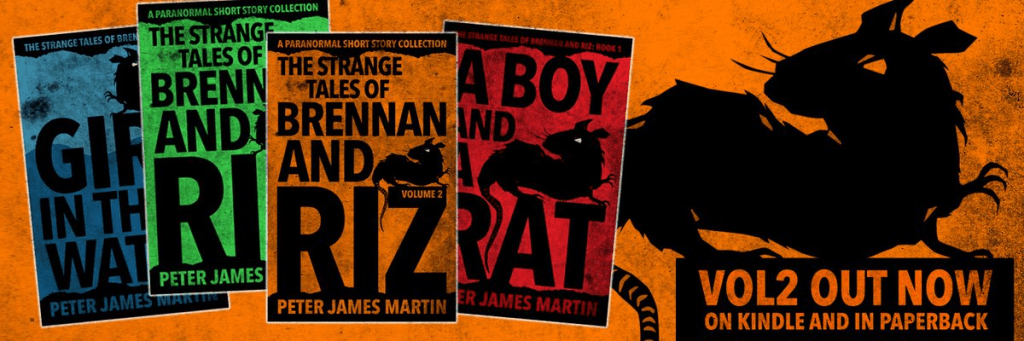
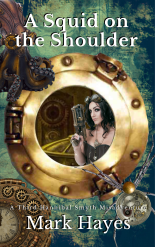
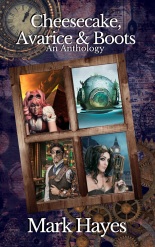
Except, its not. For one thing, one fairly large fly in the ointment in fact, I am for my sins primarily a steampunk writer. As you can plainly see from the picture above four of my novels and a collection of short stories are set in the same steampunk universe…. Two separate trilogies one set 150 years before the other… So do these rules apply? Well…

Hannibal is not a gentleman, he is a guttersnipe with aspirations. If he is dashing it is normally in the opposite direction to danger if he can help it. He uses coarse language all the time, I mean all the time, indeed he tends to pick up on rather a lot of foreign swear words while he is at it. He is more concerned with preserving himself than the empire, indeed he actively works against the interests of the crown much of the time. As for things above the ankle and below the waistline, well if I was to be polite I would say ‘he is a great admirer of the female form’ as its better than saying he is a lecherous swine. His trilogy is set at the back end of the 20th century and as for technology well Hannibal doesn’t really understand how anything works which is a convenient way to avoiding dull explanations of how the nano-clockwork spider in his eye actually works, what powers the airships, and how the engines work on Jules Verne’s submarine.
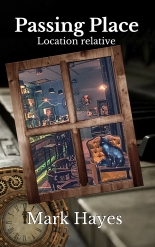
So our ‘Steampunk fiction, what is it?’ list basically doesn’t apply to my main steampunk characters series. Oh, and he hardly ever mentions cogwheels… Yet I am, I think it fair to say, pretty much as much a steampunk writer as it is possible to be. Most of my novels are steampunk, and I doubt anyone reading them would disagree with that.

And you know what, I am happy with that, just as I am happy with other people’s visons of steampunk being different from mine. My other series ‘A Ballard of Maybes’ ticks a far more of that list but still steps outside those boundaries. If someone what to write a steampunk story that fits in with that list then more power to them, indeed I look forward to reading it. But as far as the Harvey special is concerned and me in general, I want to be surprised and astounded by as many different visions of steampunk as possible.

Steampunk is a broad church, or sunken temple, or mad cult of star spawn worshiping loonies…

It can be airships on Mars, it can be sinister clockwork mice and druids on steamrollers, it can be a hand-job in Calcutta from a psychopath with great legs and razors for fingers, it can be a Polynesian engineer and the search for the fountain of youth with a walking corpse. It can be nothing above the ankle or below the waist with manners, tea and crumpets. It can in fact be anything, as long as it’s splendid and silly and wonderful. Even when its dark and grim…  

So lets fix that guide a little shall we…

Steampunk fiction, what is it? A brief guide version 2:

  • “It’s whatever you want it to be..!”

So there you go, If you are interested in trying your hand at a short story fro this project consider that your brief… The Harvey Duckman’s Splendiferous Steampunk Special is open for submissions from now until probably September.

Harvey Duckman Anthologies in general, I should add, is always open for submissions…

You can find details of how to submit and the submission rules on the Harvey website. Note, occasionally we don’t actually apply rule 2 but it is there for a reason… probably.   

Posted in amreading, amwriting, books, Canadian steampunk, fiction, Hannibal Smyth, indie, indie novels, indie writers, indiewriter, novels, opinion, reads, steampunk, writing | Tagged , , , , , , , , | 6 Comments

More words to music…

When I write, I write to music. I have in fairness mentioned this before, but these posts seem surprisingly popular for what amounts to Mark’s favourite obscure bands and musicians, so what the hell here is another little collection of musical joy.

The music changes, depending on mood, and what I am writing. Often times the music influences the words, not so much on a individual basis but in sense of place, emotion and feeling. So sometimes the right music is needed for what I am attempting to write. As it hard to write intense emotion while listening to Aqua singing Barbie Girl…

I am glad to report I have still never deliberately listened to Aqua singing Barbie Girl…

Usually I choose what I listen to, and let it just slip in the background but on occasion I just stick on You Tube and let it throw music at me with the joy of algorithms. This can lead to odd choices and chance discoveries and occasionally unexpected joys of discovery, or rediscovery.

Just about every time the algorithm spits out anything by Unwoman for a start, though she is a fixture of my playlists these days… but sometimes one must wander through the temple

But then there are the more delightful and unexpected ones like this by The Edan House.

For those unaware of them, The Edan house is a collaborative musical project, best described as Progressive melodic goth, started by Stephen Carey (This Burning Effigy) that includes among many others Simon Hinkler (The Mission), Julianne Regan (All About Eve) Tony Pettit (Fields of the Nephilim).

I have two of their album and never remember to play them because who remembers to play albums these days, but they are fabulous.

Finally, since this is a post about joy that started with singer and cellist Unwoman I’ll round this off with another cellist though this one ‘play it wrong’ though does so in a delightful way.. With The Dead South, a band playing their own version of Bluegrass country, despite been from a little way north of the Mason Dixie line.

Oh did I say finally…

Well finally apart from this sort of ‘cover version’ of Jeff Buckley’s Hallelujah… Praising a slightly different deity. Because sometimes the star’s just are right…

Posted in amwriting, humour, indie, indiewriter, music, music, reads, writing, writing music | Tagged , , , , , , | 2 Comments