I am fond of the dark, of laying on my bed, naked to the world, staring into the void. I could be staring up at anything. Staring up at endless worlds of possibility. The dance of the infinite. The realm of gods and daemons, of the divine and the devilish. In darkness all things are possible. I could be looking up at anything.
Or just the ceiling…
I am not alone in my fascination with darkness, staring into the dark is a very human thing to do. We have been doing it since the first of us walked upright. Occasionally, the darkness stares back at us, if only in our imagination.
Hopefully just in our imagination…
But without knowing the darkness, how can you appreciate the light, or in the words of the king…
‘It was the possibility of darkness that made the day seem so bright.’ ~ Stephen King, Wolves of the Calla
Of course, sometimes a person can slip into the love of darkness a little too much…
‘I knew nothing but shadows and I thought them to be real.’ ~ Oscar Wilde, The Picture of Dorian Gray
‘I am terrified by this dark thing that sleeps in me.’ ~ Sylvia Plath, The Collected Poems
‘A child weaned on poison considers harm a comfort.’ ~ Gillian Flynn, Sharp Objects
‘Nothing shows you the straight line from here to death like a list.’ ~ Chuck Palahniuk, Survivor
‘I’ve always liked the moonless night best. It’s easier to say things in the dark. It’s easier to be yourself.’ ~ Patrick Rothfuss, The Wise Man’s Fear
Somethings are important to remember however, such as…
‘You don’t find light by avoiding the darkness.’ ~ S. Kelley Harrell
‘Darkness is just light turned inside out.’ ~ Beelzebub
‘The darkness makes everything disappear but it makes nothing go away.’ ~ Craig D. Lounsbrough
‘Stare at the dark too long and you will eventually see what isn’t there.’ ~ Cameron Jace, Snow White Sorrow
But fear not, for the most important thing to remember if this final quote…
‘When its dark enough you can see the stars.’ ~ Charles Austin Beard
William Nettleton is a fine name. Stick a ‘Sir’ in front of it and it brings up images of a big game hunter in the 1800’s with an elephant gun nestled under one arm, smoking a pipe of suspicious looking native tobacco while pontificating on how long he can avoid returning to his wife and young child William the younger, back in Britain by pretending to be lost in the Serengeti.
Sir Willian Nettleton, who fathered a string of mix race bastards over the course of his fifteen years of being ‘lost’ on safari finally returned to Cape Town when the gin ran out. Died of consumption in 1837 on the journey back to Teesside, so never met his his own namesake who had been born a few weeks after he first left for Africa, That William was to be the great great great grandfather of the current Willam Nettleton who for some reason shortens his professional name to appear cooler and writes as Will Nett…
(Its should be noted I made all of the above up : MH)
Occasionally Will Nett sends me blog posts , they tend to be entertaining, well received and deceptively intelligent reads… he normally does this when he has a new book coming out. If he has a new one out he hasn’t bothered to tell me this time. He has never claimed to be ‘lost’ in the Serengeti, he did once spend a very long time getting some cakes from a shop in Amsterdam though…
Piano Man by Will Nett
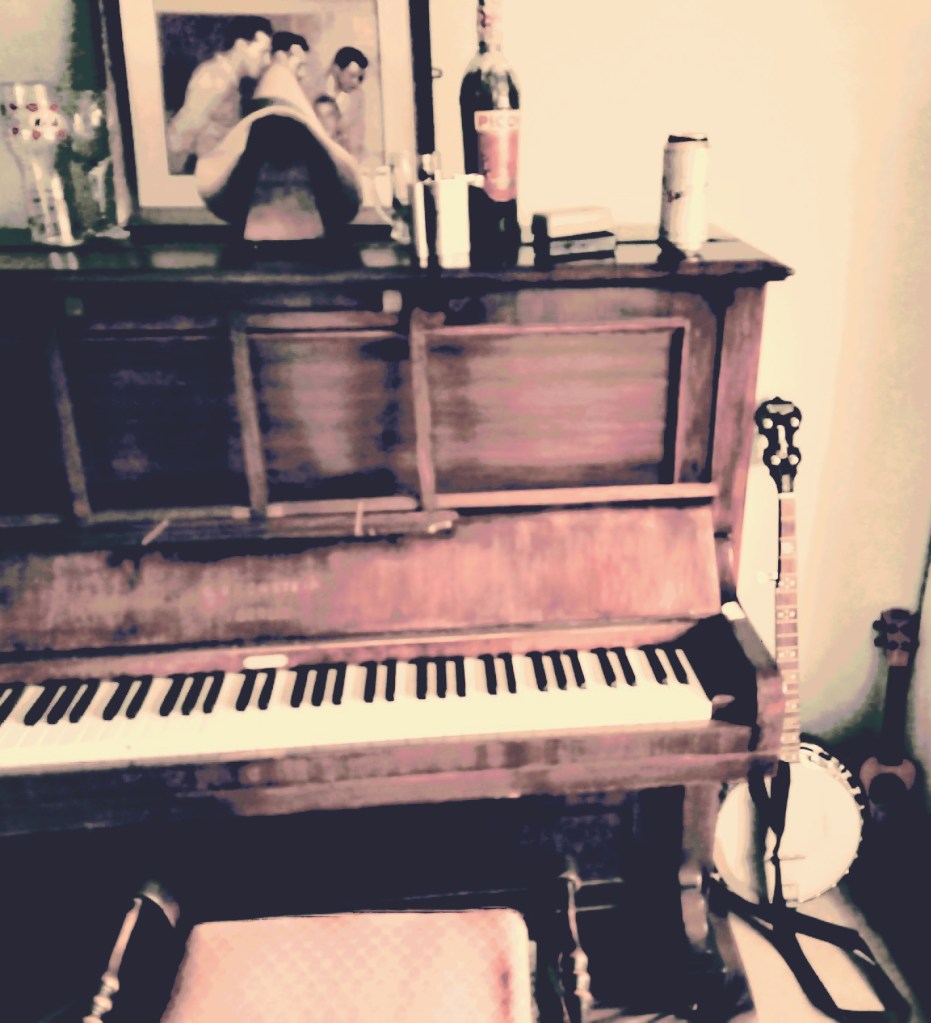
Like most authors, I’ll do almost anything to avoid writing. Buying a piano a couple of years ago seemed as good an idea as any. I’d always fancied having a crack at it, but would not have gone out of my way to find one, so when a friend was selling one, and another had a van in which to deliver it, I was first in line.
All we had to do was transport it the half a mile between our houses. Equipped with a couple of ratchet straps and an impressive collection of orthopaedic complaints that were about to be considerably exacerbated, we lugged it aboard with little incident, other than the loss of a single foot. That is, one of the piano’s feet. Between the four of us we’d done the hard part, so when we reached my front garden, and within 10 yards of the intended destination, we dropped it flat on its back, causing a sonic boom that could be heard as far away as the Peak District. It was accompanied by the distant hum of Carl Bechstein spinning in his grave. I bet Chopin didn’t have to go through all this rigmarole.
If it was even vaguely in tune before, it most certainly wasn’t now. We heaved it into place; against a gable end wall as far away from next door’s attached living room wall that the architecture would allow, and the tuner set to work on it, doing a fine job restoring it to something playable, despite the damage we’d caused- the interior metal crossframe had broken some of the wooden parts and a couple of keys required attention.
‘Bechstein’s of this vintage are fairly sturdy,’ he pointed out, as I pored over the order book that I managed to source online from Bechstein themselves.
All-focus
The ‘vintage’ in question dated back to 30th September 1896, the exact date the piano was dispatched from the factory to London as part of an order of 5 similar pieces.
It had survived two World Wars, Spanish Flu, Covid, and yet, like many others, almost came unstuck on a Spencerbeck housing estate.
But how to play?
Naturally, my ever auto-didactic mindset meant there was simply no time for lessons, or doing anything properly, so instead I immersed myself in a pile of records and YouTube tutorials- specifically the excellent Pianote channel. Given that I took no formal training, my classical repertoire extends only as far as the first ethereal few bars of Beethoven’s ‘Moonlight Sonata’, but it was the sidemen and women of my parents’- and now my record collection- that I most hoped to emulate; the broad countryfied strokes of the Rolling Stones’ Nicky Hopkins; soul man Billy Preston; Eagles and Elvis back-up Glenn Hardin; Bobby Whitlock; Leon Russell; Nickey Barclay. They all seeped into one another, as musical influence often does, but I developed a set of sorts comprising sing-a-long country classics like ‘Swinging Doors’ and ‘The Fool’ alongside some Patsy Cline and Johnny Cash for anyone who wanted to sob into their beer suds come closing time. Elvis songs come as standard given that they’re largely repurposed country covers and there’s a potential impersonator in every pub in the land, and my obsession with the r&b rumble of Ray Charles’ ‘What I’d Say’ found it’s way to the fore, too. I made a point of avoiding the works of one of my all-time favourite artists, the untouchable Nina Simone, lest I grow tired of her work from trying to recreate it.
I haven’t quite reached the recommended ‘10,000 hours’ theory of practice, but I played every single day for over a year, be it at length, or on occasion for a matter of minutes in a manner that would give any piano teachers palpitations. My appalling posture and Octopus-like hand placement and fingering- careful, now- soon became part of my whole style, but I wasn’t going to be invited to the Proms anytime soon. I didn’t care about any of that. I just wanted to raise a tuneful racket.
I didn’t seek out pianos publicly- they’re few and far between in pubs and the like, now, but they suddenly seemed to materialise; an out of tune baby grand, also a Bechstein, over a now closed rock bar heralded my first public performance; an equally toneless stand-up dustbox in the corner of the Navigation led to a rousing ovation during a post-Boro match jam; I found myself in evening dress en route to a wedding playing in the lounge of the Scotch Corner hotel. A Belgian friend looked on baffled as I was accompanied by a gang of Scouse housewives- Scousewives?- in Toxteth’s Peter Kavanagh pub. I almost missed a flight playing, badly it has to be said, in an airport in Milan after a heavy few days.
The piano has brought much joy, and continues to do so, but more importantly gives me an excuse to avoid writing. You can expect my next book sometime around 2028.
This may or may not be the first post in a series of posts, in this case thought it is also an old post from 2020 redone as the question that inspired that original post came back around once more. The question a writer friend asked me the first time around being ‘Can I as a sis white male write a novel where the main character is a woman of colour?”
It’s also an excuse to just remind everyone what a wonderful writer N.K Jemisin is.
N.K. Jemisin is one of my favourite modern fantasy writers, and I love that particular quote.
I say this, but I could have said she is one of my favourite female African American writer. People often believe its important when talking about her work to mention she is both female and black. However, the reason N.K. Jemisin is one of my favourite modern fantasy writers is not because she is a woman, or because she is a member of an ethnic minority in her home country. Its because she is a bloody fabulous writer.
To me, this is much the same way as my love of Anne Mccaffrey’s ‘Shell Ship’ novels has nothing to do with the writer being an Irish American, having red hair and being a woman, or my love of David Gemmell’s heroic fiction has never been informed by his beard and the way he stands when he urinates. What informs my opinion of a novel and of novelists is, and always has been, the quality of the writing, the telling of the tale, the envisioned worlds and the characters who inhabit those worlds… Those ultimately are the only important aspects by which you can just a novel.
That my friend asked the question, ‘Is it okay for me as a straight white male to write a novel in which the main character was a black woman and would his doing so risk offending someone?’ says nothing but good things about him as a writer and a human being. Its a very good question to ask yourself before you put pen to paper.
But it is also one that leans heavily on political correctness. So to quote N K again…
There is nothing wrong with a writer considering the question of what is or isn’t politically correct. But in my opinion if you’re being politically correct for the sake of being politically correct then your missing the point entirely. You should consider other peoples opinions, you should consider their feelings, and you should do so because, quite simply, that’s the fucking human things to do!
I have the same argument with people who complain about other being ‘woke’ and ‘wokeness’ in general. Which is little more than the latest buzzwords for political correctness. There is nothing wrong with being ‘woke’. Being ‘woke’ to me means little more to me that taking a moments out of your day to consider other people’s feelings and try and avoid upsetting people by railroading through your own opinions…
However, to railroad though my own opinions, if someones opinion is that a privileged white male can not and should not write a story about someone other than a privileged white male, then their opinion is utterly worthless. Write a damn fine story, with a lead character complete with flaws and strengths, well rounded, interesting, and perhaps even a little inspiring. Then I don’t care if you are the same gender, race or sexuality as the character you have written about. Why should I?
And yes, I say this as a privileged sis white male… Do you have a point you wish to make?
The friend who asked that question is a fine writer. I am damn sure that people of every gender, every race, creed and colour will enjoy whatever tale he crafts. Maybe some of them will be damn pleased that the heroine is not an upper middle class white woman, because they aren’t an upper middle class white woman. Or maybe they are, and still are damn pleased.
As I say, I love N K Jemisin’s novels because they are bloody good books, with great characters, set in strange intriguingly different settings and worlds compared to the normal fantasy fare. But I dare say if she chose to write a novel who’s hero was a sis white male in a box standard foe-middle-ages European setting I would also read it, and not for one moment find myself wondering if it was okay for her to write such a novel because she is a black woman…
This is a bit of a rant I know. This is also just my opinion, yours might differ… But if you think any writer should only write that which they personally experience due to their gender, sexuality and skin colour, then yours is an opinion I don’t give a damn about, because I believe you are fundamentally wrong.
That said, every writer should ask themselves if what they are writing might offend someone…
Then they should write it anyway, because someone will always be offended, but just because someone is offended it doesn’t mean they are right. It just means they are offended. The job of the writer is to write the best story they can, to write good believable ‘real’ characters, that people what to read. If the writer does that and someone is offended that the writers main character isn’t the same skin colour, sexual ordination, or gender as the writer, then I do not despair of the writer, but of the one who has taken offence.
In short ‘Rules of writing #1’ write the great characters you want to write, not the characters people think you should write.
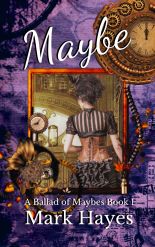
Of course, I said all this in the original post when I was writing ‘Maybe’ a book with a lead character who is both female and half Polynesian. Neither of which I am. Which is partly why I was reminded of it earlier as current WIP which has a main character who is in theory, at least in the start of the novel, a sis white male and remains that way most of the time. When Lucifer Mandrake isn’t being Lucy at any rate.
I am not half Polynesian, nor am I female, yet maybe remains a popular novel because I wrote Eliza Tu-Pa-Ka well. I am not a Trans magician in Victorian England who presents as male with the aid of carefully constructed glamours either, but I hope I write Lucifer Mandrake just as well as I did Eliza..
I asked myself a great many questions before I set out to write ‘The Hanoverian Conspiracy’ Whether I was going to offend anyone by not writing about a sis white, slightly over weight, grumpy Yorkshireman in his early fifties, wasn’t one of them.
The Music changes,depending on mood, and what I am writing. Often times the music influences the words, not so much on a individual basis but in sense of place, emotion and feeling. So sometimes the right music is needed for what I am attempting to write. As it hard to write intense emotion while listening to Aqua sing Barbie Girl…
In fairness I have never deliberately listened to Aqua sing Barbie Girl…
Sometimes howsoever a musical choice is just perfect for the mood you are writing, sometimes that means rediscovering a forgotten classic…
The trick is to keep writing, and resist the urge to dance. Particularly if your are writing in the office..
Somewhere along the banks of the river Severn there is a small tumbledown stone cottage, with a patchy thatched roof which I suspect the local swallows have been stealing away for nesting material for a decade or so. A small plume of wood smoke from the crooked chimney lets you know it’s occupied rather than abandoned. You know there is a stove below that chimney and something is slowly bubbling away on it…
The garden that has lost a battle with weeds and brambles, if not the war, made it hard to be sure if that was the case. Though the trio of large sunflowers, tied to bamboo canes, should have been a clue. Strange mosses gather on the old stones and an old stump in the middle of the garden has long been given over to interesting fungi, which is either delicious, deadly or both. There is also an old well at the back of the garden. Not the picturesque kind that grants wishes, but the kind something that was once a woman might climb out of in a thin cotton slip and drip ominously at you beneath a tangle of unkempt hair.
On the breeze as you pass by there is a smell of baking bread, and the iron tang of blood, but what you hear is the rhythmic thunder of a keyboard being struck, or perhaps wrestled into submission. A word herder is at work, and the act of creation is as violent, painful, bitter, dark, inspired and wonderful as it ever is…
Of course, none of this is true… At least in what we can loosely describe as this reality, but there are others, even if they are only realities of our imagination… And the river Severn is tidal, sometimes to an extreme degree… As is the number seven…
None of this is in any way relevant to the reason for this post or the ‘word herder’ who’s book I am reviewing. She lives in a nice little flat, in a nice little town and not a tumbledown witches cottage slowly giving itself back to the earth. But in some other version of the universe, she should, at least for a couple of days a week, in the middle of summer, if its not raining.
Spells For the Second Sister by Nimue Brown
Seven is a strange number. According to numerology the number seven represents perfection and is a symbol of eternal life. Seven suggest completeness, there are seven wonders, seven days to the week. It is also the number of change, it is often said that at the age of seven we become complete within ourselves and our true personalities manifest. While its multiples in years are also times of change. At fourteen we truly become teenagers. At twenty-one we become truly adults with all the horror that entails. At twenty-eight we start to look for something more than hedonism and joy. At thirty-five we confront the panic of a looming middle age, half out three score and ten already gone… Forty-two we reconcile with the past and access the future with an acceptance we could not find before… Then at Forty-nine and we rip apart reality and reorder all existence… As for fifty-six I’ll let you know when if I get there…
Spells For a Second Sister is by way of a journal written by Kathleen Sylvia West, documenting her life, starting with the evens of her fourteenth year and moving up in increments of seven. How true any of the events described are is a matter of perspective. Also which version of Kathleen is writing her journal is also a mater of perspective. She’s not entirely sure herself much of the time, what is true, what is false recollection, what is wishful thinking, what isn’t. Which version of Gloucester did she wake up in this morning. Is the sinister mouse circus still opposite the cafe? Whats at the heart of the bookshop? Who is Merryweather? How exactly do you bake bread with blood in the middle? Is the tide coming in?
With a supporting cast of ‘interesting’ individuals including other versions of herself, this is at times horror story, fairy tale, urban fantasy, coming of age, philosophical, parable for the modern age and just a little Micheal Moorcock at his most surrealist. While its not in anyway similar to his ‘The Fireclown’/’the Winds of Limbo’ it has a vibe that reminds me of it.
There is a lot, and I do mean a lot, that could be unpacked here. Philosophy, morality, existential guilt, self-loathing, self-consuming… There are a lot of levels to this novel, its smart, sexy, funny, engrossing and layered with complexity. As well as the number seven…
Or its just escapist waffling fun with lines line this randomly sneaking up on you…
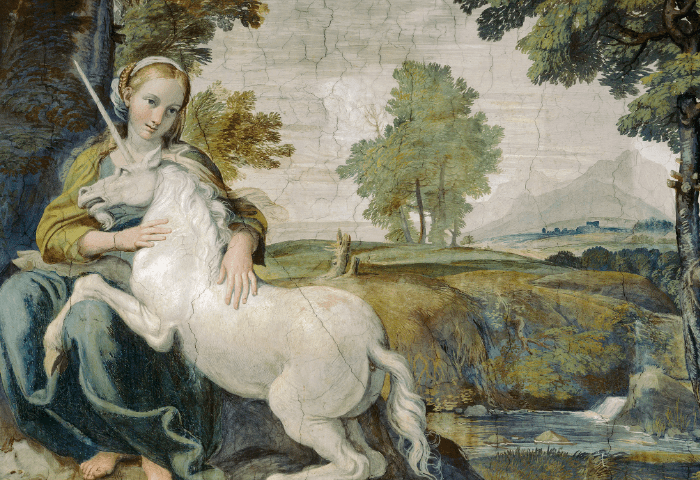
‘...the Local unicorn is a pervert.‘
The novel works on whatever level you wish to consume it. Though it is hard to walk away form it without some complex thoughts. I am still trying to digest it myself. Not to mention some of the singular lines contained within it. What I do know is it was weird, wonderful and wild.
Not done one of these for a while, but I’ve collected quotes for years and occasionally I feel obliged to share a few. We all need a little more wisdom in our life…
And some times just need to read a line that makes us smile…
Nothing is impossible, the word itself says ‘I’m possible’! ~ Audrey Hepburn
Be wiser than other people, if you can; but do not tell them so. ~ Lord Chesterfield
Life is like the ocean, it goes up and down. ~ Vanessa Paradis
Some people are so poor, all they have is money. ~ Jack Kerouac
A clever person solves a problem. A wise person avoids it. ~ Albert Einstein
Do Kind things for badgers ~ Nimue Brown
Being entirely honest with oneself is a good exercise. ~ Sigmund Freud
Three o’clock is always too late or too early for anything you want to do. ~ Jean-Paul Sartre
The secret of life is honesty and fair dealing. If you can fake that, you’ve got it made. ~ Groucho Marx
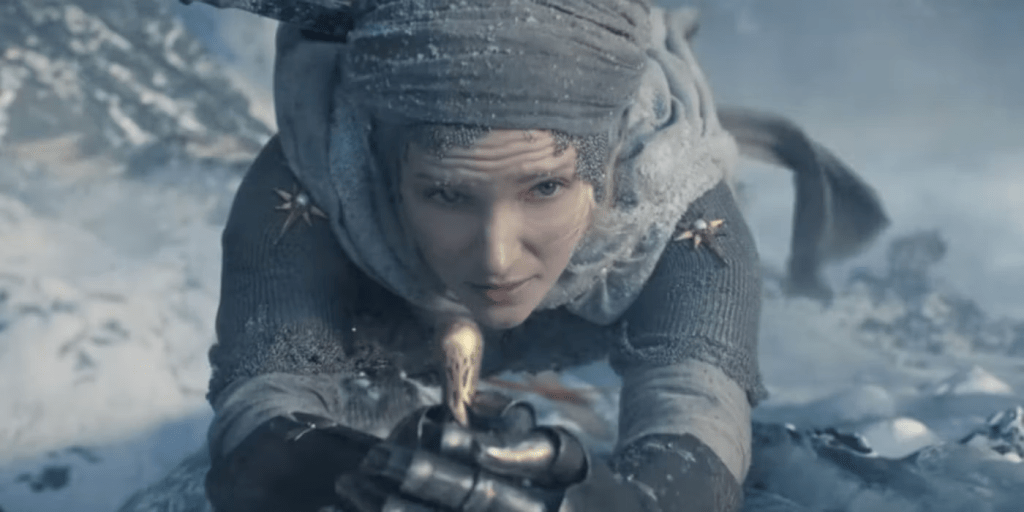
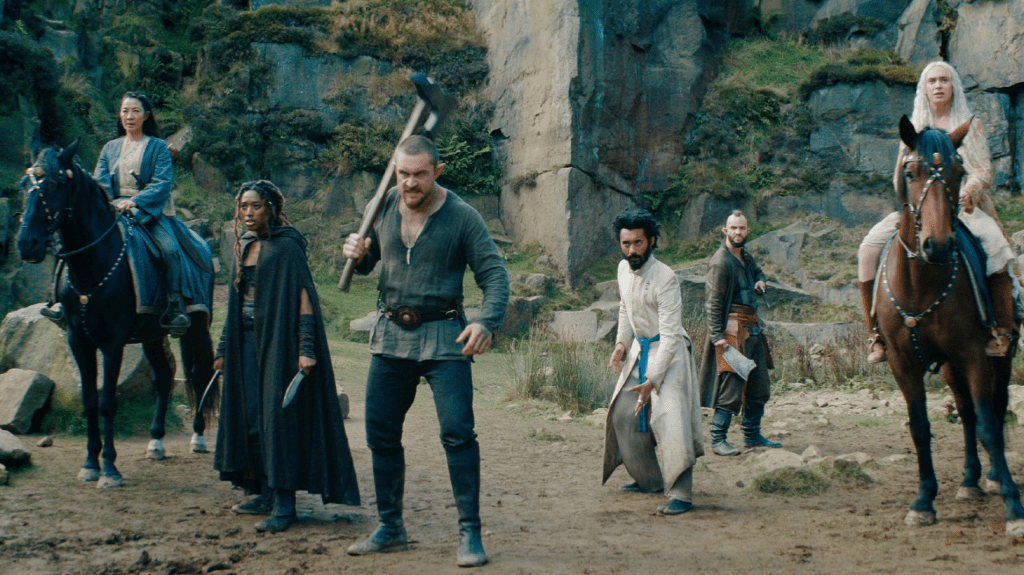
‘The Rings of Power’ Amazon’s Lord of the Rings prequel, Love letter to Tolkien’s mythology, or poorly written Sauron, Galadriel romance fan fiction? Brought to you, as it was, by more money than sense, it has it’s detractors. I have to admit I have a certain ambivalence towards it, I enjoyed the first series, and enjoyed playing ‘spot the dark lord’, but some of the flaws, of which there were many, were jarring.
The ropy CGI of the opening scene of Galadriel on the ice-wall was as convincing as some Doctor Who special effects form the late 70’s. While the ‘epic’ battle of the south-lands looked like a minor squabble between a couple of villages. For all the money thrown at the series at points it looks like it was filmed for spare change and a couple of bits of string. It reminded me at times of the mid-90’s New Zealand fantasy TV series with slightly better sets and a budget that stretched to decent make-up.
Also its reputed budget could have put a sizeable dent in child poverty, world hunger or any other good cause that springs to mind, rather than average at best eye candy for a few hours… I struggle with this as a concept.
So, as I say, ambivalent. All that said however what it did do well was the elves and the sense of otherness about them. Which brings me to The Witcher, or more specifically The Witcher prequel currently on netflic’s Blood Origin’s… Which doesn’t.
Now before this becomes a rant, which it will in a paragraph or two, I want to be clear that I love the original series, which is one of the best written fantasy series I’ve ever watched. The first season is particularly masterful in the way it was written out of sequence to better tell the story. The second season suffers slightly from the success of the first as it can not pull of the same trick, but is still good solid fantasy, made for a fraction of ‘The Rings of Powers’ budget, but is far more polished. The world is well imagined, and carefully true to the source material of the books (which I read afterwards) and the games which I have never really played.
In those two original series, the elves are pitched carefully to have parallels to medieval European Jewish society, and the treatment of the Jews which, well, the holocaust was hardly a unique event in the history of the European Jewish peoples. They were the others within society, despised, hated and blamed for all the ills of society by a cynical ruling class that will always use the other as scapegoats. (these days its immigrants that fill the role of ‘the other’ but there is nothing new under the sun). If your people are starving, blame the ‘others’. If there are no jobs blame ‘the others’ etc… The elves of ‘The Witcher’ are in essence an oppressed race in a society dominated by humans. They are also a race that has been subsumed by humanity as a servile class. However as they live within a human dominated world and have for thousands of years it makes sense that they have adopted many human traits. Ten thousand years of oppression, and being forced to ‘fit in’ with the human overlords will do that to you.
But still they hanker back to the golden age before humans arrived. When the world was an elvish world.
In short, these humanised elves felt right in the original series. They were still ‘other’ and pitched as such but how they acted made sense. Also towards the end of the second season the elves became far more ‘elvish’, rebelling against the oppression of thousands of years.This again made sense and was part of the wonderful writing I have come to expect from the series.
That writing was why I had high hopes for The Witcher: Blood Origins. On the face of it those high standards slipped a little. But it was still a good fantasy romp all the same. A bit two dimensional, with two dimensional characters and it suffered from been based on deep back story, in many ways it had similar issues to the writing on ‘The Rings of Power’ yet it drew on thinner less defined ground to start with. It also had a fraction of the main series budget,which showed at times. None of this was a problem however. It was watchable fun… Except…The elves…
Blood Origins is set in a world before the coming of humanity. This is an entirely elvish world… Yet the elves here are basically nothing more than humans with pointy ears. The society is in effect entirely human and if you remove the pointy ears from all the actors you don’t need to change anything else for this to be a world mirroring medieval Europe…
Only in this version of medieval Fantasy land Europe its the dwarves who are the Jews, oppressed by elves (presumably this is because the writers felt someone has to be the Jews…) The dwarves it seems were there before the elves , and we discover they are the ones who actually built the mysterious monoliths… I suspect this is a Russian doll of a plot point and one day we will discover the dwarfs oppressed a race of squid people who actually built them.
But back to elves…
Now I am not saying all elves need to be Tolkineque. The elves in the Dragonage games are a great example of a different kind of elves… But what they do need to be is something other than just ‘humans with pointy ears’. They actually need to be ‘other’, different, strange… This entire series hangs off one mage who does everything because he is insecure about his origins, his social class, and desperate for power because of it. All very human. Every in the make of society is the same too. Noble houses ruling, merchant class been merchanty. Lower class being trodden on.
Nothing about these elves is anything other than human, except the ears… The golden age of elves was a short lived oppressive empire after a thousand years of war between kingdoms left the continent stricken with famine… This is not a glorious elven past, its a mirror of the political and social reality of The Witcher present, but everyone has pointy ears…
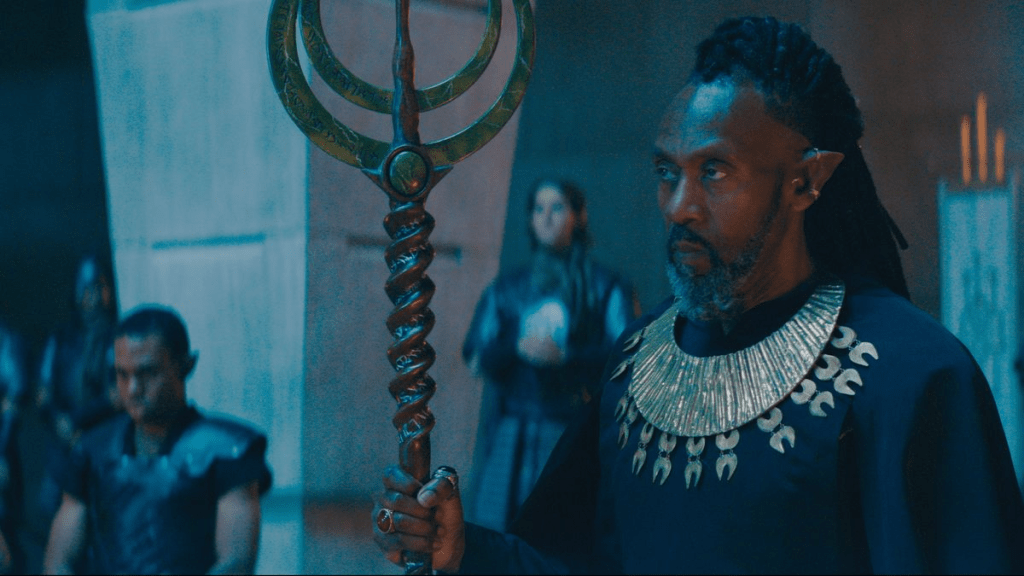
It’s watchable, there are some nice touches. Lenny Henry (who is also in the rings of power) makes for a great villain as Balor. There are nice little bits at the end, hints to the main series with a ancient elf mage realising he can use the monoliths to travel in time. The commander of the elf army picking up a bone helmet after he is vanished to another plain of existence by Balor. A helmet worn by the leader of the wide hunt…. There are other little ominous things as well. There is in fact much well crafted here…
There is much good about the series, much it adds to The Witcher universe….
It’s just all let down by the lazy ‘humans with pointy ears’ thing…
As with last year this may be slightly early, as there is a fair chance I’ll read a couple more before the end of the year. (in fact I know I will as there are a couple I am reading at the moment), but building on the tradition started way back in 2021 it is time for my annual Passing Place Blog Books Of The Year Awards. An with last year this award ceremony carries very little prestige, and no prize money… It also doesn’t have a particular order, but does include all the books I have reviewed on the blog ‘this year…’ for a given quantity of twelve months since the last rewards so includes books read in December last year…
The Award for: Book by a Steampunk Author that not Steampunk but in in fact beautifully written dark age fantasy with more than a Hint of David Gemmell in his pomp, goes to Annis: Goddess of Sorrows by Mat McCall
The Award for: Book not being a just another Talented child novel… with special mention of strange nocturnal bees, indoor rain, quires of vixens, and dirigible’s used as giant night lights… Goes to Monica Orphan By Stephen Palmer , with equal mention of the other two novels in his Conjuror Girl series.
The Award for: Book that includes Were-Otters and that not even slightly being what the novel is about but by god its beautiful, wonderful and deeply, impossibly, fascinating… Which is a new and very singular category, goes to Hunting the Egret by Nimue Brown
The Award for: Sequel for a book from last years list that is even better than the first book and deeply deeply sinister on a whole new level… goes to Visitation by Kieth Healing
The Award for: Best book in a formatted I can’t stand but read and enjoyed anyway… A special category for books of micro fiction goes to Micro Moods by Amy Wilson. If you like micro fiction give it a try…
The Award for: Books that include a fictional book within them that contains the sage advice like Do kind things for Badgers goes to When we are Vanished by Nimue Brown, just read it…. and remember Be more like the toadstool. Then you will be happy.
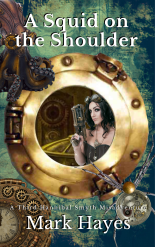
The Award for: ‘Third book in a trilogy written by the person who writes this blog’ goes to A Squid on the Shoulder by Mark Hayes., No its not nepotism, I am not related to myself… Did I mention the giant volcano powered cannon pointed at the moon?
The Award for: Novella that was a stretch goal on a kick started and I don’t actually know if it was published or not but it certainly should be… goes to Semblance of Truth by Nimue Brown… Yes that is her third appearance in this list, whats you point, have you not read Nimue Brown? And if not why not?
The Award for: ‘Book that grew out of a series of blog posts on this very blog and is now strands as a warning to all of the dangers of H P Lovecraft… goes to Lexinonicon: A Blaggers Guide to the Writings of HP Lovecraft by Me… Still not Nepotism, though I have been know to sleep with myself… I also know how to summon the old gods, whats your point again?
The Award for: Best Hardback containing a trilogy I love, goes to Hanover by CG Hatton, which is three of my favourite books sandwiched into a lethal weapon…
The Award for: I saw the ending coming a mile off, yet I was still both surprised and delighted by it when I got there… goes to Critical Nexus by Kate Baucherel the forth in her SimCavalier series
The Award for: Anthology of the year goes to Harvey Duckman Volume 9, by Various the one with the octopus on the cover that may or may not include a story inspired by the wisdom of an old plumber written by his son.
The Award for: Book by an author who is a huge ball of over-excitement but delightful with it goes to Dexter and Sinister: Detecting Agents by Kieth W Dickinson, warning book contains cats… well a cat, almost a cat at any rate….
The Award for: Best use of the colour orange… goes to Apocalypse When? Apocalypse How? a book of photograph by the immensely talented Ian Robinson , which also contains stories and poems from the writers and poets of the Post Apocalypse School of Teesside, This may include a story by me as they gave me an honour degree in ‘Waffling on about the importance of tin-openers’, I look forward to my post graduate studies in zombie slaying and woodcraft.
The Award for: Novella I loved but and still waiting for book 2 of, what he just made a new (and very cute) human with his wife, oh fine I’ll wait then…. goes to Engines and Amulets : The Aethertide Saga Book 1 by Craig Hallam. It also has a pretty cover… It’s all purple smoke (the book not the baby)
The Award for: Book by another author who for some reason thinks they should write this series under a pen name… goes to Dormant Magick: The Whitby Witches Book 1 By Lillian Brooks, who has also received an award under her actual name in this awards ceremony. Frankly I loved Lillian’s novel and don’t know why Amy feels she needs to write them under another name, though Lillian is taller and looks better in a pointy hat…
The Award for: Proper folklore of the dark and twisted verity that makes you skin itch and sets your teeth on edge… goes to Lore of the Saelvatici by Steven C Davis, which was also the most surprising book I read all year in many respects, and utterly visceral.
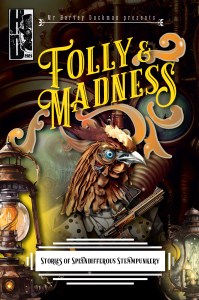
The Award for: Anthology of the year, yes a second one, goes Harvey Duckman Volume 10, the one with the gargoyle on the front by Various ( and me ) contains among other things ‘The Ballard of Jonny Two Bones’ which could be described as a western, for the first paragraph or two. It then becomes something else entirely…
The Award for: Book based on a book written by a long dead relative who based there book on a Wagnar opera… goes to Bleak Future : The flying Dutchman book 1 by Nils Visser which was also beautifully illustrated by Julie Gorringe. Its a fabulous read, but don’t ask me about the flag…
The Award for: A hardback you could Muller a badger with… goes to The Complete Hannibal Smyth Misadventures By Mark Hayes*. This is the first three Hannibal Smyth novels combined into a single book, with extra’s. It exists because I wanted a copy of the novels in hardback… *Mark is a wonderful author and a delightful human being and you should all read his books. He also likes people to buy him gin and tonics with a slice of lime, light on the tonic…
The Award for: Non-fiction book of the year other than the Lexinonicon… goes to Wyrd by Kieth Healing. Its all about runs and ‘Ball of string theory’ …
The Award for: Novella I really wish was a full sized novel , its just that damn good… goes to Owl Eyes Motel by Barbara Avon, which is just delightful in it’s dark sexy wonderfulness
The Award for: Novel I have been waiting for for four years that did not disappoint… goes to A Boy and a Rat by Peter James Martin. Which Peter can pick up provided he doesn’t send Riz…
And there we are, that the full list, mostly… I did a lot of reviews this year and some short ones and frankly the list was getting out of hand. It was only twelve long last year… I don’t really have an overall book of the year. I recommend them all or they would not be on this list, but if you twist my arm its Hunting the Egret by Nimue Brown, because, I’m a sucker for a love story, and were-otters…
Some four years back I reviewed a book of interconnected short stories about a middle-aged paranormal detective and a ‘rat’, which you could at a stretch call his partner. I equated this to something along the lines of Jim Butchers Harry Dresden novels, but set in Teesside, with a talking (generally swearing) rat. It was my first foray into the alternative Teesside of Brennan and Riz. A place I have visited many times since in the form of the authors micro tweet stories (frankly if you don’t follow their author on twitter you should) and with Peter James Martin’s many contributions to the Harvey Duckman Anthologies featuring the unlikely duo.
Back then Peter told me he was working on a novel about Brennan and Riz which was in essence the origin story. I looked forward to it, and waited…
and waited…
and waited…
and hunker down due in a global pandemic…
and waited…
and came out of the other side of a global pandemic
and waited…
and waited…
Bloody authors, tell you they are writing something and then take an age to get it written, and don’t get me started on Patrick Rothfuss… If I wasn’t just as bad my self I would scream a little…
Then finally…
So you wait for years for a book to arrive and finally it does and it sits on your to read pile for months, because readers… But eventually I got around to reading it and I was not disappointed.
Riz, when he is not swearing, cursing and generally been a bit of a swine, is a rat. Actually he is a rat when he is doing all that as well. He is also something else. Very definitely something else, but want that is, is a question that gonna remain unresolved. We may be better not knowing, certainly Brennan is probably better off in the dark.
There is a fair chance Brennan would have been better off if the rat never hid in his backpack to avoid the spring-heeled goblin murders lead by Jack the Ripper, who’s working for a Fae lord who wishes to ‘Make humans believe in the fae again’
The the emphasis being very much on ‘Make’ as it is hard not to believe in mystical creatures when they start ripping your face off, and murdering everybody. The survivors will almost certainly believe…
Luckily for Brennan he and his best friend Merrick, along with Valarie who might be Brennan’s girlfriend at some point, with a little help from the rat, are sure to be more than a match for the ancient unspeakable evil Fae Lord and his army of murdering Zebedee impressionists… Just as long as they are all on the same side and none of them are too busy squabbling. Thankfully Riz is a calming influence and Bren’s parents are perfectly normal…
Peter writes with wit and charm on every page, there is also a sense of darkness and dread that seeps in at the seams (possibly that’s Riz). If this is the first time you have come across Brennan and Riz then you are in for a treat, if you have cross paths before you are not going to be disappointed.
Also, whats a littler mass murder between friends.
“Saw Dickens do a reading once. My God, that man’s voice does things to me.”
– Holly Trinity
Harvey Duckman Presents’ 2019 Christmas Special has been re-released just in time for the holidays, now folded into the series’ main range as Harvey Duckman Presents Volume 12. (Days of Christmas, that is…)
Among the fantastic festive tales of renegade fairies, festive dream worlds, nightmarish Santas and why elf on a shelf is just plain dystopian is my first contribution to the Harvey series, The Carol of the Bells. It’s also the first print appearance of Holly and Mira, who investigate the mystery of York Minster’s ghostly monk. Very happy to see this collection getting a new push.
Lurking inside are stories by Thomas Gregory, Andy Hill, Peter James Martin, Craig Hallam, Kate Baucherel, Cheryllynn Dyess, Marios Eracleous, Zack Brooks, Ben McQueeney, Maggie Kraus, Gerald Wiley, Lynne Lumsden Green, Mark Hayes…