This morning, as I got in the car to drive to work, the radio told me Meatloaf had died.
Meatloaf, particularly when in combination with Jim Steinman’s lyrics, has long been part of my life. My older sister bought Bat out of Hell the first time round, while she still lived at home. My mother, of all the musical choices she could have made, used to set up the ironing board and iron to it. A few years later I would borrow the album and play it and Dead-Ringer while I hammered at the keyboard of my dads old typewriter attempting to turn keystrokes into stories. One of the first albums I remember buying was Bad Attitude, Meatloaf’s first post Steinman album, which was something of a flop in trhe charts but I still kind of like…
Meatloaf was never cool, Bat out of Hell came out in 77, in the middle of punk, year was operatic pompous over the top Rock and Roll… He never became cool, which I think its a blessing. Cool never lasts, cool is fleeting, Queen were never cool, nor were the Stones come to that. Meatloaf’s music was just powerful, awesome, and inspiring. It didn’t care what you thought of it, it would belt out at you anyway, and because of that it was something special…
Those songs, and that music will mean different things to different people, but I suspect they mean something to everyone. I suspect they touch us all one way or another over the years. To me back in 77 when I was 7 years old growing up in a northern city, those song were all of a different world, a world of endless highways, burning sand on midnight beaches, screaming engines, cheery red lipstick and everything America impossibly was in my 7 year old imagination…
So, while I have not listened the full album of Bat out of Hell in years, due to the way we consume music in this digital age. I think tonight I shall put the album on the turntable, after I have blown the dust off it. And maybe offer my throat to the wolf with the red roses, as heaven it seems could not wait any more…
I don’t like micro fiction. I say this not to denigrate it as entertainment or indeed as an art form. It is simply a personal thing. If pushed as to why I don’t like it then I will admit that in truth it is simply because I don’t see the point of it. But let me be very clear, this is just a personal opinion, nothing more.
I like a good short story, god knows I have written enough of them. A good short story should have enough in it that you care about the characters, that you find that strange emotional involvement with the text that will elicit shock, or rage, or sentiment. Joy, loss, anger, love, hate… This is not a matter of length alone. I know some brilliant really short stories, a little over, or perhaps less than a thousand words. But these are exceptions, not the rule. To connect to a short story it must be just that, a story.
Which brings me back to micro fiction, and why I’m not a fan of the form.
Micro fiction is at its best just a slither of a story, introduction, situation, resolution in a few short lines. Yes there is craft to it, art to it, but there is also nothing to connect to. It might take a minute to read, and after reading it, its gone. I haven’t been with it long enough to care.
At its worse, micro fiction isn’t even that, its an unsatisfying glimpse at a story that ends without really going anywhere, because so many micro fiction stories are written as micro fiction… Which is to say, they don’t end because they have reached the natural end to a story but because observing the form is more important to the writer than telling the story. ‘This is a micro fiction, therefore it must be a micro fiction…’ Which is fine, as it goes, except for me I find it impossible to write anything based around restrictions of that kind.
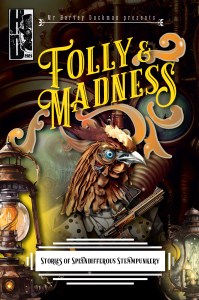
Should you ever meet her, and be short of better things to talk about, ask Gillie Hatton, the editor of the Harvey Duckman anthologies about just how strictly I observe word limits with my short stories… Which is not to say I don’t have stories in the Harvey anthologies that obey the 3000 word limit,. I do, but that tends to be the exception, not the rule. A couple of my stories in the Harvey’s are closer to 8k, because, and this is the important point for me, that’s how many words it took to tell those particular stories…
So, what is the point of micro-fiction. What is the point of a story that can be read in a minute, and remains in your consciousness for less than that. How can anyone possibly tell a story worth reading in less than 500 words? In 300 words? in a half dozen lines? Surely this is symptomatic of the disposable nature of modern society and has the value you associate with that self same disposability? More importantly how exactly do you read micro fiction. You can’t just read a book of micro fiction cover to cover… Well you can, but as an experience it lack something, how can you engage with a bunch of unrelated stores in such a short format without each overlapping the other…
So, anyway, having established I am not a fan either as a writer or a reader of Micro fiction, I’ll get to the actual point of this post, which is a review of a book called Micro Moods, written by a fellow Harvey writer Amy Wilson, which is, as the title implies, a book of micro fiction. Well this is going to go well isn’t it…
Actually though, yes it is.
Micro Moods is a collection of 140 micro fiction stories which cover the breath of human experience. The collection is divided up in to five loose categories, Fear, melancholy, hate, love, joy. Each is engaging, interesting, complex and to an extent prose poetry more than just stories. They explore the inner workings of the mind, emotion and experience. Take fear, the stories all have the edge of horror and trepidation, you know something terrible is going to happen, but they manage to forestall your expectation all the same. It is not so much about the event, but the anticipation of the event.
Likewise the melancholy stories, all of which are small but beautifully crafted insights into the inner thoughts of the troubled.
Many of these stories are ostensibly female stories written in a female voice, and it is a testament to the power of these stories that even though these are very short they manage to instil a layer of discomfort and awkwardness for the male reader. But then many of these stories are meant to be unsettling for any reader. There is a darkness to them, but it is a darkness that at times is counterpointed with light.
I read these stories in strange places, and at stranger times. the book followed me around the house for a few weeks. Laying on my bed side, or at the side of the sofa, on the kitchen table, on the doorstep while I enjoyed a coffee in the sunshine one Sunday, and other places. Often I read a story or two and then it would be left behind and it wasn’t until I returned to the vicinity that I read another. It’s a book that can do that, and that you dip in and out of and that your never quite sure what you are going to read for that couple of minutes while the kettle boils.
But what you will read will be interesting, strange, upsetting , joyous dark and wonderful often all at the same time and in less words than you would think possible it will leave you thoughtful, or horrified,. angry , happy or sad.
So you should buy it, and treasure it’s little windows into the recesses of the soul.
I still don’t like or understand micro fiction. I still don’t really get the point of it. It always leave me wanting more, because it isn’t enough. But that’s me, and plenty of people love it. If you are a person who loves flash fiction, then take it from someone who doesn’t, this is one of the best collections I’ve ever read, by a writer who is a master of the art form. So its worth your time if its your kind of thing, or even if its not…
That said, personally I think Amy needs to stop faffing about with these silly things and finish that damn novel she has been writing since before her first Harvey Duckman story. But then I am a miserable old sod, who has been looking forward to her novel for years.
Writing is, so E.L. Doctorow would have it, a socially acceptable form of schizophrenia. As quotes go, I find that one just a tad depressing. Mainly because it has a smidgeon of truth to it, for me at least, I would never presume to know how other writers write, but I have many a conversation with non-existent people in my own mind. Some of which get written down, so of which disappear into the ether…
Writing is, in many ways, my way to dealing with the world. It is often frustrating, demanding and drives me to distraction. It often is a case of framing my thoughts and neurosis in such as way that I can process them. Why this tends to be fiction is simply because fiction is the easiest way to put a lay of separation between what I write and my thoughts. A separation I need to be there.
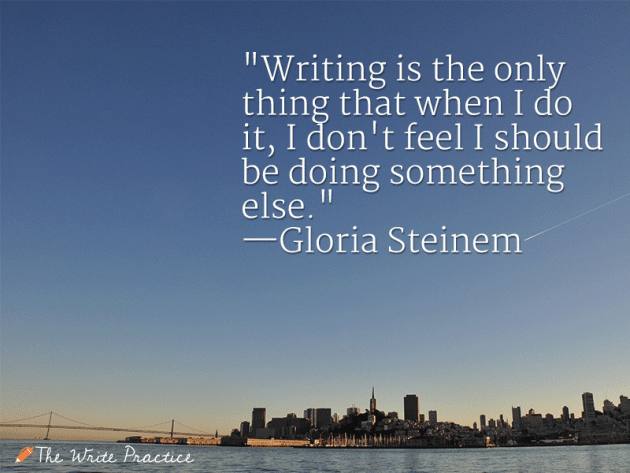
My fiction is, in many ways, a by product of my coping mechanisms. It always has been I think, though when I first starting writing in my late teens I didn’t understand the why of it. What I do know is that without writing, published or not, I would have struggled far more over the years. It is my therapy, and often my source of joy. No matter how difficult it can be, it is central to my mental health, and how I face the world. Also, as Steinem eloquently puts it…
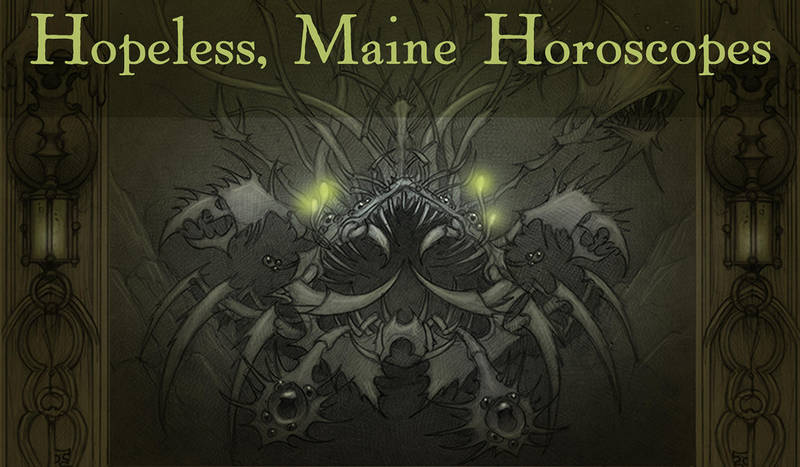
The strange, beautiful, and fabulous people over at Hopeless Maine are holding an online convention of sorts this coming Saturday evening.
Baring anything unexpected coming up I shall be in attendance with a bottle of rum, and I may even make some vague attempt to be witty at some point… Though I’ll probably just enjoy the show, and hide from view.
Anyway, should you have an hour or two to spare, or the whole evening, you could do worse than to pop along.
Of course there is no guarantee you will be able to leave afterwards, this is Hopeless after all, so best arm yourself with your best fighting spoon beforehand.
On the 22nd of January, there will be an online Hopeless Maine festival, which is an exciting prospect. I’ve already got some brilliant content in from people involved in the project, with more to come. One of the things I love about Hopeless is that it has always been a community thing and that’s very much part of what it’s for.
I had a number of reasons for wanting to do this. One is that everyone being online during the pandemic opened up a great many things for disabled people, and now those things are going away again, which isn’t ok. I wanted to offer something. I also know that in the UK January tends to be a miserable month with not much happening, unpredictable weather and post-festive crapness. So I thought it would be nice to do something fun where no-one has to travel.
Back at the end of November I reviews a novel by Keith Healing called ‘The Burnt Watcher‘, I was, you may recall, quite taken with it, and the post cataclysm world in which it took place. Not least because it had echo’s of the ‘old tentacle hugger’ from Providence Rhode Island and more importantly Robert W Chambers. And lets face it I’m a sucker for an old gods, pervasive evil and dark undercurrents…
One problem I did have with the first novel, which I didn’t bring up in the review, was the perspective and tense in which it was written, which is first person present tense. When I say problem, the problem was not in the writing, so much as in the reader. That is to say it is not a style I am overly fond of in anything but short stories, and even in short stories it has to be done well. It is perhaps a tribute to the novel and Healings writing that after the first chapter or so, this was a minor niggle and something that only threw me occasionally, while the advantages of this style lent themselves perfectly to the brooding pensive atmosphere that drags you along.
It’s a style Lovecraft used a lot, to a greater or lesser success in his short stories. The Rats in the Walls being a fine example. He also used it less successfully in other short stories, but the main strength of the style is that you learn everything for the central characters point of view, and if done right you can feel the consequences and certainly for Lovecrafts characters the slow descent in to madness along with a sense of disconnection and uncanniness as it creeps in. But while as a style this lends itself to a short story, across the breath of a novel it is harder to pull off, with ‘The Brunt Watcher’ Keith did a impressive job of maintaining the slightly off kilter nature of the narrative without it losing me as a reader. It did however beg the question he could continue to play this hand successfully in the sequel…
Which brings me, rather neatly, to ‘Visitation’ the second novel in Healings ‘the Fear’ series. Like the previous novel it is written from the perspective of Hobb Grey, the burnt watcher form the title of the first novel, once again inn that first person present tense style. Form the off however it is clear that this novel has a much broader scope than the first, in which events took place in a small isolated village called Stonehouse just south of the city of Gloster (analogous to modern day Gloucester, though a few miles south of the current city for reasons that stem from one of the main premises of the novels…) Instead of almost the entire novel been set in a single isolated community, the first half of this novel takes the reader on a trip through the west country, giving the reader a much broader view of this post calamity world and the people who inhabit it.
Along the way Hobb’s ‘apprentice of sorts’ Alice is revealed to be more than she seems. The hangover of Stonehouse is perhaps not the only reason for this. Hobb’s own hangover from Stonehouse also broods at the back of his mind. The encounter in the first novel with the yellow king is far from resolved. the tension between the pair of them increases as they travel to the south west to investigate what caused a ship to crash into the docks back in Gloster. There is something dark and pernicious at play, and the further they travel the more Hobb starts to fear what they will find, and what it will mean.
What they find at the end of their journey changes the relationship between the pair for ever, as measures Hobb feels forced to take to save Alice leave her scared both outwardly and inwardly. But it is on their return to Gloster that things take a real turn for the worse. There is a plague in the city, a plague that is not entirely natural. Hobb must take steps, but every step he takes costs him a little more, and takes him further down a dark road, a road littered with broken friendships, broken bodies and broken minds. All the while their is a presence, shrouded in darkness with just a hint of sickly yellow, prying its way into Hobbs consciousness…
That and a certain city…
Strange is the night where black stars rise,
And strange moons circle through the skies,
But stranger still is Lost Carcosa.
Despite, or perhaps regardless of limitations of a first person present tense narrative Visitation is engrossing, dark and pervasive Horror fiction at its best in a strange and interesting world. Indeed, that slightly off-putting style adds to the sense of disconnection and strangeness, so works perfectly in that regard. There is much more for Healing to explore in the world of The Fear, your left with many questions and wanting to know more, and fearing to know more in the same instance.
You can read this as a stand alone, though I am not sure why you would, as it is as masterfully written and engrossing as the first novel.
.
There is also a artist, who Hobb befriends. An artist who becomes obsessed with a strange vision and driven by it… If you’ve read as much Lovecraft as me, I suspect you will fear for him from the moment he is introduced… You’ll not be disappointed.
Putting the Horror back into Horoscopes, those luverly people trapped for all eternity on the fog bound isle of Hopeless Maine, nothing here to worry about at all…
It has to get better, we thought. People will be comforted if they know that, we thought. And so we looked, and we could not look away, and we knew terrible, unspeakable things and blood poured from our eyes and we screamed all the time we were writing this. The universe doesn’t love you even a little bit, and it loves us even less.
Capricorn: You keep dreaming about the donkeys on the roof. This year you will start waking up on the roof and it’s only a matter of time before you start wondering if you are a donkey. Some of you have always been donkeys. Some of you are now turning into donkeys. Some of you are only dreaming about it. You will never be able to tell which one of these things applies to you.
Aquarius: You will grow extra parts of yourself and will live in…
“Listen to them, the children of the night. What music they make!” ~ Bram Stoker
Music has always been a big part of my creative life, despite my utter inability to play any of the many guitars I own, or carry a tune in a bucket, for despite my lack of musical talent I have always had a great appreciation of it as an art form. It also, importantly, plays a huge part in my own art… If the random scratchings of my pen nib can be called art.
I have always written to music, even way back in the late 80’s when I would sit at my dads ancient old typewriter in the dinning room of the family home, typing horrendously puerile fantasy ‘epic’s’, while playing an ecliptic collection of albums on the huge old fashioned stereo.
Unsurprisingly much of my taste in music grew out of chance and randomness. Back in 1985, at the tender age of 15 I spent all the money I had saved up form my paper round to buy a ticket to see Bruce Springsteen at Roundhay park play My Home Town, in my home town. The boss was the biggest name in rock and roll in 1985, it was the year of the Born in the USA album. I as you might imagine knew almost nothing about him or his music at the time. He was just the big name doing a huge outdoor gig in Leeds. As gigs go, Springsteen in 1985 defined the word epic, I was spell bound. Before the summer was over I owned his whole back catalogue, except, oddly enough ‘Born in the USA’ which I didn’t buy for another twenty years.
Springsteen to my fellow teenagers in the mid 80’s was so huge he was by default uncool. Typically I didn’t give a damn. I also spent a lot of time writing ‘badly’ to ‘The River’ and ‘Nebraska’. And through Springsteen I started listening to Gary US Bonds, John Cougar Mellencamp, Little Steven and other Americana. Mellencamp in particular influenced my writing life in later years, the opening chapter of Passing Place was inspired in no small way by his track Minutes to memories off the Scarecrow album.
It was another piece of randomness the following summer, after I left school at 16 that led me down another path musically. A band called The Mission had a song in the charts called Wasteland that my mate Scottish John used to put on the jukebox about once an hour in The Barleycorn pub lower Armley, where me John, and several other unconvincing idiots managed to get served while being clearly underage, as long as we stuck to the snug and kept our heads down. Which we did, right up until John started his obsession with The Mission. At which point the Landlord started to get irritated as every other song that got played in the Barleycorn was from another decade…
John convinced me to get tickets, and that he would pay me back, Somewhere between buying the tickets and the gig, John gave up on music because he gained a girlfriend… This left me with two tickets for a band I knew nothing about, and as is the way of these things I went to the gig alone.
Thus began my love affair with Goth music, as the mission came out to the theme from dam busters, with huge flans blowing fog banks of dry ice out across the gig, and thunderous cords rang out. This was the Gods Own Medicine tour, the next day I bought their entire back catalogue, and everything by The Sisters of Mercy, from which they sprang…
The support from that gig were a little known local band called All About Eve… Who are still one of my favourite bands to write to, The Mission themselves not so much as its hard to write and dance at the same time…
This little tour down memory lane aside, music and writing are indelibly linked in my mind. Different artists have influenced my writing and some have been constant companions, I still write to the acoustic Springsteen albums, Nebraska and The ghost of Tom Joad in particular. Occasionally if I can stop the urge to dance The Mission and The Sisters, and plenty of others. But my mainstay for writing has almost always been female artists, or lead singers and of a certain type. Quirky, a little left field and on occasion a little odd, folky… For some reason these female voices are the muse I need to write.
All About Eve, that support band from the Mission gig in 1986 for example, with the mellow passionate tones of Julianne Regan at their heart. Susanne Vega, Alanis Morrissett, Fiona Apple, Tracy Chapman, Amanda Palmer, Dresden Dolls, Suzie Sue, to name some of the mainstays, though their are plenty of others.
Perhaps it because I know so many of these artists music intimately, though the same could be said for a lot of male artists, but they are the sound track to the tapping of the keyboard, just as much as back in the dim dark past I was writing to Bowie and Springsteen. But unlike Bowie and Springsteen and other male artists when I listen to female artists the writing flows more. Don’t ask me to explain it, I am not sure I can, but I doubt there is a single chapter in Maybe, for example, that wasn’t edited, rewritten, and proof read at some point in the process while Julianne Regan sang Scarlett… Hannibal for some reason requires Amanda Palmer singing the ukulele song before he is prepared to leap out on the page. Short stories need either Susanne Vega or increasingly Fiona Apple, in order to get a workable first draft.
The point of this wondering diversion, if it has a point and I’m not sure it does, is I recently was introduced, by Steven C Davis to Unwoman, an America artist who had escaped my ear until I listened to Steven’s Hopeless Maine based pod cast on GASP (Gothic Alternative Steampunk and Progressive radio show) . And I was taken with Unwoman’s voice, and the music. It struck me that it was perfect writing music, and a writer always needs a new muse.
I then of course forgot about it entirely, as I am utterly useless, until I was remined of it in a twitter post from steampunk explorer earlier today. Work being quiet though I bought the wonderfully titled album ‘Of My Own Space and Time I Am Queen’ off bandcamp and gave it a listen…
Thus began my rabbit hole afternoon, listening to music while I ‘worked’ and seeking out Unwoman on YouTube once I had listen to the album a couple of times… Which led me to this utter utter gem of a cover of NIN’s Hurt…
Gloucestershire is, I have come to believe, a strange place. Maybe it’s something to do with the waters of the Severn, or the wind blowing out of the Malvern hills, or maybe it’s something in the soil and the roots of the earth. Some ineffable quality that has made it an odd little Bohemia of literary excellence and artistic joy. A loose knit colony of inventiveness, wonder and talent….
But it is defiantly strange… in the best of ways.
I am saying this as a Yorkshire exile, living in modern dystopian Teesside, just down the road from those flaming towers that inspired the opening sequence of Bladerunner, which is in its way my own little literary Bohemia. Perhaps there is something about culturally distinct isolated collections of small towns. Perhaps it is simply in large city’s artistic community’s are too dispersed to thrive in quite the same way… Perhaps there are little communities of writers everywhere, and we just don’t see them… Perhaps I only noticed the Bohemians of the Severn because I spent a couple of days down there earlier in the year… Or perhaps its just unique.. I am torn if I am honest… I like unique strangeness, so I am going to go with that for now…
In recent months, the occasional, sporadic book reviews I hopefully engage and entertain with on here, have been heavily influence, like my bookshelves, by those Bohemians of the Seven. Influences that have been creeping in like happy little tentacles for a few years in fact… Meredith Debonnaire, Tom Brown, Nimue Brown, Matt McCall, Stephen Palmer, Keith Healing…
Perhaps it really is something in the waters of the Severn, the name of the river etymologists would tell you is derived from the British Celtic word Sabrinā, and no I don’t know exactly how you pronounce that ā at the end, but Sabrinā is also, depending on interpretations, the name of Celtic princess, or a nymph that drown in the river. Folk-law says she is now the guardian of the river, a not entirely benevolent one… Occasionally she demands her due in blood and bone…
Sabrinā cropped up, in an unfortunate way (for her) in Monique Orphan, Being as I am, an ignorant northerner, I wasn’t entirely aware who she was, until I looked her up. I thought at first she was just another of Stephen Palmers wonderful inventions. Until that was she cropped up in the next book I read… Which happened to be from another of those Bohemians of the Severn… Honestly its got to a point Gloucestershire writers have their own shelf in my library… And what an odd but fabulous shelf that is… The latest book to go on that shelf though is a little out on its own…
Nimue Brown, is one of my favourite writers. I originally types ‘is becoming one of my favourite writers’ then realised that was a lie… there is no becoming here, she most definitely just is. I’ve read rather a lot of her work, including some of her none fiction. But the latest of her books I have indulged myself with is somewhat different from her usual fair. This is no bad thing, Nimue has both the raw talent and intellectual grace to write anything she damn well choses. But the latest book of her books, (latest to me, to be clear, she wrote it a while ago) is defiantly a departure from quirky steampunk, and gothic fog shrouded islands. It is somewhat more serious, and defiantly more adult in its themes (these by the way are both the correct and the incorrect terms, I am just not sure how else to say what I mean.)
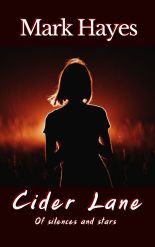
It is also by way of a romance, a genre I seldom read, despite having written a novel that has been described as a romance once myself. Though I am never entirely happy with describing Cider Lane as a romance, even though it is. Cider lane is about two ostensibly ‘broken’ people who find some solace in each other, it is also a lot more than that, and in some ways less… But I’m not talking about my own work here.
Hunting the Egret, is about two ostensibly ‘broken’ people who find some solace in each other, it is also a lot more than that. It’s a LOT more than that… But to deal with the ‘broken’ people first. Gareth is defiantly broken, his sense of self worth is, well it would not fill a thimble, he has suffered abuses that, well he has been broken for most of his life and those he has ‘loved’ for want of a better word have only abused him further, locking him in a cycle of BDSM servitude, which has long stepped across the line from kink to abuse . Verity on the other hand, well she has other issues ‘broken’ would be the wrong word, troubled would be better. Verity has a hard enough time relating to normal people, and Gareth isn’t ‘normal’ by any standards, but then nor is she, however she is not normal in very different ways.
One of the reasons, aside the author which would have been enough to start with, that I bought this book is because it described itself as containing ‘magical realism’. Which it does. An American author and friend of mine described Passing Place as being a magical realism novel. Which was an odd description I thought as I had never thought of it in that way, but as Hunting the Egret contained ‘magical realism’ it seemed a good idea to read it, for curiosity alone. And, you know , Nimue wrote it which was reason enough.
The novel has a sense of place about it. Which is along the banks of the Severn. A landscape Nimue clearly knowns well, and I know not at all. But having read Hunting the Egret I feel I know it… In the same way I feel I know the north Yorkshire moors around Howarth because of the writings of a certain Miss Brontë. The Severn is an old river, and an old border, between the Celtic west and the Saxon kingdoms. Unsurprisingly there is a lot of folk-law surrounding it. Sabrinā is only the start. Its a tidal river as well, one unique because of the Bore wave that occasionally travels it length. So its unsurprising there is a lot of myths about the area.
Verity is for want of a better description, a pagan, granddaughter of a self professed witch, and daughter of an unlikely and not entirely successful marriage. Her fathers is a water born hermit on a canal barge, most of the time… While her mother, well actually I would really like to know more about Verity’s mother, there is a story in there I am sure, but at the same time I am glad, for this novel at least, that the mysteries surrounding Sorrel remain mysteries. She has certain fay qualities shall we say. Verity has inherited much from both sides of her family. She also has small ears and likes to swim in the river, but not in the way you might first imagine.
This is a romance… There is passion… There is also brutality, both the brutality of the natural world, and the brutality of the human one. At least the former is more honesty in its intent… The human world has been brutal to both Gareth and Verity, in different ways. For the passion to survive those brutalities both must come to accept the other for who and what they are and find a balance of a kind between them.
From a less gifted author this novel would be a mess, certainly I don’t believe I could have written it, Nimue somehow makes it seem effortless and draws you in. Yes this is a romance, and aspects of the novel follow the kind of plot you expect in a romance. But it is so much more than just a romance. It is dark, and gritty, and the darkness comes in strange places, not always as obvious as you make think, there is an encounter in the river between two otters that’s in many ways as dark as anything else that happens in this story. Though that at least is part of natures brutality, rather than that created by humanity. Yet for all the darkness, the grim sections, the brutality, and there is that word again, it has an uplifting nature to it as well. It is after all a romance, and a story for the romantic within us all, even cynical Yorkshiremen.
In short it is beautiful, strange, magical, and in its own way uplifting, but mostly just beautiful…
And, we should all listen to hawthorn trees more. They are both wise and witty.
I’m a little tired and world wherry when it comes to ‘talented child’ stories. This may seem a little harsh, indeed it is, but as the basis for a plot it has been around along time, particularly in fantasy, sciFi and other genre fiction. Admittedly you can say the same for almost any major plot device. There is nothing new under the sun. But Genre fictions in particular tend to attract this one for, admittedly, good reasons.
You know the plot I suspect, but let me lay it out anyway just in case you wondering what I’m talking about.
A young person, of confused parentage, most often an orphan, living in reduced circumstances, starts to manifest unusual powers. Powers they don’t understand, and deny having even to themselves, Powers no one can explain. Generally these powers are of a kind they should never have due to been the wrong class, or race, or gender or because they have ginger hair… Powers they have to hide from everyone but a couple of friends, who will agree to keep the talented child’s secret.
There will of course be sinister figures of authority hunting them once through some misadventure or lack of understanding they almost reveal themselves. There will be a mysterious adult confidant who will advise them, but that confidant will be of some reduced station difficult for the talented child to fully trust. At some point the friends will be imperilled because of the talented child and trust between them will also break down. Tension will build and build towards some from of showdown. And things will be come ever more perilous…
There is nothing wrong with this plot. It has been a very successful plot for a great many books. It has echo’s every Harry Potter novel for a start. Though Potter may have any accolades but originality isn’t one of them. There are aspects of the Nania books in there too, and the sword in the stone. Gaiman’s ‘The Books of Magic’, indeed even Star Wars when you come down to it is the story of a Talented Child coming into powers he doesn’t understanding. All of which, and many more, predate JK Rowling’s tales of a wizarding world. And post Potter there are many more. But as I said, with good reason, because as a fantasy plot it provides mystery and as the protagonist explores their own powers and how they fit into the world the reader is gradually exposed to that world themselves in a natural organic way.
But as I said in the beginning, I am a little tired and world wherry of ‘Talented child’ stories. Mainly because I’ve read so many of them.
I’m explaining all this because of my reaction when I was asked if I would like a review copy of Monique Orphan, by the books author, Stephen Palmer. I was a little trepidatious about it. The name of the book, and the blurb on the back, more or less screamed ‘Talented child plot’ at me. In fact it couldn’t have scream this any louder. This would be that same well trodden path, and while it could prove to be a very well written, well thought out and a beautifully crafted jaunt down that well trodden path, it was still going to be that well trodden path all the same.
In short, I didn’t feel it was a book that appealed to me.
Partly because I know I can walk around my house (others would call it my library), and lay my hands on many books that would all fit neatly into the ‘talented child’ plot. Books I’ll have read at some point over the last few decades, in many cases more than once. So what I look for in a book is something different, something new… Another reason is related to this, the protagonists of all Talented Child novels tend to have a very defined moral compass. We (the reader) are supposed to feel sorry for them, root for them, and want them to over come the dice that fate has rolled them because they are representations of good, if they seem occasionally misguided in how they seek to be good. As such I tend to find the protagonists tend to start off ‘nice but dim’ and while they always make mistakes, they remain ‘the good ones.’ As characters they lack shades of grey, and these days I find such characters dull.
And here in lays a confession, I’d never been tempted to buy and read Stephen Palmers earlier series, The Factory Girl, despite the books having beautiful Tom Brown covers, and reviews from people I trusted. When I looked at them last year I read the blurb and despite the premise sounding interesting my first thought was ‘talented child’ and I decided to give them a miss… So when Stephen asked me if I wanted a review copy of Monique Orphan, and I read the amazon blurb, I thought I knew what I was in store for. I thought I knew exactly what I was going to get. That self same well trodden path, down which I’d walked as a reader so many times. The same path I had side stepped with his earlier series. Indeed if the blurb was anything to go by it was even more a ‘talented child’ novel than the factory girl novels.
Here is that blurb, just to illustrate my point…
In an alternate 1899…
Monique, resident for as long as she can remember at Shrobbesbury Orphanage, has a strange talent, which she neither understands nor can control. This talent, however, is only supposed to be possessed by men.
Should she conceal her abilities in order to survive, or should she be true to herself? If she hides her gift she will languish, yet if she reveals her true self she will be hunted down and experimented upon by men whose talents outshine her own…
A most peculiar adventure through a fantastical alternative fin de siècle Britain where the darkest creations are those that come from within.
So ‘Talented child’ it is then…
But, as Stephen had ask me if I would like a copy to review, and I’d given him my usual speech ‘I don’t take review copies, I prefer to buy books, that way if I don’t like them I don’t feel obliged to write a review, as I only ever do honest reviews and only ever review books I love.’ , my catch all for getting out of writing derogatory reviews if I hate a book. I bit the bullet and bought a copy. Despite the book not exactly leaping out at me in the ‘I must read this’ stakes.
So, then the book arrived, and joined the to-read pile on my bedside cabinet. Where I may add it was up against quite a lot of other solid contenders, vying for my attention. Several mainstream books people had recommended me of late which I hadn’t gotten to, a couple of classics I wanted to revisits, a couple of other books by indie/small press authors I’d wanted to read.
The usual pile in fact.
And there it sat… staring back at me. Saying , ‘Hi, I’m another ‘Talented child’ book, please read me… Oh go on please…‘ While I tired to ignore it.
I meanwhile finished a fabulous mainstream book that had been recommended to me late one evening. Norwegian author Camilla Bruce’s novel You Let Me In. Which while I won’t be writing a review (as its mainstream published and doesn’t need any help to find an audience from me) But I’ll recommend to everyone now in passing. Having finished this, thought about it, scribbled some copious notes on a couple of aspects of the book in question, thought about it some more and unwisely gotten myself a coffee, I reached the point at which I needed to rummage through my to read pile trying to decide what to delve into next.
I was not of a mind to read another mainstream novel, or one of the looming classics. Wuthering Heights in my opinion should only be read in the dark of mid winter with a gales blowing out side, rain lashing at the windows, a small fire in the hearth and by the light of a guttering candle. Teesside weather was remarkably calm that evening, so Emily Bronte would have to wait… Therefore I was left with one of the several small press novels in the pile. One of which by an American friend I was struggling with, another was a sequel to a book I read and reviewed earlier in the year, that I was looking forward to but wasn’t quite ready to read, and one I suspect would turn out to be not entirely atypical romance novel by one of my favourite small press writers, which might, like Wuthering Heights also deserve a good storm brewing in the heavens when I sat down to read it. And finally Stephens, Monique Orphan, for which I was still struggling to find excitement to temper, given the whole ‘talented child premise.
Also I had no idea what kind of weather it might need, though gloomy overcast drizzle is generally good for novels set in Victorian times I’ve found.
However, I realised, one of these books I had been specifically asked to read. The authors of the other indie books in the pile didn’t know I had the books in question, because I don’t tend to tell authors I have bought their books until I have read them, and then only if I loved them, for the same reason I don’t review books unless I love them. There is enough negativity in the world, why the fuck add to it… And just because I didn’t like a book doesn’t mean no one else will.
The upshot of all this consideration was then only one of these books I felt obligated, to an extent, to at least give a go. Thus while fully aware I was in for a ‘talented child’ novel, and well aware of my reservations and lack of enthusiasm for that same old well trodden path, I decided to bite the bullet and give Monique Orphan a go. So I picked it up off the to-read pile, planning to read the first couple of chapters before calling it a night, and then seeing where I went from there.
Dawn broke the following morning around 8.00 am…
I know this because of the glow beyond the curtains, and my sudden realisation I was half way through a novel about a talented child and had somehow forgotten that sleep was an option with some wisdom to it, even if I didn’t have to go to work that morning…
Now, if you have been paying attention, and your still reading this somewhat extended witter even by my standards, you’ve probably guessed that I wouldn’t be writing this blog, which is by its meandering way leading to a review of Monique Orphan unless I loved the novel… To reiterate, I don’t write reviews unless I like what I am reviewing. The world has enough negativity in it without me adding to it, and frankly writing a shitty review is easy, people sadly do that all the time, tearing things down is easy, too easy, so I see no reason to do it as well. I may’ve read far too many Talented Child novels in the past but there are plenty of people who won’t have, people who might love this book even if I don’t. So if I hadn’t enjoyed the book, well why share my opinion?
But I did love it. I loved it despite it being a talented child novel, despite it walking that well trodden path… Though despite is the wrong word, and while it walked that path, while indeed everything I wrote earlier about ‘Talented Child’ plots in general entirely applies to Monique Orphan, the novel is also so much more. It may walk the familiar path but it blurs the lines. Indeed, it doesn’t so much follow the path so much as wander back and forth across it while heading in the same direction. It takes, in short, a more interesting, stranger, and a more engrossing path.
For a start there are lots of little details of Monique’s world that are both that every familiar late Victorian setting and aren’t. This late Victorian England is not an England you would recognise. For one thing it is much diminished it size. Somewhere up beyond the midlands you enter Danelaw, a northern England that is separate and rule form Jorvik (the old Norse name for York) and while this is only mentioned in passing to an extent, as a Yorkshireman I can not tell you how much that idea appealed to me… There’s also an undercurrent of religious bigotry left over from Tudor times that I suspect has a little more truth to it than other depictions of Victorian England would have you believe. Northern France, Paris in particular, has been drown by malignant magical means and London is full of French refugees. There are river spirits, indeed Sabrina goddess of the river from actual folklore puts in an appearance, there are strange nocturnal bees, indoor rain, quires of vixens, dirigible’s used as giant night lights and other assorted oddities.
Monique’s world is then an odd one. But, and here is where Palmer holds your interest as a reader, it is explored though the eyes of those to whom all this is, to an extent at least, normal. A plethora of oddities are mentioned as much in passing as anything. Like the Nordic nations of the north celebrating Yule with a huge, presumably magical, light show that includes Odin on his eight-legged horse passing through the sky. A sight that the orphans witness from a roof top as the northern boarder is not faraway… Like the main character putting up an umbrella to walk through the indoor rain, then taking it down again when they get outside to a overcast by rain free day. All this strangeness is presented as normal, and feels normal when you read it. Which is quite a trick for any writer to pull off. Nothing here is weighed down with exposition beyond what its needed.
That same light touch is applied to the characters themselves, in particular Monique herself. The strangeness of the setting takes second place to story. As does the mystery’s surrounding the main character. There is so much untold, because there is so much she does not know about her own history. Yet it is alluded to, in half guesses, in the phrasing of a sentence. You know there is more to tell, You know there are reasons for things she does, and how she reacts to events. You also know that she doesn’t understand them herself, at times she has little more than deep feelings about the sense of things. There is also her stagnated sense of self-worth, a product of the society she lives in and the lack of value it places not only on orphans but on female orphans in particular. You get a sense she is hiding much of the truth about herself and her past, from herself. She has forgotten more than she choses to remember.
The strangeness and oddity of the setting might have been enough to keep me reading on its own, the strangeness and oddity of Monique herself certainly was. But what really sets this apart form all those ‘Talented Child’ novels I have read before is the moral ambiguity of the protagonist. A moral ambiguity that makes some degree of sense, a reaction to the environment in which she is being raised, and the social positioning of a orphan girl, in a society that places no value in the poor.
There is a thread of moral ambiguity to Monique. Moral ambiguities she justify to herself as much by choosing what she believes to be the truth of things and how she should react, and how she treats and uses her friends. She is manipulative, she uses charm, and threat with equal measure. She will act out of virtue, saving a friend, only to then use that very action to blackmail and guilt tripping her friends in to doing what she wants them to do. Sure these actions are justified, by her own internal moral compass that points somewhere vaguely north, very vaguely. But survival which is her primary justification at first gives way to another, darker justification. When she is gifted an escape she turns her back against it in favour of pursuing a justice of her own design. When her friends are against this she manipulates them further until they agree to do as she wants.
What is great about this, and the way it is written, is your led along with it all, you follow her logic, yet the moment you take a step back you can see what she is planning, even if she never uses the words, is dark and dangerous, and very much the wrong side of that moral compass. You can justify it by thinking that she doesn’t realise exact how dark what she is undertaking to do is, because Mr Palmer steers you to doing so, but then there are odd moments when a line or two of the narrative makes you realise that while she might deny it, even to herself, she knew, deep down, exact what she was doing and what she hoped to achieve. Exactly what she was manipulating her friends to do as well.
I read the book in two long sittings, I quite literally found it hard to put down. I loved the setting, and the characters and Monique herself. I walked hand in hand down that winding path that didn’t lead where the path of the ‘talent child’ normally leads. The dark overtones, and moral ambiguity were all perfectly pitched. And in the end I was left thinking, if all ‘Talent Child’ novels were like this I would never get sick of them…
It is a little dark, it is a little chilling even. Monique’s world is dark and chilling and she is a perfect reflection of it. In the end I can only say this, when I finally finished it, I ordered the next two books of the trilogy straight away. You, dear reader, I suspect would do the same. I look forward to them arriving. I also look forward to a brooding sky with a hit of damn in the air, the kind of sky that makes you shiver a little… Which would seem the perfect weather for reading these books..
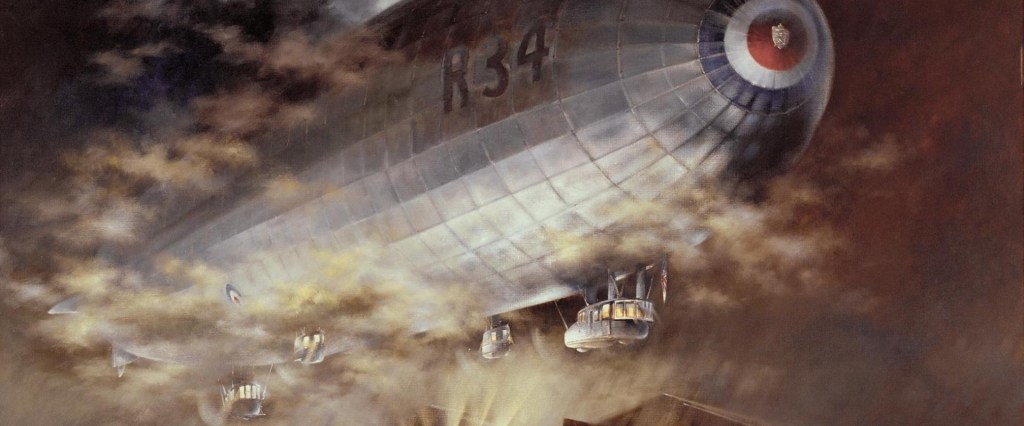
‘Helium is a bit of a sticky wicket you see. Had you requested Hydrogen that would have been easy,’
Sir Robert had been informed by his chief science officer. The scientist, whom Sir Robert suspected was a man who would struggle to identify the difference between a sticky wicket and a good one, let alone play a straight bat, had gone on to explain that in his esteemed opinion.
‘Hydrogen was in any regard ‘the better choice for the purpose concerned,’ as, ‘It would apparently lift ten percent more weight or allow a ten percent smaller gas envelope’.
There was also the added benefit that hydrogen
‘Can be extricated via relatively simple chemical processes involving oxygenation, which would release the gas.’
While Helium on the other hand, well, getting hold of high quantities of helium was a problem.
‘I would advise you Home Secretary, to inform the party in question of the benefits of Hydrogen.’
This had been the oily little man’s official position on the matter.
Sir Robert, on recite of this advice, had hastily scribbled note to the West residence to that effect, which had invoked a swift reply on scented note paper, in an envelope attached to a small box.
It read.
‘Dearest Sir Robert.
Please find enclosed one cigar, kindly supplied by Mr West and an airtight jar.
The jar contains slightly compressed Hydrogen.
Please light the cigar then proceed to open the jar.
Regards
Miss Eliza TuPaKa
Having followed the instructions exactly as they were laid out Sir Robert appeared in public clean shaven later that day for the first time in ten years. He also wrote another memo to the Chief Science Officer.
‘I asked for Helium, helium you will supply’.
Sir RobertPeel,Home Secretary,
Overall, he found what most annoyed him was the wasted cigar, being as it was, a rather good Cuban of the type reputed to be hand rolled on dusky maidens’ thighs. That said there was one dusky maiden in particular he determined would at some point pay in the end for the loss of his moustache.
There were somethings that a man cannot forgive, even for sake of Queen and country.
Note: The little story above is from the opening pages of Gothe, the forthcoming book 2 in The Ballad of Maybe’s series














 The Passing Place