Horrorscopes 2022

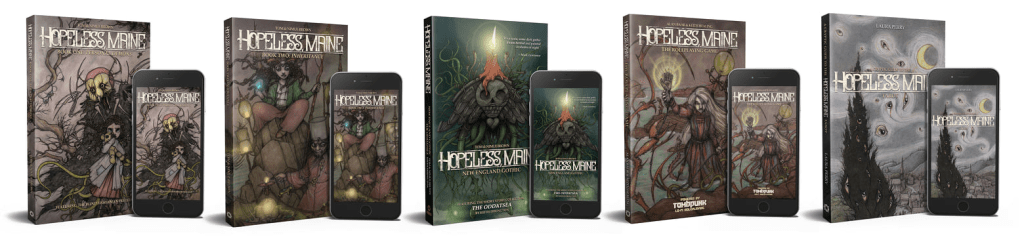
Putting the Horror back into Horoscopes, those luverly people trapped for all eternity on the fog bound isle of Hopeless Maine, nothing here to worry about at all…

Nimue Brown's avatarThe Hopeless Vendetta

It has to get better, we thought. People will be comforted if they know that, we thought. And so we looked, and we could not look away, and we knew terrible, unspeakable things and blood poured from our eyes and we screamed all the time we were writing this. The universe doesn’t love you even a little bit, and it loves us even less.

Capricorn: You keep dreaming about the donkeys on the roof. This year you will start waking up on the roof and it’s only a matter of time before you start wondering if you are a donkey. Some of you have always been donkeys. Some of you are now turning into donkeys. Some of you are only dreaming about it. You will never be able to tell which one of these things applies to you.

Aquarius: You will grow extra parts of yourself and will live in…

View original post 573 more words

Posted in Uncategorized | Leave a comment

The music of type…

“Listen to them, the children of the night. What music they make!” ~ Bram Stoker

Music has always been a big part of my creative life, despite my utter inability to play any of the many guitars I own, or carry a tune in a bucket, for despite my lack of musical talent I have always had a great appreciation of it as an art form. It also, importantly, plays a huge part in my own art… If the random scratchings of my pen nib can be called art.

I have always written to music, even way back in the late 80’s when I would sit at my dads ancient old typewriter in the dinning room of the family home, typing horrendously puerile fantasy ‘epic’s’, while playing an ecliptic collection of albums on the huge old fashioned stereo.

Unsurprisingly much of my taste in music grew out of chance and randomness. Back in 1985, at the tender age of 15 I spent all the money I had saved up form my paper round to buy a ticket to see Bruce Springsteen at Roundhay park play My Home Town, in my home town. The boss was the biggest name in rock and roll in 1985, it was the year of the Born in the USA album. I as you might imagine knew almost nothing about him or his music at the time. He was just the big name doing a huge outdoor gig in Leeds. As gigs go, Springsteen in 1985 defined the word epic, I was spell bound. Before the summer was over I owned his whole back catalogue, except, oddly enough ‘Born in the USA’ which I didn’t buy for another twenty years.

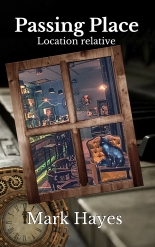
Springsteen to my fellow teenagers in the mid 80’s was so huge he was by default uncool. Typically I didn’t give a damn. I also spent a lot of time writing ‘badly’ to ‘The River’ and ‘Nebraska’. And through Springsteen I started listening to Gary US Bonds, John Cougar Mellencamp, Little Steven and other Americana. Mellencamp in particular influenced my writing life in later years, the opening chapter of Passing Place was inspired in no small way by his track Minutes to memories off the Scarecrow album.

It was another piece of randomness the following summer, after I left school at 16 that led me down another path musically. A band called The Mission had a song in the charts called Wasteland that my mate Scottish John used to put on the jukebox about once an hour in The Barleycorn pub lower Armley, where me John, and several other unconvincing idiots managed to get served while being clearly underage, as long as we stuck to the snug and kept our heads down. Which we did, right up until John started his obsession with The Mission. At which point the Landlord started to get irritated as every other song that got played in the Barleycorn was from another decade…

John convinced me to get tickets, and that he would pay me back, Somewhere between buying the tickets and the gig, John gave up on music because he gained a girlfriend… This left me with two tickets for a band I knew nothing about, and as is the way of these things I went to the gig alone.

Thus began my love affair with Goth music, as the mission came out to the theme from dam busters, with huge flans blowing fog banks of dry ice out across the gig, and thunderous cords rang out. This was the Gods Own Medicine tour, the next day I bought their entire back catalogue, and everything by The Sisters of Mercy, from which they sprang…

The support from that gig were a little known local band called All About Eve… Who are still one of my favourite bands to write to, The Mission themselves not so much as its hard to write and dance at the same time…

This little tour down memory lane aside, music and writing are indelibly linked in my mind. Different artists have influenced my writing and some have been constant companions, I still write to the acoustic Springsteen albums, Nebraska and The ghost of Tom Joad in particular. Occasionally if I can stop the urge to dance The Mission and The Sisters, and plenty of others. But my mainstay for writing has almost always been female artists, or lead singers and of a certain type. Quirky, a little left field and on occasion a little odd, folky… For some reason these female voices are the muse I need to write.

All About Eve, that support band from the Mission gig in 1986 for example, with the mellow passionate tones of Julianne Regan at their heart. Susanne Vega, Alanis Morrissett, Fiona Apple, Tracy Chapman, Amanda Palmer, Dresden Dolls, Suzie Sue, to name some of the mainstays, though their are plenty of others.

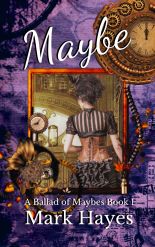
Perhaps it because I know so many of these artists music intimately, though the same could be said for a lot of male artists, but they are the sound track to the tapping of the keyboard, just as much as back in the dim dark past I was writing to Bowie and Springsteen. But unlike Bowie and Springsteen and other male artists when I listen to female artists the writing flows more. Don’t ask me to explain it, I am not sure I can, but I doubt there is a single chapter in Maybe, for example, that wasn’t edited, rewritten, and proof read at some point in the process while Julianne Regan sang Scarlett… Hannibal for some reason requires Amanda Palmer singing the ukulele song before he is prepared to leap out on the page. Short stories need either Susanne Vega or increasingly Fiona Apple, in order to get a workable first draft.

The point of this wondering diversion, if it has a point and I’m not sure it does, is I recently was introduced, by Steven C Davis to Unwoman, an America artist who had escaped my ear until I listened to Steven’s Hopeless Maine based pod cast on GASP (Gothic Alternative Steampunk and Progressive radio show) . And I was taken with Unwoman’s voice, and the music. It struck me that it was perfect writing music, and a writer always needs a new muse.

I then of course forgot about it entirely, as I am utterly useless, until I was remined of it in a twitter post from steampunk explorer earlier today. Work being quiet though I bought the wonderfully titled album ‘Of My Own Space and Time I Am Queen’ off bandcamp and gave it a listen…

Thus began my rabbit hole afternoon, listening to music while I ‘worked’ and seeking out Unwoman on YouTube once I had listen to the album a couple of times… Which led me to this utter utter gem of a cover of NIN’s Hurt…

Your welcome…

Posted in amreading, amwriting, Goth, indie, indie novels, indie writers, rites | Tagged , , , , , | 2 Comments

Bohemians of the Severn

Gloucestershire is, I have come to believe, a strange place. Maybe it’s something to do with the waters of the Severn, or the wind blowing out of the Malvern hills, or maybe it’s something in the soil and the roots of the earth. Some ineffable quality that has made it an odd little Bohemia of literary excellence and artistic joy. A loose knit colony of inventiveness, wonder and talent….

But it is defiantly strange… in the best of ways.

I am saying this as a Yorkshire exile, living in modern dystopian Teesside, just down the road from those flaming towers that inspired the opening sequence of Bladerunner, which is in its way my own little literary Bohemia. Perhaps there is something about culturally distinct isolated collections of small towns. Perhaps it is simply in large city’s artistic community’s are too dispersed to thrive in quite the same way… Perhaps there are little communities of writers everywhere, and we just don’t see them… Perhaps I only noticed the Bohemians of the Severn because I spent a couple of days down there earlier in the year… Or perhaps its just unique.. I am torn if I am honest… I like unique strangeness, so I am going to go with that for now…

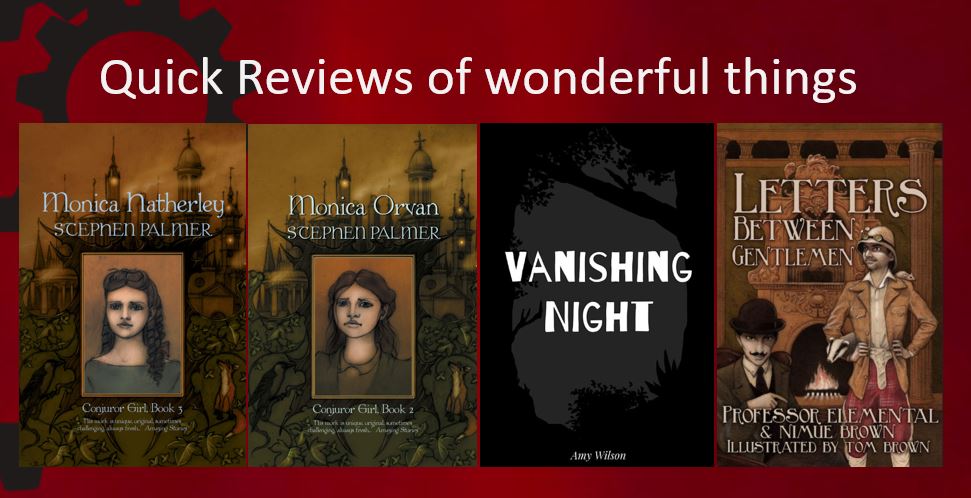
In recent months, the occasional, sporadic book reviews I hopefully engage and entertain with on here, have been heavily influence, like my bookshelves, by those Bohemians of the Seven. Influences that have been creeping in like happy little tentacles for a few years in fact… Meredith Debonnaire, Tom Brown, Nimue Brown, Matt McCall, Stephen Palmer, Keith Healing…

Perhaps it really is something in the waters of the Severn, the name of the river etymologists would tell you is derived from the British Celtic word Sabrinā, and no I don’t know exactly how you pronounce that ā at the end, but Sabrinā is also, depending on interpretations, the name of Celtic princess, or a nymph that drown in the river. Folk-law says she is now the guardian of the river, a not entirely benevolent one… Occasionally she demands her due in blood and bone…

Sabrinā cropped up, in an unfortunate way (for her) in Monique Orphan, Being as I am, an ignorant northerner, I wasn’t entirely aware who she was, until I looked her up. I thought at first she was just another of Stephen Palmers wonderful inventions. Until that was she cropped up in the next book I read… Which happened to be from another of those Bohemians of the Severn… Honestly its got to a point Gloucestershire writers have their own shelf in my library… And what an odd but fabulous shelf that is… The latest book to go on that shelf though is a little out on its own…

Nimue Brown, is one of my favourite writers. I originally types ‘is becoming one of my favourite writers’ then realised that was a lie… there is no becoming here, she most definitely just is. I’ve read rather a lot of her work, including some of her none fiction. But the latest of her books I have indulged myself with is somewhat different from her usual fair. This is no bad thing, Nimue has both the raw talent and intellectual grace to write anything she damn well choses. But the latest book of her books, (latest to me, to be clear, she wrote it a while ago) is defiantly a departure from quirky steampunk, and gothic fog shrouded islands. It is somewhat more serious, and defiantly more adult in its themes (these by the way are both the correct and the incorrect terms, I am just not sure how else to say what I mean.)

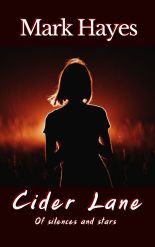
It is also by way of a romance, a genre I seldom read, despite having written a novel that has been described as a romance once myself. Though I am never entirely happy with describing Cider Lane as a romance, even though it is. Cider lane is about two ostensibly ‘broken’ people who find some solace in each other, it is also a lot more than that, and in some ways less… But I’m not talking about my own work here.

Hunting the Egret, is about two ostensibly ‘broken’ people who find some solace in each other, it is also a lot more than that. It’s a LOT more than that… But to deal with the ‘broken’ people first. Gareth is defiantly broken, his sense of self worth is, well it would not fill a thimble, he has suffered abuses that, well he has been broken for most of his life and those he has ‘loved’ for want of a better word have only abused him further, locking him in a cycle of BDSM servitude, which has long stepped across the line from kink to abuse . Verity on the other hand, well she has other issues ‘broken’ would be the wrong word, troubled would be better. Verity has a hard enough time relating to normal people, and Gareth isn’t ‘normal’ by any standards, but then nor is she, however she is not normal in very different ways.

One of the reasons, aside the author which would have been enough to start with, that I bought this book is because it described itself as containing ‘magical realism’. Which it does. An American author and friend of mine described Passing Place as being a magical realism novel. Which was an odd description I thought as I had never thought of it in that way, but as Hunting the Egret contained ‘magical realism’ it seemed a good idea to read it, for curiosity alone. And, you know , Nimue wrote it which was reason enough.

The novel has a sense of place about it. Which is along the banks of the Severn. A landscape Nimue clearly knowns well, and I know not at all. But having read Hunting the Egret I feel I know it… In the same way I feel I know the north Yorkshire moors around Howarth because of the writings of a certain Miss Brontë. The Severn is an old river, and an old border, between the Celtic west and the Saxon kingdoms. Unsurprisingly there is a lot of folk-law surrounding it. Sabrinā is only the start. Its a tidal river as well, one unique because of the Bore wave that occasionally travels it length. So its unsurprising there is a lot of myths about the area.

Verity is for want of a better description, a pagan, granddaughter of a self professed witch, and daughter of an unlikely and not entirely successful marriage. Her fathers is a water born hermit on a canal barge, most of the time… While her mother, well actually I would really like to know more about Verity’s mother, there is a story in there I am sure, but at the same time I am glad, for this novel at least, that the mysteries surrounding Sorrel remain mysteries. She has certain fay qualities shall we say. Verity has inherited much from both sides of her family. She also has small ears and likes to swim in the river, but not in the way you might first imagine.

This is a romance… There is passion… There is also brutality, both the brutality of the natural world, and the brutality of the human one. At least the former is more honesty in its intent… The human world has been brutal to both Gareth and Verity, in different ways. For the passion to survive those brutalities both must come to accept the other for who and what they are and find a balance of a kind between them.

From a less gifted author this novel would be a mess, certainly I don’t believe I could have written it, Nimue somehow makes it seem effortless and draws you in. Yes this is a romance, and aspects of the novel follow the kind of plot you expect in a romance. But it is so much more than just a romance. It is dark, and gritty, and the darkness comes in strange places, not always as obvious as you make think, there is an encounter in the river between two otters that’s in many ways as dark as anything else that happens in this story. Though that at least is part of natures brutality, rather than that created by humanity. Yet for all the darkness, the grim sections, the brutality, and there is that word again, it has an uplifting nature to it as well. It is after all a romance, and a story for the romantic within us all, even cynical Yorkshiremen.

In short it is beautiful, strange, magical, and in its own way uplifting, but mostly just beautiful…

And, we should all listen to hawthorn trees more. They are both wise and witty.

Posted in amreading, amwriting, big questions, book reviews, books, indie, indie novels, indie writers, opinion, pagan, reads, supernatural | Tagged , , , , , , , | 4 Comments

The Talented Child Dilemma

I’m a little tired and world wherry when it comes to ‘talented child’ stories. This may seem a little harsh, indeed it is, but as the basis for a plot it has been around along time, particularly in fantasy, sciFi and other genre fiction. Admittedly you can say the same for almost any major plot device. There is nothing new under the sun. But Genre fictions in particular tend to attract this one for, admittedly, good reasons.

You know the plot I suspect, but let me lay it out anyway just in case you wondering what I’m talking about.

A young person, of confused parentage, most often an orphan, living in reduced circumstances, starts to manifest unusual powers. Powers they don’t understand, and deny having even to themselves, Powers no one can explain. Generally these powers are of a kind they should never have due to been the wrong class, or race, or gender or because they have ginger hair… Powers they have to hide from everyone but a couple of friends, who will agree to keep the talented child’s secret.

There will of course be sinister figures of authority hunting them once through some misadventure or lack of understanding they almost reveal themselves. There will be a mysterious adult confidant who will advise them, but that confidant will be of some reduced station difficult for the talented child to fully trust. At some point the friends will be imperilled because of the talented child and trust between them will also break down. Tension will build and build towards some from of showdown. And things will be come ever more perilous…

There is nothing wrong with this plot. It has been a very successful plot for a great many books. It has echo’s every Harry Potter novel for a start. Though Potter may have any accolades but originality isn’t one of them. There are aspects of the Nania books in there too, and the sword in the stone. Gaiman’s ‘The Books of Magic’, indeed even Star Wars when you come down to it is the story of a Talented Child coming into powers he doesn’t understanding. All of which, and many more, predate JK Rowling’s tales of a wizarding world. And post Potter there are many more. But as I said, with good reason, because as a fantasy plot it provides mystery and as the protagonist explores their own powers and how they fit into the world the reader is gradually exposed to that world themselves in a natural organic way.

But as I said in the beginning, I am a little tired and world wherry of ‘Talented child’ stories. Mainly because I’ve read so many of them.

I’m explaining all this because of my reaction when I was asked if I would like a review copy of Monique Orphan, by the books author, Stephen Palmer. I was a little trepidatious about it. The name of the book, and the blurb on the back, more or less screamed ‘Talented child plot’ at me. In fact it couldn’t have scream this any louder. This would be that same well trodden path, and while it could prove to be a very well written, well thought out and a beautifully crafted jaunt down that well trodden path, it was still going to be that well trodden path all the same.

In short, I didn’t feel it was a book that appealed to me.

Partly because I know I can walk around my house (others would call it my library), and lay my hands on many books that would all fit neatly into the ‘talented child’ plot. Books I’ll have read at some point over the last few decades, in many cases more than once. So what I look for in a book is something different, something new… Another reason is related to this, the protagonists of all Talented Child novels tend to have a very defined moral compass. We (the reader) are supposed to feel sorry for them, root for them, and want them to over come the dice that fate has rolled them because they are representations of good, if they seem occasionally misguided in how they seek to be good. As such I tend to find the protagonists tend to start off ‘nice but dim’ and while they always make mistakes, they remain ‘the good ones.’ As characters they lack shades of grey, and these days I find such characters dull.

And here in lays a confession, I’d never been tempted to buy and read Stephen Palmers earlier series, The Factory Girl, despite the books having beautiful Tom Brown covers, and reviews from people I trusted. When I looked at them last year I read the blurb and despite the premise sounding interesting my first thought was ‘talented child’ and I decided to give them a miss… So when Stephen asked me if I wanted a review copy of Monique Orphan, and I read the amazon blurb, I thought I knew what I was in store for. I thought I knew exactly what I was going to get. That self same well trodden path, down which I’d walked as a reader so many times. The same path I had side stepped with his earlier series. Indeed if the blurb was anything to go by it was even more a ‘talented child’ novel than the factory girl novels.

Here is that blurb, just to illustrate my point…

In an alternate 1899…

Monique, resident for as long as she can remember at Shrobbesbury Orphanage, has a strange talent, which she neither understands nor can control. This talent, however, is only supposed to be possessed by men.

Should she conceal her abilities in order to survive, or should she be true to herself? If she hides her gift she will languish, yet if she reveals her true self she will be hunted down and experimented upon by men whose talents outshine her own…

A most peculiar adventure through a fantastical alternative fin de siècle Britain where the darkest creations are those that come from within.

So ‘Talented child’ it is then…

But, as Stephen had ask me if I would like a copy to review, and I’d given him my usual speech ‘I don’t take review copies, I prefer to buy books, that way if I don’t like them I don’t feel obliged to write a review, as I only ever do honest reviews and only ever review books I love.’ , my catch all for getting out of writing derogatory reviews if I hate a book. I bit the bullet and bought a copy. Despite the book not exactly leaping out at me in the ‘I must read this’ stakes.

So, then the book arrived, and joined the to-read pile on my bedside cabinet. Where I may add it was up against quite a lot of other solid contenders, vying for my attention. Several mainstream books people had recommended me of late which I hadn’t gotten to, a couple of classics I wanted to revisits, a couple of other books by indie/small press authors I’d wanted to read.

The usual pile in fact.

And there it sat… staring back at me. Saying , ‘Hi, I’m another ‘Talented child’ book, please read me… Oh go on please…‘ While I tired to ignore it.

I meanwhile finished a fabulous mainstream book that had been recommended to me late one evening. Norwegian author Camilla Bruce’s novel You Let Me In. Which while I won’t be writing a review (as its mainstream published and doesn’t need any help to find an audience from me) But I’ll recommend to everyone now in passing. Having finished this, thought about it, scribbled some copious notes on a couple of aspects of the book in question, thought about it some more and unwisely gotten myself a coffee, I reached the point at which I needed to rummage through my to read pile trying to decide what to delve into next.

I was not of a mind to read another mainstream novel, or one of the looming classics. Wuthering Heights in my opinion should only be read in the dark of mid winter with a gales blowing out side, rain lashing at the windows, a small fire in the hearth and by the light of a guttering candle. Teesside weather was remarkably calm that evening, so Emily Bronte would have to wait… Therefore I was left with one of the several small press novels in the pile. One of which by an American friend I was struggling with, another was a sequel to a book I read and reviewed earlier in the year, that I was looking forward to but wasn’t quite ready to read, and one I suspect would turn out to be not entirely atypical romance novel by one of my favourite small press writers, which might, like Wuthering Heights also deserve a good storm brewing in the heavens when I sat down to read it. And finally Stephens, Monique Orphan, for which I was still struggling to find excitement to temper, given the whole ‘talented child premise.

Stormy Sky Desktop Wallpapers - Top Free Stormy Sky Desktop Backgrounds -  WallpaperAccess

Also I had no idea what kind of weather it might need, though gloomy overcast drizzle is generally good for novels set in Victorian times I’ve found.

However, I realised, one of these books I had been specifically asked to read. The authors of the other indie books in the pile didn’t know I had the books in question, because I don’t tend to tell authors I have bought their books until I have read them, and then only if I loved them, for the same reason I don’t review books unless I love them. There is enough negativity in the world, why the fuck add to it… And just because I didn’t like a book doesn’t mean no one else will.

The upshot of all this consideration was then only one of these books I felt obligated, to an extent, to at least give a go. Thus while fully aware I was in for a ‘talented child’ novel, and well aware of my reservations and lack of enthusiasm for that same old well trodden path, I decided to bite the bullet and give Monique Orphan a go. So I picked it up off the to-read pile, planning to read the first couple of chapters before calling it a night, and then seeing where I went from there.

Dawn broke the following morning around 8.00 am…

I know this because of the glow beyond the curtains, and my sudden realisation I was half way through a novel about a talented child and had somehow forgotten that sleep was an option with some wisdom to it, even if I didn’t have to go to work that morning…

Now, if you have been paying attention, and your still reading this somewhat extended witter even by my standards, you’ve probably guessed that I wouldn’t be writing this blog, which is by its meandering way leading to a review of Monique Orphan unless I loved the novel… To reiterate, I don’t write reviews unless I like what I am reviewing. The world has enough negativity in it without me adding to it, and frankly writing a shitty review is easy, people sadly do that all the time, tearing things down is easy, too easy, so I see no reason to do it as well. I may’ve read far too many Talented Child novels in the past but there are plenty of people who won’t have, people who might love this book even if I don’t. So if I hadn’t enjoyed the book, well why share my opinion?

But I did love it. I loved it despite it being a talented child novel, despite it walking that well trodden path… Though despite is the wrong word, and while it walked that path, while indeed everything I wrote earlier about ‘Talented Child’ plots in general entirely applies to Monique Orphan, the novel is also so much more. It may walk the familiar path but it blurs the lines. Indeed, it doesn’t so much follow the path so much as wander back and forth across it while heading in the same direction. It takes, in short, a more interesting, stranger, and a more engrossing path.

For a start there are lots of little details of Monique’s world that are both that every familiar late Victorian setting and aren’t. This late Victorian England is not an England you would recognise. For one thing it is much diminished it size. Somewhere up beyond the midlands you enter Danelaw, a northern England that is separate and rule form Jorvik (the old Norse name for York) and while this is only mentioned in passing to an extent, as a Yorkshireman I can not tell you how much that idea appealed to me… There’s also an undercurrent of religious bigotry left over from Tudor times that I suspect has a little more truth to it than other depictions of Victorian England would have you believe. Northern France, Paris in particular, has been drown by malignant magical means and London is full of French refugees. There are river spirits, indeed Sabrina goddess of the river from actual folklore puts in an appearance, there are strange nocturnal bees, indoor rain, quires of vixens, dirigible’s used as giant night lights and other assorted oddities.

Monique’s world is then an odd one. But, and here is where Palmer holds your interest as a reader, it is explored though the eyes of those to whom all this is, to an extent at least, normal. A plethora of oddities are mentioned as much in passing as anything. Like the Nordic nations of the north celebrating Yule with a huge, presumably magical, light show that includes Odin on his eight-legged horse passing through the sky. A sight that the orphans witness from a roof top as the northern boarder is not faraway… Like the main character putting up an umbrella to walk through the indoor rain, then taking it down again when they get outside to a overcast by rain free day. All this strangeness is presented as normal, and feels normal when you read it. Which is quite a trick for any writer to pull off. Nothing here is weighed down with exposition beyond what its needed.

That same light touch is applied to the characters themselves, in particular Monique herself. The strangeness of the setting takes second place to story. As does the mystery’s surrounding the main character. There is so much untold, because there is so much she does not know about her own history. Yet it is alluded to, in half guesses, in the phrasing of a sentence. You know there is more to tell, You know there are reasons for things she does, and how she reacts to events. You also know that she doesn’t understand them herself, at times she has little more than deep feelings about the sense of things. There is also her stagnated sense of self-worth, a product of the society she lives in and the lack of value it places not only on orphans but on female orphans in particular. You get a sense she is hiding much of the truth about herself and her past, from herself. She has forgotten more than she choses to remember.

The strangeness and oddity of the setting might have been enough to keep me reading on its own, the strangeness and oddity of Monique herself certainly was. But what really sets this apart form all those ‘Talented Child’ novels I have read before is the moral ambiguity of the protagonist. A moral ambiguity that makes some degree of sense, a reaction to the environment in which she is being raised, and the social positioning of a orphan girl, in a society that places no value in the poor.

There is a thread of moral ambiguity to Monique. Moral ambiguities she justify to herself as much by choosing what she believes to be the truth of things and how she should react, and how she treats and uses her friends. She is manipulative, she uses charm, and threat with equal measure. She will act out of virtue, saving a friend, only to then use that very action to blackmail and guilt tripping her friends in to doing what she wants them to do. Sure these actions are justified, by her own internal moral compass that points somewhere vaguely north, very vaguely. But survival which is her primary justification at first gives way to another, darker justification. When she is gifted an escape she turns her back against it in favour of pursuing a justice of her own design. When her friends are against this she manipulates them further until they agree to do as she wants.

What is great about this, and the way it is written, is your led along with it all, you follow her logic, yet the moment you take a step back you can see what she is planning, even if she never uses the words, is dark and dangerous, and very much the wrong side of that moral compass. You can justify it by thinking that she doesn’t realise exact how dark what she is undertaking to do is, because Mr Palmer steers you to doing so, but then there are odd moments when a line or two of the narrative makes you realise that while she might deny it, even to herself, she knew, deep down, exact what she was doing and what she hoped to achieve. Exactly what she was manipulating her friends to do as well.

I read the book in two long sittings, I quite literally found it hard to put down. I loved the setting, and the characters and Monique herself. I walked hand in hand down that winding path that didn’t lead where the path of the ‘talent child’ normally leads. The dark overtones, and moral ambiguity were all perfectly pitched. And in the end I was left thinking, if all ‘Talent Child’ novels were like this I would never get sick of them…

It is a little dark, it is a little chilling even. Monique’s world is dark and chilling and she is a perfect reflection of it. In the end I can only say this, when I finally finished it, I ordered the next two books of the trilogy straight away. You, dear reader, I suspect would do the same. I look forward to them arriving. I also look forward to a brooding sky with a hit of damn in the air, the kind of sky that makes you shiver a little… Which would seem the perfect weather for reading these books..

Posted in amreading, book reviews, books, fantasy, fiction, goodreads, indie, indie novels, indie writers, novels, reads, steampunk, supernatural | Tagged , , , , , , , , | 6 Comments

The Hydrogen Cigar

‘Helium is a bit of a sticky wicket you see. Had you requested Hydrogen that would have been easy,’

Sir Robert had been informed by his chief science officer. The scientist, whom Sir Robert suspected was a man who would struggle to identify the difference between a sticky wicket and a good one, let alone play a straight bat, had gone on to explain that in his esteemed opinion.

Hydrogen was in any regard ‘the better choice for the purpose concerned,’ as, ‘It would apparently lift ten percent more weight or allow a ten percent smaller gas envelope’.

There was also the added benefit that hydrogen

Can be extricated via relatively simple chemical processes involving oxygenation, which would release the gas.’

While Helium on the other hand, well, getting hold of high quantities of helium was a problem.

‘I would advise you Home Secretary, to inform the party in question of the benefits of Hydrogen.’

This had been the oily little man’s official position on the matter.

Sir Robert, on recite of this advice, had hastily scribbled note to the West residence to that effect, which had invoked a swift reply on scented note paper, in an envelope attached to a small box.

It read. 

‘Dearest Sir Robert.

Please find enclosed one cigar, kindly supplied by Mr West and an airtight jar.

The jar contains slightly compressed Hydrogen.

Please light the cigar then proceed to open the jar.

                Regards

                                                        Miss Eliza TuPaKa     

Having followed the instructions exactly as they were laid out Sir Robert appeared in public clean shaven later that day for the first time in ten years. He also wrote another memo to the Chief Science Officer.

‘I asked for Helium, helium you will supply’.

        Sir Robert Peel, Home Secretary,

Overall, he found what most annoyed him was the wasted cigar, being as it was, a rather good Cuban of the type reputed to be hand rolled on dusky maidens’ thighs. That said there was one dusky maiden in particular he determined would at some point pay in the end for the loss of his moustache.

There were somethings that a man cannot forgive, even for sake of Queen and country.

Note: The little story above is from the opening pages of Gothe, the forthcoming book 2 in The Ballad of Maybe’s series

Posted in books, fiction, goodreads, Hannibal Smyth, indie, indie novels, indie writers, indiewriter, novels, reads, sci-fi, steampunk, writes, writing | Tagged , , , , , | Leave a comment

A message from The Sanctimonious Order of the Willing Sacrifice

We, The Sanctimonious Order of the Willing Sacrifice, must regrettably start this annual meeting by apologising, but once again, for the tenth year running, we have failed to secure a year king.

While there are of course be those who scoff at what some claim are our ‘out dated religious observances’ we feel obliged to point out that it is our belief the willing sacrifice of a year king at Yule has been bringing forth bounteous years of fortune, good weather, and good health for the people of Albion for thousands of years. It is our belief, therefore, that it is the dearth of Year kings, of which there have only been two this century, is the cause of recent hardships.

Extreme weather, floods, so called ‘climate change’, pandemics, wild fires, the steady decline of decent script writing in recent seasons of doctor who, Boris Johnson, the continued lack of spangles, can all be attributed to the lack of a viable and willing sacrifice at the Yule celebrations. Frankly the selfishness of people never ceases to astound us, and that the sun continues to be renewed for the coming year we can only put down to stubbornness on the part of Hydrogen.

Why no bright and handsome youth is willing to become the new year king each Yule we can only conclude is due to a general lack of moral foundation among the youth of today.

We are willing to except that there has also been something of a lack of bountiful bevies of buxom maidens willing to give up a year of there lives to serve as hand maidens to a year king. This we believe is because they all seem to prefer to spend a gap year in Thailand or Australia, having a wild time and engaging in the excessive hedonism of some of the so-called eastern religions. Rather than feeding grapes to a numbskull pretty boy in a smokey round house. This is also regrettable.  

There is also the unfortunate matter of the round house been caught up in the Thatcherism of the early 80’s and us been forced to sell it off as technically it was a council owned tenement. But we have procured a small flat above a chinses takeaway in Salisbury for the use of the Year King. We will admit it is a little under repaired, pokey, and if you dislike the smell of boiled rice you may need a good air freshener, but many would think it was an improvement on a wattle and daub round house with no central heating. Though the flat only has a three-bar electric fire and only two of the bars work.

The bounteous feast of fruit, meats and ale is still there for the year king of course. Admittedly due to fiscal constraints, through the day these are limited to a ‘meal deal’ from the local Tesco’s. Which is also why we generally can only supply 2 litre bottles of white lightening cider. But the thought is there and there is a duck at Easter, well Peking duck if you order the two for one special at Mr Hong’s down stairs.

But all this aside we still believe we offer a fabulous, one year only, limited time experience, for the volunteer year king, and Sharon who works in the chippy, while getting on in years, is still willing to peal grapes on a Wednesday afternoon, and wear the traditional ox skin loin coverings and nothing else… on warm summer days at least, the rest of the year she insists on wearing a dressing gown, but as she is the far side of seventy now and so we feel this may be a blessing to all.

She does however make a really good sweet nettle tea.

We are aware there has been some disgruntlement in the order this year, with suggestions from Mr Wallaby that given the continuing decline of the environment, and the way mars bars as smaller than they used to be, we should perhaps look into the possibility of an ‘unwilling’ sacrifice this year. Even going so far as to suggest ‘that Jones lad from two doors down, who broken my gnome with his football last month.’

We will state once again, an unwilling sacrifice does not placate the ancient ones. They also are a lot more work. They always squirm about on the alter, and that makes it difficult to cut out there still beating heart cleanly, and the authorities look down on that kind of thing.

It makes a right mess on the rug

Anywho, I will end the meeting here. If anyone knows of a likely lad willing to be a year king tell them to drop us a line at PO Box 1010, Dudley Salterton. Also, even if we cannot find a year king, bountiful bevies of buxom maidens are still also required, and given these days of equality a year queen ,, or indeed a year Queenking, or Kingqueen would we think be just as acceptable…

Yours ,, Earnest Wilberforce, Arch Druid of The Sanctimonious Order of the Willing Sacrifice, and treasurer… Royal Air Force Retired.         

HAPPY YULE to all…

Posted in amreading, amwriting, cthulhu, dreamlands, druidry, fantasy, fiction, goodnews, goodreads, horror, humour, indie, indie writers, indiewriter, mythos, opinion, pagan, pointless things of wonderfulness, rant, reads, rites, writes, writing | Tagged , , , , , , , , | 4 Comments

The Other Elves…

Lord of the Rings, was perhaps the greatest mythological whitewashing job ever undertaken. The works of Old Grandpapa Tolkien drew heavily on Nordic, Germanic and to a lesser extent Celtic mythology, though it changed a great deal in doing so. What he changed most however was undoubtedly Elves… Tolkien’s elves maybe aloof, they may consider themselves not entirely of the world, indeed, intent on leaving it, but they were undoubtedly one of the forces of good, despite a degree of apathy towards the rest of the world.

Post Tolkien, this view of elves has become prevalent in western culture. Aloof, noble born, distant, but by nature a force for good. An unsurprising turn of events, given Tolkien’s influence on the now several generations of fantasy writers that followed him, and the genre in general in all its forms from books to films and roleplaying games. The zeitgeist firmly places elves among the most noble and good…

Pre Tolkien, however, it was a different story. In the mythologies of north-western Europe ‘elves’ were not the kind of people you wanted to invite round for tea and cake. They were the reason people nailed iron horse shoes over doorways. Elves were not an aloof force of good, but malevolent creatures from another realm, who stole babies, led men astray in the woods, took prisoners, and care nothing for ‘lesser races’. Elves were nasty, malicious, creatures, enwrapped with glamour’s and magic’s to trap the unwary. They were beautiful, alien creatures, noble and immortal, to whom humanity were merely playthings for their vanity.

In short, elves were right bastards… Akin to giants, sea monsters, goblins, and if you were lucky they may only have killed you…

There has been some regress over the years, not all portrayals of elves in fantasy have leaned heavily into Tolkien, but his quasi-medieval quasi-dark-age fantasy so often reflected in RPG culture remains the most prevalent version of elves we find in fiction, as well as settings. Which is ironic when you consider so much of Tolkien’s Middle-earth is based on Nordic, Germanic and Celtic mythology. It is one of the reasons I have found myself reading less fantasy over the years, despite being part of the original DnD generation and reading so much of it in my teenage years. Indeed when I first started writing, many many years before I finally wrote a novel, my earliest attempts were all in the fantasy genre, though I never wrote elves, I just didn’t trust them… The stories I wrote of Kasslan, Jesslar d’Ora, Hardoc de’Brinyak, (all old DnD characters of mine) leaned more in to David Gemmell’s style of heroic fantasy than Papa Tolkien’s.

Luckily for the world, those early attempts at being a novelist are lost in the darkest recesses of a file box somewhere… I have though occasionally delved into the dark and considered trying to write a dark age fantasy, seeped deeply in the blood of those original sources, the mythologies of northern Europe, and dark age cultures. It’s a rich dark bloody vain, that has seldom been truly tapped. Bernard Cornwall has written of early iron age Britain and captured some of that dark essence, as have others, but seldom, if ever, do writers dig down deep into the myths and started a fresh. However, there is one problem with trying to write a true dark-age mythological fantasy, in order to really do that, and wade deep into the dark waters of those myths, you need to have studied them to the kind of depth and understanding that Tolkien had, before he went off and changed things… And frankly that kind of depth of knowledge does not come easily, and seldom alongside the talent needed to write fiction. I may arguably have the latter of those attributes, I know I don’t have the former…

No what it would take is someone who is not only a supremely talent writer, but who has spent a fair proportion of there professional life immersed in the dark ages and it’s mythologies. Someone who has lectured on the subject and knows it to the kind of level Tolkien did…

Which brings me rather neatly, in my meandering way, to Mat McCall, the same Mat McCall who’s excellent Martian steampunk novels I reviewed earlier this year. Aside his love of a cog-wheeled top hat, Mat’s other great love (aside Nicky) is dark age mythology. So some time before he wrote his Martian odyssey, he started writing dark age fantasy. A dark age fantasy that has finally come into the light, in the form of Annis: The Goddess of Sorrows.

The world of Annis is brutal, dark and rich. The title character is a witch, feared and despised for her half blood nature. Rightly feared in many ways. Mysterious and unearthly she is also a tragic figure, a product of her parentage. As well as the only real hope for a remote ancient fortress, about to be besieged by dark forces, only half remembered by the human tribes who hold it.

That may sound a fairly run of the mill set up for a fantasy novel. This however is not run of the mill fantasy. It is dark and rich in Celtic, Germanic and Nordic mythology brought to life. The story weaves between characters on all sides. And on all sides there are villains and heroes, who are often one and the same. There are touches of Rome here as well with Corvus, once a general who defeated the Alban’s and other tribes, who has returned some years after his victories, for reasons even he can not understand. There’s giants and werewolf warriors, Fomoire (which are celtic sea deamons lead by their monstrous god king Balor) and elves, but not the elves of Tolkien, these are Sidhe Fea, Daoine… A dark race who hold humanity in contempt.

McCall manages to draw you in as a reader to all his characters, be they human or otherwise. there is no black and white here, but shades of grey. The Humans are no more saintly than the elves. For example on ancient seer of one of the tribes carries a ritual drum about with him, the skin of which was flayed from the back of a druid and still bares the druids tattoo’s… The ‘evil’ alliance between the Fomoire and the Sidhe when you read parts of this novel form their perspective is no more ‘evil’ than the human side. These once were their lands, taken from them, which they seek to reclaim… Both sides kill and slaughter with equal abandon. While the internal politics on both sides is dark and deadly.

It is perhaps this darkness, and what could have been a bleak novel in the hands of another writer, that so highlights the bright moments within the novel. The shifting perspectives are clever in that both sides may be brutal at times, but there is love and compassion there too. As I read I found myself shifting perspectives as well. The hero’s and villains are one and the same. You find yourself caring for each of them, no matter who or what they are, which is testament to the quality and strength of the writing. Gemmell at his best could do that, Abercrombie too, but most writers don’t quite pull that off, McCall does.

The exception, that perhaps proves the rule, is Annis herself, from and of whom we only get the strangely off putting view point of her thoughts. Off putting in a good way. She seems to glide through the novel, never speaking, never interacting directly in the narrative. her thoughts strange, alien, and complex. A wonderful counterpoint to the dark, grim brutality around her. She seems not quite of the world, which is exactly how she should feel.

This whole novel is beautifully written, hard to put down, and as dark and brutal as the age it is set in… This is the kind of fantasy we need more of, luckily for us, there is more to come from Annis’s world.

Also, the elves, are not the elves of Tolkien, they are those other elves… The ones we knew to fear. Now where can I find a horse shoe…

Posted in amreading, amwriting, book reviews, books, druidry, Europe, fantasy, fiction, indie, indie novels, indie writers, indiewriter, mythos, novels, reads, Uncategorized | Tagged , , , , , | 5 Comments

Nostradamus Poe

This blog is many things, most of them literary. Occasionally it touches on important subjects like depression, traction engine’s (though this is a new development and will probably be a passing phase), life in general, racism, sexism, other ism’s, and once in a while, partly because I have a degree in politics, philosophy and economics, it even does politics.

What it doesn’t do as a rule is Politics with a capital P. Which is to say while I might comment on something in broad strokes I try to keep general politics off to one side. This is a conscious choice, because I grew up in a time when the mere fact someone’s views directly opposed your on a subject merely meant you had a difference of opinion. You could discus that difference of opinion in a civilised way. You did not need to burn them at the stake… Everybody had a right to be wrong, and people often were. But you could talk to the other side, and you did not need to chose sides to start with.

The choosing of sides has always been my problem with politics. For example, I agree with a lot of the principals of the labour party, but not all of them. I agree with some of the principals of traditional conservatism, though notably fewer. I agree with rather a lot of Green political thinking, but I fine the naivety of some green party manifesto policies frankly irritating. I am in fact that worst possible (from the prospective of political parties) of all political thinkers, an informed independent… As such I am willing to hold a discourse on most subjects and even occasionally adjust my views on a subject if the ‘other side’ put forward points that validate their views over my own.* Which in this day an age seems to make me something of a unicorn politically… But I also respect other peoples right to hold a different opinion to my own, and have friends on multiple sides of the political divide, I don’t even hold anyone’s views on Brexit against them, provided they don’t try to ram them down my throat, sure I think it was a mistake and we were better off in Europe than out of it, but not everyone who voted leave did so for bad reasons, and just because we disagree on that or any subject** doesn’t mean I won’t stand you a pint and talk of other things.

*bigots, racists, sexists and homophobes not withstanding. They can all just go fuck themselves.

**except the above and people who think the second Highlander movie was alright, they can also go fornicate with themselves.

So in essence I try to keep big P politics off my non-political blog, and talk of other things. As such in light of recent events, lets do that and talk about a story by Edgar Alan Poe, The Masque of the Red Death, A story that has the distinction of been one of the three anyone can generally remember…

It isn’t actually my favourite Poe story. That’s ‘The Tell Tale Heart’… Which is about as perfect a short story as it possible to write in my opinion. You could disagree, I’d stand you a pint and discuses it’s virtues against say ‘The Murders on the Rue Morgue’ any time. You’d be wrong to think Rue Morgue is better than tell tale heart, but I’ll happily let you explain why you think your right…

But to get back to The Masque of the Red, its a story that seems remarkably prescient today, in an almost Nostradamus fashion. It is the story of prince Prospero, a rich and powerful aristocrat, in a kingdom consumed by a terrible plague. The red death. This plague ravages all the lands, the dead lay unburied in the streets, the suffering in the kingdom is terrible.

Prospero and his court however, are indifferent to the suffering of the common folk. ‘Let the plague burn through them, there will always be more poor after all’. So they lock themselves away in a walled abbey. But as they are soon bored, the prince orders entertainment for his guests, the nobles and wealthy of the land, the powerful and influential… A great masque ball is planned. ‘let us be entertained…’

So the great masque ball begins. The wealthy, the noble, the powerful. Those who hold themselves above the common herd, party… while beyond the walls of their abbey, the pour suffer grieve and die…

Now, as I say, I don’t generally do politics here. So I am not going to point out the masque of the Red Death has a certain satirical echo of this week in British politics. I shall instead let you draw your own conclusions as to why this Edgar Alan Poe story was brought to my mind today.

In the end of course, The Masque of the Red death ends badly for Prince Prospero. He and his noble elite guests come to a messy end when a red robed figure with a mask of a decaying corpse walks though the abbey. This figure it turns out is the personification of the red death and all the party goers fall victim to the plague…

Shame that…

As I don’t do big P politics here I am not going to any statements about parties that may, or may not, but lets face it almost certainly were, held in 10 downing street last Christmas. But I will say that certain politicians who make such a point of proclaiming their credentials as literary scholars should perhaps have spent a little more time reading Poe…

Then perhaps they would have considered what became of Prince Prospero and his cronies, when they partied while those they considered ‘beneath them’ suffered…

Posted in amreading, amwriting, big questions, horror, humour, indie, opinion, politics, reads, Uncategorized | Tagged , , , , , , | Leave a comment

Books of the year

It may be slightly early, as there is a fair chance I’ll read a couple more before the end of the year, but now seems as good a time as any to do my annual Passing Place Blog Books Of The Year Awards. An event that has never been annual previously, as I have never done it before, carries very little prestige, and no prize money… It also don’t have a particular order, but does include all the books I have reviewed on the blog this year as well as honourable mentions for all the books I personally have failed to write this year… So lets start there, as its mildly embarrassing.

At the start of the year, indeed the very first blog of 2021, I presented a list of things to come, the three books I hoped to write and publish this year…

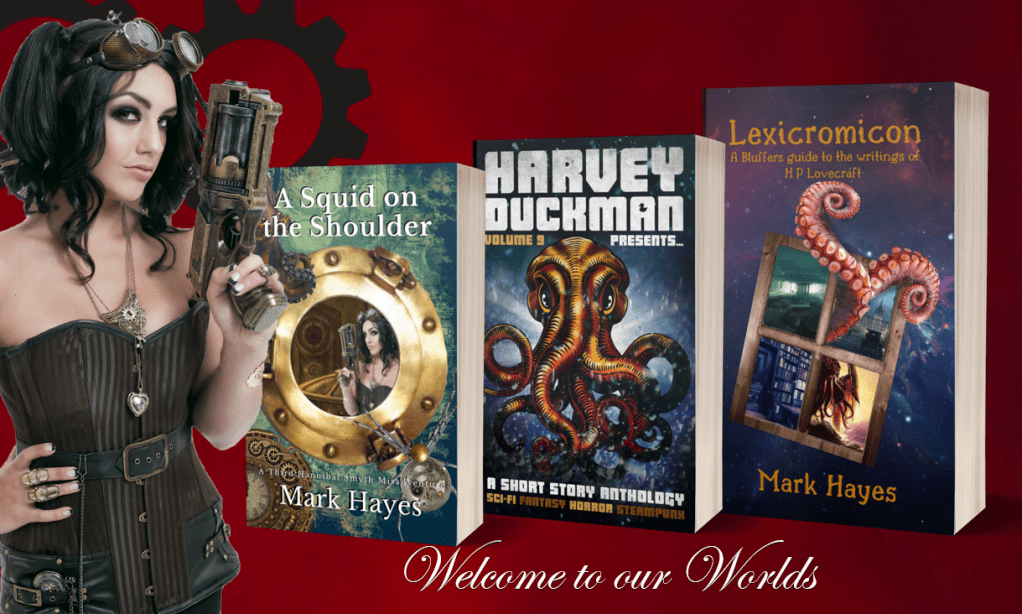
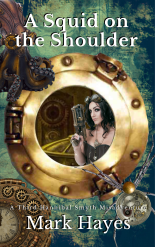
Well, that didn’t happen… However by way of an up date , two of the three, A squid on the Shoulder and the Lexicromicon are written. They are currently sat in my editor, the wonderful C G Hatton’s inbox till she can get to them. So with luck both will be out by April 2022 at the latest, in time for the first big convention of the year, on the off chance the world decides not to end between now and then.

I also started a side project that got a little derailed , The Elf Kings Thingy, for the literally couple of people who have asked me about it, yes I plan to pick it back up in the new year and continue the series…

However moving on from my own literary triumphs’ of 2021… ahum… On to the Books of the year and want an ecliptic year of wonderfulness it has been.

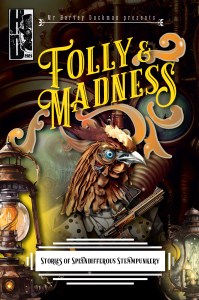
The award for book most likely to contain a steampunk story but didn’t… goes to Harvey Duckman volume 7. The one with the steampunk girl on the cover. Another wonderful collection of stories from the Harvey Duckman writers, which contained among others a story by me set in the Passing Place universe. I’m rather fond of it. It also marked the 50th Harvey writer to join the ever growing stable.

The award for book Book I’d read the year before but forgot to review at the time, goes to The Oddatsea, a Hopeless Maine novella, written by Keith Etherington and illustrated by the every marvellous Tom Brown.

The award for book I didn’t write a full blog post about but did review…. goes to Kate Bauchreal’s Tangled Fortunes, the third in the simcavalier novels of near future cyber crime, which was a great read as were the previous novels, all of which are now collected in a single volume ‘Hacked’

The award for the best pure scifi novel I’ve read this year, like every year… goes to C G Hatton’s Defying Winter the third of the Thieves Guild Origins novels another wonderful instalment in her Thieves Guild universe and if I have not convinced you to give them a read by now frankly you’re a lost cause

The award for book most likely to contain a story about a dragon but doesn’t…. goes to Harvey Duckman Volume 8. the one with the dragon on the cover, which contains Mandrake a steampunk , urban fantasy story written by me, which I should have clearly written for volume 7, but what you going to do (its also quite possible going to become part of a novel, but that’s another story) and as usual a whole bunch of other stories by an eclectic bunch of new writers.

The award for most initiative book of the year… goes to Mat McCall’s The Dandelion Farmer, because it just does. Maybe I am a sucker for Victorian Martian colonists, airships and automatons written by way of journal entries, dairies and the occasional officious report. But if you want something very different to your average run of the mill novel this is it.

The award for most fun you can have on the sofa on a Sunday afternoon with a hot cup of tea on the side and a book in your hand… goes to Ben Sawyer’s debut novel Holly Trinity and the Ghost of York because of all the books I’ve read this year this was the most singular fun I had reading. Which is up against some particularly stiff compertion this year.

The award for best use of tentacles, and art, and words (but mostly tentacles) in a graphic novel… goes to Hopeless Maine Optimist’s by Tom and Nimue Brown. Which was just a joy as ever, the penultimate book in the series and I can not wait for the final instalment.

Best sequel, that’s even better than the first book and that’s saying something, of the year… goes to that Man McCall again and The Hourglass Sea. Which starts where the first book left of and just gets better, stranger, and more engrossing

The nepotistic award for a book I wrote five years ago but have finally released in hard back and I am just happy about this so will keep mentioning it… goes to me and the 5th anniversary release of Passing Place in hardback, with updated none litigious version.

The aware for best book I bought at random after a convention because the writer seemed like a nice bloke… goes to Keith Healing’s The Burnt Watcher, and what a delightfully dark with the occasional slither of yellow read that was..

Finally the award for book I bought months ago and finally got around to reading… goes to Nimue Brown’s Intelligent Designing for Amateurs.. Druid in traction engines and Friday Bob , is all I have to say…

Somehow, mainly by putting on of mine in the list, I managed to review 12 books this year, one for each month… Its been a good one, book wise, which considering very little else has been this year is good. I’ve read far more than I reviewed, as ever. As I only review indie books as a rule. Neil Gaimen doesn’t need me to flog his books…

I don’t really have a book of the year, but if someone was to twist my arm it would be Ben Sawyers Holly Trinity novel just because its the one that I think I needed most at the time, and made me smile when I needed something to do so ( as I said , its been a year, October and early November felt like a year all on their lonesome…) But in all honesty I recommend everything in this list.

Here’s hoping for another great year of books to come. Keep reading everyone, and keep writing.

Posted in amreading, book reviews, books, humour, indie, indie novels, indie writers, indiefriday, indiewriter, sci-fi, steampunk, supernatural | Tagged , , , , , , , , , , | 1 Comment

Illuminating observations of the perils of an indiscreet life…

For reasons, that have never been explained to me, at Pudsey (the small town between Leeds and Bradford and somewhat merged into both these days), in the large park behind the swimming pool, just up past the aviary, this is, and has been since my childhood and probably before, a old traction engine.

Not a working one, I should explain, it’s fire box has long been welded shut, the many levers disconnected from such interesting things as breaks and gear boxes. The wheel doesn’t turn the cumbersome front axil. The great steam whistle to warn people ahead that this great lumbering beast of the industrial revolution is ponderous heading towards them has long been detach. But then the great lumbering beast hasn’t moved for over fifty years or more.

Instead of its original intended purpose it has been a climbing frame, and well of possibilities the imagination of children can draw upon for decades. Or at least it was, there is I suspect a fair chance it has long been removed, but it was certain still there when my own children were young enough to clamber all over it and pretend there were driving this mechanical dinosaur. Which is certainly what I did when I was a child. For when I was a child it was a magical thing, impossibly huge and built like a literal tank, only more solidly. Say what you like about the 19th century, when they built a machine they built it to last…

When enmeshed with my childhood imagination that traction became many things as I stood in it cab after clambering up into it. It was the great engine of a land pirate, the scourge of the highways, a lumbering lunar rover transforming the surface mars (yes I know, the moon and mars are separate celestial bodies, I was a child, the rules of logic don’t apply.) In my mind it wasn’t quite as lumbering as it probably was in its working days, except when I used it to singlehandedly save the day when the dinosaurs came back… It was, in short, many things and all of them that special kind of wonderful only a child can imagine, or someone who has been a child and can articulate that sense of endless possibilities and joy without consequence…

Which brings me to that rather ponderously evocative title for this blog, which are words I did not write myself, but borrowed from a chapter in an extraordinary work of fiction by the ever delightful and talented Nimue Brown, who most certainly can articulate the endless possibilities and joy without consequences of a child’s imagination. The Child in question is called Temperance who is been raised by her Granny in the small rural and eminently civilised English town Bromstone, on the unremarkable middling class Baker Street. Temperance’s view of the world and everything in it is a delight, and reminds me of that old traction engine in Pudsey park and all the things it inspired. But then there is something about traction engines. While the novel in which Temperance plays a major role is called with equally ponderous delight, Intelligent Designing for Amateurs.

There is much more than just Temperance’s exuberance in Intelligent Designing for Amateurs, there is indeed a host of characters, from a socialite archaeologist with a serious problem with suitors, an inventor bereft of inspiration but determined to find it, Temperance’s Granny Alice, who may once have been called Anne and spent the years of her youth on the Spanish main. A dog faced boy with a serious rodent problem, the owner of a biscuit factory who has a novel approach to issues of labour. Occasional protests, a mild riot or two, Oh and druids, who own a traction engine…. because why would there not be?

Events, of a mildly calamitous nature, are set in motion when the socialite archaeologist is directed to a small Welsh field and unearths the pieces of Pair Dadeni, which as I am sure you know your Welsh mythology, is otherwise known as The Cauldron of Rebirth. At which point she gets her neighbour Charlie, the budding inventor short of inspiration, to put it back together. Then there is a mildly embarrassing incident when Temperance putting a dead cat in it…

At which point the biscuit factory owner hits upon a way to solve his labour problem’s by ’employing’ the recently deceased… Or possibly the formerly deceased… About this point things start to get somewhat odd and uncanny for Temperance and the inhabitants of Baker Street…

Did I mention the druids in the traction engine?

Under the pen nib of a less skilled writer this could all have devolved into farce quite quickly. Instead despite the strangeness of the characters (who are regardless all perfectly realised) the ecliptic mix of complex elements that is the plot (which regardless of what should be incredulity hangs together perfectly) this is a joyous romp. The novel is something between out and out steampunk, a comedy of manners, political and religious satire, and the kind of pure invention you get when children clamber on board a static traction engine. It put me in mind of Robert Rankin at his wildest, with a touch of Pratchett grounded reality in the unreal thrown in. It is in short just a joy to read. So you should do that.

You should also seek out a traction engine, even a static one in a park, clamber aboard it, throw in some imaginary coal, and have wild adventures… And if your not sure how to do that, ask a child.

Posted in amreading, amwriting, book reviews, books, druidry, fiction, goodreads, indie novels, indie writers, indiewriter, pirates, reads, steampunk, supernatural, writes, writing | Tagged , , , , , , , , , , , | 5 Comments