The cost of AI

There are those who will read this and think it is a rant. It is not a rant, I am not ranting, but I could.

The use and proliferation of AI is decimating creative communities. There are some obvious examples of this, artists and graphic artists being one of them. AI art is everywhere and not as easy to spot as we occasionally fool ourselves into believing. Yes the seven fingers woman is an obvious example, but for every obviously fake ‘photo realistic’ piece of art, there are hundreds of bits of clip art, back ground and other stuff that is manufactured on mass with AI and flooding the market. As I have used both royalty free clip art to put together book covers and paid one off fees for bits of clipart work as well, as soon as I go to the sites I have used in the past I can see the sheer amount of AI clip art that has been generated. It is hard to find clip art that is not tagged as AI generated on reputable sites now due to the sheer volume of AI swamping the market.

Graphic art is however the tip of the iceberg.

Let us look at another example. A whole industry of audio book narration grew up in the last 10 years. Home studio narrators have sprung up, many invested hundreds or thousands in bespoke home studios, with expensive recording equipment and sound dampening tiles and god only knows what else. It has however paid off, many making a good living in the new cottage industry of audio narration.

At least that was the case, up until the turn of the year, when AI voice narration reached a point where it is good enough to fool most people. Or at least be acceptable despite its failings. Instead of paying anything up to £180.00 per 10000 words to have your book recorded and produced by good quality audio artist. AI narration has becomes and option. And the big bad river company has made its AI narration offering free to use for authors who publish with them. As the big bad river company is also the biggest market for audio books in the world and owns the main platform they also control the keys to the kingdom. They set the production/quality values for audio books. As such their AI audio narration is defacto to the required standards.

Is AI narration as good as human narration, no. But it is getting to the point it is hard to tell, it is no longer flat and emotionless, it has inflection , it has fake breathing, to make it sound real… Which is very odd as producing out loud breaths etc. is something professional narration produces do, yet AI is putting it in to sound more human.

Many self published writers look at AI narration and see a door that was previously closed to them, or required them to figure out how to DIY their own and learn sound production in order to make audio versions of their work, and are excited at the idea. I can’t even blame them as I know how often I get asked if there are audio versions of my books, and how cost prohibitive getting them professionally recorded would be. But I am not about to go down that road. Generally the kind of ‘writers’ who ‘write’ using AI, were the first ones jumping on the AI narration train. But some real writers are starting to use Amazon’s AI narration tools because its free. And other AI narration packages because its a cheap option, in a cost prohibitive market.

But the real cost is a human one. A new creative industry has died that was full of interesting voices doing great narration and audio production. Artists who did not just record a writers work but added to it with with a voice and infection. Home based narrators have lost 50 -80% of there work overnight and the industry is not dying, it has been murdered. Audio artist making a reasonable living doing good work have gone form turning work away or passing it on to there collogues to fighting over scraps. A cottage industry side hustle that became a full time home based job that worked with their life style has been ripped apart and turned into a side hustle at best or they have just found themselves going back to the ‘real jobs flipping burgers and stocking shelves.

Added to this, one of the ways audio books got made was split royalty deals where the narrator and the writer took an equal share of the royalties. Many indie writers have gone down this route in the past, because it is more viable for them and narrators like them because royalties are a small but steady income flow if a book does reasonably well on audio. The problem here is however audio platforms are now been flooded by AI audio , which means rather than been one book in a shop, your one book in a warehouse… Sales for audio books continue to trend upwards, but in a flooded market place individual books get lost and are just never seen so audio sales for individual books are down… Share royalty deals are no longer covering cost and narrators and writers are making less for their work than they were a year ago…

I have Never made audio versions of my own novels, because of the cost, but I will never use AI to do so. I would have used an artist to record my work if I could. Just as I don’t; use AI art no matter how convenient it may be. Just as I would never use Ai to write anything , literally anything… let alone a book .

I don’t ghost write, but I know of writers who do, and writers who have made a living ghost writing. But guess what, that is another industry been decimated by AI. Why pay for a ghost writer to do a first draft of a book for you, when AI can write one for you…

The anthology series I am on the editorial staff of gets swamped by AI written short stories, all of which are crap, but we have to sieve through them to find real stories written by people. As far as I am aware we have never failed to spot a fully AI story , or an story someone used AI to draft. We very clearly state in out T&C that AI is not accepted but it doesn’t stop people trying. I had a long conversation ( that involved some harsh words from me) with a ‘writer’ who enthusiastically told me they used AI to write short stories. I had to explain how using prompts and keywords is not writing, any more than using them to make art does not make you an artist. the conversation did not go well, they blocked me, I am sad about this…

The book industry, audio paper and e, is also been destroyed by volume, two years ago there were around 1.5 million books available on the big bad river. Two years ago, there were perhaps 20,000 audio books on the big bad rivers audio platform. There are 20 million books on the river and 2,00000 on the audio platform because of the flood of AI crated drivel
Writers find it harder and harder to reach an audience, because the audience can not even see them amid the flood waters.

AI is killing art and artist on so many levels and in so many ways.

So no I will not be making an action figure of myself using AI, or anything else with AI, I will not pay for AI art for book covers, I will not use AI narrators for audio books rather than pay real narrators, I will not use AI editing tools I will use an editor, I will not use AI to design a coffee mug , or a poster or anything else. And I sure as hell will never use AI to write a skill that has taken me all my fifty five years to learn and one day I hope to master.

What I will do is pay humans to do these things when ever possible, use art made by humans and buy books written by humans. because the cost of AI is not just our souls but also actual people. Do we want a future where computers do the art that lines the pockets of the mega rich while we flip burgers? because what has happened to audio narrators will happen to every other industry. I am not a luddite, I am a tech geek, but AI is a bad road and we need a turn off, before there is no art left, just soulless AI generated garbage, that costing independent artists of all stripes there livelihoods and their license to be artists in the first place.

What is perhaps even worse, those independent artists who survive will not be able to reach an audience due to the floor waters of AI junk

There are those who will read this and think it is a rant. It is not a rant, I am not ranting, but I could.

Posted in publication, writes, writing | Tagged , , , , , , , , | 1 Comment

Dear Edgar 37 ~ The Landscape Garden

Hello and welcome to mark is about to ignore his own rules. Dear Edgar as you may well be aware is covering each of sixty six stories Edgar Alan Poe wrote in order of publication. The Landscape Garden is the thirty seventh of these tales. It was published in September 1842 issue of Snowden’s Ladies Companion, a magazine for women, published by William S Snowden between 1834 and 1844.

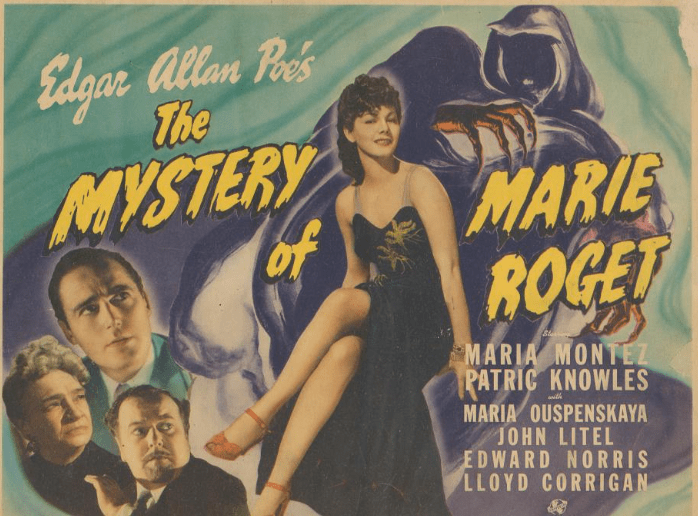
The months following the publication of this story saw the same magazine serialize ‘The Mystery of Marie Roget’ Dear Edgar’s sequel to ‘The Murders on the Rue Morgue’. It could be posited that, though details are sketchy to say the least, that ‘The Landscape Garden’ was given to Snowden because Poe was running late with his second C. Auguste Dupin story and having missed a deadline gave the magazine this story as a place holder. Which is the best you can say for it in many ways.

The Landscape Garden is not even described as a story, but rather as a sketch. It takes us on a tour of a beautifully landscaped garden. In essence it is a piece for descriptive writing that lacks for any real plot as such. Which is part of the problem, as its just not very interesting, this is not what you read Poe for… The other problem is that it isn’t really a finished piece of work. We know this not least because the sketch was to become part of the longer more complete work ‘the Domain of Arnheim’ published five years later.

So the rule I am about to break is this, normally I read each story in this series at least three times. Once without making any notes, just to ‘read the story’ once more to make notes on anything that I may need to mention, and a final time after the piece has been written, just to make sure I am happy with what I have said. This is the same approach I took with Lovecraft project a few years ago, and more or less works, though when a story isn’t great it makes it much more of a chore.

This story however, I have read once, and as I know it is going to be subsumed by the sixty-first story, once on this occasion is enough, indeed once too often.

It is also why this is a relatively should piece, because frankly there is very little to say about it

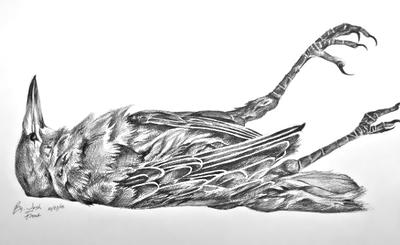
THE RAVEN IS NEVERMORE…

SHOULD YOU READ IT: No, perhaps if your are a keen gardener…. but no not even then. Wait till ‘The Domain of Arnheim’ as at least that is a complete story

BLUFFERS FACT: The entire of Snowden’s Ladies Companion can be found here at the internet archive in the form of microfilm scans of the original magazines. Yes I went to look and yes it is fascinating. There is a remarkable lack of any perfume adds, advice on how to obtain a better organum, and no fad diets. There is however a couple of pages of sheet music…
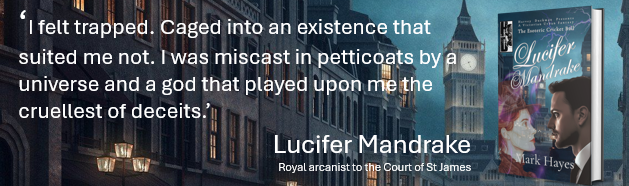
In other news, I have concept art for the cover of the book this will all become one day, in a year or so one suspects may be more. It will probably not have this cover but I like it for the moment, opinions on it would not be unwelcome…

Posted in Dear Edgar, Poe, reads, retro book reviews | Tagged , , , , , , | Leave a comment

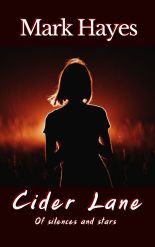
10 years down the Lane

Ten years ago this month I published my first novel. I wrote it in July the year before, then spent a year redrafting it several times, while trying to convince myself it wasn’t just a mid-life crises project. I had always wanted to write a novel, I been writing for the better part of three decades, but now I had actually written one. It was finished it was done , it was as good as I could make it. The only thing left to do was to send it out into the world. It was terrifying…

A novel, as I have become fond of saying because the analogy appeals to me, has the authors blood on the pages. ‘You have to bleed a little in the ink, least the words not mean anything’ to misquote Ian Astbury. The other analogy I use a lot is a novel contains slithers of an authors soul. Both are equally apt when it comes to that first novel. It is also something of the ginger stepchild of my novels. I write an ecliptic mix of Urban fantasy, steampunk, and Urban science fiction. I write worlds of magic, or madness powered by steam. I write speculative fiction…

That first novel however is none of these things. It is a contemporary romance between two broken individuals, an exploration of two psychologically damaged, deeply traumatized individuals trying to exist in a world utterly unsuited for them. There is a lot of blood on the pages because when I wrote it I had a lot of blood to shed. Also I was trying to write something meaningful, not to me, but to the reader. Here was pain, here was trauma, here is the light at the end of the tunnel, and yes its an on coming train.

Cider lane is not a nice book, it not a comfortable read, when it is funny it is funny in counterpoint, when it is charming it is charming despite itself. It was never meant to be a comfortable read and if I achieved anything with the novel it was that. Which only added to the apprehension when it came to putting it out into the world.

To understand why I was apprehensive, why indeed I was terrified, one has to consider who I was. My mother taught me to read, she sat with me every night and made me read to her. Forced me to do so when I had hated the very thought of reading. I was dyslexic, though no one knew that at the time. In the late seventies dyslexia wasn’t something anyone had really heard of. If your child struggled with reading, your child was held back and singled out for ‘special’ classes. Stigmatized and considered to be ‘just a bit thick’. Teachers didn’t bother with the ‘special’ kids too much. Of course the trouble with been a very bright child who has yet to learn the word dyslexia, is that you know your are consigned to the ‘just a bit thick’ ‘special’ kids, so you believe it…

My mother bought a book about Dyslexia, which I discovered years later as it was hidden from the world in the back of a wardrobe. Then she made me read to her, as unlike the rest of the world, she did not accept that I was ‘just a bit thick’. As it happens she was not wrong, but thirty five years later when I was about to publish my first novel, in the back of my mind, I was still that kid who was ‘just a bit thick’. Why the hell did I think I could write anything, let alone a novel. Why the hell should I inflict my damaged psyche onto the world? Who the hell would want to read it? Why the hell would I want them to?

Can you say imposter syndrome? Oh I had it bad, I still do in fact. I seek friendships with people smarter than me, because they are the people I want to spend time with, and yet people smarter than me intimidate me. I try to write books that are clever, witty and wise, yet feel I am none of those things, most of the time. I am a terrible fraud, and someday someone will realize this and they will send around the people who will stop me from writing, for my own good.

Ten years ago this month, I published my first novel, and I was terrified.

Cider Lane remains the troubled child of my novels. Some people like it, some people should never read it, some love it, a few hate it. Its not a nice novel, its not a cozy read, and I left a lot of blood on the page, in places too much. It is also not a novel i would write now. Which is not to say I don’t like it or am not proud of it. I am very proud of the novel, I think it is unique and I love it now as I did then. I am just aware of its flaws and that it is the difficult child.

Passing Place, my second novel, contains my soul, the blood on the pages is the bright scarlet blood of the veins. My later novels hide my soul away and disguise the blood. Oh its still there, it just isn’t quite on display in the same way. Perhaps because I am a better writer now, or just because I bleed in a more controlled fashion. Hannibal Smyth, Lucifer Mandrake, Benjamin West, Gothe, Eliza Tu-Pa-Ka, and the rest are all slithers of my soul, they all bleed my blood on the page, but much of the blood is their own. Both Susanne and Colin from Cider Lane bleed directly from my veins. It is an uncomfortable book, it was never meant to be otherwise.

It also goes in hard from the outset. the first chapter is written exclusively from the perspective of a young woman suffering the trauma of watching her parents burn to death in a car crash she has herself just escaped. Her mind shrinking back to a primitive state of survival, deep in a psychological cave, withdrawn form the world. As first chapters go there is nothing soft and cozy about it, indeed the reason for the books eventual structure of alternating between the two main character stemmed in part from needing a different tone to buff the early Susanna chapters. Susanna’s perspective in those first few chapters are deep survival mode withdrawn from eth world. The counter balance are Colin’s chapters which are more open and flowing. Colin is just as broken as Susanna in his own way. More so in fact, his wounds are not as fresh, but they are much deeper, while Susanna had the resilience of youth on her side.

The structure of the novel, with the two main POV’s view flipping on alternate chapters is another of those things that some readers might struggle with. It is an odd structure, the kind of structure a novelist who doesn’t know better might feel is both challenging and interesting. And in actuality it was, once the characters inhabit the same space the first part of a new chapter covered the events of the previous chapter seen from the others perspective. This led to some interesting situations. such as Susanna behind a door holding a carving knife with every intent to use it, while an unknowing Coilin is trying to talk to her through the door. The two perspectives of that situation are very different…

Cider Lane is a complex, uncomfortable read, and I made some choices about structure and narrative I would never make now. It is a novel about surviving trauma, it isn’t supposed to be a cozy read. I don’t ask forgiveness for the ending, nor apologies for the telling. But terrifying though it was putting that first novel out into the world, for all its faults, I am glad I did.

I have not tried to sell the book for a long time. I don’t advertise its existence as such. I don’t take copies to conventions as a rule because its not genre fiction. It doesn’t link into to any other book I have written (Aside one nightmare scene in Passing Place that strikes home with those who have read both) It is however a book of which I am very proud, for all its faults, which are mainly faults of my making, I would never revise it now. Nor ask forgiveness.

Ten years ago this month I published my first novel.

We all begin some where, my journey started when I took a stroll down Cider Lane.

Posted in amwriting, big questions, cider lane, depression, reads, writes, writing | Tagged , , , , , , , , | Leave a comment

Dear Edgar 36 – The Masque of the Red Death

In the world of art there are many indisputable masterworks. True masterpieces that transcend the art world. Van Gothe’s Sunflowers. DeVince’s Mono Lisa. Vermeer’s Girl with a pearl earring. Goya’s The nude Maja, Giorgione’s The Sleeping Venus, that one by Monet everyone raves about, though I don’t see it myself, blurred landscapes with indistinct figures I ask you…

Fiction too has masterpieces, be it novels or short stories. Stories that are transcendent. Stories that are a slice of perfection, true and wonderous things. A perfect collection of the perfect words to convey a perfect story that becomes at once timeless and indisputable.

As I have oft stated that the quest of any writer should be for the perfect sentence. That no such beast exists, or at least that it is near imposable to achieve and is ultimately a futile endeavor should not dissuade the writer from seeking it. I have got close, once or twice. There are moments I think I have succeeded in my goal, but they are mirages in the desert. They draw you on with the promise of water, but your thirst remains unquenched.

There is no such thing as perfection, there is no perfect sentence, there is certainly no perfect story. At least not one that flowed out of my fingers as they scampered across a keyboard. But if such a beast does exist it is The Masque of the Red Death.

Two thousand four hundred and forty five words of exquisite, concise beautiful perfection.

Our own Dear Edgar wrote more than one story that could be considered a masterpiece, The Tell Tale Heart, The Fall of the House of Usher, Berenice to some extent and others. He certainly wrote many that could almost be considered such. But in my opinion none of them surpass this one. In The Masque of the Red Death not a word is wasted, or found wanting. Unlike many of his stories there is no meandering start or over done back story. The tale is told, a tale for the ages, one both complex and full of dark gothic imagery, but at the same time a tale of beautiful simplicity. A tale a reader can impose meaning upon and relate to as they might a contemporary piece even over 180 years since it was first published.

There have been countless adaptations, audio, cinematic, comic books, and the masked figure of red death turns up in countless ways through out pop culture. The figure of the red death is nigh on ubiquitous. While the idea of Prince Prospero gathering his wealthy noble friends and locking them all inside an abbey, whence they can party with excess, safe from harm while a deadly plague ravages the poor is one awash with modern echoes.

Boris Johnsons held parties in Downing Street while Covid ran rampant. The poor suffer while the rich drank wine in their ivory towers… The modern nobility, the billionaires, living in their private walled estates, their abbeys. If civilization starts to fall we all know who will be locked outside the walls and who will be within. Perhaps in that lays the long last appeal of the masterpiece. The prince, and all his rich sycophants that sought through wealth and privilege their own survival, while the poor died beyond the walls of their sanctuary, die of the same plague as those they cast to their fates.

His wealth did not save him, for in the end all are equal… to the Red Death.

The story, briefly for those who do not know it, is thus. Prince Prospero as I say, gathered his friend in an abbey, having first provisioned it to out last the plague that ravages the land. A plague called the Red Death because it causes those who contract it to bleed out of their skin. Once inside he has his guards bolt and weld the gates shut. Then he proceeds to have a party, several parties indeed a party every eve for six months while the plague ravages those beyond his walls.

 The prince had provided all the appliances of pleasure. There were buffoons, there were improvisatori, there were ballêt-dancers, there were musicians, there were cards, there was Beauty, there was wine. All these and security were within. Without was the Red Death.

After six months of parties the experience starts to wane, so he decides to spice things up with a masque ball. A ball spread through seven rooms each of a different coloured theme, blue, purple, green, orange, white, violet and the final room the black room illuminated with scarlet light, in which stands a clock, counting down the hours and chiming them in.

When the clock strikes midnight and the twelve tolls ring through the seven rooms a new figure is seen to join the masque. A figure dressed in a blood splattered funeral shroud, as if mocking the world beyond the walls, or worse those within. The prince is outraged, declaring the figure should be ceased so he may be hung at dawn for the impertinence of his costume. But fear spreads through the court and none dare approach the ghastly figure as it progresses through the rooms to the final chamber. Prospero gives chase , drawing a dagger to kill the offender who so mocks his court, but as he approaches he falls to the floor and dies in blood. The guests surge towards the figure, and try to grab him but the shroud and mask fall away revealing no one within. Then the courtiers begin to fall, and in a few moments the whole court succumb to the red death.

And now was acknowledged the presence of the Red Death. He had come like a thief in the night. And one by one dropped the revellers in the blood-bedewed halls of their revel, and died each in the despairing posture of his fall. And the life of the ebony clock went out with that of the last of the gay. And the flames of the tripods expired. And Darkness and Decay and the Red Death held illimitable dominion over all.

It is a dark tale, a haunting tale, a tale that tells us in the end all of us die. That fate can not be cheated, before death all are equal and wealth and privilege will not save you. But dark or not it is as perfect a short story as you could imagine.

Many read into the symbolism with in the story, the seven rooms are widely considered to represent the seven stages of life birth to death, the clock marks time and death is inevitable. That it can be read as an allegory is not in doubt, but in essence this is all just backdrop to the story, a frame in which to mount the painting.

A FLOCK OF RAVENS EVERMORE…

SHOULD YOU READ IT: You mean you haven’t? Go read it now. Oh you have? Go read it again.. You have read it many times? Okay go seek out the reading by Christopher Lee on You tube, and listen to the perfect story read by the perfect narrator… www.youtube.com/watch?v=ymiHGQH54yQ

BLUFFERS FACT: Aside the masterful Christopher Lee version there is a beautiful version recorded by Basil Rathbone, the Shakespearian actor who was the authors first choice to play Rhett Buttler in Gone With the Wind. Basil was an actor of the old school who is best remembered now for his masterful portrayal of Sherlock Holmes in 15 movies in the 40’s and 50’s, (16 is you count The Great Mouse Detective). Sherlock Holmes of course owe his existence in part to Dear Edgars detective Auguste Dupin.

Posted in horror, Poe, reads, retro book reviews | Tagged , , , , , , , , , | Leave a comment

Dear Edgar 35 ~ The Oval Portrait

On occasion, when you spend time in the company of dead authors, you come across an obscure little story that inspired something far more well known. Occasionally the original feels like it is a pastiche of the more famous work. That is the case with this little tale by our Dear Edgar. But before we come to that let me illustrate this point with a little story of my own.

A somewhat casual ex-girlfriend of mine, was in an equally casual relationship with younger man, she was younger than me, he was younger than her. Both relationships were a tad torrid and doomed from the outset, but none of that is important, and it was fun for a time (and quite some time ago). The reason I bring this up is because one night the two of them watched the original Mad Max, the DVD of which she had borrowed from me, which was the main reason she told me this story.

In any regard, it gets to the end where Max handcuffs ‘the toe cutter’ to his car, and gives him a hacksaw, doing the whole speech… ‘The cuffs are carbonized steel and will take you twenty minutes to cut through, but you could cut through your arm in a couple of minutes.’ then sets the car on fire, leaving the Toe Cutter with a choice. Lose an arm or be blown up and die in fiery agony…

The young boyfriends response to this was ‘Seen that before, they stole from SAW’.

Now obviously he wasn’t the brightest as the concept of Mad Max being the much older movie did not occur to him. Despite the original Mad max been a low budget Australian movie that shows its age. But he had indeed ‘seen’ the whole arm or cuffs bit ‘before’ in his own objective time line SAW was the original, not the one inspired by another movie. I suspect it would have blown his mind to point out neither movie did that scene first…

Okay, so small wander through my own past over, lets get back to Dear Edgars The Oval Portrait. The story, which is about as short as Poe ever gets, involves an injured man stumbling into an abandoned Château. How he was injured? From who is he taking refuge? Does he like cream in his coffee? Was he ever in a complex casual love triangle with a younger woman? None of this is explained in the current version of the story. But this doesn’t matter the narrator story is not the story, the story is within the story, his story merely sets a framework in which to tell the actual story.

To pass the time while he hides out, or possibly convalesces, or whatever he is doing, our narrator examines paintings on the walls of the room, and reads a reference book that talks about them. Which is a perfectly normal thing to do after you break into a house with some undisclosed injury. Eventually he sees a painting he had not seen before in an oval frame. A portrait of a beautiful young woman. A portrait so captivating he is mesmerized by its for almost an hour. It is so absolutely life like, so ‘real’ in nature, the artist had captured the young woman in such exquisite detail, he is astounded by it. (this is the era before 4k HD clearly)

Once his memorization fades he looks up the picture in the refence book and then the story within the story is revealed. The painter was the husband of the young woman in the portrait. An eccentric who cared more for his work than anything else in the world, including the subject of the painting. The paining does indeed capture the life of the young woman, who dies while sitting for the portrait he insists on painting of her. The not entirely expressed implication is the life of the young woman was captured by the painting. Which is why it is so life like. It is life, all her life.

This is all beautifully written, it is the kind of story Poe writes so well, with a structured poetic prose that draws you along and lets you feel the old leather bindings of the book, and the capturing beauty of the painting. this is one of his shortest tales, and yet the perfect length for him to tell this story in the way it is told. Oscar Wilde praised this story for its ‘Rhythmical Expression’ which is hard to argue with, even if I was inclined to argue with Oscar. Speaking of whom…

Oscar’s praise for ‘The Oval Portrait’ came a few years before ‘The Picture of Dorian Gray’ was published. He made no secret of aspects of the novel been inspiring by Poe. While admittedly in Oscars opus the painting shows the true face of its evil subject, the idea of a life been captured in canvas remains the same. Reading this story after having read Dorian Gray years ago, it struck me I knew this story, I had read it before… It was a hacksaw handcuffs moment…

This is, as I have said, a very short story. It is also far from the most well known in Poe’s bibliography, it is however well worth a read. It is a somewhat mesmerizing little tale, perfectly told. It is also very very Poe. A mans wreaked by obsession, the death of a beautiful woman… This has been going on since he wrote Berenice and Morella some seven years before. With his wife Virginia growing ill it was a subject very much on his mind by 1842.

A FULLY FLEDGED UNKINDNESS OF RAVENS

SHOULD YOU READ IT: Its a short read but a beautiful, if dark, twisted and somewhat disturbing, read. So yes, yes you should

Bluffers fact: This story was first published under the title ‘Life in Death’, in that original version there were several opening paragraphs that tell the reader how the narrator had been wounded and that he had taken opium for the pain. Poe removed these from the later version as he felt they added nothing to the story but ambiguity. Making the paintings life like nature seem to be a hallucination.

Having sought out the original version in the dark recesses of the internet, and utterly failed to find it, I must concede he was entirely correct to do so… But it does mean I will never find out if the narrator ever in a complex casual love triangle with a younger woman…

Posted in amreading, Dear Edgar, Poe, reads | Tagged , , , , , , , , | 1 Comment

The post-con collapse

Working a convention is exhausting. I am not alone in this. Almost every author I know has much the same story. Conventions are draining, much I suspect because writers tend not to be the kind of people who are naturally gregarious. We chose to hide our personalities in books, we chose to spend time staring at words in the never ending search for the perfect sentence and to enjoy the world from behind the visage of the observer. We watch, we speculate, we consider, and we imagine. Directly interacting with it is something else entirely.

Now when I say this I do not mean that writers are incapable of been perfectly normal functioning adults. Though that said they are writers so normal left on the first tide and sailed off long ago. However in day to day life, when they are just a person who is also a writer, they can function just fine. It is however in the moment they have to present as a writer that things go a little sideways.

A writer at a convention stands, or sits, behind a table and stares out into the void of

  • ‘I used to read but I never get the time to any more’
  • ‘I don’t really read books’
  • ‘blank featureless stare follows by the smallest of nods and then wanders off’
  • ‘I will engage you in conversation for several minutes, say the book looks interesting, then say I have no money and wonder off again’
  • ‘I am a bored adult dealing with a child who is also bored and a significant other who is also bored and this have no interest in engaging with anyone on the off chance it would relieve my boredom’
  • ‘I’m a Cos-play girl, in a cos-play world, I look fantastic, in mostly plastic’
  • ‘Have you got a card or something,’ which may be ‘I don’t care but want to appear interested’ or ‘I read eBooks mainly, or just don’t want to carry heavy books about with me today…’
  • can I buy these on amazon?’
  • ‘Bert’

Of these only Bert is interested in anything you have to offer. Bert is a bit odd though, you worry about Bert. You worry about yourself because your talking to Bert, and you also worry that were the roles reverse you would be a Bert…

None of this is entirely true, there are plenty of lovely people who go to con’s. Most people in fact. The Cos-play girls are almost certainly lovely people as well, even the odd Dalek. I love cons and the people who go to them. but when I am working a table they can suck the life out of you with the sheer number of negative interactions. It is why I perfer to do them with people, like Kate, Ben or Gill. Two or more writers can keep each other going through the dark times between 12:30 and 2 when people are off having lunch and the same three cosplayers have wandered past for tenth time as dancing Deadpool’s with a smart speaker playing something atrocious, which is hilarious the first couple of times…

Working cons is a draining experience, working two in quick succession (Saturday and Sunday) even more so as you have to arrive early to set up and leave late to pack down, early mornings, long days, and the peopling…

I suspect my IRL boss for the day job was unsurprised to receive an text message on Sunday saying I was going to take Monday off.

On top of all this I gave out the very last of my pre-covid bookmarks half way through Saturday, and had none at all on Sunday. Given the ‘I only read ebooks, and/or can I get them on Amazon?, crowd are lovely people who I want to get my books that way not having bookmarks is a problem…

I had designed and order fabulous new book marks (see below), I order then weeks ago, they had not arrived in time for the two con’s. They arrived on Monday….

I may have sworn… a lot….

So anyway the advice for authors is this, do cons they are great. Take a Ukulele with you, and a silly hat. Smile a lot, even at the ones who aren’t going to give you a moment. Smile with the ones who waste your time a little. Smile at Bert, even if he worries you. Take a friend so your not suffering alone. Get plenty of sleep before hand, and allow your self down time afterwards

And importantly , order the bloody bookmarks at least a week earlier than you think is reasonable because they will arrive later then you think…

Posted in amreading, books, cthulhu, Dear Edgar, humour, writing | Tagged , , , , , , , , , , | 2 Comments

Dear Edgar 34 # Three Sundays in a Week

Occasionally, amid explorations of obsession and madness, horror and satire, existentialism and human frailty… You just need to tell a ridiculous tall tale or two to keep yourself amused. Nothing could be even slightly problematic about that could it…

Well…

Here is the thing, while this is nothing more than a tall tale, and wasn’t problematic to any great degree at the time when our Dear Edgar wrote this, reading it now with modern eyes can throw up the odd,,, lets call them niggles. And as much as I am a firm believer that if you read something you should read it in full knowledge that it is ‘of its time’, those niggles still bears a modicum of examination, not least because the niggles in this case are more directly reflective of dear Edgar himself.

In this tall tale our narrator, who never supplies us with his name, seeks permission from his grand uncle Rumgudgeon to marry the young and beautiful Kate, his grand uncles other ward. The grand uncle agrees with but one stipulation. The narrator can not marry the girl, who is his second cousin insists to the narrator that:-

You shall have Kate and her plum when three Sundays come together in a week — but not till then… …I am a man of my word. 

Okay, so ‘niggles’

Firstly the narrator wants to marry his cousin. Now it should be noted she is desirous of this too, and marrying your second cousin was not that unusual in the mid 1800’s. Half the royal families of Europe were related to each other in that way for a start, but still to the modern reader…

Secondly there is the matter of ‘her plum’ now I am not entirely sure what ‘her plum’ refers to in this context, only that it is mentions several times, and the grand uncle is some what desirous of her plum too, apparently…

Then there is another matter, the narrator has ‘seen his fifth Olympiad’ which is to say he is twenty as the Olympics’ are every four years. An oddly anarchic term in the 1840’s given the modern Olympics did not arise for another fifty plus years. His cousin Kate however is only fourteen. Now again this was not an issue in 1840’s America. this is not to say it was common, but it wasn’t uncommon or illegal to marry at that age, with a parents or guardians consent.

When he was twenty-six Poe married his own cousin Virginia Clemm officially in 1836 when she was fourteen. They obtained a marriage license when she was only thirteen in the neighboring state. I am well aware to our modern eyes this seems a whole heap of wrong. It would also be illegal now in the very states where it was legal then. I have also had people tell me they don’t read Poe now because to there mind he was a pedophile. Which were he trying to marry a fourteen year old today he would certainly be. And there is nothing wrong with their view.

That said, transposing the morality of today on to the past is something of a foolish endeavor and if your going to do so you should do so utterly, so you should probably stop reading Shakespeare as well. You have to take these things in context. Poe married Virginia legally with the consent (admittedly begrudgingly given ) of her parents. They went on to have a happy marriage. If you don’t wish to read Poe now because the morality of his day differs from your own I commend your integrity, I just don’t think your reasons for doing so are right.

More importantly I don’t think you should tell me, or anyone else, not to read Poe because his 1800’s morality is not your own 2000’s morality. This has happened several times… This is problematic because it is of it time, it was not problematic in its time. which is the point. If you want to know the difference, read some Lovecraft, there was a man who was problematic for his time…

But back to this ridiculous tall tale.

It is Kate, the would be bride, who comes up with a somewhat contrived solution to the three Sundays in a single week conundrum, with the help of a couple of navel offices who have circumnavigated the globe in opposite directions, both have crossed the international date line, so one is technically a day behind, and one technically a day ahead. So for the two sailors and the couple three consecutive days are effectively ‘Sunday’.

The uncle keeps to his word, and the couple marry… hussar.

Its a tall tale, its quite funny because of the way its written, but its nothing more than that short , funny , clever and written to make its reader smile.

THREE AMUSED RAVENS WHO SAW THE JOKE COMING BUT LAUGHED ANYWAY

SHOULD YOU READ IT: It is a perfect example of a tall tale, it is written to a punch line and writing to be funny in the tell as well as the end. As a writer it is interesting, as a reader merely amusing. But it is certainly amusing.

SHOULD YOU NOT READ IT: If you can not read this through the filter of the morality of its time, then you should not read it. Likewise if you can not separate writer and story. As I said earlier this is problematic because of its time, it was not problematic in its time. which is the point.

Bluffers fact: Crossing the international date line does not in fact change the day and the world keeps spinning, the entire premise of the story is wrong in that regard. As was Jules Verne when he used that plot device to have Phileas Fogg win his bet in around the world in 80 days…

Posted in humour, Poe, reads, retro book reviews, Uncategorized | Tagged , , , , , , , , | Leave a comment

New Book, Conventions, and an update

Occasionally, just occasionally, everything all comes at once. Which is why I have an ear infection, am currently deaf on my left side, feel like curling up in a dark room under a blanket, just as I have the busiest weekend of the year. Oh and my new book marks haven’t arrived…

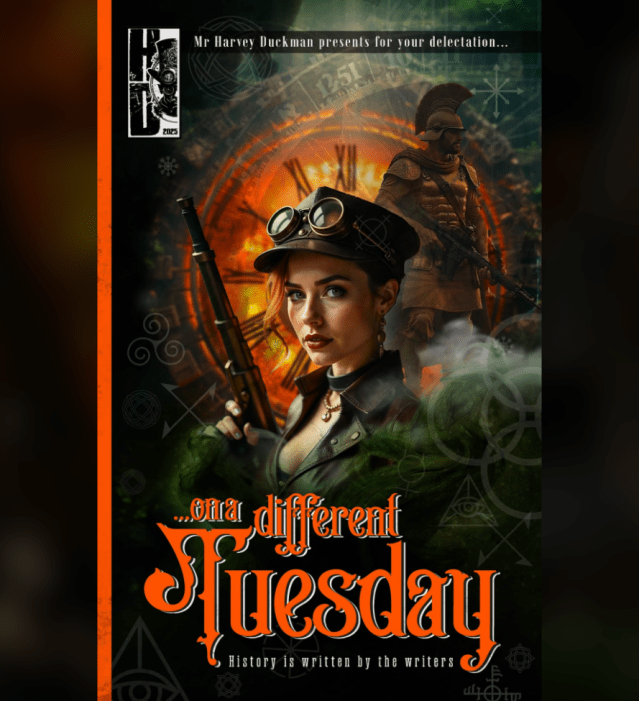
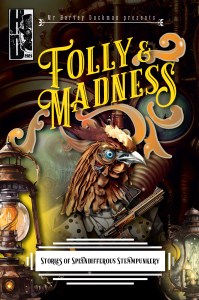
The Big news first, Today sees the release of the latest Harvey Duckman Anthology, this one is Alt History, with a healthy dose of steampunk. Because someone said Alt History was a broader church and less niche than just steampunk so would have a wider appeal. As that someone was me I am not going to disagree. It has certainly made for a fabulous collection and one I am very proud to be part of.

My own contribution in this anthology is a story from the Maybeverse, which isn’t a thing as yet but when has that ever stopped me. Anyway History is written by the writers, as the tag line says…

Harvey Duckman is back with a fabulous collection of stories examining alternate histories, from the Romans, to the middle ages, through the 1600s to the Victorians and the 20th century and beyond… what if history wasn’t quite as our records remember?

Looking for original, wonderfully imaginative stories from a bunch of fantastic writers? Sit back and enjoy a glimpse into our weird and wonderful worlds.

Featuring funny, poignant, dark, thought-provoking and always entertaining short stories from Liz Tuckwell, Steven C. Davis, John Holmes-Carrington, Anna Atkinson-Dunn, Darren Goossens, Hugh Alan, Mark Hayes, CK Roebuck, Mary F. Carr, Keith Errington, Reino Tarihmen, Zachary Taylor Branch, Ben Sawyer, Phil Sculthorpe, Davia Sacks, Will Nett and Michael A. Clark.

As it is called On a Different Tuesday, we are of course releasing it on a Friday ….

A quizziling stick, or rather a stick with which to Quizzel

Tomorrow Myself and several Harvey writers including the editor herself will be at the Globe Theater in Stockton on Tees at Kapow, a lovely local scifi con we do every year. If you are local to the area at all bob in. We will be talking books and stuff

On Sunday , three of us will be further up the A1 in Newcastle Comic-Con doing much the same thing but in a different hat.

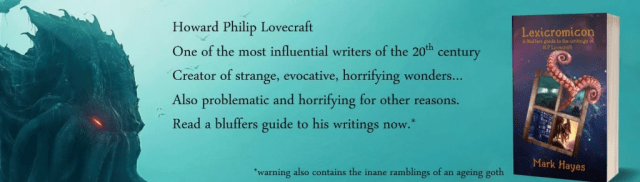
One final bit of news, I have finished the second draft of the new book on Lovecraft I was commissioned to write. Which makes me very happy as I can get back to writing fiction..

Posted in fantasy, Harvey Duckman, indie, indie writers, steampunk | Tagged , , , , , , , , | Leave a comment

Dear Edgar 33 – Eleonora

The One remains, the many change and pass;
Heaven’s light forever shines, Earth’s shadows fly;
Life, like a dome of many-coloured glass,
Stains the white radiance of Eternity,

Our dear Edgar, as you are doubtless aware, was something of a romantic, or at the very least aspired to write romantic poetry. The four lines above are very much of the romantic poetry tradition. They were read out by Mick Jagger at fellow Rolling Stone Brian Jones funeral. They are not however the words of Poe, but come from the poem Adonis, by Percy Bysshe Shelley, who is perhaps most remembered in these latter days, despite his own fame, as the husband of Mary Shelley.

The Shelley’s were of course at the heart of the 18th century Romantic tradition, as they hang about with that big blouse wearing, opium addict, syphilitic and peer of the realm Bryon. they went to all the best parties in Italy, got annoyed by that bloke Coleridge and his obsession with enormous sea birds and told ghost stories that would cause generations to come to find themselves pointing out that Frankenstein was the name of the Doctor not the monster… heady days.

Edgar, the romantic and poet, of the mid 19th century probably wished he had been around fifty years earlier when the Romantics movement was in full swing. he would have been gutted had he known the New Romantics movement would not turn up for another hundred and forty years, though I am not sure what he would have thought of Spandau Ballet, but he would have probably loved Adam and the Ants… because who doesn’t.

In any regard, if this all seems a little off track and your wondering what it has to do with anything, it is all about the third line in that snippet from Shelley’s Adonis.

Life, like a dome of many-coloured glass,

Because our dear Edgar stole it, or at least part of it, for his own fanciful romantic tale Eleonora.

The Eleonora of the title is the love of the narrators life, his cousin… he lives with her and his aunt in The Valley of the Many-Coloured Grass, which is an idyllic paradise full of fragrant flowers, fantastic trees, pink flamingos and a River of Silence. An isolated little world all of its own untrodden by the footsteps of strangers. And in the valley of the many-coloured grass the cousins fall in a deep all abiding love.

So that bodes well….

When Poe wrote this tale, that is awash with romantic language and imagery, Virginia his wife and half-counion had herself fallen ill, with the sickness that would eventually, in five more years, be the death of her. Aspects of this story foreshadow her demise, and there is little doubt that when writing a tale of romance such as this, certain autobiographic aspects were imbued in the story. Poe’s deep romantic attachment to Virginia is well documented. While their familial relationship, and Virginia’s age when they wed leads to a discomfort among our modern sensibilities, that he loved her and that love was reciprocated is hard to dispute.

Eleonora falls ill, and the tranquil joy of the valley of many-coloured grass is broken with it. The River of silence grows murky, flowers wilt, the fantastic trees shed leaves and the flamingos fly off never to return. The valley of many-coloured grass is no longer a sweet eden in which innocents dream of love. But before she dies Eleonora extracts a promise from her lover, that he will never forget her, or the Valley of the many coloured grass. That he will hold her forever in his heart and love no other.

And so our narrator vows to her, with ‘the Mighty Ruler of the Universe’ as his witness, that he will never bind himself in marriage ‘to any daughter of Earth’. Which is a beautiful sentiment, and of course and utterly foolish vow. This is a story by Poe , we have read Ligeia we have read Morella, we can all see where this is going. You don’t make a vow to a dying woman in a Poe story and not expect to pay a price for it later in the tale.

Eleonora dies, the valley dies with her, at least in the eyes to the protagonist, and he leaves the valley. Time passes and eventually he finds himself in a strange city. In that strange city far form the valley of the many-coloured grass he meets Ermengarde, a beautiful woman who fills the void in his heart. the memory of the valley and his life with Eleonora a distant memory, he forswears his vow and marries Ermengarde.

Yes, I know, clearly the narrator has never read any Poe…

The shade of his forsaken Eleonora comes one night to visit our narrator from beyond the grave…

So wrathful ghost of a forgotten love visits the man who has forsworn himself in his vow to her, clearly his suffering with be great, his guilt will drive him insane and he shall suffer as will the woman who replaced his lost love. There will be much weeping, a dragging of nails down chalk-boards, the haunting screams of harpies in the night. For guilt and paying for forsaking vows are Poe’s favorite themes. Oh yes, we readers of Dear Edgar know what is coming… Where were we, oh yes…

The shade of his forsaken Eleonora comes one night to visit our narrator from beyond the grave….

Sleep in peace! — for the Spirit of Love reigneth and ruleth, and, in taking to thy passionate heart her who is Ermengarde, thou art absolved, for reasons which shall be made known to thee in Heaven, of thy vows unto Eleonora.

If that is not a twist of an ending to a Poe story I don’t know what is. A vow forgiven, a blessing given… It is almost as if our Dear Edgar was suddenly faced with the mortality of the woman he loved and was dealing with the concept of life beyond Virginia. Or perhaps that is just projection on our part knowing what was instore. What is sure is this is a very different Poe romance. The Valley of the many-coloured grass is a different setting to the dark gothic houses and castles you normally find in his fiction. The lovers have passion but not rage, joy but not anger. It is arguably his most romantic tale. Certainly the imagery has deep sexual overtones, while there is innocence and awaking knowledge within the story. It is a beautiful piece with a surprising ending, if only because it is not an ending you would expect from a tale by Poe.

The hero of the tale is love itself and the hero wins out over. I am sure Percy Shelley would have approved, once the opium wore off and if he wasn’t wrestling with Lord Bryon in an Italian lake.

FOUR RAVENS,

SHOULD YOU READ IT: This is very much a tale written as prose poetry. It is romantic and uses romantic language. You should perhaps read it to your lover by candle light..

Bluffers fact:  Ermengarde is an odd name, the use of it in this story inspired H.P. Lovecraft, who read a lot of Poe, to use the name in ‘Sweet Ermengarde’ in a story he wrote mocking a certain kind of romantic fiction prevalent in the 1920’s. That story inspired the name of Sweet Ermengarde, a German Goth Rock band, who are a lovely bunch of fellows who once offered me tickets to their UK tour, just before it was scuppered by covid. You should look them up, they are well worth a listen.

Posted in Poe, reads, retro book reviews | Tagged , , , , , , , , | Leave a comment

Still Researching Lovecraft

I am still engaged in a project involving a book about the worlds of H.P. Lovecraft. I originally mentioned this just over a month ago, in a post called Researching Lovecraft… This as you may have guessed is a follow on from that post, as people liked it and because I failed my sanity rolls, so had to crack on with writing the book….

Part of the brief is a short biography of Howard, between 5k and 10k, which covers his life from birth to death and everything in-between. While I have a copy of S T Joshi’s biography on old tenacle hugger (which I recommend for those of an academic lint), somewhere in the upper library, otherwise known as the spare bedroom where men fear to tread. It has been some years since I read it and I felt it would be cheating to borrow heavily from it. it felt more important to start afresh, keep it lighter than Joshi, while not skipping over anything important. I have my own style which any reader of my non-fiction will recognize. One perhaps less worthy in an academic sense, but one would hope more readable.

Besides which, a short biography is supposed to lean into the ‘short’.

That all said, there has been no shortage of research involved. What is included in the final cut maybe 20% at most of the notes I took double checking things I already know and fresh research into anything I didn’t. There were some fun little facts thrown up along the way, which may make the cut in one way or another but the rabbit holes were deep, the warrens winding and there was many a twist back on oneself along the way. So here are some of the more… unusual notes, or entertaining little factoids, depending on the way you look at them.

Howard with his mum and dad age 2 (that’s Howard at age 2, his mum and dad were older, obviously)

Young Howard wore a dress, this was not unusual, it was in fact very normal for young boys in the 1890’s, even if it does seem a little odd from a modern perspective… He also wore pink which was considered a very manly colour. Any conclusions you draw from this says more about you than it does about Howard…

Lovecraft’s maternal Grandfather had the wonderful name, Whipple Van Buran Phillips.

Whipple was a freemason and successful businessman. He also owned much of the land around a small town called Greene in the west of Rhode Island state.

When Lovecraft first met his later wife Sonia Greene, he defiantly didn’t say , “Ma Grand pa Whipple used to own him a town called Greene.”

The above is not because it would have been a terrible chat up line… But because it would have made Howard sound like a backwoods racoon-hunter, which would have horrified him.

When he got himself appointed as chairman of the UAPA’s Department of Public Criticism he embarked on a campaign to advocate the use of ‘British English’ over ‘American English’ which he believed, in his typically xenophobic way, to be a bastardised version of the language, watered down by immigrants from Russia, the Slavic nations and Jews.

Irony flag: American English is far closer to the English of Shakespeare than modern British English…

This was also why ‘The Colour from Outer Space’, using the British spelling, because xenophobia…

Second Irony flag: Sonia Greene, Lovecraft’s wife, until he died as he never filed the papers for his devoice, was actuality a Ukrainian of Jewish stock, though she came to New York as a young child. She was therefore exactly the kind of immigrate he thought were ruining New England.

Speaking of Sonia , Howards aunts disapproved of her, not because of her heritage, or even that she was a widow with a teenage daughter, but because they thought she was a gold digger…

Third irony flag: Once they were married Sonia Greene supported Howard finically for years, as he was quite unable to get a job…

Sonia became an unintentional bigamist when she remarried in 1936, because she believe Howard had filed the devoice papers. he had, but he had field them in his desk draw rather than with the county clerks office. She did not learn she had still been married to him until 1945, when she also found out he had been dead for eight years…

Sonia later wrote a short memoir entitled ‘The Private Life of H. P. Lovecraft‘ in which she said he performed ‘satisfactorily’ as a lover. Damn girl…

Posted in Nyarlathotep, opinion, reads, writes, writing | Tagged , , , , , , , , | Leave a comment