At work, the one that pays the bills, I have a pile of notebooks. Some are very much ‘work’ notebooks full of notes for work. Others are note pads full of, well not work related notes, writers notes. Note’s I have taken when escorting contactors, or at my desk on a lunch time, or hanging on conference calls waiting to be asked to go and do technical things, and knowing no one is going to ask me for a couple of hours. Generally is its just ‘non-work’ the note books will eventually find there way back home to the note pad pile on the bookcase near my home desk.
Some notebooks are full of both work and writers notes, and so have to stay at work and get forgotten about . Often they are just small scenes I have half written in because an idea came to me. Often these were written several years ago, and I am not 100% sure what they were about. Other time I start to remember as I read them. Like the small dialogue below between a physiotherapist and his patient, the origins of which I remember…
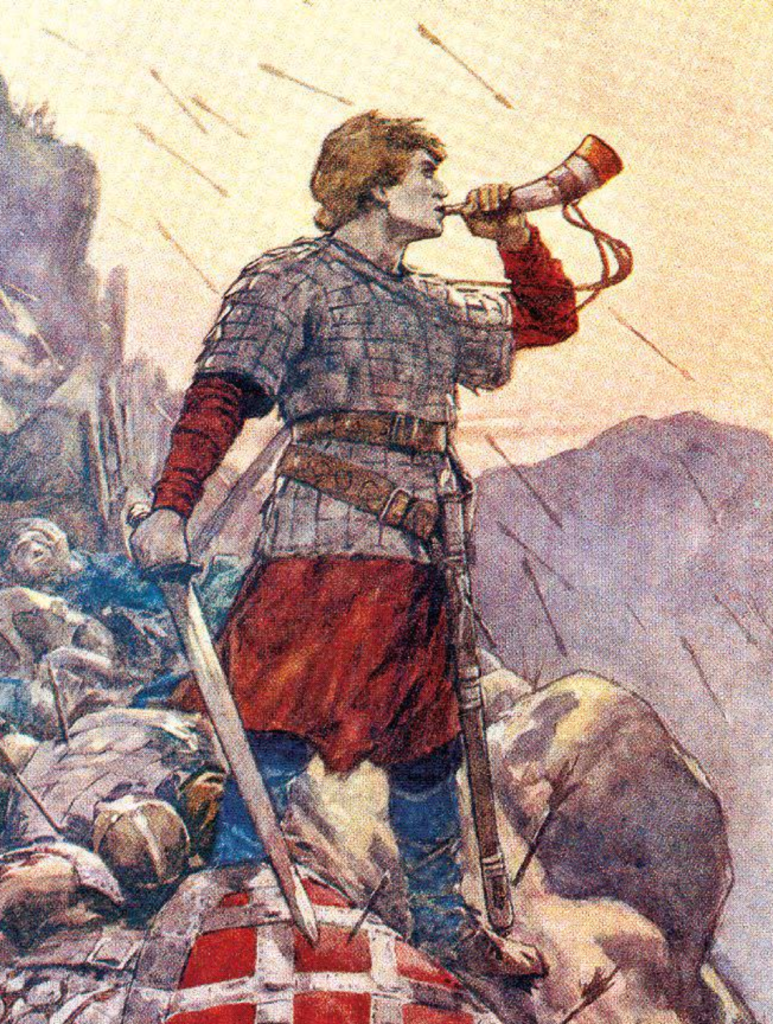
This dialogue was written to take place after a the patient describes, in some detail the events that take place at dusk on the 3rd day of a battle. I know this because I have a mind map a couple of pages before this piece describing that whole scene in not form. Basically small descriptions of events to take place over a full chapter of with arrows and lines linking them up in some kind of order, only half of which makes much sense. Some of which is not entirely legible as my hand writing is ecliptic at best.
This doesn’t matter overly as I know the scene being described, which is Battle of Roncevaux Pass at which reputedly the most famous of Charlemagne’s Paladin knights met his end. It was supposed to be a long scene written with a dream like quality to it. A recollection, rather than observation, of the events at Roncevaux Pass. Which was to be followed, in the half thrown together idea of a story or a novel that may or may not ever be written , by this dialogue. Written out long hand on the page of a note book , then forgotten about for a couple of years or more till I came across it today.
“So Roland…”
“Orlando!”
“Orlando them if you prefer. What do you think all that means?”
“Is that not what you are suppose to tell me?”
“Well sure, sure. But I do not interpret dreams as such.”
“They are not dreams.”
“Are they not? Well let me ask you this. What year did the battle you describe take place?”
“the year of our Lord seven ninety three.”
“And todays date is?”
Grunted laughter… “it matters not.”
“It matters not? We are in the third decade of third millennium, yet you speak of observing a battle in the first. By my reconning some fourteen hundred years ago.”
“it is still no dream.”
“What is it then, if not a dream?”
“A memory…”
There are more notes. Another couple of conversations though less defined than this one. There is a note that says in the battle scene Roland refuses to fight, though this is contradicted later there is also this little aside
“let no man claim to be the best on life, least his vanity doth prove his undoing!”
“Yet you believe yourself so?”
“Of course, least tis between myself and Roland…”
I am not entirely sure who is speaking, though I suspect it is Renaud, Roland’s rival in many things. I have a lot of notes, I clearly had a lot of ideas when I wrote them and I know who sent me down this path in the first place, (looking at you Jessica Law). But I had other things to write and stories to tell so this whole Roland/Orlando novel idea was confined to a note book at work and for a time forgotten, till I read through my notes today.
I have many note books that tell similar tales, and more stories never written than you could ever imagine. I may one day get back to this one, or some other no doubt. My advise to any writer is to write things down, in note pads , in files on your computer, voice notes , what ever, but when you have ideas tame them. That is how novels get started. The Lucifer Mandrake novel began as I have said before form a small dialogue lost in notes I stumbled back over years later.
Speaking of which there were other unrelated notes in that note book including this one which I suspect was a passing note for Lucifer, one of them at any rate…
In the beginning there was darkness, and then the lord said “let there be light!”
Have you ever wondered who he said that to?
I mentioned this on Bluesky the other day and a friend there (summer oaks) pointed out he could of course have just been talking to himself, but then asked the somewhat pertinant question.
Who wrote down what he said?
I have not yet formulated an answer to that one. But I like to think it was a small cherub called Mildred. For more joyfully important conversations you can find me on blue sky under my actual name, which makes a nice change for social media @markhayes.bsky.social
Back in August 2021 I wrote a post about the value of research to a fiction writer, and specifically in regard to a short story I had written called ‘Mandrake’ that was at the time had just being published in a Harvey Duckman anthology. This was the first time I ever mentioned the name Lucifer Mandrake on the blog and at the time I had no more than fleeting intentions of ever taking that short story and the characters within any further. February saw the publication of the Lucifer Mandrake novel I first vaguely posited way back then. It’s been a long road since then, but I thought I would revisit the concept of research…
Research is one of the most important aspects of the fiction writers toolbox, I am aware this may seem counterintuitive, after all its fiction. We just make it up don’t we? Well yes. But when ‘just making things up’ research is often far more important than you might imagine.
If you want the reader to invest in the world your characters inhabit you need it to be convincing. So, when writing something set in the mid Victorian period, even a fantasy where the ‘rules’ of how the world works have been tweaked, you still need the period details to be right. Mid-Victorian England is a very solid place and time. Your readers will know a lot about it, some of the things they know may not be entirely accurate, some may be down right wrong, but if you ever have to defend your historical accuracy in your version of Mid Victorian England, where magic is real and someone is raising members of the house of lords as zombies (some one is bound to notice the undead in the upper chamber of parliament eventually), you need to get the actual historical details correct. Or if they are wrong have them wrong for reasons of plot not oversight.
Doing that kind of research might sound a little tedious, but it isn’t for me because I love research. This may be because when I am doing research I’m not acctually having to write. Writing is work, and like most writers I know, we may love to write but the old gods and the new know we will try and avoid it as much as possible. Research is perfectly valid procrastination… We are not avoiding work we are working, its not our fault that this working involves a large cup of tea, a slice of cake, lounging on the sofa and leafing through Brewster’s book of Phrase and Fable* or Stotts Original Miscellany, The Oxford History of the Classical World, or the one bound in brown leather that is probably not human skin….
*It may be possible to be a writer and not have an edition of Brewster’s on the shelf. But I am not sure how. Mine is the fifteenth edition which replaced a battered twelfth edition when it fell apart after many years of use. They are now on the twentieth edition so mine is a tad dated. The first edition came out in 1870. It is the bible of English Literature…
Aside getting your setting and history right however there is another reason why research is important. It is a rich vain of story, colour, character and background to explore and more importantly steal. No matter how clever and interesting you think your plot may be. No matter how interesting your characters and the world you imagine, actual history and people are far more complex and interesting. For example, if you are going to write about an attempted assassinations of Queen Victoria it is probably wise to look up attempted assassinations of Queen Victoria. At which point you will learn more about the character and nature of the queen and her husband by reading her diary entry about one such attempt
Just before the second shot was fired and as the man took aim, or rather more while he fired, dear Albert turned towards me, squeezing my hand, exclaiming “My God! Don’t be alarmed”. I assured him I was not the least frightened, which was the case.
The diary of Queen Victoria June 10th 1840
A lot of the nuances of character of my version of Alexandrina ‘Victoria’ Saxe-Coburg, and Prince Albert as they appear in The Esoteric Cricket Ball (the Lucifer Mandrake novel) were informed by these words. Given they feature a lot in the latter third of the novel, while trapped in magical amber in a liminal void, and very much not existing in their public persona’s, getting the relationship between the prince and the queen right mattered. Getting it close to the real royal couple, or a facsimile there of, also felt important.
Lucifer Mandrake, in case this has passed you by at all, is a Victorian gentleman arcanist, by royal appointment to the court of St, James. (except they are not entirely a gentleman, Lucifer is on occasion Luci, though they are always themselves) They have many secrets, and a rather firm opinions on the subject of cricket… The latter being of some important to the original short story because a fair portion of it took place in the Lords pavilion. It was also important in establishing the character of Lucifer because Cricket in the 1850’s was very much the sport of hooligans, thugs and horary Henrys. Their abhorrence of Cricket gave Lucifer a window into their psyche, while also helping to explore certain aspects of the quasi-Victorian society inhabited by Lucifer Mandrake and his compatriot Sir William Forshaw (who unlike Mandrake is a bit of a cricketing enthusiast).
Cricket is, as any right-thinking Englishman knows, the pursuit of louts, drunkards, ruffians and gamblers. Yet, despite all this, somehow the sport of cricket itself remains terminally dull.
Mandrake and Forshaw are, to an extent, analogous to a Homes and Watson. Though I say this only because its the most obvious comparison as to how their relationship works. That relationship, one character being exceptional and unusual in some way, the other acting as the conduit of the more mundane everyman, is one that existed in fiction long before Arthur Conan Doyle first put pen to paper (Poe’s Dupin in The Murders on the Rue Morgue for one thing). But it is the one readers are most likely to make a comparative link to. This I will admit was entirely my intention, Mandrake even lives in Baker Street for god sake… Though the Holmes and Watson analogy was not set up for the reasons the reader might assume, but you would have to read the novel to find out why that is.
The point of this post is however to champion research for the writer. With it you can ground a story in reality. Doing so enables you to leave reality behind convincingly with your flights of the imagination. The number of small details research threw up I incorporated into the Mandrake novel would possibly astound you. Even seemingly innocuous details such as when they drained the marshlands east of Hackney can influence how the story goes. The London of today is not the London of yesteryear and you can not set a story in London without London itself being a character. You might need to know when buildings were built, when rivers were channelled under ground, when the underground was first planned, when the major train stations of London came into to being. All these things add to the world you are making your sand pit, the characters in that sand pit and the story you’re trying to tell.
So buy a copy of Brewster’s, and start doing some research… And of course you may want to buy a copy of Lucifer Mandrake : The Esoteric Cricket Ball to see if you can find the bits I fudged….
Somewhere down towards the bottom end of this post there is a book review. This is not unusual and regular readers will be well aware I am going to waffle on for a few hundred words before I actually talk about the book. The book itself however is unusual in regards to the usual mix of sci-fi/fantasy/horror/or just plain weird, that I tend to review here between everything else I write about. I say this because it is a non-fiction memoir about working in the retail sector, written by a delightfully funny woman who makes video shorts primarily (though not exclusively) about fashion and the fashion trade. This is, I am sure regular readers of my blog, and anyone who knows me will agree, not exactly my area.
I generally wear black Levi jeans, black band t-shirts, band hoodies of bands on 40th anniversary tours, and New Rocks cowboy boots. A couple of those black T-shirts that I still wear regularly (and I don’t just mean around the house, but out and about) are now a very light grey, and older than my eldest child. If that doesn’t sound too much of a fashion sin you probably need to know my eldest is a primary school teacher who will be thirty in December.
They made Band T Shirts to last in the early 90’s…
Of course I also occasionally wear tweed suits, waist coats and bowler hats when I am working at conventions. I am entirely capable of dressing myself and have a large collection of pocket watches, cuff links and pagan ear-rings, and LARP style quazi-medieval/Viking shirts. But fashion wise this is where I am at.
Aging goth, quantum pagan or cira 1890’s esoteric investigator… Lets just say fashion is not something in which I generally engage. I may occasionally have been fashionable for a few hours in the mid 2000’s but only because fashion came to me, not the other way round.
The other thing regular readers would know about me is that I am a little bit bi-polar, (in the exact same way as the ocean is a little bit moist). This is not an official diagnosis, I have never wanted or needed an official diagnosis, I know who I am and where I hang around on the spectrum. I am also luck enough that while I swing between depressed and manic, while never settling in the middle for any length of time, my downs are only so down and my ups only so up. I know my own symptoms and how best to manage them. For several weeks recently, I have been deep in the downs, both for what I would term as real reasons and the imagined ones (which are not imaginary, merely to do with state of mind, which is to say they are real to me) Those reasons are not important, and ones I suspect those who know me well could guess at. What was important was I needed a way to shift my focus and not dwell upon them even more. I needed distraction, as I sat staring at my desktop screen, trying to find meaning in pixels. One of the easy way to distract myself from darker thoughts is to ‘doom scroll’ which is a somewhat unfortunate turn of phrase in this instance but the one our cultural zeitgeist uses, so apt.
I doom scroll a lot, Wikipedia, goggle images, Pinterest, wander off on wild adventures that could be called research, and on occasion Facebook Reels, because the algorithm does a lot of heavy lifting for you, will throw random stuff your way and watches to see what sticks, pause to watch a whole reel and it will put more form that creator before your eyes… This is of course intrinsically dystopian, but it does mean you tend to get more of what you like, or things that makes you stare at them like a rabbit in headlights for too long…
Recently, while on a down , I spent a whole night watching reels featuring Billy Connelly. Before that it was DadBodVeteran a beard atached to a GenX guy standing on his poach commenting on stuff he has seen on the internet with a mix of disbelief, suppressed rage, and wisdom, all with a sardonic wit that makes me smile. There are others, lots of others, I mention Dad bod because he comes across as a particularly good guy, and he is well worth a watch.
The most recent creator the algorithms threw at me which managed to stick however was at first was a bit of an outlier. The Lady doing reels about fashion I mentioned earlier. The delightful Maggie Weber otherwise known as RefashionedHippie. Maggie does videos like ‘the fashion game, what is this’ where she shows you an item and asks you to guess what it is, and how much it costs. ‘This is stupid and I hate it’ where she shows you a item of fashion, mocks it, and them mildly rages about the price, often just before going on to point out that rather than spend $10000 on a what appears to be a sleeping bag you walk around in from Channel, you could buy 1000 actual high grade sleeping bags for the homeless through a charity… ‘Designing for humans 102’ where she ‘plays’ and abductee teaching aliens how to design cloths for humans, somewhat unsuccessfully though the aliens all work for well known designers…
Actually, I am not sure if designing for humans is comedy or a factual observation given some of the things Maggie has show me from Balenciaga…
Maggie is very funny, she is also warm hearted, loving, and passionate about her subject. She comes at fashion from the thrift store. She upcycles, and is a champion of all things Etsy and the like. She is very much a hippy in that regard. She uses the platform her comedy bits of the world of high fashion , low fashion, and other things that amuse her so she makes amuse you, to try and make the world a better place. Encouraging her followers towards good causes.
(Maggie actually had me in tears over one go-fund me she asked her followers to help out with that had been stuck for a year and her followers managed to fully fund in a matter of hours for a mother to move her and her daughter out of state and away from her daughters abuser. Again those who know me will know getting me to tear up is not overly difficult, particularly when I am in a down phase, but still, it is things like this that restore your faith in humanity.)
There are a lot of reels, I started working backwards through them on Instagram, as I did other things on the desktop. I started to resurface, to the echoes of Maggie saying ‘Hello’ on Instagram, making me, laugh, smile, feel less disconnected and then reconnected with that esoteric madness that is humanity. I think this was round about the Dawn French* moment I was back to myself fully…
*yes that Dawn French, who liked one of Maggie’s reels on Instagram, followed her, and possibly broke Maggie with happiness ( she did the dance). Having been more than a little in love with Dawn French since all the way back her The Comic Strip Presents days, I can completely understand Maggie’s excitement…
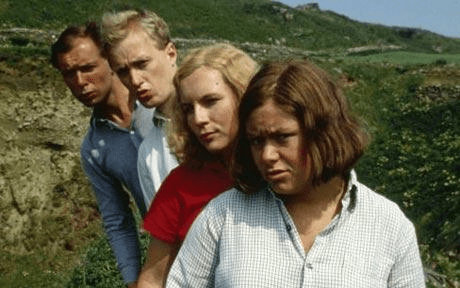
Five go man in Dorset : The Comic Strip Presents Circa 1982
In any regards I am still watching Maggie’s videos, backwards through the Instagram time line… But mostly because they just make me smile a lot, and I love the way she says ‘Hello’, rather than to deal with a wave of depression. But adventures in short reel videos aside, Maggie has also written a book (well two actually and narrated several audio books, but this post has been leading up to the book review I promised earlier…) A book called ‘Why I hate Everything’ which is an odd title when Maggie is such a positive influence on the world, but As it is a memoir of 10 years working in the retail industry in the USA, perhaps not… The book was a wonderfully engaging read, made me late for work three times this week because I ended up reading till stupid o’clock in the morning and I recommend it to anyone.
Why I Hate Everything ~ Maggie Weber
Retail is a strange place. I am aware I speak as a man who is less than fond of shopping, and who has never worked in a shop, but I have long been aware for those who do, retail is a strange place. Just how strange… Well that’s where this book comes in.
Be in a donut shop, a thrift shop or a ’boutique’, retail is indeed a strange world, all the stranger for the people who work in it, the staff, the managers, becoming one of those managers and needed to manage staff… And then of course you have the dark forces ranged against you at all times plotting your down fall and seeking to break your fragile spirit. You might also know these dark forces as ‘costumers’.
Maggie Weber did not so much chose to work in retail, as it was chosen for her. A teenager reluctantly in need of a summer job, possibly because her mum just wanted her out of the house, she ends up working in a donut shop staffed with a delightful collection of people who depending whether they work out front or in the kitchen out back speak Hindi or Spanish, and reluctantly English if all else fails. The Latino bakers have girlfriend problems and tie up the only phone line so you can’t take card payments. The manager communicates by notes and is in a strange form of stationary based warfare with his kitchen staff. Maggie meanwhile learns the dark arts of avoiding actual work (anything involving costumers) by holding onto a mop and looking busy, and many other lessons that set her in good stead when she ends up back in retail after collage when she takes a temp job at the first of three thrift stores and then a ‘mall boutique’ until she finds her actual vocation.
If things in the donut store were a little weird at times, this was nothing compared to life in a thrifty store. Where you occasionally help the shoplifters who look like they really need the help. Or point out how all the profits go to charities to guilt the other shop lifters who really don’t into paying for that $3 dollar top they slipped into their bag. And that’s before the extremely religious boss and the pro Christian hiring policies kick in. ‘When did the Lord Jesus first make himself known to you? Please answer in the from of an essay…’ And lets not mention The Matrix.
I said don’t mention the Matrix….
The world of retail is odd, the staff odder (and when teenagers worryingly dumb), the costumers down right weird, aggressive and detached form reality, and Maggie guides you through it all. The strange, the funny, the touching, the wonderful, the delightful , the horrifying and the oh my god my sides are splitting how can this be true but of forgive me lord I hope it is…
In short this is a journey, a delightful, heart warming, engaging, funny journey, and one well worth taking.
A final note, as I will drop Maggie an email to tell her I have written a blog post about her book as I would any other author, so she might read this.
At some point in your life you will have learned of this story, you will most likely not recollect when and how you learn of it, but you know of the story. ‘The Murders in the Rue Morgue’ is one of those stories that is part of the zeitgeist of humanity. It is a story so intrinsic to our collective culture, so ingrain within us, so referenced and repeated, that it exists beyond itself.
This is not the only story penned by our own Dear Edgar of which this can be said. The Masque of the Red Death, The Pit and the Pendulum, The Tell-tale Heart among others all exist in this strangely wonderful state of being known by us all, generally learned of in childhood somehow, in the same way as we absorb with the rest of our cultural consciousness. This is true throughout western culture, and within the western culture zeitgeist I am including Japan, South Korea and other places whence a commonality of literary architypes has grown. Edgar Allen Poe’s stories have been around a long time and they are no longer merely stories, they have becomes part of our collective consciousness.
That said, this might just be me…
‘The Murders in the Rue Morgue’ were ‘committed’ by an escaped orangutan. I say this certain in my own mind that you already know this. That in fact everyone knows this, or at least everyone likely to be reading this knows this. It is one of those things we, the collective hive mind of humanity, know. If I am wrong about this, and you’re not aware of this basic ‘known’ , my apologies for the spoiler. However, in my defense, reveling who, or in this case what, committed the murders in Poe’s fictional Parisian street isn’t really central to the story. It is just the part of the story we all know in our collective zeitgeist.
The real story in this tale is instead about how Poe’s amateur sleuth Auguste Dupin deduces this to be the case. The revel is not the conclusion, merely the point from which Dupin starts to explain how he deduced the truth of the matter. A common structure to just about every successful detective story (and by coincidence heist movies). Sherlock Holmes, Hercule Poirot, Miss Marple, Philip Marlowe, all reveal the culprit then explain how they cleverly figured out it was them. Which always comes down to a series of seemingly unconnected facts they have observed, through out the telling of the story. Little facts that are placed before the reader in slightly disguised ways so as to not seem important. Clues to the mystery that taken in isolation mean little but when the detective puts them all together the conclusion becomes obvious and undeniable. Even Dirk Gently does it this way. With Dupin however, Poe did it first.
In creating Dupin, Poe created an architype, not so much in the character of Dupin himself, though the aloof intellectual who coldly observes the smallest details, has little respect for the authorities, bored with the world in general and processing a superior attitude all round, has certainly been copied more than once. The same can be said for the way the tale is presented to us. Narrated by the detectives companion, a man of lesser intellectual gifts often astounded by how his friend reaches his conclusions despite the ‘detective’ oft insisting that they were obvious, if not ‘elementary’.
Auguste Dupin is, frankly, one screeching violin and a heroin addiction away from being Sherlock Holmes. Much like Holmes he is not a professional detective as such, and investigated the murder as much for his personal amusement as anything else, and while we know nothing much about the narrator, not even his name, he is the precursor of Doctor Watson and plays Watsons role of biograph and foil to the detective. This is not to say Conan Doyle ripped off Poe when he created Sherlock. Dupin appears in only three short stories by Poe, This one, ‘The Mystery of Marie Rogêt’ and ‘The Purloined Letter’. So while he is a well rounded character, his legacy is hardly extensive. Instead what Sir Arthur did was take Poe’s idea and build upon it, some might say not unreasonably Doyle perfected it, but without Dupin there may never of been a Sherlock Holmes.
All that said, The Murders in the Rue Morgue is an imperfect progenitor of the detective story. It suffers from the annoying habit of our Dear Edgar that was becoming more prevalent the more successful his works became. The habit of long winded introductory sections to a story that have little if any real relevance to the heart of the tale. The previous tale ‘The Man of the Crowd’ did this, ‘William Wilson’ did much the same, even the otherwise sublime ‘The Fall of the House of Usher’ suffered from it to a lesser degree. If Poe was writing today and submitted one of his tales to an anthology I suspect he would receive a rejection email or two telling him they loved the story but he needs to shed a thousand or so words from the beginning and get on with the real story.
He does this a lot and I suspect this has a great deal to do with writers at the time often being paid by the word for copy. That he was also editorial staff for many of the periodicals he first published tales in suggest no one was acting as editor here either.
This is not to say there is nothing interesting and engaging about the first third of this tale, there is a lot of set up in regards to Dupin’s methods of detection, but it could have been weaved into the story of the murders themselves with ease, and made of a more engaging tale as a whole, instead as a reader its a bit of a chore getting through the first several pages before the story really begins. But when it does begin it becomes a masterful construction, placing all the clues before the reader, half hidden in plain sight. And yes, due to the whole zeitgeist thing we all know when reading this who committed the murders anyway, but even so the weaving of clues throughout Dupins’s investigation is perfection. A perfection that the reader comes to understand after the culprit is revealed and Dupin reveals his deducted truth.
It is easy to understand how our dear Edgar created a new genre of story, the detective story, with this tale. the seeds of the great detective novels Christie, Doyle and others are all there. The zeitgeist of Western culture owes Poe a debt it could never repay for Dupin. Imperfect it may, this is the tale that took us all to Baker Street, and its influence continues including the Holmes and Watson style dynamic of the exceptional and his more mundane colleague, which I quite happily ‘borrowed’ for my own creations Lucifer Mandrake and Sir William Forshaw.
It doesn’t matter that we all know the ape did it, the story is not about the murder but about how the detective discovers the truth. And it that the tale is a vibrant today as it was it was first published back in 1841.
A MURDER OF RAVENS, OBVIOUSLY, BUT LOSING ONE FOR THAT LONG DRAWN OUT FIRST THIRD.
Should you read it : It is, as I say, part of our collective culture, so yes clearly you should.
Should you not read it: There is no issues as such, but if you want to skip forward to the part where Dupin first reads of the Murders that have occurred in the Rue Morgue in the newspaper (which I suspect is where a Conan Doyle story would have started) no one would blame you.
Bluffers fact: Back to Sherlock, because without Dupin, Benedict Cumberbatch might never of become famous enough to be hired by marvel studios to play Doctor Strange. Which begs the question, who could have played Stephen Strange better? I can’t think of anyone, so I believe we all owe Poe a big thankyou for that.
It was well said of a certain German book that “er lasst sich nicht lesen” –it does not permit itself to be read. There are some secrets which do not permit themselves to be told. Men die nightly in their beds, wringing the hands of ghostly confessors, and looking them piteously in the eyes –die with despair of heart and convulsion of throat, on account of the hideousness of mysteries which will not suffer themselves to be revealed. Now and then, alas, the conscience of man takes up a burthen so heavy in horror that it can be thrown down only into the grave. And thus the essence of all crime is undivulged.
Opening paragraph, The man of the crowd By Edgar Alan Poe
When I first read the above passage at the beginning of this story I was somewhat enamoured by the idea of a book which doesn’t permit itself to be read. That bit of German, if your wondering also happens to translate to ‘it cannot be read’. A book that holds on to it secrets, and refuses to allow others to read it is a fascinating concept. What strange esoteric means does the book use to prevent people from reading it? Does it curse those who to do so with blindness, or just rip away their understanding of words? Do it cause strange deaths often mistaken for accidents to befall the prospective reader? Or perhaps it just send those who read it mad, thus unable to comprehend the words they have read let alone reiterate them to another?
What dark secrets could such a book hold, a book that actively refuses to be read and ‘prevents’ people from doing so? Who was the author (who clearly has no future in publishing creating books that won’t allow people to read them but that’s beside the point), who were they and why did they write it, did they go mad doing so, were the last pages written in their own blood and semen, sealing their soul, angry and haunted, within the pages of their final work, written on vellum made for the skin of their dead lover?
Or was it just print on demand from amazon?
Is it available in ebook? If so does the internet contain a new version of the demonic force that inhabits the book, or does it just screw up your kindle if you try and read it? How about audio, is it narrated by Christopher Lee and if so did he recorded it after his death?
Oh but this book sounds interesting my Dear Edgar, tell me more…
*cough
In actuality The Man of the Crowd does not mention this book again, nor is the book named in any way, neither does it have any baring on the story. Also, should you go to the trouble of a hunt around the darkest corners of the internet you will fined there is no mention of such a book anywhere in phrase or fable, be it German or otherwise, except for websites pointing back at this story from our Dear Edgar. Either Poe just made the whole thing up, or the book is very very good at avoiding been read, and is doing so by removing its very existence from the zeitgeist of human culture.
I like to think its the latter, call me a romantic.
In any regard, lets move on from all that and talk about the actual story shall we. The Man in the Crowd is a bit of an oddity and a lot of an allegory. Set in London, the biggest city in the world when Poe wrote this tale. It is a story about told us by a narrator who develops a monomaniacal obsession with a man he sees in a crowded street and determines that he needs to follow him discreetly to find out more about him. The man stands out because of all the people the narrator has observed he is the only one the narrator can’t categorize. There is in fairness something very odd about the man, if only that he seems to wander around the streets of London, without every arriving at a destination. Eventually, without ever speaking to the man, or indeed even being acknowledged by him, the narrator having followed him for the better part of thirty hours or more, just gives up his somewhat irrational pursuit.
This is after he has spent the whole day, and half the story, in a coffee shop watching the crowd pass by and going into detail about the various groups of people within it. Which is less interesting that you might imagine… Then comes ‘the man’ of the title.
There is a oddity to the man, just as there is an oddity to the title. A more logical title for this story would have been ‘The Man in the Crowd’. But it is not ‘in the crowd’ but ‘of the crowd’ as if the man is a function of the crowd itself rather than being part of it. An ethereal creature wandering the streets of London endlessly in ragged clothes, but ragged clothes that were once rich in nature. A man of dubious character with a concealed knife as the narrator notes. And wander he does, as the narrator follows him all around London through the night and into the dawn and all the following day. The man never speaks to anyone, never interacts with anyone, wandering in and out of shops and through markets but always seemingly alone and isolated amidst the greatest crowd of humanity imaginable.
This is interesting, but only interesting in terms of the title making it so, because the story itself doesn’t expand on the difference between been in the crowd and of it. Or who the man really is , or indeed what he is.
There are a great many interpretations of this story, people have ‘theories’ a plenty. Indeed I ended up swimming in interpretations while researching this story, many of which were far more interesting that the story itself. When you find far more analysis than plot however one is struck by the question, why? I have two theories on this one. the first is because the tale is so opaque, and frankly bland, it invites interpretation, as people try to find something interesting to say about what is in effect a story that is not overly interesting mainly because it just isn’t. The man is never explained and in the end the narrator simply stops following him. There isn’t so much as a sly grin of recognition in the end, or anything else, the man just carries on walking. If this is profundity, it is a profundity without profundity. Least ways nothing within the story makes it so, but people have certainly looked hard trying to find it.
So have I, as you may be able to tell. And yet alas I have come up somewhat lacking… But that is just the first of my theories…
The second theory, well. In the first paragraph Poe mentions a book that will not allow itself to be read, so perhaps that book changed this entire story around to hide itself within the tale, remaining unread as all the letters have separated from their words and formed new ones to tell a story other than the story the book doesn’t want you to read… If this is the case at least that would make the tale interesting, sadly there is no way to know…
TWO RAVENS CONTENPLATING A MURDER BUT NEVER BECOMING ONE.
Should you read it: Well, I am somewhat torn here, as the story in of itself is not overly interesting yet there is something here, clearly that so many people have tried to interpret. For me personally the idea of the book that shall not be read is by far the more interesting idea in the whole tale and that is only in the first paragraph. Besides if I say no, am I not just doing what the book wants?
Should you not read it: There are some minor antisemitic issues in the story. they are no more overt than Fagin in Oliver twist, but still, be warned…
Bluffers facts: Poe grew up in London, when fostered by the Allen family and would have known it reasonably well, but it is more likely that much of the London he describes here is based on the London of Charles Dickens rather than his own recollections. The London of Oliver Twist, though without the songs of the musical version.
Lucifer Mandrake, Arcanist to the court of St James, by appointment of Queen Victoria Saxe-Coburg, is not having his best day. Someone has been resurrecting dead peers of the realm. The House of Lords is now inhabited by the undead. Sooner or later, someone is bound to notice. Well probably. Is this just a plot to derail The Witchcraft Bill? Or is it something more insidious, such as a plan to remove Victoria as head of state and replace her with the King of Hanover?
A post Newtonian Magic Victorian Urban fantasy In Kindle, Paperback, or hardback
At home, on the shelf above my desk, just to the left of the raven black quill and owl tormented ink stand, and in front of the leather bound scroll case of dubious origin, I have a porcelain phrenology skull, which oddly enough also as a small hole in its base in which you could mount a quill. Possibly this could also be used as an ink well, if you poured ink into the base of the phrenology skull, but frankly that would be weird. I suspect it was originally intended as merely a stand in which to house a fountain pen, not that I ever used it as such.
I picked up the skull at a charity shop at some point in the past, and keep it on the shelf because… well what kind of writer would I be if I didn’t have a phrenology skull?
Why do I mention this, well mainly because phrenology plays a part in the ‘origin’ story of ‘The Business Man’, but also because I like the word, phrenology.
The Business Man is another of Poe’s satires, and suffers to an extent with similar issues of structure as ‘The man who was all used up’, which is to say the story is more an extended joke than and actual story. Unlike that previous satire however this one hold a grain of truth that remains as relevant today as it did way back in 1840 when this story was first published in Burtons gentleman’s magazine.
The story itself is the life story of Peter Proffit, told to us by the man himself. ‘A Methodical Business man’ as he styles himself, though the read may think of him more as a crook, a shyster, conman and morally bankrupt. Though he does have some moral qualms when it comes to the business of postage fraud, an old con where by he would write fake letters to rich people, and hand deliver them, charging the recipient for the postage (which was how postage worked back in the days before stamps). His moral objections were not in regards to swindling the rich people with fake letters, but on behalf of the fake people, but with the unkind things being said about the fake people he is writing letters ‘from’. The recipients of his letters are so nasty…
This ‘postal’ fraud is the tip of the iceberg of the businesses Peter has tried over the years. All equally spurious at best. Such as the eye-sore business, in which you buy a plot next to a pleasant richly appointed building, and build an absolute hovel, before charging well above the worth of the land and the building so the mark can tear it down. The ‘mud-dabbling’ business where you employ a dog to get itself covered in mud then rub up against peoples shoes so you can charge them for shoe shining ( though he fell out with the dog who wanted half the profits so that was the end of that scam, the dog was never paid, but then he was a contractor after all…). The ‘assault and battery’ business, where you start a fight then sue the mark for attacking you. the ‘organ grinder’ business which is using a hand cracked organ to make horrible music then charging people to stop.
Peters propensity for these sharp practices in the realm of ‘business’ he blames on his nursemaid when he was a child swinging him around and banging his head on a bed post. The resulting permanent bump in his head in the region, he tells us, that according to phrenology controls ‘system and regularity’ Which might possibly be right next to ‘morals and honesty’ though I can’t find any of these on my phrenology chart, wo who knows, Though a good whack on number ten does you the world of good I believe…
Aside blaming phrenology for his sharp business practices peter doesn’t suffer form an overdoes of guilt. One does wonder where the bump of Narcissus would be, certainly Peter Proffit seems to have the same moral center some others who might pursue the ‘art of the deal’, which is probably why once he finally comes up with a scheme that makes him rich at the end of his self satisfied story he is considering running for office. One suspects sadly he would probably do quite well in current political climates in Poe’s native land.
The scheme that makes Peter rich in the end by the way, is breeding cats. Which sounds benign I know, but he starts breeding them because a law is passed to keep down the numbers of stray felines by paying a bounty on cat tails… The kind of business I can almost imagine another ‘Business man’ engaging in gleefully, in his red hat…
Unlike previous Poe satires, this one still resonates today. Possibly more so given the current occupant of a house on Pennsylvania Avenue who you could easily imagine going into the cat tail business, and the rest of Peter Proffit’s failed ventures. I am not sure that is a good thing.
A TRIO OF RAVENS CONSIDERING A HOMICIDE
Should your read it: Its a fun story, and funny,
Should you avoid it: no, but it is hard to detach yourself from the thought that the more things change, the more they stay the same, and satire makes little odds in the end…
Bluffers fact: This story was original published in 1840 as Peter Pendulum, It was later republished in 1845 as The Business Man with the main characters name changed. Possibly this is because Poe decided he didn’t want two stories in a collection with the word Pendulum in the title, and ‘The Pit and the Dangly Swinging Death Thingy’ did not scan…
One of the most lauded and successful novels of the early 1990’s was Trainspotting by Scottish writer Irvine Walsh. It is undoubtedly one of the best books I have never successfully read. The same can be said for Anthony Burgess 1962 novel A Clockwork Orange. Aside both being set within counter culture youth diasporas, and both been made in to movies, they both have something else in common, which is what makes them, for me specifically, unreadable. Which is not to say I have not tried, merely that I can’t read them for very long without my brain rebelling, feeling dizzy and wanting to lay down in a darkened room.
When I say they are unreadable for me, that is exactly want I mean.
I am dyslexic, I learned to read the hard way by forcing the mindless scratching’s I see in to some form of collective meaning that allows me to interpret them as words. It took years and determination from my mother who made me read to her every night. She instilled within me a love of the written word and I have never stopped reading since. But while I have read Shakespeare, Homer, the Bronte’s, Dickens and well just about anything and everything I can. The one thing I can not read are things a written in ‘not’ English. Which is the case for both Trainspotting and A Clockwork Orange. One is written in Scottish brogue, the other in a teenage street language. While both are recognizably English by root my dylexic brain can not decipher the non-words into words without having to stop at each one and more or less spell them out to myself. I just can’t, while I would love to read both novels, I revert to the reading age for a five year old when I try. Its frustrating, horrifying in fact, and I hate it…
I can cope with, indeed have written, dialogue in ‘rough brogues’ when appropriate. Such things do not break me. But an entire story, let alone an entire novel where the narrative is written and spelt in dialect is literally painful for me personally.
This brings me to ‘Why the Little Frenchman Wears his Hand in a Sling’. As you may have guessed the reason for the extended diatribe on why a published writer, and one who reads just about anything and everything, can not actually read ‘everything’, is because of this particular story from our Dear Edgar. The entirety of which is written in a rough Irish brogue. I am sure for many readers this presents an entertaining departure from the norms of narrative. But I, as I hope I have explained above, can not read it.
This is something of a problem when one is tasked with reading the entirety of Edgar Alan Poe’s work. As such I have persevered with this story far more than I ever would have done otherwise, and I have been trying to read it for over a month now. A month in which I have come to hate every word of this story with a tempestuous passion. Has it been worth it, the annoyance (mostly with myself), the feeling of inadequacy, the self abhorrence at my own ineptitude. The occasional throwing of my otherwise beloved complete works across the bed room…
No. It has not…
Take this passage
for every inch o’ the six wakes that I’ve been a gintleman, and left aff wid the bog-throthing to take up wid the Barronissy, it’s Pathrick that’s been living like a houly imperor, and gitting the iddication and the graces. Och! and wouldn’t it be a blessed thing for your sperrits if ye cud lay your two peepers jist, upon Sir Pathrick O’Grandison, Barrronitt, when he is all riddy drissed for the hopperer, or stipping into the Brisky
I have no idea what any of it means, nor, one is loathed to admit, do I care. It hurts me to try and read it and this is one of the more readable ones… It doesn’t help that the story itself is little more than a short anecdote, with nothing interesting going on, no wild flight of fancy, no dark overtones,, indeed nothing to hold the interest of the reader. Probably, it hard to be sure when it makes your brain hurt to read it…
So to return to the title which is after all a question. Why the Little Frenchman Wears his Hand in a Sling? Well, I have no idea, if you manage to find out please let me know.
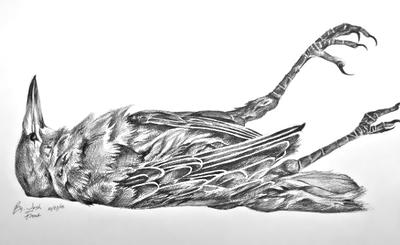
A DEAD RAVEN
Should your read it: Well, if you can and wish to do so who am I to stop you, but I quite literally can’t
Should you avoid it: If you have the kind of issues I do with the written word due to dyslexia yes, if not , yes…
Bluffers facts: Alone among Poe’s Tales, this story has no first publication in a periodical. It was published first and only in Tales of the Grotesque and Arabesque.
I love a bookshop. Be that bookshop a large Waterstones or some other major chain, or a small independent book store, a dusty little second hand books shop, or a huge second hand book shop in a disused railway station. I love a bookshop. The picture below is from Waterstones Bradford, which is a particularly pretty one
I would, as I am sure you can imagine, love to have my books in bookshops. This is why despite been self published I have them signed up for extended distribution which means your local independent bookshop, or indeed waterstones, can stock my books… they don’t, but they can. You can however walk to your local bookshop, ask them to order a copy of my book for you and they will most likely will. I understand why many readers would prefer to do that, and support their local bookshop, rather than by from The Big River Company. Equally many prefer to buy from specialized book websites, as they view them in much the same way as they view independent book stores. The little guy punching upwards against the big corporation…. I have been known to do this myself. As I am no more fond of The Big River Company than anyone else, however there is a dichotomy here, and one many readers are probably unaware of.
If I am buying an independently publish book, published through The Big River Company, I always buy them from The Big River Company. This stands true even if I know the author and could buy from them directly. The reason I don’t buy indie books, published through The Big River Company, from book shops is because of the way expended distribution works for the authors. While buying from independent bookshops is a good thing, and if you are buying the latest Lee Child that’s exactly where you should buy from. Authors published through Amazon get a much smaller royalty share from a book id it is purchase from a bookshop. This is because the bookshops profit margin has to come from somewhere and where it comes from is out of the writers royalties.
For example, Buy a print copy Cider Lane (my first novel) from amazon and I make around £2.00 in royalties, which will be paid to me 3 months later. If you order and buy the same book from a bookshop, I will instead get about 12 pence in royalties (or about 5% of what I would get through an amazon sale), six months later…
There are ways around this with local shops. I could take a number of authors copies, and ask some local bookshops if they are interested in stocking them. The bookshop would however want at least 40% of the cover price. Print costs and shipping would account for another 40% and so I would make a couple of quid, if a book sells, provided I invoice the bookshop, which will pay me 60 days after the invoice. Any books that don’t sell I will have to go back and collect or they will bin them. Even if that was practical for more than a couple of shops, economically it would as ridiculous as buying a stock of books to sell at conventions, without any of the fun of working a convention and meeting readers at them.
As I have said on many an occasion, I do not make my living through my writing, it is a vocation not a hobby, but it is not how the mortgage gets paid. That is the only reason I have extended distribution, because I don’t care about the money, and some people will only buy from a bookshop because they despise Amazon. But if you want to buy books in part to support indie authors, frankly they are better off if you buy them from The Big River Company. Not only in terms of sales but in terms of amazon ratings and reviews for authors which we need to find a wider audience. And while books don’t pay my bills, they do go towards paying the bills of plenty of indie authors. This is not about me.
A while ago I opened a bookshop page on this blog, as it seemed a way to offer people books without people needing to have an amazon account, but that has become increasingly uneconomic because of postal costs. Frankly if someone orders a book form my directly what normally happens is I buy a copy on amazon and get it posted to them. Because I get free shipping so it works out cheaper for them.
I love bookshops, I find it hard to walk past one, they have a lure that never fails to entrap me. I will always support them. But when it comes to indie books I will still buy from Amazon because it is just better for the indie authors I seek to support that I do so.
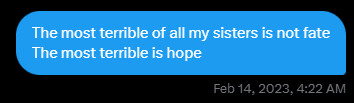
For reasons I don’t entirely understand, posts involving things form my scrap folder seem oddly popular. Admittedly I suspect having now said that, no one will read this post, as my audience is as predictable as a British summer. Bless your cotton socks… In any regard this is a bit of an odd one, I remember writing this, I remember why I wrote it, because I have read the messages I sent myself in the night… The first of which was this one.
I sent that as a direct message to myself at 4:22 in the morning. So I must have been awake at the time, either due to insomnia with my mind flitting about, or because I woke up from a dream and needed to write that line down in a hurry. What ever it was… In any regard just under 40 minutes later I sent this…
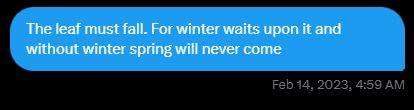
Which suggests i was still awake, or I was texting myself in my sleep. Or of course someone had broken into my house, and was leaving messaged to me on my phone to mess with my head… No of course I’m not paranoid, why would you say that?
A minute latter the third and final message was left…
I then returned to the arms of sleeps sweet embrace, or stared at the ceiling in horror at the faces forming in the shadows… Its a coin toss really.
In the morning , or at some point not long after that, I read those messages back and possibly it triggered the memory of the story I had been telling myself in the night. Or I wrote the beginnings to a story based upon the messages I had sent myself and it had nothing to do with what had been on my mind, it was merely what I imagined was on my mind when I wrote those messages in the darkness.
Or whoever/whatever wrote them…
Which brings me to this very short far from finished tale, I’ve not yet gotten around to completing, written over two years ago now. A story I think is set in ancient Greece (I’m not entirely sure), and sort of know what its about and who the two observers of the strange drama unfolding between a young girl and the last leaf on an olive tree…
“Don’t you dare leaf… You stay right there… Don’t think of falling… Not today leaf… You stay where you are.” The young girl insisted with a tone that boke no argument.
Not that the leaf was in a position to argue.
She was, he determined, not much past her first decade of life, yet from her demeanour he determined she was no longer a child. Which is to say she had faced heartache and the grim realities of life with the understanding that comes from having no one to shelter you.
“Don’t you dare leaf… You stay right there… Don’t think of falling… Not today leaf… You stay where you are.” She repeated as he observed her and not for the first time. It seemed a mantra of her own making, a mantra that spoke of determination and a willfulness that would not be denied.
“Don’t you dare leaf… You stay right there… Don’t think of falling… Not today leaf… You stay where you are.” She said again and as she did so he realised behind the willful determination there was a desperation. An imploring lilt to her voice hidden deep within.
In a sense, he realised, it was not so much that she willfully wished the leaf not to fall, as the certainty that should it fall, she believed her world would fall with it.
“What is this?” he asked his companion on the barren rocky hillside that overlooked the walled garden attached to girls tiny house. More hovel than house, he thought, a squat squarish building of rough stone with a roof of peat sod and hay. It had one room, with two small cots huddled around an open fire.
I sort of love this little story, the is a beautiful melancholy feel to it. I think that very first message in the night time was the words of the observers companion. I think the girl was told by her father that he would return form the war before the last leaf fell, hence she will not ‘let’ it fall. I think the he who asked ‘What is this?’ is the spirit of her father, unaware he is dead and that she is his daughter. I mean to finish it at some point, but we will have to see if I get to it
As regards his companion, in case your wondering, well she is one who collects the souls of the departed, and has sisters, one of which is Fate, but her most terrible sister, as that first text in the night time stated, is Hope…

















 The Passing Place