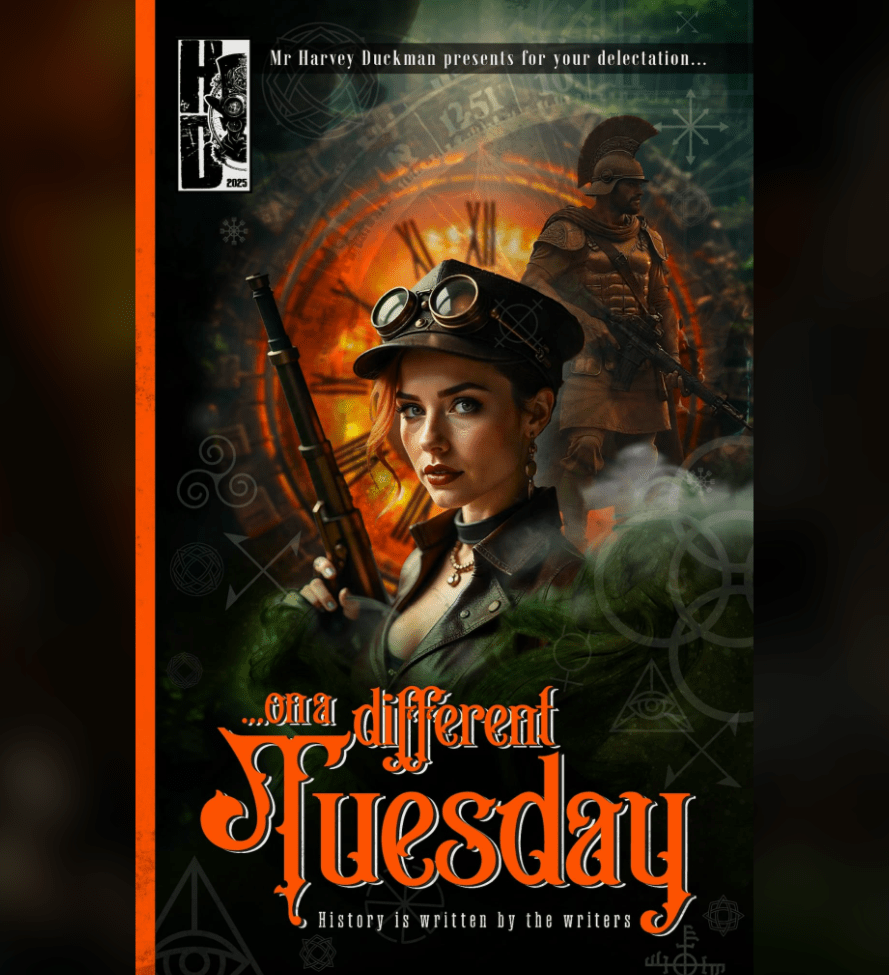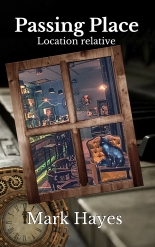
Lucifer Mandrake, Arcanist to the court of St James, by appointment of Queen Victoria Saxe-Coburg, is not having his best day. Someone has been resurrecting dead peers of the realm. The House of Lords is now inhabited by the undead. Sooner or later, someone is bound to notice. Well probably. Is this just a plot to derail The Witchcraft Bill? Or is it something more insidious, such as a plan to remove Victoria as head of state and replace her with the King of Hanover?
A post Newtonian Magic Victorian Urban fantasy In Kindle, Paperback, or hardback
At home, on the shelf above my desk, just to the left of the raven black quill and owl tormented ink stand, and in front of the leather bound scroll case of dubious origin, I have a porcelain phrenology skull, which oddly enough also as a small hole in its base in which you could mount a quill. Possibly this could also be used as an ink well, if you poured ink into the base of the phrenology skull, but frankly that would be weird. I suspect it was originally intended as merely a stand in which to house a fountain pen, not that I ever used it as such.
I picked up the skull at a charity shop at some point in the past, and keep it on the shelf because… well what kind of writer would I be if I didn’t have a phrenology skull?
Why do I mention this, well mainly because phrenology plays a part in the ‘origin’ story of ‘The Business Man’, but also because I like the word, phrenology.
The Business Man is another of Poe’s satires, and suffers to an extent with similar issues of structure as ‘The man who was all used up’, which is to say the story is more an extended joke than and actual story. Unlike that previous satire however this one hold a grain of truth that remains as relevant today as it did way back in 1840 when this story was first published in Burtons gentleman’s magazine.
The story itself is the life story of Peter Proffit, told to us by the man himself. ‘A Methodical Business man’ as he styles himself, though the read may think of him more as a crook, a shyster, conman and morally bankrupt. Though he does have some moral qualms when it comes to the business of postage fraud, an old con where by he would write fake letters to rich people, and hand deliver them, charging the recipient for the postage (which was how postage worked back in the days before stamps). His moral objections were not in regards to swindling the rich people with fake letters, but on behalf of the fake people, but with the unkind things being said about the fake people he is writing letters ‘from’. The recipients of his letters are so nasty…
This ‘postal’ fraud is the tip of the iceberg of the businesses Peter has tried over the years. All equally spurious at best. Such as the eye-sore business, in which you buy a plot next to a pleasant richly appointed building, and build an absolute hovel, before charging well above the worth of the land and the building so the mark can tear it down. The ‘mud-dabbling’ business where you employ a dog to get itself covered in mud then rub up against peoples shoes so you can charge them for shoe shining ( though he fell out with the dog who wanted half the profits so that was the end of that scam, the dog was never paid, but then he was a contractor after all…). The ‘assault and battery’ business, where you start a fight then sue the mark for attacking you. the ‘organ grinder’ business which is using a hand cracked organ to make horrible music then charging people to stop.
Peters propensity for these sharp practices in the realm of ‘business’ he blames on his nursemaid when he was a child swinging him around and banging his head on a bed post. The resulting permanent bump in his head in the region, he tells us, that according to phrenology controls ‘system and regularity’ Which might possibly be right next to ‘morals and honesty’ though I can’t find any of these on my phrenology chart, wo who knows, Though a good whack on number ten does you the world of good I believe…
Aside blaming phrenology for his sharp business practices peter doesn’t suffer form an overdoes of guilt. One does wonder where the bump of Narcissus would be, certainly Peter Proffit seems to have the same moral center some others who might pursue the ‘art of the deal’, which is probably why once he finally comes up with a scheme that makes him rich at the end of his self satisfied story he is considering running for office. One suspects sadly he would probably do quite well in current political climates in Poe’s native land.
The scheme that makes Peter rich in the end by the way, is breeding cats. Which sounds benign I know, but he starts breeding them because a law is passed to keep down the numbers of stray felines by paying a bounty on cat tails… The kind of business I can almost imagine another ‘Business man’ engaging in gleefully, in his red hat…
Unlike previous Poe satires, this one still resonates today. Possibly more so given the current occupant of a house on Pennsylvania Avenue who you could easily imagine going into the cat tail business, and the rest of Peter Proffit’s failed ventures. I am not sure that is a good thing.
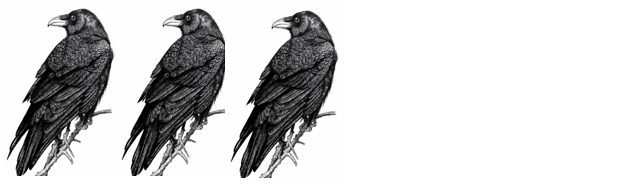
A TRIO OF RAVENS CONSIDERING A HOMICIDE
Should your read it: Its a fun story, and funny,
Should you avoid it: no, but it is hard to detach yourself from the thought that the more things change, the more they stay the same, and satire makes little odds in the end…
Bluffers fact: This story was original published in 1840 as Peter Pendulum, It was later republished in 1845 as The Business Man with the main characters name changed. Possibly this is because Poe decided he didn’t want two stories in a collection with the word Pendulum in the title, and ‘The Pit and the Dangly Swinging Death Thingy’ did not scan…
One of the most lauded and successful novels of the early 1990’s was Trainspotting by Scottish writer Irvine Walsh. It is undoubtedly one of the best books I have never successfully read. The same can be said for Anthony Burgess 1962 novel A Clockwork Orange. Aside both being set within counter culture youth diasporas, and both been made in to movies, they both have something else in common, which is what makes them, for me specifically, unreadable. Which is not to say I have not tried, merely that I can’t read them for very long without my brain rebelling, feeling dizzy and wanting to lay down in a darkened room.
When I say they are unreadable for me, that is exactly want I mean.
I am dyslexic, I learned to read the hard way by forcing the mindless scratching’s I see in to some form of collective meaning that allows me to interpret them as words. It took years and determination from my mother who made me read to her every night. She instilled within me a love of the written word and I have never stopped reading since. But while I have read Shakespeare, Homer, the Bronte’s, Dickens and well just about anything and everything I can. The one thing I can not read are things a written in ‘not’ English. Which is the case for both Trainspotting and A Clockwork Orange. One is written in Scottish brogue, the other in a teenage street language. While both are recognizably English by root my dylexic brain can not decipher the non-words into words without having to stop at each one and more or less spell them out to myself. I just can’t, while I would love to read both novels, I revert to the reading age for a five year old when I try. Its frustrating, horrifying in fact, and I hate it…
I can cope with, indeed have written, dialogue in ‘rough brogues’ when appropriate. Such things do not break me. But an entire story, let alone an entire novel where the narrative is written and spelt in dialect is literally painful for me personally.
This brings me to ‘Why the Little Frenchman Wears his Hand in a Sling’. As you may have guessed the reason for the extended diatribe on why a published writer, and one who reads just about anything and everything, can not actually read ‘everything’, is because of this particular story from our Dear Edgar. The entirety of which is written in a rough Irish brogue. I am sure for many readers this presents an entertaining departure from the norms of narrative. But I, as I hope I have explained above, can not read it.
This is something of a problem when one is tasked with reading the entirety of Edgar Alan Poe’s work. As such I have persevered with this story far more than I ever would have done otherwise, and I have been trying to read it for over a month now. A month in which I have come to hate every word of this story with a tempestuous passion. Has it been worth it, the annoyance (mostly with myself), the feeling of inadequacy, the self abhorrence at my own ineptitude. The occasional throwing of my otherwise beloved complete works across the bed room…
No. It has not…
Take this passage
for every inch o’ the six wakes that I’ve been a gintleman, and left aff wid the bog-throthing to take up wid the Barronissy, it’s Pathrick that’s been living like a houly imperor, and gitting the iddication and the graces. Och! and wouldn’t it be a blessed thing for your sperrits if ye cud lay your two peepers jist, upon Sir Pathrick O’Grandison, Barrronitt, when he is all riddy drissed for the hopperer, or stipping into the Brisky
I have no idea what any of it means, nor, one is loathed to admit, do I care. It hurts me to try and read it and this is one of the more readable ones… It doesn’t help that the story itself is little more than a short anecdote, with nothing interesting going on, no wild flight of fancy, no dark overtones,, indeed nothing to hold the interest of the reader. Probably, it hard to be sure when it makes your brain hurt to read it…
So to return to the title which is after all a question. Why the Little Frenchman Wears his Hand in a Sling? Well, I have no idea, if you manage to find out please let me know.
A DEAD RAVEN
Should your read it: Well, if you can and wish to do so who am I to stop you, but I quite literally can’t
Should you avoid it: If you have the kind of issues I do with the written word due to dyslexia yes, if not , yes…
Bluffers facts: Alone among Poe’s Tales, this story has no first publication in a periodical. It was published first and only in Tales of the Grotesque and Arabesque.
I love a bookshop. Be that bookshop a large Waterstones or some other major chain, or a small independent book store, a dusty little second hand books shop, or a huge second hand book shop in a disused railway station. I love a bookshop. The picture below is from Waterstones Bradford, which is a particularly pretty one
I would, as I am sure you can imagine, love to have my books in bookshops. This is why despite been self published I have them signed up for extended distribution which means your local independent bookshop, or indeed waterstones, can stock my books… they don’t, but they can. You can however walk to your local bookshop, ask them to order a copy of my book for you and they will most likely will. I understand why many readers would prefer to do that, and support their local bookshop, rather than by from The Big River Company. Equally many prefer to buy from specialized book websites, as they view them in much the same way as they view independent book stores. The little guy punching upwards against the big corporation…. I have been known to do this myself. As I am no more fond of The Big River Company than anyone else, however there is a dichotomy here, and one many readers are probably unaware of.
If I am buying an independently publish book, published through The Big River Company, I always buy them from The Big River Company. This stands true even if I know the author and could buy from them directly. The reason I don’t buy indie books, published through The Big River Company, from book shops is because of the way expended distribution works for the authors. While buying from independent bookshops is a good thing, and if you are buying the latest Lee Child that’s exactly where you should buy from. Authors published through Amazon get a much smaller royalty share from a book id it is purchase from a bookshop. This is because the bookshops profit margin has to come from somewhere and where it comes from is out of the writers royalties.
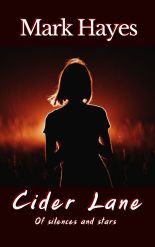
For example, Buy a print copy Cider Lane (my first novel) from amazon and I make around £2.00 in royalties, which will be paid to me 3 months later. If you order and buy the same book from a bookshop, I will instead get about 12 pence in royalties (or about 5% of what I would get through an amazon sale), six months later…
There are ways around this with local shops. I could take a number of authors copies, and ask some local bookshops if they are interested in stocking them. The bookshop would however want at least 40% of the cover price. Print costs and shipping would account for another 40% and so I would make a couple of quid, if a book sells, provided I invoice the bookshop, which will pay me 60 days after the invoice. Any books that don’t sell I will have to go back and collect or they will bin them. Even if that was practical for more than a couple of shops, economically it would as ridiculous as buying a stock of books to sell at conventions, without any of the fun of working a convention and meeting readers at them.
As I have said on many an occasion, I do not make my living through my writing, it is a vocation not a hobby, but it is not how the mortgage gets paid. That is the only reason I have extended distribution, because I don’t care about the money, and some people will only buy from a bookshop because they despise Amazon. But if you want to buy books in part to support indie authors, frankly they are better off if you buy them from The Big River Company. Not only in terms of sales but in terms of amazon ratings and reviews for authors which we need to find a wider audience. And while books don’t pay my bills, they do go towards paying the bills of plenty of indie authors. This is not about me.
A while ago I opened a bookshop page on this blog, as it seemed a way to offer people books without people needing to have an amazon account, but that has become increasingly uneconomic because of postal costs. Frankly if someone orders a book form my directly what normally happens is I buy a copy on amazon and get it posted to them. Because I get free shipping so it works out cheaper for them.
I love bookshops, I find it hard to walk past one, they have a lure that never fails to entrap me. I will always support them. But when it comes to indie books I will still buy from Amazon because it is just better for the indie authors I seek to support that I do so.
For reasons I don’t entirely understand, posts involving things form my scrap folder seem oddly popular. Admittedly I suspect having now said that, no one will read this post, as my audience is as predictable as a British summer. Bless your cotton socks… In any regard this is a bit of an odd one, I remember writing this, I remember why I wrote it, because I have read the messages I sent myself in the night… The first of which was this one.
I sent that as a direct message to myself at 4:22 in the morning. So I must have been awake at the time, either due to insomnia with my mind flitting about, or because I woke up from a dream and needed to write that line down in a hurry. What ever it was… In any regard just under 40 minutes later I sent this…
Which suggests i was still awake, or I was texting myself in my sleep. Or of course someone had broken into my house, and was leaving messaged to me on my phone to mess with my head… No of course I’m not paranoid, why would you say that?
A minute latter the third and final message was left…
I then returned to the arms of sleeps sweet embrace, or stared at the ceiling in horror at the faces forming in the shadows… Its a coin toss really.
In the morning , or at some point not long after that, I read those messages back and possibly it triggered the memory of the story I had been telling myself in the night. Or I wrote the beginnings to a story based upon the messages I had sent myself and it had nothing to do with what had been on my mind, it was merely what I imagined was on my mind when I wrote those messages in the darkness.
Or whoever/whatever wrote them…
Which brings me to this very short far from finished tale, I’ve not yet gotten around to completing, written over two years ago now. A story I think is set in ancient Greece (I’m not entirely sure), and sort of know what its about and who the two observers of the strange drama unfolding between a young girl and the last leaf on an olive tree…
“Don’t you dare leaf… You stay right there… Don’t think of falling… Not today leaf… You stay where you are.” The young girl insisted with a tone that boke no argument.
Not that the leaf was in a position to argue.
She was, he determined, not much past her first decade of life, yet from her demeanour he determined she was no longer a child. Which is to say she had faced heartache and the grim realities of life with the understanding that comes from having no one to shelter you.
“Don’t you dare leaf… You stay right there… Don’t think of falling… Not today leaf… You stay where you are.” She repeated as he observed her and not for the first time. It seemed a mantra of her own making, a mantra that spoke of determination and a willfulness that would not be denied.
“Don’t you dare leaf… You stay right there… Don’t think of falling… Not today leaf… You stay where you are.” She said again and as she did so he realised behind the willful determination there was a desperation. An imploring lilt to her voice hidden deep within.
In a sense, he realised, it was not so much that she willfully wished the leaf not to fall, as the certainty that should it fall, she believed her world would fall with it.
“What is this?” he asked his companion on the barren rocky hillside that overlooked the walled garden attached to girls tiny house. More hovel than house, he thought, a squat squarish building of rough stone with a roof of peat sod and hay. It had one room, with two small cots huddled around an open fire.
I sort of love this little story, the is a beautiful melancholy feel to it. I think that very first message in the night time was the words of the observers companion. I think the girl was told by her father that he would return form the war before the last leaf fell, hence she will not ‘let’ it fall. I think the he who asked ‘What is this?’ is the spirit of her father, unaware he is dead and that she is his daughter. I mean to finish it at some point, but we will have to see if I get to it
As regards his companion, in case your wondering, well she is one who collects the souls of the departed, and has sisters, one of which is Fate, but her most terrible sister, as that first text in the night time stated, is Hope…
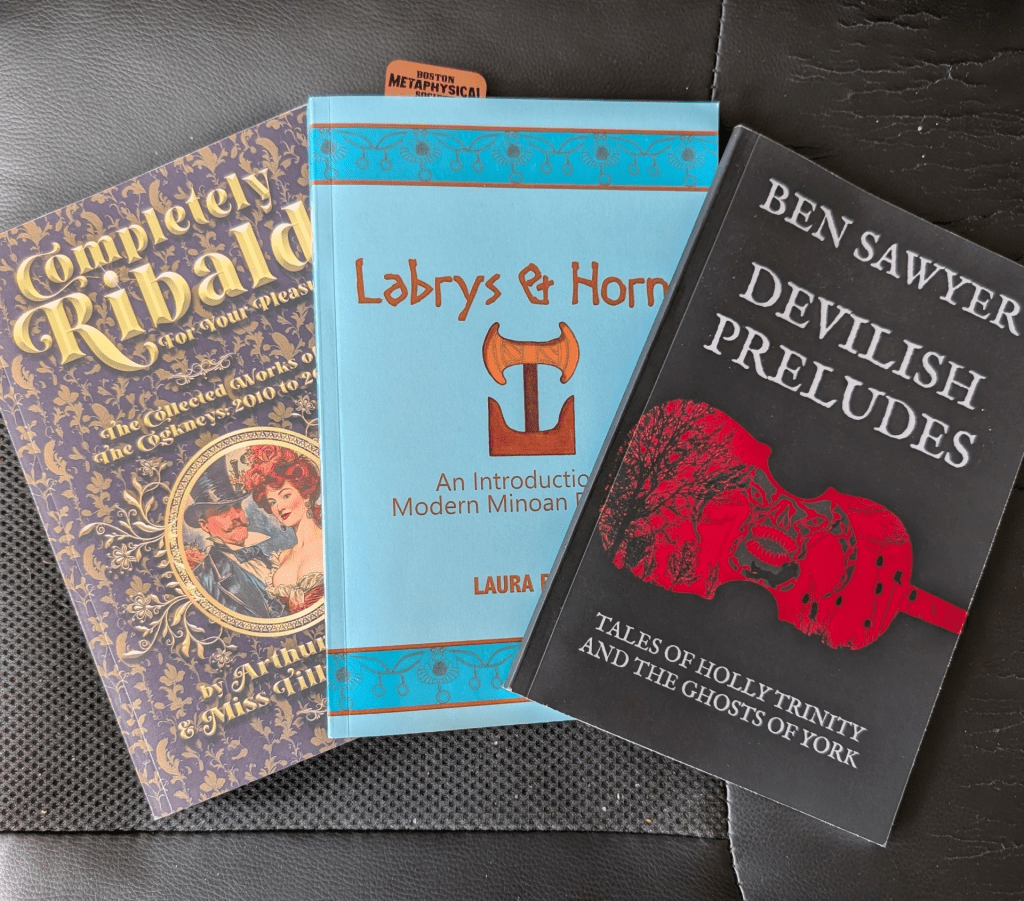
Ben Sawyer is a fellow Harvey writer and novelist. His Holly Trinity novels are unique, delightful and set in the ancient ghost haunted city of York, a place for which I have no small affection. It has been something of a pleasure to watch him grow as a writer, from a quiet guy who nervously came over and talked to Gillie of Harvey Duckman fame a few years back and admitted to ‘writing a bit,’ and to ‘having this novel I am working on’. To an increasingly successful word herder who looks a little less nervous.
I bumped into him last at Unleashed at the Royal Armories in Leeds and will be sharing a couple of tables with him and Kate Bacheral at Scabrough Scifi next month, where last year we were mercilessly executed by Dalek’s one of which was wearing my top hap.
This is a post from his blog, which is worth a follow.
I have no recollection of writing this, it is just a thing that exists in the scraps folder on my one drive. I know I wrote it but not when or why. Sometimes my mind is delightful… Others… Well, I worry about me sometimes.
It watches…
It would be wrong to say it is waiting. Waiting would imply it was waiting for something. That it desires something. Desire is an emotion, wanting is an emotion. Emotions are not something it experiences. To have emotions requires a frame of reference. An emotion is a reaction, it does not react, it does not desire, it does not want…
It does however hunger, though what it hungers for it could not describe, and could not be described by any frame of reference you could understand.
How could you, a child of the universe, understand what it hungers for. What could you relate to a thing that lays beyond your universe. Beyond any universe. A thing of the void that was there before the universe was born. The void that will be left when the universe finally collapses in on itself into the absolute entropy of heat death.
How could you even envision it.
How could it envision you…
It watches, as it has always watched, since the vital spark of existence gave birth to the very universe in which you exist. It watches from beyond infinity, as infinity expands ever outwards, but is never closer…
Distance, is of the universe, not that which lays beyond. It is as close as a whisper and as far as darkness. It watches even now, watches in the eternity between seconds. Time has no meaning to it, for time too is of the universe. A function of gravity, of matter…
But it hungers, it hungers not to be an abstraction, a thing of the void, a thing outside of time, outside of space.
I am to blame, at least in a small way, for something delightful. This has been known to happen before… Occasionally I think people just need someone to blame and I am convenient as I have an occasionally loud personality, which hides the fragile collection of idiosyncratic night terrors that pretends to be brave while hiding behind masks of ambivalence, hiding behind a broken smile and the fear that some one soon is going to tell me to stop trying to write things. Or worse that they like something I written.
Sorry, got side tracked…
Anyway, back to blame… Several years ago now Kate Bachereal wrote a story about a small avian of currently unknown gender, trying to buy a cocktail in a bar on an alien planet and not having the local currency. In actuality this was a couple of paragraphs to illustrate a point in a non-fiction book about crypto currency, the same book had for reasons that made sense at the time a quote from me in it about it being impossible to play ‘shove half-penny’ with a bitcoin. I got blamed for that too. In any regard a few months later when we were looking for stories for one of the early Harvey Duckman collections, Kate decided to dig out her little Avian space traveler and turn the those couple of paragraphs into an actual story.
This lead to a conversation on the Thursday night in ‘Connections’ our regular writers bar in Norton about how the avian ( who may be a bird person but is a flightless bird person) could get off the roof of the bar in the story. Obviously since the cocktail waiter in the bar was an octopus (the bar in the story, not Connections, Glen is as far as I am aware not an octopus) and the octopus was helping the little avian escape dastardly feathers thieves, the solution was simple.
“Octopus catapult” ~ Mark, two beers in, suggested loudly
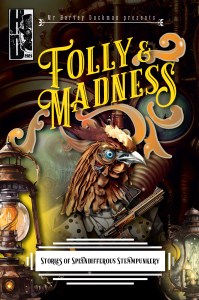
The story was written, my small suggestion included. I was very pleased to help and delighted by Kate’s story, which was just good old escapist fun. So I encouraged her to write more. By encouraged I mean badgered her to do so. A couple more ‘Finch’ found their way into the original run of Harvey’s. One also made it into the first of the relaunched Harvey’s ‘Folly and Madness’ But still I badgered Kate for more.
What I actually said, at least once a month or so for a couple of years was,
“These Finch stories, you realize that it you put them together and build around them, you have the structure for a great galactic travelog novel following Finch’s gap year travels around the galaxy. You should do that.”
For reasons, probably just so she could blame me, Kate went away and did just that. And ‘The Travels of Finch’ became the first novel to be released that started out as a short story in a Harvey Duckman Anthology. Of course everyone at Harvey Duckman Towers is very pleased for Kate, delighted that a short story within the anthologies pages has lead to a novel, and proud of Kate for doing so.
Which is just bloody typical…
(note for refrence . ‘The Travels of Finch’ was released two weeks before Lucifer Mandrake: The Esoteric Cricket ball. The other novel that started out in life as a short story in a Harvey Duckman. I am not remotely salty about this I just like to pretend I am, Masks….)
The Travels of Finch
Take one galactic tourist bird-person, one gap year, one diary from their granny from when she went on her own gap year tour of the galaxy, one cocktail serving octopus, pirate parrots, steam fruit, Armageddon cults, plumage thieves, plumbing for water slides, white water rafting between skyscraper canyons, Wild safaris on strange worlds, more cocktails, and let you imagination run wild….
Finch is an avian who’s yet to molt and get their adult feathers, so is not yet of a gender. Off on a gap year tour of the galaxy and doing what you should on a gap year, getting into trouble. Out of trouble, into more trouble, making friends, getting friends into to trouble. And drinking cocktails.
There is, and always should be, a place on every bookshelf for absurdity, silly, ridiculously, seat of you pants, fun, and that is what this novel is. It is not trying to make clever points about anything much, its not trying to be especially insightful, it doesn’t even mention cricket once…
There is absolutely no careful veiled points being made here about the absurdities like gender identity politics, environmental issues, celebrity culture, tourism, ecology, or anything else.
It is just fun, and funny, and joyous. So just read it for that.
Honestly, just do its wonderful. And a wonderful thing to be apportioned some minor amount of blame for the existence of. Even if all that amounted to was me nagging Kate to write it
When writing fantasy, be it high, low, grim dark, romantic, steampunk, urban or whatever, a writer can’t just throw words at a page and see what sticks. Well, that is not entirely true, that is in fact quite often the writing process, and I as tend to start out on any story or novel flying by the seat of my pants, throwing words at a page is exactly what I do. But after the throwing has calmed down and we can see what stuck, a little world building is generally in order. If only to create an internal logic to your sandbox.
Way back in 2021, when I took a short dialogue between two unknown participants and turned it into a short story for a Harvey Duckman Anthology the world building involved was minimal. This is not to say there wasn’t a lot of research done for that short story (mostly into Cricket in the 1900’s), but there is a difference between research and world building. In terms of a short story you may need to research all kinds of things , and you almost certainly will if you set about writing a novel. I posted here about research at the time when the short story was published in one of the original Harvey Duckman Anthologies.
Unlike research, world building for a short story is generally a some what minimalist affair. This is to say you that if you only construct the world to tell that one short story the internal logic of the world only needs to hold together for maybe 5000 words at the most. Thus you can throw in a few random things without really fleshing them out. The world is but a stage, the stage decorations can be made of papier-mâché and wireframes because no one is going to be looking behind them any time soon. The same doesn’t hold for a novel however. For a novel, stage decorations don’t quite do it.
In that original short story the narrating character, Mandrake, tells you he is a arcanist by royal appointment to the court of St James, and the subtext is that he resides in a mid Victorian period where magic exists. As I wanted a little structure to that magic, rather than just ‘wriggling of fingers’ I called the magic he practiced ‘post-Newtonian’. It was a single line idea that expanded a little in the short story but only in regards to things I needed Mandrake to be able to do to tell that story, and to add depth to the stage dressing… Such as Newtons laws of magic.
Sir Isaac Newton, as you are doubtless aware, was one of the great minds of the 1600’s, indeed one of the greatest minds of human history. The polymath most famous for his laws of motion and gravitation, was also a mathematician, astronomer, theologian physicist and to somewhat lesser acclaim now, was also considered at the time to be the last great Alchemist and the successor to Dr John Dee. It is this last bit that fascinates me most, because if magic were real, Newton would almost certainly have been the royal arcanist of his time. More to the point if magic was real, Newton would almost certainly of tried to codify it.
I threw Newton at that original short story for this reason. Using ‘Newton’s Laws of Magic’ gave Mandrake’s magic a basis that felt ‘real’ at least in terms of the story. It also allowed for the idea of ‘gentlemen magicians’. Which is to say members of the landed, old money, classes as dabblers in the arcane, in much the way that they dabbled in science. While Newton was clearly a gifted genius, many of his fellow ‘scientist’ in his day were little more than privately wealth individuals faffing about. Often employing those lower in the social orders to write papers for them to put there name to. It gave me the tension between the upstart court magician of no breeding and ‘the gentlemen magicians’ of his day.
The short story held together well. The world of papier-mâché and wireframes stage dressing did its job. the only problem was it did that job too well. I liked the characters and the ideas behind the stage dressing. I decided to play with the idea of a novel with the same characters, taking on that story and seeing where it led. So the short story became rewritten as the first couple of chapters of a novel the world expanded in depth and feeling over the course of three years of writing.
A novel however needs more than papier-mâché and wireframes. A novel needs a much more fleshed out world, even if the reader doesn’t need to see it as such.
Fantasy land: some assembly required…
In Mandrake’s world, magic had to have always always existed. IT made no sense for it suddenly to appear out of thin air like…. yes okay but you see my point. Newton did not invent it, he merely codified aspects of it. This gave me Post-Newtonian magic, or arcana. A structured kind of magic, that can be studied by gentlemen of independent means and of course practiced by journey men arcanists who are probably the ones with most of the innate talent…
But that ‘post’ implies the existence of ‘Pre-Newtonian Magic’, less structured wilder magic, held in forgotten grimoires, or the ‘folk’ magic of witches. Pre-Newtonian magic was persecuted by the church, books and witches were burned, most of those witches being women because sadly some things you don’t need to envision… But ritualized magic and religion are two sides of the same coin which allowed me to build more parallel history into the mix.
Newtonian magic gave Mandrake’s world structure, it also gave me Gottfried Leibniz , Newton’s bitter rival to play with. The German polymath who had incidental links to the House of Hanover which were handy, he also wrote extensively which allowed me to throw an interest in the fae realms into the mix by making it Leibniz ‘hobby’. Also a certain Germanic attitude to the arcane, with which to invest Prince Albert. But i needed more.
The history of magic in Mandrake’s world needed to progress, so I had British arcanists becoming more accepted after they help win the battle of waterloo in a day. No need for the Prussians to arrive on the third day, old Boney was already on his way back to St’Hellan. Magic meets Victorian inventiveness and also Victorian values. The struggle between the Whig’s and the Tory’s, the great reformers and the great conservatives, was rife in the 1800’s. A witchcraft bill being put before the house made sense. As unfortunately did the continued oppression of female magic, though that is somewhat intrinsic to Mandrake’s personal story.
Mandrake live in a world where the Fae realms exist, magic in many forms, glamours, rituals, covens and necromancy. But it is still the mid-Victorian world of steam and cogs. The world building is layers on top of real history. There are plots against the crown, but there were plenty of those in real history too. There are those who seek to bring Ernest of Hanover to the throne rather than ‘that doxy at Buckingham palace’ and they are not made up either. Most of Mandrake’s world is based on research, what makes it a fun place to play with is where real history and people meet the invention.
So welcome to the world of Lucifer Mandrake. A world of magic and steam power, betrayal, plots, necromancy, fairies, secrets, transformation and the unexpected. I did not know what I was writing until I got going, it didn’t end up where I expected it to either. But then the really good stories never do.
Well its finally here, 3 years after the original short story, The esoteric Cricket Ball is pitching down the leg side… The novel started out as half page of dialogue between two unknown participants written about ten years ago. It became a short story in a Harvey Duckman Anthology when I stumbled back across it three years ago and while writing the short story I fell in love with the two main characters Lucifer Mandrake and Sir William Forshaw, and the interplay between them.
That drove me to take the short story and create the novel. A novel set in a Victorian England where magic exists. Both characters go on something of a journey in the novel. A journey that takes both of them to places I never really expected to them to go when I started all this.
Other things sprang form the pages as I wrote the novel, The Men in Dark Tweed where born within its pages, a marvelous ditty about ‘The maggot of Salamanca, the basis of other projects yet to begin and much more, but its started with a forgotten piece of dialing and now we have this…
Lucifer Mandrake, Arcanist to the court of St James, by appointment of Queen Victoria Saxe-Coburg, is not having his best day. Someone has been resurrecting dead peers of the realm. The House of Lords is now inhabited by the undead. Sooner or later, someone is bound to notice. Well probably. Is this just a plot to derail The Witchcraft Bill? Or is it something more insidious, such as a plan to remove Victoria as head of state and replace her with the King of Hanover? Mandrake must brave the Fae realm and its denizens, doppelgangers, necromancy, a prison of amber, conspirators in the highest level of government, malevolent men in dark tweed, and worst of all, the cricket, in order to save the crown. All the while Lucifer must keep a secret of his own, the secret of Luci Drake, she who dwells within.
Magic, mayhem and impeccable manners, in a Victorian world where magic is real.
As I have written the novel I have on more than one occasion blogged about it, so regular readers of these uttering will be aware of it i am sure. But as I say, finally it is here…
All I need now is for some people to buy a copy and read it..