Books of the year

It may be slightly early, as there is a fair chance I’ll read a couple more before the end of the year, but now seems as good a time as any to do my annual Passing Place Blog Books Of The Year Awards. An event that has never been annual previously, as I have never done it before, carries very little prestige, and no prize money… It also don’t have a particular order, but does include all the books I have reviewed on the blog this year as well as honourable mentions for all the books I personally have failed to write this year… So lets start there, as its mildly embarrassing.

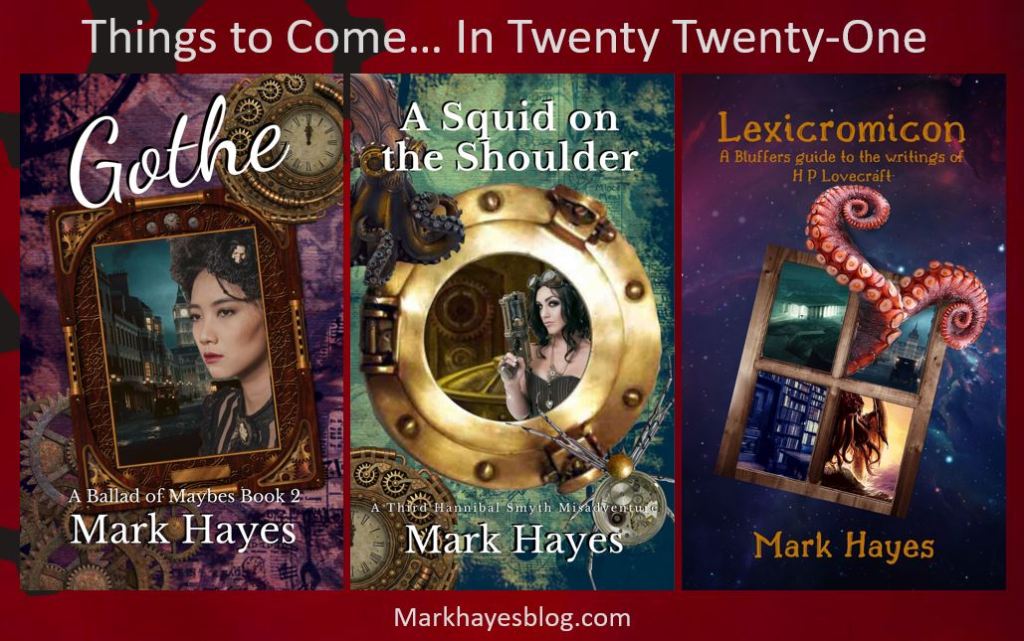
At the start of the year, indeed the very first blog of 2021, I presented a list of things to come, the three books I hoped to write and publish this year…

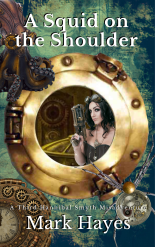
Well, that didn’t happen… However by way of an up date , two of the three, A squid on the Shoulder and the Lexicromicon are written. They are currently sat in my editor, the wonderful C G Hatton’s inbox till she can get to them. So with luck both will be out by April 2022 at the latest, in time for the first big convention of the year, on the off chance the world decides not to end between now and then.

I also started a side project that got a little derailed , The Elf Kings Thingy, for the literally couple of people who have asked me about it, yes I plan to pick it back up in the new year and continue the series…

However moving on from my own literary triumphs’ of 2021… ahum… On to the Books of the year and want an ecliptic year of wonderfulness it has been.

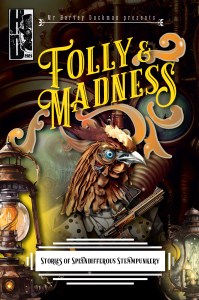
The award for book most likely to contain a steampunk story but didn’t… goes to Harvey Duckman volume 7. The one with the steampunk girl on the cover. Another wonderful collection of stories from the Harvey Duckman writers, which contained among others a story by me set in the Passing Place universe. I’m rather fond of it. It also marked the 50th Harvey writer to join the ever growing stable.

The award for book Book I’d read the year before but forgot to review at the time, goes to The Oddatsea, a Hopeless Maine novella, written by Keith Etherington and illustrated by the every marvellous Tom Brown.

The award for book I didn’t write a full blog post about but did review…. goes to Kate Bauchreal’s Tangled Fortunes, the third in the simcavalier novels of near future cyber crime, which was a great read as were the previous novels, all of which are now collected in a single volume ‘Hacked’

The award for the best pure scifi novel I’ve read this year, like every year… goes to C G Hatton’s Defying Winter the third of the Thieves Guild Origins novels another wonderful instalment in her Thieves Guild universe and if I have not convinced you to give them a read by now frankly you’re a lost cause

The award for book most likely to contain a story about a dragon but doesn’t…. goes to Harvey Duckman Volume 8. the one with the dragon on the cover, which contains Mandrake a steampunk , urban fantasy story written by me, which I should have clearly written for volume 7, but what you going to do (its also quite possible going to become part of a novel, but that’s another story) and as usual a whole bunch of other stories by an eclectic bunch of new writers.

The award for most initiative book of the year… goes to Mat McCall’s The Dandelion Farmer, because it just does. Maybe I am a sucker for Victorian Martian colonists, airships and automatons written by way of journal entries, dairies and the occasional officious report. But if you want something very different to your average run of the mill novel this is it.

The award for most fun you can have on the sofa on a Sunday afternoon with a hot cup of tea on the side and a book in your hand… goes to Ben Sawyer’s debut novel Holly Trinity and the Ghost of York because of all the books I’ve read this year this was the most singular fun I had reading. Which is up against some particularly stiff compertion this year.

The award for best use of tentacles, and art, and words (but mostly tentacles) in a graphic novel… goes to Hopeless Maine Optimist’s by Tom and Nimue Brown. Which was just a joy as ever, the penultimate book in the series and I can not wait for the final instalment.

Best sequel, that’s even better than the first book and that’s saying something, of the year… goes to that Man McCall again and The Hourglass Sea. Which starts where the first book left of and just gets better, stranger, and more engrossing

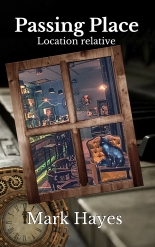
The nepotistic award for a book I wrote five years ago but have finally released in hard back and I am just happy about this so will keep mentioning it… goes to me and the 5th anniversary release of Passing Place in hardback, with updated none litigious version.

The aware for best book I bought at random after a convention because the writer seemed like a nice bloke… goes to Keith Healing’s The Burnt Watcher, and what a delightfully dark with the occasional slither of yellow read that was..

Finally the award for book I bought months ago and finally got around to reading… goes to Nimue Brown’s Intelligent Designing for Amateurs.. Druid in traction engines and Friday Bob , is all I have to say…

Somehow, mainly by putting on of mine in the list, I managed to review 12 books this year, one for each month… Its been a good one, book wise, which considering very little else has been this year is good. I’ve read far more than I reviewed, as ever. As I only review indie books as a rule. Neil Gaimen doesn’t need me to flog his books…

I don’t really have a book of the year, but if someone was to twist my arm it would be Ben Sawyers Holly Trinity novel just because its the one that I think I needed most at the time, and made me smile when I needed something to do so ( as I said , its been a year, October and early November felt like a year all on their lonesome…) But in all honesty I recommend everything in this list.

Here’s hoping for another great year of books to come. Keep reading everyone, and keep writing.

Posted in amreading, book reviews, books, humour, indie, indie novels, indie writers, indiefriday, indiewriter, sci-fi, steampunk, supernatural | Tagged , , , , , , , , , , | 1 Comment

Illuminating observations of the perils of an indiscreet life…

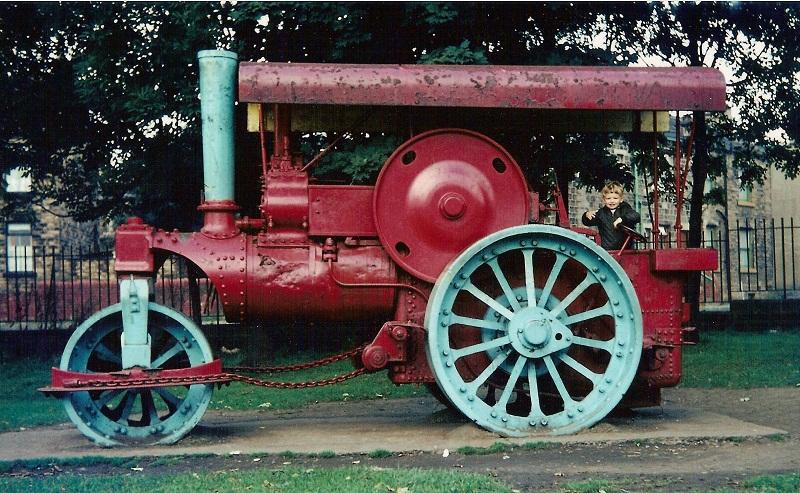
For reasons, that have never been explained to me, at Pudsey (the small town between Leeds and Bradford and somewhat merged into both these days), in the large park behind the swimming pool, just up past the aviary, this is, and has been since my childhood and probably before, a old traction engine.

Not a working one, I should explain, it’s fire box has long been welded shut, the many levers disconnected from such interesting things as breaks and gear boxes. The wheel doesn’t turn the cumbersome front axil. The great steam whistle to warn people ahead that this great lumbering beast of the industrial revolution is ponderous heading towards them has long been detach. But then the great lumbering beast hasn’t moved for over fifty years or more.

Instead of its original intended purpose it has been a climbing frame, and well of possibilities the imagination of children can draw upon for decades. Or at least it was, there is I suspect a fair chance it has long been removed, but it was certain still there when my own children were young enough to clamber all over it and pretend there were driving this mechanical dinosaur. Which is certainly what I did when I was a child. For when I was a child it was a magical thing, impossibly huge and built like a literal tank, only more solidly. Say what you like about the 19th century, when they built a machine they built it to last…

When enmeshed with my childhood imagination that traction became many things as I stood in it cab after clambering up into it. It was the great engine of a land pirate, the scourge of the highways, a lumbering lunar rover transforming the surface mars (yes I know, the moon and mars are separate celestial bodies, I was a child, the rules of logic don’t apply.) In my mind it wasn’t quite as lumbering as it probably was in its working days, except when I used it to singlehandedly save the day when the dinosaurs came back… It was, in short, many things and all of them that special kind of wonderful only a child can imagine, or someone who has been a child and can articulate that sense of endless possibilities and joy without consequence…

Which brings me to that rather ponderously evocative title for this blog, which are words I did not write myself, but borrowed from a chapter in an extraordinary work of fiction by the ever delightful and talented Nimue Brown, who most certainly can articulate the endless possibilities and joy without consequences of a child’s imagination. The Child in question is called Temperance who is been raised by her Granny in the small rural and eminently civilised English town Bromstone, on the unremarkable middling class Baker Street. Temperance’s view of the world and everything in it is a delight, and reminds me of that old traction engine in Pudsey park and all the things it inspired. But then there is something about traction engines. While the novel in which Temperance plays a major role is called with equally ponderous delight, Intelligent Designing for Amateurs.

There is much more than just Temperance’s exuberance in Intelligent Designing for Amateurs, there is indeed a host of characters, from a socialite archaeologist with a serious problem with suitors, an inventor bereft of inspiration but determined to find it, Temperance’s Granny Alice, who may once have been called Anne and spent the years of her youth on the Spanish main. A dog faced boy with a serious rodent problem, the owner of a biscuit factory who has a novel approach to issues of labour. Occasional protests, a mild riot or two, Oh and druids, who own a traction engine…. because why would there not be?

Events, of a mildly calamitous nature, are set in motion when the socialite archaeologist is directed to a small Welsh field and unearths the pieces of Pair Dadeni, which as I am sure you know your Welsh mythology, is otherwise known as The Cauldron of Rebirth. At which point she gets her neighbour Charlie, the budding inventor short of inspiration, to put it back together. Then there is a mildly embarrassing incident when Temperance putting a dead cat in it…

At which point the biscuit factory owner hits upon a way to solve his labour problem’s by ’employing’ the recently deceased… Or possibly the formerly deceased… About this point things start to get somewhat odd and uncanny for Temperance and the inhabitants of Baker Street…

Did I mention the druids in the traction engine?

Under the pen nib of a less skilled writer this could all have devolved into farce quite quickly. Instead despite the strangeness of the characters (who are regardless all perfectly realised) the ecliptic mix of complex elements that is the plot (which regardless of what should be incredulity hangs together perfectly) this is a joyous romp. The novel is something between out and out steampunk, a comedy of manners, political and religious satire, and the kind of pure invention you get when children clamber on board a static traction engine. It put me in mind of Robert Rankin at his wildest, with a touch of Pratchett grounded reality in the unreal thrown in. It is in short just a joy to read. So you should do that.

You should also seek out a traction engine, even a static one in a park, clamber aboard it, throw in some imaginary coal, and have wild adventures… And if your not sure how to do that, ask a child.

Posted in amreading, amwriting, book reviews, books, druidry, fiction, goodreads, indie novels, indie writers, indiewriter, pirates, reads, steampunk, supernatural, writes, writing | Tagged , , , , , , , , , , , | 5 Comments

A touch of yellow…

Those who have followed my blog previously will know that aside from the odd post about writing in general, book reviews, talking about my own work, and the occasional pondering on the inner workings of the universe, mental health and wittering on, I have written rather a lot about the old tentacle hugger of Providence, Rhode island and not always kindly, it has to be said…

Indeed, I have written a whole book on the writings of HP Lovecraft, a bluffers guide to his stories if you will, that I was hoping to release this year, but thanks to some minor inconvenience (the global pandemic) it has been tied down with my editor slightly longer than envisaged…

Lovecraft, like many a writer before him and since, was something of a magpie when it came to borrowing from other writers. I can’t really blame him for that, I am something of a magpie myself, almost every writer is. Oh we call them influences, but what we really mean is ‘that’s a good idea, I’m nicking that’. He also liked to reference, to a greater or lesser extent, the work of other writers in his own, usually with there permission if they were contemporary’s. In some cases he even went so far as to write them into a story… then kill them off… but all in good fun, for the most part…

One of the unintended results of his being a literary magpie is some aspects of the ‘Cthulhu mythos’ which are generally associated in these latter days with Lovecraft first and foremost, were actually shiny trinkets he ‘acquired’ for his nest. The most famous example of which is arguably the play, ‘The King in Yellow’ which originally appears in the a book of short stories of the same name by Robert w Chambers in 1895. Lovecraft ‘borrowed’ a lot from the king in yellow, and was certainly influenced by Chambers style and fiction in general. The play, is portrayed as a piece of occult literature, mentioned in the same breath as the Necronomicon in Lovecraft’s ‘The Whisperer in Darkness’.

Strange is the night where black stars rise,

And strange moons circle through the skies,

But stranger still is

Lost Carcosa.

Excerpt form the play ‘The King in Yellow’ in the story of the same name ~ Robert W Chambers

Before chastising old tentacle hugger for his literary magpieing, it is also of passing note that Chamber was something of a magpie himself, and ‘borrowed’ the king in yellow himself and entity named Hastur from ‘An Inhabitant of Carcosa’ by Ambrose Bierce, and Carcosa itself come to that. Though in fairness to Chambers, all he really borrowed in this case was the names. His Hastur is not ‘a god of shepards’ as he is in Ambrose’s story. Besides, as I say, writers, we are all magpies… Which brings me to the reason I am writing this clearly fascinating and insightful piece (hey, you have read this far) A book I picked up because I have bumped into the author (Keith Healing) a couple of times at conventions and he is a likable chap, who is also something of a literary magpie in this grand tradition.. and so I was curious. And also because of the aging leather fob on my keyring…

I made myself that keyfob some years ago on a whim (I hope) as carved into the leather is ‘the yellow sign’ of Hastur… I made myself a wallet at the same time, which had an elder sign craved into it. This was a joke, of sorts. An invitation to disaster, and the means to repel it…

I didn’t say it was a funny joke…

Also, that wallet has long since been thrown away after it started to disintegrate after a few years, yet the yellow sign keyfob is still there. I occasionally wonder, in the darkness on the night, while staring up at the faces in the ceiling, if I should be worried by this… but shuffling merrily along.

The Burnt Watcher, by Keith Healing is a strangely involving novel, it draws you in to a strange disturbing world some half a millennium or more after a great calamity has struck mankind. The nature of that calamity is never really explained, but then it need not be. Told as it is in first person by the title character his understanding of what happened five hundred year before is all you have to go with, and he doesn’t know. All you can do is take implication for the after effects. London, Birmingham and other great city’s of our own age are now ‘the glass’. Hell holes no one wanders into. Less towns and city’s are no less dangerous. Something in stone causes ‘the fear’ and ‘the fear’ haunts ever aspect of life.

What ‘the fear’ really is, well that’s in part is ingrained into the very fabric of this novel. My suspicions changed several times as I read, my first assumption was the fear was caused by radiation form a nuclear war, hence the major city’s are now ‘the glass’. It is an assumption that would explain much of how and why this strange dystopian world came into been, except it doesn’t explain everything. And the further into the novel you go the less that assumption explains. There is something else, something at the heart of things, something insidious. An insidiousness that is their in the writing, the way the tale is told, layers been stripped back and revealed careful, so if you are making assumptions those assumptions are fed carefully before they are revealed to be wrong…

I have theories of course, the novel and its author, invite the reader to have theories, by explaining little of what has happened to the world, he is inviting you to make your own connections. To guess what ‘the fear’ really is and where and how it arose. Perhaps the great physic screaming of billions of souls as the calamity struck and so many died managed to draw something through the dimension, something that has always been there, but fed by the cataclysm is strong enough, and insidious enough to effect the real world… Meh, its a theory, I suspect I will have to read the next book to find out… I suspect I will be doing that shortly. As I said it is a strangely involving novel, but strange and involving in a good way, and hard to put down…

There is also a hint or three of the colour yellow, mention of a king, and ‘strange is the night where black stars rise…’

Posted in amreading, amwriting, big questions, book reviews, books, cthulhu, goodreads, horror, indie, indie novels, indie writers, novels, reads, rites, sci-fi, steampunk, supernatural, Uncategorized, writes, writing | Tagged , , , , , , , , , , , , , | 3 Comments

Five years of Passing Place

Five years ago my personal favourite of my novels, and the one I will grudgingly admit to being most proud of Passing Place was release. I say grudgingly because all my novels are little slithers of my soul and, excepting my children, the things of which I am most proud. Picking a favourite is akin to picking a favourite child, something that in the case of my children I would never do as I love them both equally. Luckily in the case of my novels however picking a favourite it is somewhat of a more reasonable undertaking. I love them all, but of all of them the greatest slither of my soul is contained within the pages of Passing Place. It is, in short , the book I always wanted to write.

I should perhaps explain that last statement. When I say I always wanted to write it, that doesn’t mean I always knew what it was going to be, or anything so grandiose. What I mean is I always wanted to write something different, something unique, something that drew on everything that excited me as a reader, a watcher and a listener. I wanted to write something both epic and personal, that explored complex themes and yet could touch people on an emotional level. I wanted to write something that readers could identify with and yet at the same time be encouraged to think about, something that asked questions and did not entirely answer them all. Which is a long winded way of saying I wanted to write the kind of book I love to read.

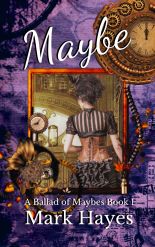
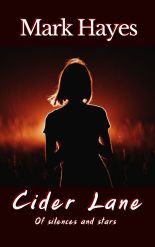
I would like to think that statement applies to everything I write, but I just think Passing Place does that better than the rest. The Hannibal novels are pulpy satire, Maybe is a straight forward steampunk adventure novel, and as for my contemporary novel Cider Lane, well ‘it’s complicated’ as the saying goes. They all have things to say, they all will touch readers in different ways, but Passing Place is the closest to the kind of novel’s I dreamed about writing thirty five years ago when I was still a kid, hammering away at my dads cheap typewriter and using ridiculous amounts of Tipex to erase my mistakes…

This is why, if I am asked, as happens form time to time at conventions, which of my books I would recommend to a new reader ‘Passing Place’ inevitably is the answer I give.

Which brings me to here, five years after it release, which is something of a epoch as the novel itself took me five years to write (though in that five years I wrote cider lane and much of what became the first Hannibal novel and the first few chapters of what later became Maybe). For much of the five years since I have been playing about with idea’s for a sequel without ever really nailing down what it was going to be, the main problem being that the first novel tells the whole of the main characters story. While he would be in any sequel (not that one is required), he could never be it’s focus. So the sequel never got started, until that is I finally realised what it was going to be when I was working on a side project to do with the 5th anniversary. A side project that harkens back to those childhood dreams I had of being a writer.

Perhaps not unusually, when I dreamed of writing my own books, I dreamed of holding them in my hand. And while I read, and still read, mostly paperbacks, there has always been something special about hardbacks. A hard back is the most real of realities. the most solid of things. At least if you’re a bibliophile at any rate. My book shelves are stacked with paperbacks but the books of my favourite authors I have in hardback. It’s just a thing… And sure perhaps I am weird like that, but then I’m a writer, the ship of normal sailed away years ago…

But in any regard, I publish my books through amazon and while I would prefer to publish them in other ways as I am not a huge fan of the all consuming global nexus, they remain for now the best option, because while making a stand against them would be all very well and good, amazon effectively is the marketplace. However up until recently you could only publish via amazon in two ways, on kindle or in paperback. there were options to publish hardback versions through third parties but all of these had their own hurdles to jump and issues with supply (purchasing third party books on amazon tends to be a pest as well).

Then, earlier this year, Amazon announced they were going to start publishing hardbacks. Frankly at that point not typesetting and releasing a hardback versions of my books would have seemed insane. It was after all a childhood dream come true, even if the only hardback version ever purchased was my own copy…

Of course, it is never as simple as that, and I am never going to not make things more complex than they need to be. If I was going to put out a hardback version of any book, I wanted the first to be Passing Place for all those reasons I started with. But as it was the fifth anniversary, I wanted to do more.

Despite being my favourite, Passing place is also the least successful of my novels. Not least this is because it doesn’t fit neatly on any genre shelf… which makes it difficult to market. It is however the best reviewed, which is to say it gets the best reviews, if not the most numerous. Readers like it, love it in many cases, frequently try to bully me into writing a sequel in other cases. I have in fact never had a bad review for Passing Place. So while it has never set the world on fire, it smoulders nicely. As such I thought if I was going to do a 5th anniversary, hardback release, I ask someone to write an introduction, which American author Joseph Carrabis, who had recently read the novel and praised its virtues in a frankly overwhelming review, kindly agreed to write for me.

There were other things I wanted to do as well. One of the niggling issues with Passing place was my own naivety when I first publish it. The text falls somewhat foul of the ‘fair and reasonable usage’ rules on copyright. Only a little foul, a tad over the legal line, but I quote rather too much of the lyrics of one particular song which has a fairly central part to play in the novel. the fifth anniversary seemed like a good time to revisit this issue and resolve it. But this took a while as I needed to write the lyrics for a fictional song form a fictional rock opera, that would retain the impact of the original.

That may not sound like a huge mountain to climb, but it was larger than you might imagine…

But eventually I managed to climb the mountain, typeset a hardback edition in a larger font format for a larger book. with all those minor changes. Then of course I needed to do the same with the paperback and kindle editions…

The little project took a while.

But, it is done, the hardback I expect no one to buy, of my least successful, but most beloved book is available to all. As are the paperback and kindle editions… It would be remiss of me not to mention this…

And importantly to me, and no one else one suspects, I will very soon, as soon as the copy I ordered arrives, be able to realise a childhood dream, and hold a Hardback written by Mark Hayes in my hand. Now that will be a fine day, amidst a year that has been woefully sort of fine days…

Posted in amreading, amwriting, big questions, book reviews, books, Esqwiths, fantasy, fiction, goodnews, goodreads, Hannibal Smyth, Harvey Duckman, horror, indie, indie novels, indie writers, indiewriter, novels, opinion, Passing Place, publication, reads, sci-fi, self-publishing, steampunk, supernatural, writes, writing | Tagged , , , , , , , , , , , , , , | 1 Comment

Sailing on an Hourglass Sea

Not too long ago I reviewed Mat MaCall’s The Dandelion Farmer. I was I think now perhaps a little too gushing in my praise of the novel, the first of a trilogy of which the second The Hourglass Sea is the subject of this review.

The problem with the review of The Dandelion Farmer (the short version posted on amazon is above, the long version from the blog is here.) is very simple. Once you have said something is ‘a tour-de-force’ written with ‘mastery’ and ‘a wonderful read’ it leaves you with no where to go when you discover to your chagrin the sequel is even better…

If there was one flaw in the first book it was a problem inherent with the style in which the novels are written, because it is all in the form of excerpts form diary, official reports, memoirs, the overlap between different POV characters views of events occasionally led to you viewing one set of events several times, without necessary adding a great deal to the story. While I addressed this to an extent in my long review here, it wasn’t a major flaw. There was just one or two places where it was a tad over done. As flaws go however its was a minor one, and one that did not detract form the splendour of the novel. It just could have been even better, but I felt at the time that was a little like saying a masterpiece like the Mona Lisa could have been even better if only Leonardo had made her smile even more enigmatic… Which is to say you can not improve on a master piece it is already a master piece, and even the flaws are part of what make it so…

Then I read The Hourglass Sea.

Everything I loved about The Dandelion Farmer is in here and more. The Characters evolve, the steampunk, Victorian era, colonial mars grows in your imagination, the deeper plot becomes, well deeper more complex, strange and engrossing. The epic quality to it all, the grand scale, the intricate details of character and place. It’s all there.

Not to mention the most fascinating, and my favourite, characters from the first book, Aelita the catholic raised native Martian, and Adam Franklin the man who isn’t, are very much centre stage once more, driving the narrative with their own portions of the story. Which is not to detract form the other characters who are all wonderfully realised creations in their own right.

The scope of these novels just expands, the second book taking you further into the history of Colonial Mars and mysteries that surround its former inhabitants. The scale is epic views through the microcosm of the individual, which make sit all the more engaging as a narrative. It’s engrossing and draws you further in as the story progresses, even more so than in the original novel.

What isn’t there are the minor flaw I choose to ignore in the first novel. While POV’s in the excerpts still over lap, as indeed they should, it has been kept to a minimum, allowing the greater narrative to flow more easily, and avoid those occasional bits in the first novel where they got a little stifled. Which as I say was the smallest of flaws in that first novel, even if I ignored it at the time due to how much I loved it. Every novel has flaws, 20’000 leagues under the sea has too many passages about fish, war of the worlds is dry to the point of arid at times, Wuthering Heights gets a tad flouncy around the edges. There is an Inuit Saga in the middle of Passing Place… Perfection in a masterpiece is a slightly more enigmatic smile than the most enigmatic smile ever known.

With The Hourglass Sea, Mat MaCall has managed to take his masterpiece and make the smile even more enigmatic…

Was I a little too gushing in my praise of the first novel, perhaps, but only when views with hindsight. The first book was a masterpiece, the second is just better still… I can not wait for the third
Posted in amreading, book reviews, books, fiction, goodreads, indie, indie novels, indie writers, indiewriter, novels, publication, reads, sci-fi, steampunk, writes, writing | Tagged , , , , , , , , , , , | 4 Comments

Returning to the Passing Place

One of the odd questions one gets asked when one is stood around at an event by a display of books you have written is ‘which would you recommend?’ I have strong feelings for all my novels, for a variety of reasons in each case, I suspect every writer does. So clearly I would recommend them all.

That said, occasionally people refine the question a little and ask something along the lines of ‘If I was to read one of them which would you recommend most. To that I have an answer, its always the same answer, and I suspect no matter how much I love everything else I have written or will go on to write it will remain the answer. Because if there is one book that is the absolute soul of me as a writer, it is Passing Place.

Cider Lane is the novel I wrote to prove to myself as much as anyone that I could write a novel. The Hannibal novels, Maybe, all the short stories in anthology’s like the Harvey Duckman books or my own little anthologies were more or less written for fun, and the joy of the thing. But Passing place is the book I always wanted to write. The book, more specifically the kind of book, I dreamed about writing when I was a teenager back in the dim, distant, big hair and dark eyeliner days of 1980’s. It’s the kind of book I wanted to write in my twenties, and toyed with in my thirties, and finally, over the course of five years I wrote in my mid forties, with noticeably less hair and even less eyeliner…

It took five years, though in the course of that five years I wrote and published another novel and started two more. But still from the first version of the first chapter to finally going in to print Esqwith’s Piano bar and grill, the Passing Place was more or less where my ide spent its time.

I often say novels are slithers of a writers souls, because I am pretentious at times, but to me this remains true. A writer, if they are doing it properly, puts a lot of themselves into their novels. Every novel… But Passing place is the novel that took the majority of mine.

Ironically of course, it is also probably my least successful novel, because its very hard to Pidgeon hole into a specific genre. However of late it has received some frankly stunning reviews. Which is to say the reviews stun me… Not least because they are reviews from my peers

That last review from American author Joseph Carrabis is the short version of a review which frankly astounded me when I read the full one. Its on his blog (which is always a good read aside this review) here.

All of this frankly unexpected love for Passing Place coincided with the 5th anniversary of the novel being published.

It also marks the point, five years after the first novel, that I have finally got to the point where I have the sequel firmly planned. I was missing something vital from the next book that has stopped me writing it until now, that being the central character (though I wasn’t aware that was what was missing I just knew something wasn’t there yet…) So it took five years to write the first novel, five more to figure out how to write the second , and it will probably take me five years to write it, around ever other project I have going on.

But finally, for those few who have been waiting, I am returning to the Passing Place, to Richard the Piano Player, Greyman, Jolene, Lyall, Sonny, Morn and the cat… Something red is coming…. Another slither of my soul…

This is something I though some people might want to know…

Posted in amreading, amwriting, book reviews, books, Esqwiths, fantasy, Harvey Duckman, indie, indie novels, indie writers, indiewriter, novels, Passing Place, reads, sci-fi, supernatural, writes, writing | Tagged , , , , , , , , , , | Leave a comment

The Craft…

Just to get the obvious apology out of the way, sorry, this post is not about the 1996 cult classic teenage witchcraft movie, it is instead about the craft of writing. Though that said there is a line that can be draw between Neve Campbell and Robin Tunney et all throwing around spells while struggling with teen angst and a whole subgenre of YA protagonists/antagonists, and writers in general over the last 25 years. Stephanie Meyer for example probably snuck off to watch the movie at some point despite her Mormon roots a decade before Twilight became a thing… But lets not drift off topic…

Actually this post is about the craft of writing, as it NaNoWriMo, though I am not participating in the annual challenge for the first time in several years due to family matters, but I feel obliged to offer a little encouragement to those who are as they get towards the gristle of the month, and a little advice to authors in general, by way of a few of my favourite quotes on the craft itself.

Enjoy…

Try to leave out the parts readers tend to skip ~ Elmore Leonard

Don’t tell me the moon is shining; show me the glint of light on broken glass ~ Anton Chekhov

The more subtle and elegant you are in hiding your plot points, the better you are as a writer ~ Billy Wilder

You must stay drunk on writing so reality cannot destroy you ~ Ray Bradbury

Literature was not born the day when a boy crying ‘wolf, wolf’ came running out of the Neanderthal valley with a big gray wolf at his heels; literature was born on the day when a boy came crying ‘wolf, wolf’ and there was no wolf behind him ~ Vladimir Nabokov

I would advise anyone who aspires to a writing career that before developing his talent he would be wise to develop a thick hide ~ Harper Lee

And finally, in light of all that, my favourite quote of all.

I owe my success to having listened respectfully to the very best advice, and then going away and doing the exact opposite ~ G K Chesterton

Posted in #amwriting, amediting, amwriting, fiction, humour, indie writers, nanowrimo, quotes, writes, writing | Tagged , , , , , , , | Leave a comment

Hopeless Joys

One of the best things being an indie author has brought to my life is I get to meet other indie and small press authors. This is not because they are all wonderfully creative giving people, (though as a rule they are), but because as well as been a collection of wonderful individuals they have often created wonderful works of art and fiction. The kind of wonderful that makes life worth living. Its also a collection of wonderful that I would probably have never been privileged enough to stumble across if I wasn’t an indie author myself, because its the kind of wonderful you need someone to tell you about if you are ever going to find it. And trust me on this, its a kind of wonderful that makes the lives of all that touch it richer.

As such, if only to address the balance of the universe and tip the scales away from the mundane mainstream of the popular that is packaged for everyone’s consumption, and advertised relentlessly, when I find something wonderful (and yes I know I have used that word an awful lot in the opening paragraphs but its the right word) I make a point of sharing it here.

To put it another way, the next marvel movie doesn’t need the likes of me to wax lyrical about it. Indie authors, artists and publishers on the other hand need all the exposure they can get, even from little old me.

All of which, mildly rambling preamble, brings me to Hopeless Maine: Optimists, the forth graphic novel of the Hopeless Maine Quintet by Tom and Nimue Brown, which is due for release early next year. I was lucky enough to get a copy of at the weekend while working the stall next to their at a steampunk event in Gloucester that had been organised by a mutual friend, author Matt McCall, writer of The Dandelion Farmer. As a side note, that Event was enormous fun and I highly recommended any West country steampunk, or the steampunk curious, or just about anyone attend the next one…

Why should you spend you hard earned cash, and read the Hopeless Maine novels? Because your life will be better for doing so. What more reason do you need. But in case that is not all it takes to tempt you to explore a strange fogbound island, somewhere and somewhen off the coast of Maine. An island that doesn’t let you leave, where the fauna and flora is both strange and dangerous, and something hides in the fog that is best not thoughts about, lets see if the art work does…

Now, I am not saying you should read the Hopeless Maine series just for Tom Browns art, though frankly that is reason enough… What makes these novels so good, so damn wonderful (there’s that word again) is that the art is paired with the words and storytelling of Nimue Brown. The elder gods were good when Tom and Nimue met, for they have birthed wonders between them. They are also among the nicest people I have been privileged to meet, and restore my faith in humanity and what humanity can be, each time our paths cross..

Where you start, if you have never visited the island before, well the best place to start would be Hopeless Vendetta, the collaborative blog/ community which Tom and Nimue not only share, but invite others to contribute to.

Then, once you have dipped your toe in the salty, and not entirely safe waters around the island, consider reading the novels… Frankly if you can just dip your toes I will be surprised.

For myself, I read Hopeless Optimists in bed, on a pile of extra fluffy pillows, by lamp lights, with a hot cup of coffee that steamed away till it wasn’t and never got picked up while I sunk deep down into the wonder of Hopeless for a couple of hours of just wonderful indulgent joy of art and story telling at its very best…

I will not tell you to read it, you should instead infer that in my opinion you should read everything. Trust me, you life will be better for doing so… And you’ll never wonder where all the spoons have gone again…

Posted in amreading, book reviews, books, dreamlands, druidry, indie, indie novels, indie writers, novels, reads, sci-fi, steampunk, supernatural | Tagged , , , , , , , , | 2 Comments

Fact Vs Fiction, by Dr Tamara Clelford

Todays offering on Guest Post Wednesday, the first of a new series of guest posts I’ll probably manage to put out on Thursday’s, is from a fellow Harvey Duckman writer and tapdancing physicist, Tamara Clelford, who’s has one of those doctorate things that intimidate those of us who developed out education by osmosis. She is also not in anyway scary, and does not spend her time developing interesting ways to murder people with technology, and get away with it…

She is one of the foremost experts in her field professionally, but assures me this is not because she has irradiated most of her peers and buried them in the void floor beneath her lab.

I chose to believe her, it seems safer that way…

FACT V FICTION by Dr Tamara Clelford

I’ve spent most of my life writing about facts in various different forms. Maybe I’m explaining facts to people, finding out new facts and presenting them or paraphrasing facts that other people have found out. Whatever the context I’m very comfortable writing about things that have happened, things that have been proved and presenting them in a report, document, paper, thesis etc. Fiction writing, however, I gladly left behind me when I waved goodbye to my last English class upon finishing my GCSE’s. This was done with the certainty of never returning to writing fiction. Well, that’s one promise I haven’t kept.

If you’ve read my previous guest blog here at the Passing Place you’ll know I wrote my first novel by accident, and indeed I did get into fiction writing on a whimsical whim whilst on holiday. Much to my shock and horror I really enjoyed it and haven’t managed to do as much writing as I would actually like to do. Words I thought I would never say, but we all evolve as life goes on.

I thought today that I’d have a look at my approach to fiction writing, and how it differs from my factual writing and actually why they are actually quite similar.

MY INSPIRATION

In factual writing you don’t normally talk about your ‘inspiration’ to write the paper or report you have to write. Normally the inspiration is along the glamorous lines of ‘it’s part of my job’. Well, I suppose if you are a fiction writer who lives off their books this could actually be the same reason there.

There’s normally a reason why you’re writing a factual report, and that is because you have created something new and need to tell people about it. What I create in these contexts I suppose does come from the inspiration to solve a particular problem or to fill a gap by creating a new thing. So, maybe I should use the word inspiration in work as well.

I’m more comfortable talking about inspiration for my fiction stories, even though it’s along a similar line. I’ve found out a fact and thought ‘I wonder how that happened’ or I’ve thought ‘wouldn’t it be fun if I could do x’ and then my brain has gone down a journey to solve that particular problem and out pops a short story or a book.

TO PLAN OR NOT TO PLAN

This is where the big difference is for me.

My factual writing is carefully planned out, I know what I need to explain, how it’s going to be explained and what graphs and equations I need to put in. Each stage is meticulously planned.

Fiction writing, I have a loose overarching idea in my head (for example: What if the takahē were part of a clandestine operation? Why do evil genius’s always wear a polo neck?) and start writing at the beginning and see where I end up.

The thought of planning a novel is as ridiculous to me as not planning a report!

WHERE TO START

I can hear my friend Katy singing “Let’s start at the vey beginning…………..” well I do and don’t agree with her. I suppose it’s about defining what your beginning is.

Fiction, yes, I think it’s a very good place to start as that’s how you read a book or a short story. Start at the start, end at the end and then do many many rounds of heavy editing to make the middle bit flow between the two.

Factual writing, however, I don’t read in chronological order. I read the abstract, the conclusions and then poke around in the middle to find out more details on the answers and how they were got. So, I write things accordingly. I write the conclusions first, because you already know the answer before you start writing. I then agonise over the abstract, as this is the most difficult bit to write so I start with a draft at this point. I then write the results, then the method and then the introduction. Then I have the fun task of getting the abstract into a good shape. So, I do start at the beginning of where I read, if not the beginning of the piece.

HOW TO DIVIDE UP THE TEXT

In factual writing you divide the text up with clear and informative section headings. There are no surprises – the results have the results in them and the method the method and so on and so forth.

However, chapter headings are often obscure, funny or misleading. Most of the books I read go for the classic approach of having catch chapter headings such as 1, 2, 3 or if they’re being posh one, two, three. Some of the books I’ve read recently (like Mark’s) have got actual chapter titles and I’ve really enjoyed deciphering them. I’m going to steal that idea and I’m going through the arduous process of adding chapter titles to my book, but I’ve made life easy for myself as I have a theme running through them.

WHERE TO STOP

In factual writing you finish your section at the end of the topic when everything is beautifully tied up. In a thesis this could be the end of the chapter, in a report the end of a section and a paper the end of a paragraph the sections just differ in size depending on the size of the overall document. You don’t do cliff hangers to leave the reader in suspense to find out the results of the experiment when they read onto the next section. Apart from anything else that would be pointless as you will have already read the main results in the abstract, so it’s very difficult to build suspense when you’ve already told them the punch line. What you do instead is build a secure coherent argument showing why the results are valid.

In fiction writing it couldn’t be more different. The book summary is obscured to leave the reader in a state of puzzlement, so they want to read the entire book. There is no upfront summary detailing the plot and the baddies, if you’re lucky there’s some hidden pointers in the text as you go through it. You also don’t tie up a section of the story at the end of a chapter, cliff hangers are king and almost mandatory. There’s no point writing a book where you have been left with no urgent reason to have to read the next chapter at 3am when you need to be up by 7am.

WHAT WRITE IN

For 4 glorious years of my life I was worked on a UNIX based computer. It was bliss and I loved it, but then I moved away from academia and it’s really difficult to function in the outside world without access to normal programmes. So, when I started working for myself, I decided to create the best computer set up I could and do a mix of the two and I started writing in LaTeX again. This is a great typesetting programme for producing documents with equations and images where you actually want them. It’s like a very high level programming language where I can just write things like \[WACC = K_e \times \frac{E}{E + D} + K_d (1 – t) \times \frac{D}{E + D}\] to give me a lovely looking equation rather than having to battle getting them into word. It’s bought me more pleasure and calm than it really should have.

However, writing fiction is probably not the best idea in LaTeX as the functionality doesn’t help and you can only produce pdf outputs. I actually write my fiction stuff in word at the moment, as this is probably the easiest format to transfer text in that has an inbuilt spell checker. I do know that some people write their work in specific writing programmes, I’ve had a look at a few of them but they don’t fit how I write fiction. As I’ve already told you there’s no planning involved so having to have some idea of what I’m doing ahead of time to just be able to write your book just doesn’t work for me.

HOW TO DEFINE ’THE TRUTH’

In academic scientific writing the truth is defined by you explaining your experimental process in sufficient detail that someone else would be able to re-create your experiment and they should get the same answers (within the measurement error). You can’t make stuff up or exaggerate, well I should say shouldn’t as people do try.

However, there are no such restraints in fiction writing. I like to start in a basis of a true story, something that has happened to me or I’ve read or observed, and then just take it further and further down the line so you very quickly end in a world of fantasy so you can explore all those ‘what-ifs’. Where the fantasy bit takes you can be different, it can be into a future world, a past world, a crazed situation or whatever your mind can think up as there are no limits.

BIO

Tamara is a star trek loving, pukeko obsessed, tap dancing, Queen listening, lord of low frequency and high-priestess of high frequency physics geek. Having worked in a variety of technical roles, both normal and clandestine, she is now a consultant working on physics based problems and data science. This latest incarnation has opened new doors to a wide variety of work and interests, like: an eclectic blog, writing a novel, encouraging people into physics, and teaching people how to code and do data science.

Follow Tamara on social media: @SwamphenEnts or if you want to see her technical life or learn to code go to swamphen.co.uk

Posted in #amwriting, amreading, amwriting, blogging, books, fiction, goodreads, Harvey Duckman, indie, indie writers, opinion, reads, sci-fi, writes, writing | Tagged , , , , , , , , | Leave a comment

Occasional reviews: Holly Trinity and the Ghost of York

As a son of the shire, I have spend many a day and night in the streets, snickers, and alleys of York. It is an old city, it was old before the Vikings got there, it was old before the romans set the first walls around it, it has old bones aplenty, both figuratively and actually.
There’s a pub, by the riverside, where they say some nights you can see the brush topped helmets of roman legionaries cross the bar floor, the ghosts of long dead soldiers marching on a road five feet below… I’ve sat in that pub, and drank dark ale, and yet I have never seen them myself, but I’ve met plenty who would swear to you they have, or something like it.
York has always been a city of ghosts. Old bones, as I say…

So, York is a perfect setting for a novel about a guardian who protects the city from the worst the supernatural world has to offer…

See the source image

Of course, it not as simple as that, having the perfect setting doesn’t mean anything unless you can bring that setting alive, give it breath, and the feel of the city and those old bones beneath your feet. Sawyer does that. He does that even if you have never walked those streets yourself, crossed its bridges, wondered down the shambles or walked it’s ancient walls. It feels like York, the great Northern capital, the original second city. A city with old bones.

But Sawyer also does more. He has a cast of characters that you will both love and fear for, and indeed just fear. The title character, Holly, is a joyous invention. Mysterious, strange, awkward, mad and fascinating. I could not help but be put in mind of Matt Smiths Doctor Who, but that’s a bit of a disservice, Holly is a singular invention in her own right, but she has that mad infectious otherness about her that characterised Matt Smiths iteration of the infamous time lord.

The main character Mira is drawn into Holly’s world, the supernatural underbelly of York, because when a mad woman saves your life and draws you into the madness, you can run and hide, or you can run with her… Mira choses the latter.

Mira is as much a joyous invention as Holly, as are all the characters in the novel. There is a richness to them, in the same way as there is a richness to the old bones of York. There are layers to everything, the plot is deeper than it first appears. Deeper and darker, there are more twists and turns than the old streets of York itself. There are insidious and sinister ghost and other things lurking everywhere, there is also humour, quirks, and joy.

The other characters all have life and energy of there own, be they human or more than human, or what if left after the human departs this world…

All of this is wonderfully realised, masterfully written, atmospheric, and just a plain joy to read.

It leaves you wanting more, luckily, there are still plenty of old bones in Sawyers York, And the Sleeper will wake again soon I am sure… Frankly, I am looking forward to it.

Posted in amreading, amwriting, book reviews, books, fantasy, fiction, goodnews, Harvey Duckman, horror, indie, indie novels, indie writers, indiefriday, indiewriter, novels, reads, sci-fi, supernatural | Tagged , , , , , , , , | 2 Comments