The many squids of Sci-fi-Scarborough

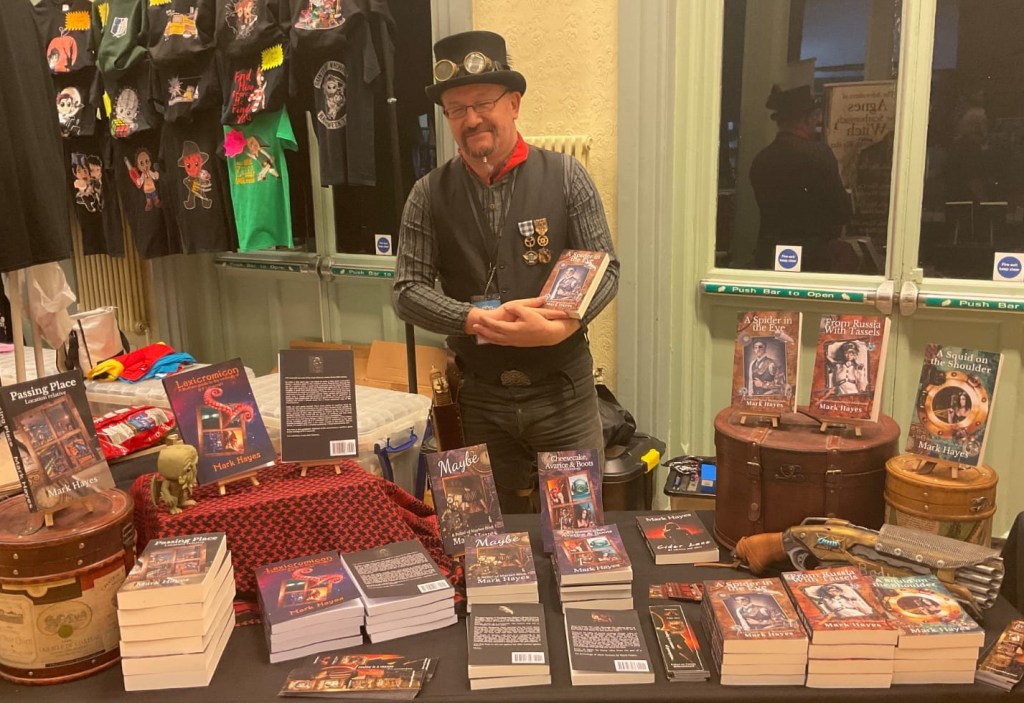
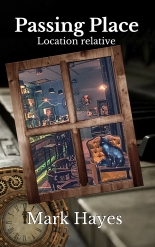
Having sorted out my accommodation for the forth coming SciFiScarbrough event I needed to make a little flyer for the two new releases I’ll have on the table that weekend. A weekend I am looking forward to after the last two years were cancelled due to the plague. Previously it was the first big event I ever attended as an author as part of the Harvey Duckman team and with my own stuff way back in 2019, which seems like another age now…

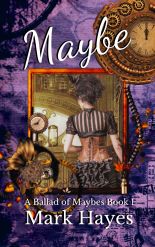
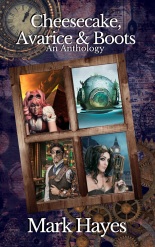
As I sorted out a flyer I also received the cover art for the next Harvey Duckman collection (which I have a story in I am sure you will be shocked to learn…) So as that will also be a new release for this event I thought I would put that on the little flyer as well…

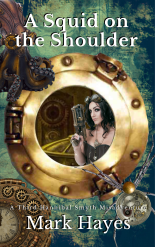
There was some unexpected, yet delightful, over lap and a theme developed…

I love Graham at SixthElements cover art for all the Harvey’s but this latest one just fits with the other two new releases I have so nicely.

SciFiScarborough 2020 is at the Spa center in Scarborough on the weekend of the 9th/10th of April

A Squid on the shoulder, the third Hannibal novel and the final one in the first trilogy is, as you may be aware, out now

Harvey Duckman volumne 9 is out soon

As for The Lexicromicon, the collected and expanded guide book to the works of old tentacle hugger himself I am hoping to have it out on the 15th of March to ‘celebrate’ the death of HP Lovecraft, which also happens to be my birthday and a generally bad day for people called Julius….

Posted in fantasy, fiction, Goth, Hannibal Smyth, Harvey Duckman, indie, indie novels, indie writers, IndieApril, Lovecraft, Nyarlathotep, sci-fi | Tagged , , , , , , , , , , , | Leave a comment

A Squid on the Shoulder

Queen Victoria is in the 200th year of her reign, and her Glorious British Empire faces a grievous threat due to the Machiavellian machinations of that most notorious instigator of insurrections Herbert George Wells.

No longer an agent of The Ministry, the shadowy branch of the British government that deals with things other Ministries neither need or want to know about. Hannibal Smyth, after fleeing the battle in Tibet, finds himself rescued from certain death after plummeting into the Indian Ocean from a burning airship. Finding out just who has rescued him in their strange craft is only the start of his latest troubles, as he finds himself traveling to the mysterious island of Doctor Musk.
A little known island just to the west of Java called Krakatoa.

There Hannibal must brave psychotic razor girls, giant cannons, HG Wells insane daughter, engine room hooch, mad scientists, the ghosts of his failures, active volcanos, and most terrifying of all ,French pharmaceuticals…
All in order to save a friend who holds the secret to his past.
Will he rise to the occasion?
Will he strive bravely against all the odds?

How can he, when he has even lost his trusty cut-throat razor…

So anyway, finally, almost 18 months later than originally planned the first Hannibal Smyth trilogy is complete…

Posted in amreading, amwriting, book reviews, books, fantasy, fiction, goodreads, Hannibal Smyth, Harvey Duckman, horror, humour, indie, indie novels, indie writers, novels, reads, sci-fi, writes, writing | Tagged , , , , , , , , , , | 1 Comment

Proof copies of joy

I don’t generally post a lot of pictures of things, well not my own at any rate. My medium is generally words. The exception to that is when I type set a book, which for complicated reasons to do with timing I have had to do twice in the last week for two very different books…

A Squid on the Shoulder, the third novel of my Hannibal Smyth trilogy, which completes the misadventures set. And the Lexicomicon, which is something else entirely, the collected essays on the complete works of Lovecraft that were originally a blog series, which I have expanded, rewritten and produced as a bluffers guide to Old Tentacle Hugger’s stories.

Typesetting is a somewhat joyful thing as its almost the final stage before I finally let a book out into the world. Besides which when you spend all your time with words it is wonderfully enriching to mould those words into their final form. To turn them into an actual physical thing… This is however the first time I have ever typeset two of my own books back to back… I am rather pleased with the proof copies that have arrived through my door however. They are precious and wonderful, even if I do say so myself…

They are pretty things, the way the art work has worked out in the Lovecraft book and teh chapter heads in squid are a delight. Just got to do all the final proofing now.

With luck, all things been equal I hope to have that final proofing done and the books out by the Id’s of March. Because reasons… In the case of Squid, because it is my birthday and two years since my last novel was release. In the case of Lexicromicon because it is the anniversary of the death of Lovecraft which just happens to be the same day…

Because hey, sometimes the stars are right.

Posted in amreading, amwriting, blogging, book reviews, books, cthulhu, fantasy, fiction, goodreads, Hannibal Smyth, Harvey Duckman, horror, humour, indie, indie novels, indie writers, indiewriter, Lovecraft, mythos, novels, Nyarlathotep, reads, sci-fi, steampunk | Tagged , , , , , , , , , , , | Leave a comment

Dystopian Forrest’s and the Merrily Method

I’m not a great believer in self-help books… I always find them a suspicious offering. I suspect the only selves ever really helped are the ones selling the books. Which is ultimately the point of them, to make money. It follows that if the point of the ‘self-help’ book is to make money then such books need a ready made audience of people who feel they need help, and that such help as they need can be found in a competitively priced paperback…

If your goal is to sell books to people who feel the answers to there problems can be found in a competitively priced paperback, then actually having the answers to their problems in said paperback would negate your audience for your next compactivity priced paperback.

So if your goal is actually to help people through useful advice and disbursed wisdom, the kind of publishers who make a living out of self help books aren’t going to touch you with a barge pole.

Yes, I am cynical, I’m a Yorkshireman born in the nineteen-seventies, what do you expect…

Despite this I recently stumbled on a self-help book I can get behind. One that does indeed have answers and a could be a guide to leading a better life…. For example…

You need to do a lot of positive thinking to improve your life. For this, you must first do a lot of thinking. Then, try and be positive about it. You will find that a great deal of help in your life, especially with regards to making things better.

How to improve your life, the Merrily Method: Chapter one

and also

Do kind things for Badgers.

The latter, from the same chapter, is clearly sage advice, as is

Be more like the toadstool. Then you will be happy.

Which is from chapter 3. The Merrily Method is clearly the self-help book I have not been seeking all my life. Unfortunately of course, it is also entirely fictional. It is however central to a remarkable, funny, strange, thoughtful, dystopian future novel by the incomparable Nimue Brown.

When we are Vanished, is a novel set in a future not very far distant, and a past not very far behind us. In which the silicon chip world we live it has been turned off. Imagine if you will a world where computers, Mobil phones, indeed everything that relies on a silicon chip, so just about everything, suddenly stopped working. Society would, if not collapse, certainly stumble… Luckily there is the new cellulose technology, which could replace the lost silicon tech, if only they can stop it having a mind of it’s own…

Then, people start to vanish. Just here one minute, not the next… Not die, not kidnapped, not spirited away by government black baggers. Just vanish…

But luckily just before the collapse, the last book to come out of the publish on demand warehouses was:

‘How to improve your life, The Merrily Method’

Perhaps the book holds the key to what’s really going on, if only anyone could make head nor tale of it… Or why the book seems to centre around three sisters, one of which was one of the first ‘vanished’, one of whom works for the government investigating the vanished and one of whom works with cellulose tech, and their mother. Certainly the odd little cults that have sprung up around the book think it holds the answers, as unfortunately do certain government bodies…

Walk until you start to remember what you are.

Then you can go back, if only you can remember the way.

Now I could go on to talk a lot more about the plot, and the importance of been nice to badgers, not putting too much trust into trees, as they are probably up to something, and dancing in yellow dresses. But I won’t, because it is simpler and wiser to say you should read the novel yourself. It is as remarkable, odd, intriguing, funny, smart and insightful as everything else Nimue has written. It is as deep as you want it to be, which is to say only the shallow would take nothing away from it, and it will help you simply by being on your nightstand. It will make you think, and wonder, and smile, and in part possibly cry. What more self-help you you need? Well until I convince Nimue to write the whole of the Merrily Method as an actual self-help book… As it would be just as valid as most of the ones in the self-help section of Waterstones, and probably actually help…
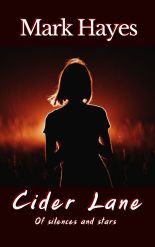
So my advise, help yourself, get yourself a copy…

And finally a last word form the Merrily Method, and one we can all learn to live by.
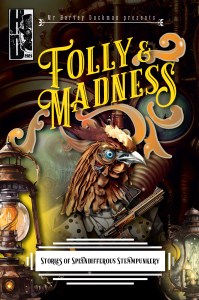
Rejoice! There is time yet for compassion and it is not yet too late to learn how to be splendid.

Posted in amreading, book reviews, books, druidry, fiction, humour, indie, indie novels, indie writers, reads, sci-fi, steampunk, supernatural, Uncategorized | Tagged , , , , , , , , | 6 Comments

Return of the Hopeless Kickstarter

Its no great secret to any regular reader that I have a certain love for the Island of Hopeless Maine. The fictional collaboration begun by of Nimue and Tom Brown. A collaboration that generously extends to others whom get to play in the danger ridden sandpit of the fog bound isle.

As with most great literary obsessions of mine it began because I was introduced to the isle by others, in this particular case I believe it was writer ‘poet’ and fellow Yorkshireman Craig Hallam who first introduced me to it via the medium of Tom’s art on twitter of all places. For this singular favour he granted me I will even forgive him his poetry…

At the core of the expanding wonder that is the island is Tom’s art and Nimue’s prose which are so interweaved as to be inseparable, and while others do saunter through the fog it is this core that binds it all together.

Now, I have read all the books, indeed they sit on the shelves above my desk, so it would be insane of me to back the Kickstarter they have just launched for the American edition of book 2… I mean I already have the Sloth comic’s editions after all… But then again,, the America editions are in a large hardback format, so they are even more a thing of beauty… and I am sure I could find space for them somewhere in my library (others would call it a house, but I am old enough to be honest, if only with myself…)

Then there are the add on’s , the Hopeless roleplaying book , the Hopeless tarot. The limited edition Hopeless pins…

What can I say, I am addict… and no I don’t need help thank you very much , I can manage my addictions just fine…

Anyway, all this is just to say, the Brown’s have a new Kickstarter for the hardback edition of book two, which of course included the option to get book 1 in hard back as well. And frankly if that isn’t enough reason to at the very least go and look at the Kickstarter I don’t know what is…

Posted in amreading, books, Canadian steampunk, cthulhu, druidry, fantasy, fiction, humour, indie, indie novels, indie writers, indiewriter, pointless things of wonderfulness, rites, sci-fi, steampunk | Tagged , , , , , , , , | 1 Comment

And sometimes you just need to hear it…

This morning, as I got in the car to drive to work, the radio told me Meatloaf had died.

Meatloaf, particularly when in combination with Jim Steinman’s lyrics, has long been part of my life. My older sister bought Bat out of Hell the first time round, while she still lived at home. My mother, of all the musical choices she could have made, used to set up the ironing board and iron to it. A few years later I would borrow the album and play it and Dead-Ringer while I hammered at the keyboard of my dads old typewriter attempting to turn keystrokes into stories. One of the first albums I remember buying was Bad Attitude, Meatloaf’s first post Steinman album, which was something of a flop in trhe charts but I still kind of like…

Meatloaf was never cool, Bat out of Hell came out in 77, in the middle of punk, year was operatic pompous over the top Rock and Roll… He never became cool, which I think its a blessing. Cool never lasts, cool is fleeting, Queen were never cool, nor were the Stones come to that. Meatloaf’s music was just powerful, awesome, and inspiring. It didn’t care what you thought of it, it would belt out at you anyway, and because of that it was something special…

Those songs, and that music will mean different things to different people, but I suspect they mean something to everyone. I suspect they touch us all one way or another over the years. To me back in 77 when I was 7 years old growing up in a northern city, those song were all of a different world, a world of endless highways, burning sand on midnight beaches, screaming engines, cheery red lipstick and everything America impossibly was in my 7 year old imagination…

So, while I have not listened the full album of Bat out of Hell in years, due to the way we consume music in this digital age. I think tonight I shall put the album on the turntable, after I have blown the dust off it. And maybe offer my throat to the wolf with the red roses, as heaven it seems could not wait any more…

Posted in opinion, Uncategorized | 1 Comment

Micro Fictions

I don’t like micro fiction. I say this not to denigrate it as entertainment or indeed as an art form. It is simply a personal thing. If pushed as to why I don’t like it then I will admit that in truth it is simply because I don’t see the point of it. But let me be very clear, this is just a personal opinion, nothing more.

I like a good short story, god knows I have written enough of them. A good short story should have enough in it that you care about the characters, that you find that strange emotional involvement with the text that will elicit shock, or rage, or sentiment. Joy, loss, anger, love, hate… This is not a matter of length alone. I know some brilliant really short stories, a little over, or perhaps less than a thousand words. But these are exceptions, not the rule. To connect to a short story it must be just that, a story.

Which brings me back to micro fiction, and why I’m not a fan of the form.

Micro fiction is at its best just a slither of a story, introduction, situation, resolution in a few short lines. Yes there is craft to it, art to it, but there is also nothing to connect to. It might take a minute to read, and after reading it, its gone. I haven’t been with it long enough to care.

At its worse, micro fiction isn’t even that, its an unsatisfying glimpse at a story that ends without really going anywhere, because so many micro fiction stories are written as micro fiction… Which is to say, they don’t end because they have reached the natural end to a story but because observing the form is more important to the writer than telling the story. ‘This is a micro fiction, therefore it must be a micro fiction…’ Which is fine, as it goes, except for me I find it impossible to write anything based around restrictions of that kind.

Should you ever meet her, and be short of better things to talk about, ask Gillie Hatton, the editor of the Harvey Duckman anthologies about just how strictly I observe word limits with my short stories… Which is not to say I don’t have stories in the Harvey anthologies that obey the 3000 word limit,. I do, but that tends to be the exception, not the rule. A couple of my stories in the Harvey’s are closer to 8k, because, and this is the important point for me, that’s how many words it took to tell those particular stories…

So, what is the point of micro-fiction. What is the point of a story that can be read in a minute, and remains in your consciousness for less than that. How can anyone possibly tell a story worth reading in less than 500 words? In 300 words? in a half dozen lines? Surely this is symptomatic of the disposable nature of modern society and has the value you associate with that self same disposability? More importantly how exactly do you read micro fiction. You can’t just read a book of micro fiction cover to cover… Well you can, but as an experience it lack something, how can you engage with a bunch of unrelated stores in such a short format without each overlapping the other…

So, anyway, having established I am not a fan either as a writer or a reader of Micro fiction, I’ll get to the actual point of this post, which is a review of a book called Micro Moods, written by a fellow Harvey writer Amy Wilson, which is, as the title implies, a book of micro fiction. Well this is going to go well isn’t it…

Actually though, yes it is.

Micro Moods is a collection of 140 micro fiction stories which cover the breath of human experience. The collection is divided up in to five loose categories, Fear, melancholy, hate, love, joy. Each is engaging, interesting, complex and to an extent prose poetry more than just stories. They explore the inner workings of the mind, emotion and experience. Take fear, the stories all have the edge of horror and trepidation, you know something terrible is going to happen, but they manage to forestall your expectation all the same. It is not so much about the event, but the anticipation of the event.

Likewise the melancholy stories, all of which are small but beautifully crafted insights into the inner thoughts of the troubled.

Many of these stories are ostensibly female stories written in a female voice, and it is a testament to the power of these stories that even though these are very short they manage to instil a layer of discomfort and awkwardness for the male reader. But then many of these stories are meant to be unsettling for any reader. There is a darkness to them, but it is a darkness that at times is counterpointed with light.

I read these stories in strange places, and at stranger times. the book followed me around the house for a few weeks. Laying on my bed side, or at the side of the sofa, on the kitchen table, on the doorstep while I enjoyed a coffee in the sunshine one Sunday, and other places. Often I read a story or two and then it would be left behind and it wasn’t until I returned to the vicinity that I read another. It’s a book that can do that, and that you dip in and out of and that your never quite sure what you are going to read for that couple of minutes while the kettle boils.

But what you will read will be interesting, strange, upsetting , joyous dark and wonderful often all at the same time and in less words than you would think possible it will leave you thoughtful, or horrified,. angry , happy or sad.

So you should buy it, and treasure it’s little windows into the recesses of the soul.

I still don’t like or understand micro fiction. I still don’t really get the point of it. It always leave me wanting more, because it isn’t enough. But that’s me, and plenty of people love it. If you are a person who loves flash fiction, then take it from someone who doesn’t, this is one of the best collections I’ve ever read, by a writer who is a master of the art form. So its worth your time if its your kind of thing, or even if its not…

That said, personally I think Amy needs to stop faffing about with these silly things and finish that damn novel she has been writing since before her first Harvey Duckman story. But then I am a miserable old sod, who has been looking forward to her novel for years.

Posted in amreading, amwriting, book reviews, books, dystopia, fantasy, fiction, goodreads, Harvey Duckman, horror, indie, indie novels, indie writers, indiewriter, opinion, reads, Uncategorized | Tagged , , , , , , , | 2 Comments

Occasionally, one is asked why…

Writing is, so E.L. Doctorow would have it, a socially acceptable form of schizophrenia. As quotes go, I find that one just a tad depressing. Mainly because it has a smidgeon of truth to it, for me at least, I would never presume to know how other writers write, but I have many a conversation with non-existent people in my own mind. Some of which get written down, so of which disappear into the ether…

A writer is not born but made through study and sheer willpower and ab...  Quote by Kilroy J. Oldster, Dead Toad Scrolls - QuotesLyfe

Writing is, in many ways, my way to dealing with the world. It is often frustrating, demanding and drives me to distraction. It often is a case of framing my thoughts and neurosis in such as way that I can process them. Why this tends to be fiction is simply because fiction is the easiest way to put a lay of separation between what I write and my thoughts. A separation I need to be there.

For the writer, madness should seep slowly out of them from the world ...  Quote by Jason E. Hodges - QuotesLyfe

My fiction is, in many ways, a by product of my coping mechanisms. It always has been I think, though when I first starting writing in my late teens I didn’t understand the why of it. What I do know is that without writing, published or not, I would have struggled far more over the years. It is my therapy, and often my source of joy. No matter how difficult it can be, it is central to my mental health, and how I face the world. Also, as Steinem eloquently puts it…

50+ Inspiring Quotes About Writing and Writers
Posted in indie writers, indiewriter, Uncategorized, writes, writing | Tagged , , , | Leave a comment

Voices from Hopeless

The strange, beautiful, and fabulous people over at Hopeless Maine are holding an online convention of sorts this coming Saturday evening.
Baring anything unexpected coming up I shall be in attendance with a bottle of rum, and I may even make some vague attempt to be witty at some point… Though I’ll probably just enjoy the show, and hide from view.
Anyway, should you have an hour or two to spare, or the whole evening, you could do worse than to pop along.
Of course there is no guarantee you will be able to leave afterwards, this is Hopeless after all, so best arm yourself with your best fighting spoon beforehand.

Nimue Brown's avatarDruid Life

On the 22nd of January, there will be an online Hopeless Maine festival, which is an exciting prospect. I’ve already got some brilliant content in from people involved in the project, with more to come. One of the things I love about Hopeless is that it has always been a community thing and that’s very much part of what it’s for.

I had a number of reasons for wanting to do this. One is that everyone being online during the pandemic opened up a great many things for disabled people, and now those things are going away again, which isn’t ok. I wanted to offer something. I also know that in the UK January tends to be a miserable month with not much happening, unpredictable weather and post-festive crapness. So I thought it would be nice to do something fun where no-one has to travel.

The third reason is that…

View original post 115 more words

Posted in Uncategorized | Leave a comment

Echo’s of Lovecraft

Back at the end of November I reviews a novel by Keith Healing called ‘The Burnt Watcher‘, I was, you may recall, quite taken with it, and the post cataclysm world in which it took place. Not least because it had echo’s of the ‘old tentacle hugger’ from Providence Rhode Island and more importantly Robert W Chambers. And lets face it I’m a sucker for an old gods, pervasive evil and dark undercurrents…

One problem I did have with the first novel, which I didn’t bring up in the review, was the perspective and tense in which it was written, which is first person present tense. When I say problem, the problem was not in the writing, so much as in the reader. That is to say it is not a style I am overly fond of in anything but short stories, and even in short stories it has to be done well. It is perhaps a tribute to the novel and Healings writing that after the first chapter or so, this was a minor niggle and something that only threw me occasionally, while the advantages of this style lent themselves perfectly to the brooding pensive atmosphere that drags you along.

It’s a style Lovecraft used a lot, to a greater or lesser success in his short stories. The Rats in the Walls being a fine example. He also used it less successfully in other short stories, but the main strength of the style is that you learn everything for the central characters point of view, and if done right you can feel the consequences and certainly for Lovecrafts characters the slow descent in to madness along with a sense of disconnection and uncanniness as it creeps in. But while as a style this lends itself to a short story, across the breath of a novel it is harder to pull off, with ‘The Brunt Watcher’ Keith did a impressive job of maintaining the slightly off kilter nature of the narrative without it losing me as a reader. It did however beg the question he could continue to play this hand successfully in the sequel…

Which brings me, rather neatly, to ‘Visitation’ the second novel in Healings ‘the Fear’ series. Like the previous novel it is written from the perspective of Hobb Grey, the burnt watcher form the title of the first novel, once again inn that first person present tense style. Form the off however it is clear that this novel has a much broader scope than the first, in which events took place in a small isolated village called Stonehouse just south of the city of Gloster (analogous to modern day Gloucester, though a few miles south of the current city for reasons that stem from one of the main premises of the novels…) Instead of almost the entire novel been set in a single isolated community, the first half of this novel takes the reader on a trip through the west country, giving the reader a much broader view of this post calamity world and the people who inhabit it.

Along the way Hobb’s ‘apprentice of sorts’ Alice is revealed to be more than she seems. The hangover of Stonehouse is perhaps not the only reason for this. Hobb’s own hangover from Stonehouse also broods at the back of his mind. The encounter in the first novel with the yellow king is far from resolved. the tension between the pair of them increases as they travel to the south west to investigate what caused a ship to crash into the docks back in Gloster. There is something dark and pernicious at play, and the further they travel the more Hobb starts to fear what they will find, and what it will mean.

What they find at the end of their journey changes the relationship between the pair for ever, as measures Hobb feels forced to take to save Alice leave her scared both outwardly and inwardly. But it is on their return to Gloster that things take a real turn for the worse. There is a plague in the city, a plague that is not entirely natural. Hobb must take steps, but every step he takes costs him a little more, and takes him further down a dark road, a road littered with broken friendships, broken bodies and broken minds. All the while their is a presence, shrouded in darkness with just a hint of sickly yellow, prying its way into Hobbs consciousness…

That and a certain city…

Strange is the night where black stars rise,

And strange moons circle through the skies,

But stranger still is Lost Carcosa.

Despite, or perhaps regardless of limitations of a first person present tense narrative Visitation is engrossing, dark and pervasive Horror fiction at its best in a strange and interesting world. Indeed, that slightly off-putting style adds to the sense of disconnection and strangeness, so works perfectly in that regard. There is much more for Healing to explore in the world of The Fear, your left with many questions and wanting to know more, and fearing to know more in the same instance.

You can read this as a stand alone, though I am not sure why you would, as it is as masterfully written and engrossing as the first novel.

.

There is also a artist, who Hobb befriends. An artist who becomes obsessed with a strange vision and driven by it… If you’ve read as much Lovecraft as me, I suspect you will fear for him from the moment he is introduced… You’ll not be disappointed.

Posted in amreading, book reviews, books, cthulhu, dreamlands, goodreads, horror, indie, indie novels, indie writers, Lovecraft, reads, steampunk, supernatural, writes | Tagged , , , , , , | 3 Comments