The Difficult Chapters…

Every reader has encountered these at some point, more than once I would suspect in most cases. Those chapters that just drag at a readers eyes.  The ones that cause you to put down a book, or more likely not pick it up for a while. The one you get to late at night, and after the first page or so decide to close the book and get some sleep instead, only to find it lurking on the bedside table the next night doing everything it can to drain any enthusiasm you have for opening the book up once more…  I read a lot at night, as I have mentioned before, but the same can apply no matter what your reading habits…

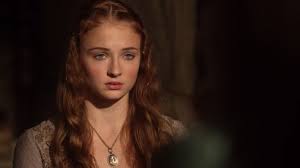
Sometimes, in certain books, it is a POV character that you just don’t enjoy the way you do the others. To give an example from my own experience, the Sansa Stark chapters in the ‘Song of Ice and Fire’ novels (Game of Thrones for those more familiar with the TV series than the books.) With no disrespect to the character on the TV show and the actress who plays her, I hate Sansa. It has little to do with the portrayal on the TV show, and all to do with her POV chapters in the books, and I do mean hate. In book one she is a spoilt brat with no concept of the world not revolving around her.
images (3)

“But you can’t take me back to Winterfell. I am going to marry Joffrey and become Queen and we love each other…”      

She rants at her father, despite everything that is going on in ‘A Game of Thrones‘ and generally brats around for all six of her chapters. By book two, considering how the first book ended and the position she is now in you would think she would elicit some sympathy. Yet somehow she manages to come across as a whimpering brat, for eight chapters, still self-absorbed yet to a whole new degree…  Which holds true for seven chapters in book three ‘A Storm of Swords’ until she becomes a bitchy brat, even in book four ‘A Feast of Crows’ she only has three chapters, interesting chapters that reveal a great deal about the underlying plot of the whole series, yet she remains a chore to read. It’s an utter relief she is not in the fifth novel at all. It’s safe to say I hate Sansa’s chapters, I started to dread them coming up even before she got to Kingslanding in the first novel. She is a Westeros mean girl, I don’t want, and indeed find it impossible to, sympathise with her, and that feeling has never shifted. Indeed that dislike bleeds over into the TV show when I watch it, despite the character being much different on screen. Or at least, not subjecting the audience to her inner monologues… I am not alone in this as other people have expressed similar opinions on the character in the novels to me. Yet I am sure there are plenty of fans of the books who look forward to her chapters yet dislike some other POV character to the same degree.

It is safe then to say, that I find Sansa Stark chapters difficult to read, because I really don’t want to read them, I would much rather be reading Arya…

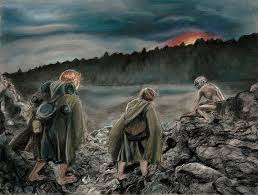
It is not always characters, there are similar issues with other novels. Take good old grandfather Tolkien’s epic, a great many people have read ‘Lord of the Rings’ once, a fair few have read it more than once, but I am sure I am not the only one who has never read the whole of it a second time. I get as far as ‘trudging through Mordor…’ and skip forward a hundred pages. Nothing and no one could entice me to force myself through a hundred pages of miserable, hungry, trudging, hobbits do a travelogue of Mordor a second time.
images (4)

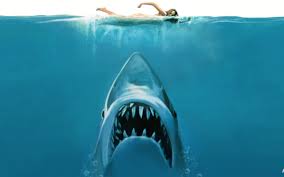
While these are major examples that stick out, they are far from alone. Jaws, for example, is a great novel, a fun read that keeps the story moving and is more terrifying in place than the movie could have ever hoped to be. But that’s only parts 1 and 3. Part 2, which was completely ignored in the movie thankfully, is a 150-page affair between the Chief Brodies wife Ellen and the oceanologist Hooper, which has no impact on the main plot and reads like a Jackie Collins novel. Not that there is anything wrong with Jackie Collins, but what is one of her novels doing sandwiched between the first and third parts of a shark based thriller? If you want to read Jackie Collins, you buy a Jackie Collins, no a sub-genre horror.  The affair has a minor impact on the ending (which differs from the movie version) but otherwise if just sub-erotica fluffy added to spice up a summer beach read, and as sub-erotic fluffy goes, it’s not very good. I suspect the publishers made Peter Benchley add it to spice up a novel they were not sure had a market at the time, which I also suspect is why he wrote the affair out of the movie version which he co-wrote a couple of years after the book became a best seller.
download (4)

Jaws is a great read btw, just skip part 2 is my advice…

The point of this post is that there are always going to be those difficult chapters. (actually, that was not the intended point of this post, it just ended up this way) As a reader, they tend to stop me from finishing a book for a while. I put the book on one side and get some sleep rather than read Sansa’s latest folly, or trek through Mordor, or discover just why Chief Brodie’s wife fancies a bit of fun on the side, and just how the weird little oceanologist gets her to her third orgasm of the afternoon. They are different for every reader I have no doubt. Some LOTR reader somewhere looks forward to the Mordor bits I am sure. Clearly, they are one Hobbit short of a fellowship but what are you going to do.

As a writer, I believe its part of the job to try and avoid ever writing those difficult chapters that people just want to skip over. Unlike skipping Mordor the second time around, skipping Sansa risks missing something important plot wise. Part 2 of Jaws may have some important bits in it too, though it has been a few years since I read it so I will stick with my assertion it doesn’t.

Of course just because I try and avoid writing chapters (or blog posts come to that) which people just want to skip over, I am sure I am just as inept as doing so as any other writer, which is where the actual original point of this post lay. I have been struggling with the working edit of  ‘A spider in the Eye/Hannibal Smyth ‘ because I have hit a chapter that feels like a ‘difficult’ chapter to me as I work on it. Or more to the point continues to be after several reworkings of it. I love all that comes before, and all that comes after, but this chapter still sits wrong with me, and has done for several weeks now.

This is not writer’s block, as I am working on other things perfectly fine, this is more writers swamp. It keeps sucking me in and trying to drown me in my own morass. Every writer I ever speak to has hit a few of these in their time. The chapter that just doesn’t feel right… Yet here is the thing, the thing I am telling myself rightly or wrongly. Some people like Mordor, some people like Sansa Stark, some people I have no doubt like Ellen Brodies middle-life crisis affair and worrying if the black lace bra and pantie set makes her look like mutton dress as lamb…  All readers are different, occasionally you can worry about the feel of that one difficult chapter too much. Sometimes the best way to get past a difficult chapter is to just write it and move on…

Of course, I shall utterly ignore my own advice and continue to pontificate on the feel of 3 pages of a chapter in the middle of my novel, and polish them until I am happy with them even if I am still working on these few pages for another month or three. because when it comes down to it that’s what I do…

And for some reader, the chapter before that I think is perfect will be the ‘difficult’ one I have no doubt…

Anyway back to editing a thousand words that are driving me round the twist

Adios

Mark

FACEBOOK    TWITTER   GOODREADS


Posted in opinion, reads, writes, writing | Tagged , , | 2 Comments

From Beyond: The Complete Lovecraftian#23

You don’t have to read much of ‘From Beyond’ to know you’re in the middle of Lovecraft country. If ever a passage screamed Lovecraft it is this one from the first page of the story…

What do we know,” he had said, “of the world and the universe about us? Our means of receiving impressions are absurdly few, and our notions of surrounding objects infinitely narrow. We see things only as we are constructed to see them, and can gain no idea of their absolute nature. With five feeble senses, we pretend to comprehend the boundlessly complex cosmos,…

from-beyond-small

From Beyond is one of those strange little stories which Lovecraft wrote early in his career, that didn’t get published until he had reached the apex of his fame in the later years when he’d reached an audience beyond the amateur press. While he never quite managed to earn a good living from his stories, he had at least gained a following that was consuming his work. Little wonder then that his back catalogue of dusty manuscripts began to find their way to the printed page. Works passed over when he was a complete unknown, he now had a market for, all be it fourteen years after ‘From Beyond’ was written. It does, however, beg the question… Given it was not good enough to publish in the amateur press in 1920, is it really worth reading now? Every writer, and I speak from experience, has the odd dusty manuscript kicking about that should never see the light of day. With this in mind, my expectations were not high

Thankfully ‘From Beyond‘ is better than my expectations allowed, though not as much as I would have liked. It is also one that perhaps benefits more than other from the passage of time. The frontiers of 21st-century physics add a certain credence to words of the bard of Providence. We’re told now that the universe consists of over 80% dark matter. Of which we know next to nothing, beyond a reasonable bit of formulation that predicts its existence. Which is to say, there is far more stuff out there than we can actually observe…

Which is not to claim that Lovecraft predicted Dark Matter all the way back in 1920 as he tapped away with incessant loathing at his typewriter. (I don’t know why I always think of Lovecraft typing away with incessant loathing, it’s just always the image that comes to mind. That of a self-hating flagellant whom fingers bleed a little with each vowelless name he types with hateful resentment… but moving on.)  In fairness had Lovecraft predicted dark matter it would doubtless have been a far darker matter than the somewhat benign stuff physicist imagine. It is, however, moving beyond our mere human perceptions which this tale goes on to explore. As the narrators ‘friend’ the some what oddly named Crawford Tillinghast explains…

We shall see that at which dogs howl in the dark, and that at which cats prick up their ears after midnight. We shall see these things, and other things which no breathing creature has yet seen. We shall overleap time, space, and dimensions, and without bodily motion peer to the bottom of creation.’

Of course, this is Lovecraft, and once anyone starts talking about ‘seeing these things‘ things predictably go down hill from there. Indeed there is a wonderfully grotesque description of Crawford Tillinghast at the start of the tale, which suggests quite strongly things have been going down hill in the sanity department among other for him for quite a while. Which does make you wonder why the narrator was so keen to follow him up to his attic to see the strange machine that Tillinghast had spent the last few months perfecting… But then what else would the narrator of a Lovecraft story do when faced with a dark staircase, a decaying friend with sanity issues and a strange machine that allows you to see ‘beyond our mortal senses‘. Which is exactly what the machine does, and then some. Strange worlds open up around the narrator, strange world with strange things lurking all around us, just beyond our meagre senses…

Okay, from the off, this is predictable territory for Lovecraft readers. The servants are all dead, a mad scientist, the cosmos unbound by mortal constraints and a narrator who has clearly never read any Lovecraft…

As I said earlier the story was better than my expectations of a forgotten early manuscript but all the same it is not hard to see why the tale took fourteen years to be published. It opens up no fresh ground, instead, it treads a well-worn pathway, one walked better by ‘Beyond the Walls of Sleep’ to think of the most obvious example. Indeed when compared to other Lovecraft tales of a similar nature it has a certain weakness, while they follow a similar path, they have more gravel to them, if you will. In comparison, this tale is just too straight forward, it moves from beginning to end with nothing to make it stand out from its fellows. It isn’t badly written, it just isn’t really anything new, a rehash of better, more mature tales. Which is not to say it does not have merit, just that it lacks something. It just is… yet it could have been so much more. The premise left open so many possibilities then ignored them all and kept down the well-trodden path. If you have never read Lovecraft this is probably a far more interesting tale, but there is the crux when it comes down to it. I have read Lovecraft, and this tale screams Lovecraft, but that’s all it does.

Perhaps this is best described as Lovecraft-lite. As such, I’ll give it 3 out of 6, because it’s not all that bad to be fair to it, it’s just not ‘Beyond the Walls of Sleep‘ or half a dozen other Lovecraft stories that follow this path in oh so much more interesting ways…

db0d7-3out2b6

As I often make use of it for this blog series, and as it has this story in full upon it a shout out to the Lovecraft archive, and a link to the story should you wish to read it yourself, which you should, just with reigned in expectations…

http://www.hplovecraft.com/writings/texts/fiction/fb.aspx

and as ever Further Lovecraftian witterings 


Posted in Lovecraft, mythos, reads, retro book reviews, rights, sci-fi | Tagged , , , | 2 Comments

The ‘ends’ of Doctor Who?

Just to be clear I borrow most of this. it does however exactly express my own view…

23/11/1963 – Doctor Who begins. Doctor Who dies.
21/12/1963 – Silly robot monsters introduced into informative historical series. Doctor Who dies.
26/12/1964 – Susan, the very person who introduced us to the Doctor, leaves. Doctor Who dies.
22/05/1965 – The terrifying Daleks are depicted as bumbling idiots. Doctor Who dies.
26/06/1965 – Ian and Barbara, the very people who introduced us to the Doctor, leave. Doctor Who dies.
09/10/1965 – The fans are insulted by an episode without the Doctor. Doctor Who dies.
25/06/1966 – A villain refers to the Doctor as Doctor Who. Doctor Who dies.
22/10/1966 – William Hartnell leaves. Doctor Who dies.
01/07/1967 – The final destruction of the Daleks. Doctor Who dies.
24/04/1968 – The series runs out of ideas and uses two monsters twice in the same series. Doctor Who dies.
21/06/1969 – The mystery of the Doctor’s people is ruined. Doctor Who dies.
03/01/1970 – The whole point of the show is jettisoned as the Doctor begins his exile on Earth. Doctor Who dies.
24/06/1972 – The first major retcon is made, as the fate of Atlantis changes just one year after it was established. Doctor Who dies.
30/12/1972 – The first two Doctors are sent to help out their third self in a crisis which threatens Gallifrey itself. While it’s nice to see them again, it tears open the massive plothole of why the Time Lords didn’t abduct and sentence the Doctor to exile far sooner than they did if they knew where he was as early as his first incarnation. Doctor Who dies.
23/06/1973 – Jo leaves, breaking the irreplaceable magic between companion and Doctor. Doctor Who dies.
28/12/1974 – The new Doctor is a goggle-eyed nutjob. Doctor Who dies.
12/04/1975 – Dalek history is retconned for the first time. Unfortunately it won’t be the last. Doctor Who dies.
19/04/1975 – The Cybermen go all rubbish. Doctor Who dies.
23/04/1975 – Billy Hartnell, the first actor to play the Doctor, dies. Doctor Who dies.
23/10/1976 – Sarah-Jane leaves, breaking the irreplaceable magic between companion and Doctor. Doctor Who dies.
30/10/1976 – The Time Lords are depicted as doddery old men. Doctor Who dies.
22/10/1977 – A gimmicky robot dog joins the TARDIS crew. Doctor Who dies.
11/03/1978 – Leela leaves, breaking the irreplaceable magic between companion and Doctor. Doctor Who dies.
15/11/1980 – A whiny boy joins the TARDIS crew. Doctor Who dies.
24/01/1981 – Romana and K-9 leave, breaking the irreplaceable magic between companions and Doctor. Doctor Who dies.
21/03/1981 – The best Doctor ever is replaced by a vet. Doctor Who dies.
04/01/1982 – The Saturday tea-time slot is abandoned. Doctor Who dies.
02/03/1982 – The producers forget to put aliens in a story. Doctor Who dies.
16/03/1982 – The Doctor fails to save a much-loved companion. Doctor Who dies.
01/02/1983 – UNIT continuity gets fucked. Doctor Who dies.
22/02/1983 – The creation of the universe is revealed to have occurred from a spaceship discharging its fuel. Doctor Who dies.
25/11/1983 – The First Doctor is re-cast and Tom Baker doesn’t turn up. Oh, and the Second Doctor’s timeline gets even more fucked up as he refers to Jamie and Zoe’s mindwipe despite having supposedly being killed almost immediately after this occurred. Doctor Who dies.
12/01/1984 – Episode 3 of the universally panned Warriors of the Deep airs, depicting scenes of someone attempting to kung fu fight a laughable-looking monster costume, which was hurriedly glued together because Margaret Thatcher had called a general election and cost the production team a lot of valuable time and resources. Peter Davison and Janet Fielding announce that they are leaving during filming of this serial. Doctor Who dies.
23/02/1984 – A new companion is brought in just to fill a bikini. Doctor Who dies.
22/03/1984 – The new Doctor is a psychopath in a clown outfit. Doctor Who dies.
05/01/1985 – The classic twenty-five minute format is abandoned. Doctor Who dies.
16/02/1985 – The show digs itself even deeper into the plot hole regarding the timing of the Doctor’s exile, by showing the Second Doctor and Jamie on a mission FROM the Time Lords. This leads to hardcore fans having to formulate made up fan theories to explain this plot hole away. Doctor Who dies.
01/11/1986 – Bonnie. Langford. Doctor Who dies.
28/03/1987 – Pat Troughton, the second actor to play the Doctor, dies. Doctor Who dies.
07/09/1987 – The new Doctor is a buffoon in an ugly pullover. Doctor Who dies.
05/10/1988 – We get to see Totter’s Yard again, except the inbreds spell “I.M. FOREMAN” incorrectly. Doctor Who dies.
02/11/1988 – The Doctor fights Bertie Bassett. Doctor Who dies.
06/12/1989 – The show ends its twenty-six year run. Doctor Who dies.
26/11/1993 – Doctor Who’s rotting carcass is briefly revived, plugged into the life-support machine known as EastEnders. Doctor Who dies.
20/05/1996 – SPLINK overlord Jon Pertwee, the third actor to play the Doctor, dies. Doctor Who dies.
27/05/1996 – The Doctor kisses his companion. Americans are involved. Doctor Who dies.
30/10/1997 – Who’s creator Sydney Newman dies, therefore taking Doctor Who with him (it dies).
23/11/2003 – Doctor Who’s 40th Anniversary is a colossal disappointment, with the only noteworthy celebratory productions being a below average animation that was de-canonized midway through production, and an overly pretentious 4 hour long audio drama that almost destroyed the credibility of the company which made it. Doctor Who dies.
25/05/2004 – A former teen singer is revealed as the companion. Doctor Who dies.
31/03/2005 – The Doctor quits after one episode has been broadcast. Doctor Who dies.
16/04/2005 – Fart humour. Doctor Who dies.
25/12/2005 – The new Doctor spends all his time in bed. Doctor Who dies.
17/06/2006 – A Doctor-light episode is an exploration of the notions of fandom and the human experience. Doctor Who dies.
08/07/2006 – An actress with her own sketch show is revealed as the companion for the Christmas special. Doctor Who dies.
16/06/2007 – The Master is turned into a raving loony. Doctor Who dies.
02/07/2007 – A former teen singer is revealed as the companion for the Christmas special. Doctor Who dies.
03/07/2007 – The actress with her own sketch show is revealed as the companion for Series Four. Doctor Who dies.
03/09/2007 – A Christmas special, four specials for 2009 and a whole series for 2010 are confirmed. Doctor Who dies.
22/11/2007 – The original producer of the program, Verity Lambert, dies. Doctor Who dies.
25/12/2007 – For the first time ever, the show is the most watched of the week. It is also the second-highest rated program of the year and the Audience Appreciation index is 86. Doctor Who dies.
29/10/2008 – The best Doctor ever announces he is leaving. Doctor Who dies.
04/01/2009 – The new Doctor is revealed to be a young male actor. Doctor Who dies.
29/05/2009 – The new companion is revealed to be a young female actor. Doctor Who dies.
06/10/2009 – The logo people originally criticized for having too much lens flare is replaced by one that people criticize for having too much lens flare. Doctor Who dies.
17/04/2010 – The Daleks change colour and become a bit bigger. Doctor Who dies.
22/02/2011 – Nicholas Courtney, who played beloved character the Brig, dies. Doctor Who dies.
19/04/2011 – Elisabeth Sladen, who played beloved character Sarah Jane, dies. Doctor Who dies.
23/04/2011 – The Doctor dies. Fuck, you thought 2016 was bad? Doctor Who dies.
04/06/2011 – The season is split so that the latter half is shown in the Autumn, just like the fans had always demanded. Doctor Who dies.
21/03/2012 – The new companion is revealed to be a young female actor who has been in a soap opera. Doctor Who dies.
01/06/2013 – The best Doctor ever announces he is leaving. Doctor Who dies.
04/08/2013 – The new Doctor is announced in a live show in primetime in the UK, simultaneously broadcast in America, Canada and Australia. He is younger than William Hartnell. Doctor Who dies.
23/11/2013 – Christopher Eccleston doesn’t turn up and his era becomes victim of the eraser via a shitty cop out retcon of the Time War. Doctor Who dies.
25/12/2013 – Matt Smith is naked and Capaldiddle doesn’t know how to fly the TARDIS, triggering NuWho scrubs everywhere. Doctor Who dies.
04/10/2014 – The Moon is an egg. Doctor Who dies.
25/10/2014 – The show has the perfect opportunity to do a Krynoid story but doesn’t. Doctor Who dies.
01/11/2014 – The Master’s cock collapses in on itself. Doctor Who dies.
09/26/2015 – Skaro is destroyed by undying mutant sludge healed with regeneration energy. Doctor Who dies.
10/03/2015 – Fucking ghosts? Doctor Who dies.
10/08/2015 – The Doctor Who General Wiki begins recording dates on this page in MM/DD/YYYY format. Doctor Who dies.
14/11/2015 – A deeply unpopular Who writer’s “found footage” episode is complete shit. Doctor Who dies.
05/12/2015 – A companion is saved from dying, becomes functionally immortal, and gets her own TARDIS with which she has lesbian adventures with someone from Game Of Thrones (not you). Doctor Who dies.
22/01/2016 – An official statement from the BBC reveals that the current disliked showruiner is quitting to be replaced by a man that wrote a script about Oods and loos in 2018 whilst confirming no new series will air for 2016. Doctor Who dies.
23/04/2016 – None of /who/’s preferred predictions are cast as the new companion, instead, a black lady that’s not Martha is cast as “Bill”. Doctor Who dies.
25/12/2016 – A goddamn superhero? Doctor Who dies.
25/12/2016 – The Series 10 coming soon trailer is aired and reveals Bill is working in catering, contributing to obesity crisis ravaging United Kingdom. And emoji robots are real. Doctor Who dies again.
27/01/2017 – Beloved War Doctor actor John Hurt dies, putting all War Doctor audios on hold forever. Doctor Who dies.
30/01/2017 – The best Doctor ever announces he is leaving. Doctor Who dies.
06/03/2017 – A picture is revealed on the show’s social media depicting shit(tier) versions of the Cybermen from The Tenth Planet surrounding Capaldi on the set of the Series 10 finale, with the image caption referring to them as “Mondasian Cybermen”. Doctor Who dies.
17/03/2017 – Series 10 is announced to feature a three-parter, which is one-parter longer than normal two-parter, breaking a perfectly good formula. Doctor Who dies.
03/04/2017 – The new Series 10 trailer reveals Missy dabbing. Doctor Who dies.
15/04/2017 – The Doctor and the new homosexual companion spend the whole episode running away from water. Doctor Who dies.
22/04/2017 – Sentient emoji robots become a canon life form in the universe. Doctor Who dies.
06/05/2017 – The Doctor is revealed to be a fan of literal who normie music. Doctor Who dies.
13/05/2017 – They fuckin’ blinded The Doctor. Doctor Who dies.
20/05/2017 – The vault reveal is predictable as fuck. Doctor Who dies.
17/06/2017 – The next time trailer for World Enough and Time confirms that the Tenth Planet Cyber variants are referred to as “Mondasian Cybermen” in-universe. Doctor Who dies.
24/06/2017 – The Master reveal in World Enough and Time is ruined due to him being teased in the trailer before and it being announced before the Series 10 premiere. Doctor Who dies.
01/07/2017 – A puddle breaks into the TARDIS. Doctor Who dies.
16/07/2017 – The new Doctor is revealed to be played by a woman. Doctor Who dies.

To summarise the reason for this post, The Doctor, a fictional time traveller from another planet, who periodically cheats death by regeneration, has in ‘his’ latest incarnation is going to be played by an actor without a penis. This, some claim, will be the death of the show…  presumably because fictional time travelling aliens who periodically cheat death by regenerating into someone else, have always periodically cheated death by regenerating into a male fictional time travelling alien from another planet. Generally, white middle-class male fictional time travelling alien from England or Scotland, which is what fictional time travelling aliens look and sound like… Instead, this time the doctor has a womb, clearly this the death of the longest running sci-fiction show in the world, and we should believe the naysayers because they have been right so many times before…

download (8)

On the other hand, in the ‘unlikely’ event that this is not the death of Doctor Who, but just another chapter in a rich ever changing challenging show that constantly reinvents itself we can all take heart that it is only 46 years to the 100th-anniversary special. So I would venture the more important question is can they carbon freeze Tom Baker so he can be defrosted in time to make an appearance in it…

I look forward to the next series. I look forward to life in the Tardis with ‘Jodie Whittaker’ at the console. A new doctor, a new writer, a new chapter… Frankly, I can’t wait to see what they do with it…

I also look forward to the next thing that is proclaimed to be the ‘Death of Doctor Who.’ as it almost certainly won’t be.


Posted in opinion, sci-fi, Uncategorized | Tagged , , , | 2 Comments

Facts Concerning the Late Arthur Jermyn and His Family: The Complete Lovecraftian#22

As titles go, ‘Facts Concerning the Late Arthur Jermyn and His Family.‘ is laborious, and fails to even give the slightest of inclines as to what the tale is about. Even for Lovecraft, a writer knows for his occasionally vague titles, ‘Facts Concerning the Late Arthur Jermyn and His Family.’ stands out as both the longest and one of the vaguest titles he ever penned. Indeed, it sounds like a court reporter’s miss placed journalism before his editor got a hold of him and told him how to write a headline… Which probably was the reason ‘Wierd Tales‘ republished it in 1924 with the title ‘The White Ape’, (three years after it first appeared in ‘The Wolverine‘ under its more onerous original title.)

wt1924-04-whiteape-240

Old tentacle hugger H.P. was less than pleased when ‘Wierd Tales‘ did this, reputably his response was to say, “If I ever entitled a story ‘The White Ape‘, there would be no ape in it”.  While it didn’t lead to him falling out with ‘Wierd Tales.’ relationships were a tad fraught over the matter. Later reprints shortened the title to ‘Arthur Jermyn’ as late as 1986 until the full name was restored in a collection entitled ‘Dagon and Other Macabre Tales‘ all of which goes to show that an author will get his own way in the end, even if he happens to have been dead for fifty years when his title finally gets restored…

Interesting though all that is to me as a collector of trivialities, laborious is a word that many might ascribe to more than just the title of this Lovecraft story, spanning as it does several generations of the Jermyn family as there rather odd genealogy. I, however, am not among these detractors. While this may not be Lovecraft’s finest work, there is a lot quirks about this tale that I really enjoy. Indeed, did I not know better, I would swear old H.P. was trying his hand at writing comedy. Tragic, rather depressing comedy, but comic all the same. Take for example the mildly bizarre Jermyn family tree.

The family tree starts with Sir Wade Jermyn, an explorer of Africa’s dark interior, in particular, the upper reaches of the Congo (because its always the Congo…) and the odd wife he brings back with him after one of his longer trips. His wife is described in the tale as being the daughter of a Portuguese trader, though not long into the tale you start to realise that this may not be entirely true… Which accounts for the oddities of the family tree from there on, and this is a family much enamoured of trees. She is however kept in the house, and Sir Wade brings all her meals to her himself. Not long after the pair produces an heir, they return to Africa and are promptly never seen again.

Sir Wade’s son. Philip, despite his noble background, becomes of all things a sailor, and not the kind that stands on the poop deck, barking out orders, but the kind who run up and down the rigging for a living, before marrying a gypsy girl, fathering a son, then disappearing into the Congo one night when he jumps ship…

Sir Philip’s son, Robert, married a viscount’s daughter and became a scientist, a far more respectable profession for the progeny of a noble house. He fathers three sons and then goes off to explore Africa himself. Somewhere along the way, he meets another explore called Seaton who tells him of “a grey city of white apes ruled by a white god” much like the one described in his grandfather’s journals. Then he kills Seaton and goes on a bloody rampage killing all three of his sons before being locked up in an asylum.

Nevil Jermyn, Sir Robert’s middle son, father a child call Alfred with a dancer who is never named, and it is this child who becomes Sir Alfred, father of the Arthur of the title. Alfred grows to manhood and ends up marrying a music-hall singer and fathering Arthur. Then he runs off and joins the circus as an animal trainer with a strange unexplained passion for a gorilla of ‘lighter colour than usual’. Then after a few years pass he suddenly goes into a rage and attacks the gorilla who kills him.

Which leaves us with Arthur who inherits the title, the family pile in the country, and takes up poetry. Presumably, he writes a lot of bad poetry about trees… and is described as looking a little odd, like most of his family line since good old Sir Wade came back from Africa with his reclusive wife.

Then a Belgian explore sends word of a strange discovery of a mummy in the Congo and links to Sir Wade. Sir Wade it seems for all his professed fame as an explorer was a bit of a laughing stock after claiming he had discovered a city of white apes in the interior of the Congo. This has been a bit of a bugbear of the families history ever since, quite apart from the mad, murderous Sir Philip going totally batshit crazy when it last surfaced as a rumour…

As noble lineages go the Jermyn’s take some beating as a comic progression of inbred oddity. Though Lovecraft does not lend himself to the comic as a rule. The implication throughout this tale is that Sir Wade’s wife was not human herself, but a White Ape, worshipped as a goddess by the strange tribe of white apes who built the strange city in the Congo.

Some commentators point to all this as evidence of Lovecraft’s obsession with his own lineage, in-breeding, mental issues and the issues of coming from a rather ‘close’ family tree himself. His own parents both ended their lives in mental institutions. Certainly, it is not the only time Lovecraft draws from this particular well, ‘The Shadow Over Innsmouth.‘ and other tales are full of such themes. But for me, this seems like Lovecraft laughing at the idea and playing with it for comic relief as much as anything. With the subtlety of ‘Carry On Screaming...’ (the best carry on film ever made). Indeed, this reads like ‘Carry on Lovecraft‘. And in the film version, Syd James would play Sir Wade no doubt…

carry on

So there you go. Ridiculous, and probably not actually written for humour but it makes me laugh, so it’s four slightly rubbery and clearly fake tentacles for this one. A tale to be read with a certain degree of mirth in mind. It’s a dry kind of wit… Arid even. But it amuses me if no one else…

4out 6

Further Lovecraftian witterings 

Posted in humour, Lovecraft, retro book reviews, rites | Tagged , , , | 1 Comment

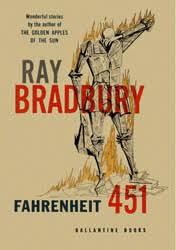
Retro Book Reviews: Fahrenheit 451

Paper burns at 451 Fahrenheit, or so the legend goes… Regarded by many of Ray Bradbury’s finest work Fahrenheit 451 remains as prescient today as it was when it was first written back in the 1950’s. It sits within the cannon of Dystopian classics like ‘Brave New World‘, ‘We‘ and ‘1984‘ as both a terrifying vision of the future and a warning to the present. But unlike the other three, I have just mentioned, ‘Fahrenheit 451’  has a surprisingly positive message about the human spirit. In rereading it with a view to this blog, (and because it has always been among my favourite novels), I was struck, as ever, by this one passage.

“Stuff your eyes with wonder. Live as if you’d drop dead in ten seconds. see the world. It’s more fantastic than any dream made or paid for in factories. Ask no guarantees, ask for no security, there never was such an animal. And if there were, it would be related to the great sloth which hangs upside down in a tree all day every day, sleeping its life away. To hell with that. Shake the tree and knock the great sloth down on his ass.”

― Ray Bradbury, Fahrenheit 451

As a guide to living your life, you can’t go far wrong with those words. Though more aspire to them than ever succeeded in following them I am sure, myself included. If it seems a message out of place in a dystopian novel, that’s because it would in any other, but ‘Fahrenheit 451‘ is a strange fish in many regards. It is also more prescient than it’s bedfellows from Orwell and Huxley.  Fahrenheit world is one where the intellectual is held in low regard.

download (5)

If you have read other ‘retro’ book reviews I have done, you will be aware I try to treat them as freshly published novels, to see how they stack up against their modern counterparts. If Bradbury was releasing this today there would need to be very little, if anything, changed within the text. The future the novel envisioned is one that we are only closer to living than we were in 1953 when the novel was first released. It was always a novel of the near future, it was just a near future that little bit further away than Bradbury foresaw. A glance at US politics and the prevailing ethos of the nation is all it takes to see the parallels between the world as it is, and the world of ‘Fahrenheit 451‘. The intellectual, the scientist, the economist, the academic, in general, is increasingly disparaged. Science as a whole has become a thing to denigrate. Just look at the rhetoric on climate change, or the way in which science budgets are being cut, or the way the Liberal ‘elite’ were portrayed as remote ‘intelligentsia’ in the last US election, castigated not just by the right but by large portions of the traditional left as the shift to popularism held sway. Intellectual has become a dirty word in political circles. All of which is echoed in ‘Fahrenheit‘ world of firemen and book burnings.

The rise of social media and screen life has become ever more prevalent. We may not sit in a single media room in our houses, surrounded on all sides by screens that push the latest soap opera upon us as Guy’s wife Mildred does in ‘Fahrenheit’. Instead, we carry our screens with us everywhere, engaging in the banal, and contributing to it. Pictures of our food, selfies, Twitter, Facebook, Instagram, flood our collective minds. We are all constantly connected to the outpourings of the global zeitgeist of popular culture while becoming ever more disconnected from our neighbours and relationships beyond the screen. Anti-depressants are handed out like candy, meditation of the mind, by popular prescription. Another echo from within the novel as Mildred takes happy pills when ever a conversation gets her down. We may not have firemen to burn our books but to quote Bradbury once more…

images (5)

And, that we have, in. many ways, there has been a steady, but an increasing decline in the reading of books over the last several decades. As this article in the Atlantic explains.

Bradbury’s vision is as much a vision of a near future now as it was then. It speaks the same warnings it ever did. Warnings of the death of the intellectual liberalism, and its replacement with a populist autocracy. The context may be different, but the parallels with the current political climate are there all the same. Indeed there are so many echoes it is at times hard to believe this is a novel from the fifties, not one that has slipped off the word processor in the last year or so.

Yet as I said when I began, the message of ‘Fahrenheit 451‘  is surprisingly uplifting for a dystopia. Unlike ‘1984’ for example, the protagonist does not end up accepting the status quo, just another cog in the machine ground down by the system. Instead, it ends with Guy joining the strange resistance group who have set themselves the task of saving books by memorising them. It’s a message that says, ‘We will not be beaten, we know this day will pass and a new day will come,’ Which is perhaps a message to us all when we look on despairingly at the current state of the world.

Posted in dystopia, reads, retro book reviews, sci-fi | Tagged , , , | 1 Comment

The Rare Unsigned Copy: and other mistakes

“You don’t really want one of the signed copies, what you really want is one of those rare unsigned copies.”

Laughter echoed around the bar at the Blackpool landlords amusing quip… Possibly because this was one of the funniest things anyone said the whole weekend. The noticeable exception to the laughing voices of many lifelong friends was my own. Not that I harboured any great resentment at being the butt of that particular joke. I am more than capable of laughing at myself. I have also been known to throw the occasional harsh one-line observation around. As my dad, a dour Yorkshireman to his core, is often fond of saying, if you can’t take it, you shouldn’t give it out… Equally, I was in fairness, as amused as anyone else. As one line observations go, it was a sharp, poignant and amusing one for sure. Far more, I suspect, than the landlord in question knew.

All this took place at the annual gathering of itinerant souls known as ‘Adamscon’. A gaming weekend that I and a few of my closest friends attend in February each year in a small hotel in Blackpool. It was once known as ‘Hayescon’, before Mark Adams who organised it with me every year, realised I had stopped doing any of the actual organising five years before. So back in 2011, its name changed, and it has been ‘Adamscon’ ever since. It remains one of the most entertaining weekends of the year, and a good time spent with friends I see less than often enough…

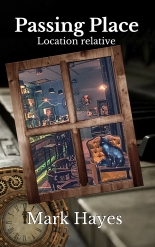
The rare unsigned copies in question were copies of ‘Passing Place‘ my second novel. It had been released a few months earlier, and several of those present in the bar room had requested signed copies from me on the release of the book. Indeed between them and others, I had worked my way through two large shipments of authors copies. Which to my mind of course raised the question,

Why would any of you actually want a signed copy from me anyway?

It was this observation that led to the Landlords quip, just after another friend had bemoaned the somewhat impersonal nature of the message I wrote in his copy. (Actually, it had been one of thirty books I was signing in my living room at midnight, in order to post them out in the morning. I had ceased coherent thinking by that point, or I would have written something more personal to the friend in question. But, as I eluded, I still found the idea of signing copies of my novel a bit bizarre.  I still do. I have lots of signed books. Ones I have gathered over the years from the likes of Terry Pratchett and Douglas Adams. Some signed with a great deal of flourish like the one below, but people asking for sign copies of my own witterings still seem mildly absurd…

signed coipy of reaperman (3)

As I said, I did not laugh and was alone in the bar room in not doing so, but mainly this was because I realised just how right the Landlord was. To my knowledge at that time, the ‘rare unsigned copy‘ in question belonged to a gentleman called Frank de Vocht. I know this because he was kind enough to write a fabulous review of the novel (see below). I also knew this because I had sold exactly one print copy through Amazon at the time…

Format: Paperback Verified Purchase

This book is an (unexpected) gem as far as I am concerned. I read the writer’s first book as well, which was also an enjoyable read, but this one fitted a lot better with the genre I normally read. It’s a very interesting mixture of fantasy, horror, a doorman with a past, a club with a forest attached, an engaging personal journey…all mixed with a bit of suspense.
…oh, and there is a cat. An odd one…
In summary, it combines many different things with a story that goes nowhere and everywhere, and I will be waiting impatiently for the sequel….


Like most self-published authors, E-books are where I get the majority of my sales. I go to the effort of setting up a paperback version of the novel because some people, my mum, for example, don’t like Ebooks. Also because frankly, I like to have at least one copy of my novel I can hold in my hand. It feels more real that way. It seems odd to me to say you have published a book if it is only in pixel form… I don’t say that out of any disrespect to those who only publish in the virtual form, I just like bits of paper with ink on them…

In fairness I am not alone, a lot of people just like to have paper copies. However, the cost is prohibitive, print on demand books are a little more expensive than the average new release paperback, and never get reduced in price. Unlike trade paperbacks, they don’t turn up in ASDA on the three books for a fiver stand. So while you might order author copies to sell at fairs and send out to people, copies bought through Amazon are generally a rarer commodity. Even more so when the majority of those who are likely to buy the novel in paperback ask you for a signed copy, rather than buy one through Amazon. Where in there resides a problem…

Here then is the point of this post, beyond an amusing anecdote involving me being the butt of a landlords joke. Signed copies are a lovely idea. I doubt there is a single author, self-published or otherwise, who doesn’t always feel pleased when someone asked for a signed copy of their latest novel. So we all happily will sign a few copies for people who ask. But in the cold light of the day what we are doing is kicking ourselves where it hurts the most, because, in the wider scope of things, we are hurting our ability to sell books by doing so. Ironic I know, but here is why…

By sending out signed copies on request, and a lot of signed copies at that, I lost a lot of Amazon sales on release day and the week or so that followed. Yes, I sold copies of the novel and was more than happy to do so. Indeed, I was gratified that some many readers expressed such interest. But it had a definite impact on Amazon sales figures and prevented the novel rating highly in the first week or so in its genre. To understand why that was a problem, you need to understand how Amazon sales can work both for and against you as a self-publisher…

To understand why that was a problem, you need to understand how Amazon sales can work both for and against you as a self-publisher. The way Amazon markets books internally has everything to do with rankings. The higher you rank in your genre, the more likely they are to recommend you book. As an experiment pick up your Kindle and search for books in your favourite category, ‘Time travel sci-fi’ for example…. Go on I’ll wait for you a moment…

Go on I’ll wait for you a moment…

See how it came back with the top 100 books in that category… that the top 100 by sales figures, nothing else. It’s not the top 100 ratings or most positive reviews, it is pure and simple on sales, which makes sense if you’re a multinational trying to make money selling books. People have bought this before, so more people are likely to buy it in the future… And yes, you can alter the search parameters, but the default is the number of sales every time, and people don’t normally change the defaults setting. The best way to find your audience through Amazon is, therefore, to sell books on Amazon, pure and simple. So selling your books direct, having scribbled a nice heart-warming message on the blank page at the front, is cutting your own throat in many ways.

Then there is the second problem, the review problem. As I have discussed before Amazon reviews are important to you as an author. Amazon can, and will, publish reviews from people who didn’t actually buy their copy on Amazon. None verified purchase reviews unlike Franks review above, are however far more likely to be rejected by Amazon. Amazon will almost certainly reject none verified reviews unless you have a lot of verified ones. They will use reasons, such as it is a review someone on your friends’ list, by another author, etc. While they would protest otherwise, one suspects they will reject as many as possible. So though nice people with signed copies may struggle to leave a review.

review-picture

Finally, the nice people with signed copies are less likely to leave a review anyway. The majority of reviews are left because people get a nice email from Amazon asking them to review a product they purchased. ( if you have bought anything from Amazon ever you will have received more than your fair share of these.) Also at the end of a kindle book the leave, a review message pops up to remind you as well. So signed copies will also inevitably lead to fewer reviews.

So there you go, a little wisdom for the budding author there, don’t do signed copies ( except for your mum perhaps, and the proofreaders/editors  who I always send a copy to as a thank you …) Say thank you, apologise that your unable to do so, and promise to sign their Amazon purchased copies if they happen to bring it with them to the barroom of the hotel in Blackpool in the middle of a rainswept February…

Of course, I am more than likely to forget this insight when I release my next novel, and lovely people ask for signed copies, but there you go, I never said I am good at taking my own advice …

Adios

Mark

Other witterings of the subject of self-publishing…


Posted in humour, opinion, Passing Place, publication, self-publishing, Uncategorized | Tagged , , , | Leave a comment

The Temple: The complete Lovecraft #21

“He is calling! He is calling!” 

The question of whom is doing the calling above, well that’s one open to interpretation, but whoever it may be they reside in an ancient temple submerges deep below the waves of the Atlantic…  Of course, this being an H. P. Lovecraft tale, and involving a ‘calling’ from one that dwells in a temple deep below the waves, I would invite you to draw your own conclusions… as Lovecraft neglects to clarify what dwells within the temple, leaving it instead to the fevered imagination of his readers, whom with the hindsight of the modern eye can easily make the leap to Howard’s most famous creation, old squid face himself…

The_Temple_-_Lovecraftian_Concept_Art_by_Mihail_Bila

This though is a tale written in 1920, for all this is the 21st post in this blog series, we are still in the early days of H.P.’s career. The foundations of his mythology were still only just being laid, it was still some six years until Lovecraft penned ‘The Call of Cthulhu‘. In all likelihood, Big C had not even begun to form as an idea in the darker recesses of Howard’s mind. At most this is a tale based upon the germ of an idea, the thing in the temple may have been many things, but Cthulhu it wasn’t, not yet at any rate. Indeed one common theory is that the temple is part of R’lyeh, the city in ‘The Shadow over Innsmouth‘, though that tale was not written until the back end of 1931, eleven years later, so one would suspect this is an even greater stretch of logic…

The tale itself tells of the last few weeks in the life of Karl Heinrich Graf von Altberg-Ehrenstein, the somewhat brutal, cruel and arrogant commander of an Imperial German Navy U-Boat in the first world war. He is a man with little to recommend him, so sympathy with the main protagonist is not easy to gain, but then that can be said for many of Lovecraft’s characters. The narrative opens with the sinking a British Frigate, and von Altberg ordering his crew to then sink the British lifeboats against the generally accepted rules of conduct for the war at sea. As I say, the commander is far from a pleasant man, but he is also the architect of his own demise in this regard, for it is this cruel act that sets in motion a chain of events that leave the U-Boat at the bottom of the ocean, his crew all dead, and the strange lights of the temple of the title calling to him.

There is a lot going on in this tale, which is one of the criticisms thrown at it. Unlike most of Lovecraft’s fiction, which tends to focus on a primary aspect of a tale, and focus events around it, ‘The Temple‘ wanders down many supernatural pathways. The strange piece of ivory found on a body clinging to the side of the U-boat after the sinking of the frigate. Dead sailors swimming around the sub. The craft itself get caught in strange currents dragging it southwards, losing power and all control as the craft sinks slowly downwards, while the crew mutinies (before being summarily executed by von Altberg.) Indeed most of the crew are eventually killed by their captain for one reason or another after they suffer from nightmares, strange visions, strange noises and other horrors. There is, as i say, a lot going on in this story and it doesn’t all quite gel as much as the writer wished. All the while von Altberg witnesses his junior officer Lieutenant Klenze, the one who took the strangely carved ivory figurine, descend into madness as the U-boat itself descends to the ocean floor.

It is Klenze who issues those ominous words I started with, “He is calling, he is calling.” Just before von Altberg helps the Lieutenant into an airlock, giving a final ‘mercy’ to the madman, or perhaps just to finally shut him up… All before the currents take the U-boat to its final destination, a ruined city on the ocean floor which von Altberg assumes (wrongly one would surmise, this being a Lovecraft’s lost city of a cyclopean nature) to be the fabled Atlantis, in which there lays a temple from which strange lights can be seen through the portholes.  Finally, the tale ends with von Altberg walking out of the airlock himself in his diving suit, and walking towards the temple, the strange sounds and hallucinations driving him to the end of the ‘iron Germanic will‘  of which he is so proud. But not before he places his logs in an airtight bottle and releases them to the ocean currents.

I should declare some history with this tale, it is one of my favourites, as much for its flaws as anything. The criticisms of the tale, its lack of coherence, the many elements that swamp the reader, I agree with. But I take the narrative to be written by a narrator on the edge of sanity. While Klenze falls to madness before von Altberg, Altberg is not far behind. Indeed, one interpretation of the tale which I have always held to personally is that Klenze and Von Altberg are one in the same. Von Altberg is watching himself go mad, and observing it dispassionately by believing that it is happening to his junior officer… While that interpretation is perhaps a stretch beyond what Lovecraft intended, (and may have something to do with being a member of the ‘Fight Club’ generation) it does make the tale hang together more and answers some of the criticisms of the story.

wallup.net

While I am fond of this story, however, I can also see the flaws so it scores only four tentacles out of six, but I recommend it all the same. There is an ominous to it, it speaks of more to come, it speaks of old gods in lost cities and the madness in the dark which could consume us all. While the ideas at its core are far from fully formed, it lays the foundations for the mythos and the horrors to come. This is Lovecraft feeling his way around the edges of everything that makes his writings what they are, and finally, it hints at what is to come, who is to come, what lays beneath the waves, the eater of minds, the edges of sanity and the void below.

‘He is coming… he is coming!’ indeed…

4out 6

Further Lovecraftian witterings 

Posted in Lovecraft, mythos, retro book reviews, rites | Tagged , , , | 3 Comments

Self-publishing: A Guidebook for the Tourist#7: The ‘Free’ book experience

Back in March, I published a post about ‘free’ books. It was rather a long one and went into a lot of detail on the subject and my opinion such as it is. To quote myself (because no one else is ever likely to go around quoting me.)

If you have written your first novel and are thinking of making it free, even just free on a kindle countdown type deal… STOP NOW… Seriously, don’t do it, you’re making a grave error.

Safe to say I have opinions on the subject. You can read the full post here if you haven’t read it previously. This post covers the same ground to an extent, but from an alternative perspective. This is because I recently put ‘Cider Lane‘ on a free promotion for a week. Yes, I am aware that contradicts my own advice… but there were reasons and the circumstances are different to the context of the quote above.

With this in mind, I thought it might be helpful to share the details of the experience here. So while I may be repeating myself a little on the subject, for which I apologise, I would like to make it clear my views on ‘Free’ have not changed. This post is not so much about making the choice to give away your hard work, but the implications and results of doing so.

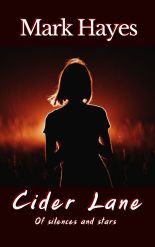
A little perspective first, however. ‘Cider Lane: Of Silences and Stars‘ was my first published novel, and it came out two years ago. Which is to say, I sent it out to the world and ran for cover. Publishing your first novel is a mildly terrifying experience…

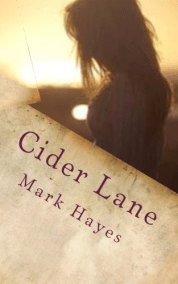
cider lane new cover

Is it really ready, does in need one least edit, one last proofread, will anyone read it, will anyone care, will I look like an illiterate incompetent wazzock who should never again be allowed within one hundred feet of a word processor…

Then to further add to the terror, some people bought it, read it and occasionally even left a review behind. People expressed an opinion, something I actually invited people to do, while being terrified of what those opinions might be… But on the whole, despite my basic background paranoia, and utter conviction I was being humoured by most people, they seemed to enjoy it. More people bought it…

Then, as is the way of these things, sales started to drop off…

This came as little surprise, as it would to anyone else, I suspect. No matter how much of your own hubris you inhale. With a few notable exceptions, the first month of sales of a new novel will always be largest. You may get a bit of a surge if you release a new book and it is successful., but for 99% of indie writers, the first month is the one where you get the majority of your sales. It is when family, friends and your extended fanbase are likely to buy a copy. Such sales are a lot easier to get than sales to people who have never heard of you. Indeed, a wise self-publicist will try and optimise these sales, build up pre-release hype and get the book as high in sales charts as possible, because that’s how you get noticed beyond your fan base.  (Interestingly this is also the basis of the biggest mistake I made on the release of ‘Passing Place’ but I will talk about that another time.)

‘Cider Lane’ has been successful sales wise, in my own terms, but after a minor surge with the release of ‘Passing Place‘ it has settled down to the odd sale once in a while. The market for it has fallen away and even reducing the price of the E-book makes no real impact. As it stands it is listed for £0.99 and it’s not going to start selling a great many copies no matter how hard I push. It has, to put it simply, had it’s run. An odd sale now and again, while it may please me, is unlikely to make much of an impact on the rest of the world.

So, why keep it listed on KU, after all, I have said before listing it on KU is pointless unless you use the promotion tools? Well, the simple answer is because I forgot to unlist it. Also, truth be told, because it actually makes me slightly more as a KU book, and it still gets the odd KU sale… I can’t, however, put it on a promotional sale, (0.99 is as low as it goes). The only option, therefore, is to put it out on a free to buy promotion. Which on principle I abhor.

However, I am not losing much putting it up on a free promotion. Yes, a few people may pick up a free copy rather than buy it, but that only really means anything if those few people were going to buy a copy anyway. It is not even as if I make anything on the sales. (0.17 per book is not going to buy me a retirement home in the Algarve) Ultimately, readers mean more to me than money at the end of the day. After 24 months, its safe to say everyone I could tempt to buy a copy has bought a copy, and if I could shift fifty more copies on a Free book giveaway what do I actually lose?

(£8.50, if you’re interested in the maths, or the price of a round of drinks for me and my girlfriend on a Friday night in Leeds, and quite a lot less than I make in my day job.)

Fifty free book sales seemed a reasonable target, gettable but a nice number, and even with all my reservations on Free books, the upside of gaining potentially fifty new readers was enough for me take the plunge.  It was also a way to test my own theories of how best to approach a sale, and if I could hook readers with one book, well that’s certainly to my benefit as a writer. If I was going to do it, however, I was going to do it right.

Right means some concerted advertising on social media, Facebook posts on book groups, several tweets each day, posting on Goodreads, posting on my blog so my mailing list was informed etc. A certain portion of each day (about an hour as it turned out) devoted to getting the message out and letting people know a couple of days in advance.  And, importantly, making use of my network of other authors etc to help get the message out, which is to say, I asked people to share a post and give likes etc. All the things I listed I the previous post on the subject in fact. Which certainly worked better than I expected.

I don’t normally go into details about book sales, but my target of fifty ‘sales’ over the five days of the offer proved to be wildly out. In the first day, thanks in part to Amazon’s approach of highlighting promotional offers, I sold 133. By the end of the five days, it was just the other side of 250. Five times my conservative target. I was in short very pleased and still am. If these figures seem small it is important to remember this is a book that has been out for two years and has already sold fairly well. None of these ‘sales’ I suspect were to people who had even heard of me, or ‘Cider Lane‘ before the promotion started. These are all cold sales, the hardest ones to get.

In terms of ‘sales’, this makes for the best month the book has had since its release. Even if only a fraction of the buyers read the book (again see my earlier post on ‘free’) its a lot of new readers, but let’s be optimistic and say everyone who took advantage of the free offer will read their newly purchased Ebook, or at the very least start to read it. I could be looking at a nice boost to sales of ‘Passing Place‘ in the next couple of months, even though the two novels are wildly different both in subject and genre. I could also be looking at a few reviews, (ever the optimist, as they have failed to materialise so far but one lives in hope).

Most importantly for me personally, however, is ‘Cider Lane’ is getting read by a whole bunch of people it wouldn’t have reached otherwise. All my reservations on ‘free’ books remain. If ‘Cider Lane’ was not 24 months old I wouldn’t have done it.

What then have we learned through this experience, well I guess people like a bargain, but people like a freebie more. Whether they value your work when they get it for nothing is another matter. Hopefully, a few will, hopefully, some will go one to read ‘Passing Place‘, the forthcoming Hannibal Smyth novel A Spider in the Eye and other books I write over the years. Also, if people have read and enjoyed it they may suggest it to other people, which in turn will sell a few more copies of ‘Cider Lane’.  There has been a noticeable upswing in sales since the free offer, not many, but in comparison to the last month before the ‘free’ sale, it is a definite improvement, so some have recommended it to others.

Has the ‘free’ offer been a success? Well, time will tell on that score. It is not an experiment I intend to repeat, the law of diminishing returns being what it is a second free sale would be less successful one suspects.  My reservations on the use of free promotions remain, but if your novel has been out a long time and has ground to a halt with sales, and importantly you have other books out as well, it is certainly worth considering.

There is a distinct lack of quotes in this post so I will leave you with a favourite of no relevance at all….

writers-quotes-story-writing-34823010-500-257


adios for now

Mark


Links to my own social media, by all means, connect with me on them.

FACEBOOK    TWITTER   GOODREADS

Other posts on writing and self-publishing are collected here:

https://markhayesblog.com/publishing-and-writing/

Posted in publication, self-publishing, writes, writing | Tagged , | 3 Comments

The Happy Thursday Good News Slot #1

We are bombarded with bad news. In these latter days more than ever. 24 Hour news channels that seldom have anything but doom-laden bulletining’s of scandalous regard. War, Politics, terrorism, the celebrity death race, more war, scandal’s, police killings, mass shootings, the rise of the far right, natural disasters, sex scandals, rapists, paedophiles, global warming, global warming deniers, Brexit, Syria, Trump, Russian aggression, North Korea, racism , homophobia, sexism and lastly good old fashioned war because there is always more than one of them….. 24 hour a day, day in day out, week in week out. Year after year. A never-ending treadmill of the worst of humanity paraded out before you on your TV screen, through your radio, through social media and trending on Twitter, all the bad news, all day every day…

And I am as bad as anyone else, I add to hurricane ‘Betty Bad News’ with the occasional post on politics or mini-rant on Facebook and elsewhere. I could be writing a post now about everything I perceive as wrong with Trumps Administration, With Mays deal with the DUP, The root causes of the Glenfield fire, and pile opinion like oil upon the bad news waters of the world. After all, that’s what everyone else seems to do. I may think there is too much bad news out there, but if I start writing blog posts about the bad news all I am doing, in the end, is adding to the darkness…  So, to put politeness aside for one moment, screw that…

images (2)

Instead, here is good news, happy news, news that will hopefully bring a smile to your face, or return some semblance of hope at the very least. As with all attempts at a regular ‘Good News’ slot that isn’t linked to the literal translation of the Latin word Gospel, it is no doubt doomed to failure. There is the famous allegory of the ‘Good News Show’ (most probably an urban myth, but one I have a fondness for). A station manager sick of nothing but Bad News made a show that would only give out good news, many applauded the idea, no one watched it, the sponsors pulled out and so it lasted only a couple of weeks. Humanity it seems prefers its news to be of the bad, preferably terrible kind.

I have a couple of motivations for doing this all the same. The first being that it’s nice to give out some good news, and the second being that if I do this every week, I will have to go and find some good news every week. Which regarding my occasional battles with depression can only be a good thing. Imagine what the world could be like if we all sought out some good news to tell people about each week…

Well yes, okay, the world would still be an unmitigated mess, but it would be a start at least.

Without further ado then, or at least no more meandering wittering on, here is this week good news bulletin.

The Giant Panda. So long the butt of erectile dysfunction jokes. Is no longer an endangered species… Yes, Mr and Mrs Giant Panda have been getting it on, enjoying relations of a charnel kind, have indeed, been dancing the naked tango in the among the bamboo, getting jiggy with it, enjoying each other company in intimate ways, having, not to put too fine a word on it SEX… Yes, this famously fringed species has thawed out enough to produce some babies, quite a lot of babies. So many that the symbol of the WWF (the wildlife charity not the American wrestlers) may have to change from the old black and white teddy bear.

giant-panda-shutterstock_86500690

This is, in my tinted view at least, good news for the planet as well as the pandas. In order to save the Giant Panda, it has taken the work of conservationists, governments, and ordinary people giving a crap, working together to bring back a species that has been on the brink for the entirely of my forty-seven years on this planet. Breeding pairs in the wild were almost unheard of in the seventies, though not bothering to breed pairs were less of a problem to find.
So well renowned was the issue of panda mating habits (or the lack of) that watching Giant Panda ‘not’ having sex in zoo’s around the world became a bit of a public obsession. Not that long ago due in one attempt to get the London Zoo female panda Char Char ‘up the duff’ to used a London colloquium, was the subject of a regular slot on Radio 4’s drive time show PM. The laboriously named, ‘The Char char the London zoo panda, pregnant or not pregnant update’ slot was broadcast at about 17.35 each day.  Where in the name of the slot was read out followed by a ‘pregnant’ pause before the announcer would say “not pregnant,” pause again and then conclude with “That was  ‘The Char char the London zoo panda, pregnant or not pregnant update’.

(Note for Americans and other lifeforms alien or otherwise – No, I didn’t make that bit up, that really was a BBC Radio 4 drivetime slot on the PM program, it ran for about seven months. It was considered to be vaguely humorous and not in any way was some weird, quaint piece of English eccentricity. Radios 4 is considered by many to be the finest radio station in the world, mostly by people who like updates about the pregnancy or lack thereof, of London Zoo giant panda’s, and to listen to the Archers…)

But back to what I was saying, good news, the giant panda is no longer an endangered species, merely a vulnerable one… both thanks to, and equally according to, the WWF

https://www.worldwildlife.org/stories/giant-panda-no-longer-endangered

Okay so Vulnerable is not a word which inspires great confidence in regards to species, but all the same, it’s good news for the Giant Panda, even if it will be less of a boon to afternoon news slots on Radio 4

That news of the pandas’ retreat from the brink broke in this article in September last year, and it took me this long to be aware of it says much about the news media, and indeed new media’s attitude to good news. …

Adios for now from the good news desk….

( oh and Manatee are apparently no longer on the endangered list either, so that’s nice too….)

http://edition.cnn.com/2017/03/31/us/florida-manatee-threatened-species/index.html

Posted in goodnews, opinion, rights | Tagged , , | 2 Comments

Misquoting Kipling and other musings…

A question that occurred to me today while working on the final draft of ‘A Spider in the Eye’ a Hannibal Smyth adventure, which I thought I would share. It’s a question of integrity, writers and indeed the integrity of that which we ‘borrow’. Like most authors, I have a propensity to use a good quote in my writing every now and again. Not least, one suspects, because I equally have a tendency to quote the words of others in conversation. In particular the words of other, far more accomplished, and far better-known authors.

It’s not rocket science after all, ‘ to be a writer one needs two things, to write a lot, and to read a lot.’  So one is by one’s vocation more likely than most to drop the odd quote into a conversation. As I just did btw, as ‘to be a writer one needs two things’ is a direct quote from that great sage of the written word Stephen King.

Writers read a lot, and we are like magpies, we pick up shiny things and return them to our nests. Our shiny things just happen to be quotes as often as not. It’s a rare day indeed that I don’t find a reason to reference a Terry Pratchett, or a Douglas Adams, or some other writer when I am ‘talking toot over a pint of ‘large’’ (Robert Rankin Reference for those taking notes). Quoting comes naturally to the writer, and a writer collects them like a waitress collects tips. Sticking them into a pocket to count up later. Even if we don’t always admit we are quoting, or even realise we’re doing so when a turn of phrase or an idea occurs to us, but for the most part we are fairly honest collectors rather than outright thieves. However, on occasion, there is a temptation to pass off something as gold which is gilt at best, because on occasion there may not be a quote where you actually need it to be…

Hence the question that occurred to me, when I came across these couple of lines in my earlier draft of ‘A Spider in the Eye’…

What was it that old hack Kipling said of Calcutta? ‘A garden of Imperial excess. A garden walled with squalor.’ Ever a man who sought to be ‘of the people’ was old Rudyard.

In case you’re in any doubt, and if I have made a half descent job of the gilt you hopefully are, Kipling did not say that at all. Indeed if he ever had anything to say about Calcutta, it would not have been in reference to the Calcutta I have him referring to. This Calcutta is almost entirely fictional. A Calcutta in the strange and alterative modernity of Hannibal Smyth’s world. A world of Airships, Steam powered camels, Clockwork Queens and in which the setting of the sun over the British Empires was avoided by liberal use of gaslight. In short, a world that Kipling never saw. Which is to say the quote is entirely made up, as it is apt for the use I am making of it and it’s the kind of thing Kipling might have said in the circumstances.

And there in lays my question… Have I, and for that matter other writers, a right to put words into the mouths ‘or pens’ of others?

Of course, the question and its answer are redundant, because writers of fiction do it all the time. And I will add an end-note in the book along the lines of ‘no he didn’t I made this up’ which will sit in between the more humorous end notes that already exist. It si no different in truth than putting the words into the mouth of sub-leftenient Vladimir Putin (a rather obnoxious, pompous ass of a  Russian navel officer obsessed with the creases in his uniform,  his own manliness and being taken seriously, in Hannibal’s world, it may not be biting satire, but I try and make it nibbling at the very least…).  Or indeed putting words into the mouths of Professor Jobs and Doctor Gates my two competeating belligerent and entirely ‘mad’ scientists fighting over the rights for ‘eye’ technology. “Bloody Jobs is obsessed, ‘eye’ this ‘eye that, eye , eye , eye, its an ocular fetish it tell you’ as Gate’s complains bitterly to Hannibal at one point.

A novelist is, when push comes to shove, one who makes up stuff and write it down when all is said and done. Why should the same not apply to quotes as it does to parody….

Quotes however are different, when we use them we should use them with care. We are stealing wisdom and selling it on the black market, such is not a thing to be done lightly. And who reads end note properly anyway. Well apart form me that is, I am mildly obsessive about notations, but I have read Prattchet for years and there is a joy in a good footnote…

EBooks are a problem here you see. In a paper book you can put down foot notes, that little ‘not he didn’t I made this us’ is at least quickly apparent. But eBooks will not format foot notes properly.

it can be done, but it is a level of coding beyond the self-publisher as a rule. I work in IT, and know my way around software and I have struggled to make this work, you have to go right down into the code of the book itself, rather than just translate a word file to a mobi etc. and its different in every format. It takes a lot of time and a lot of effort and in the end it is a lot easier to just add them as end notes.

So, where does this get us, well no where really, this post was never more than a collection of vague thoughts on the question after all. It is not like there are any real rules here. Unless you are selling a whole lot of books and the estate of ‘Kipling’ decides to sue you for defamation, or misrepresentation (somewhat unlikely all the same) It really comes down to your individual integrity and opinion I guess.  As a self-published author I do not have any legal team pointing out these issues to me, and frankly I suspect the heirs of Kipling have better things to do with their time. If someone picks up on a miss-quote I make and thinks it genuine then does it really matter when it’s a miss-quote of a long dead writer? God knows there are enough miss-quotes about on the internet which can do far more harm in the era of ‘Fake News’ some politicians would have you believe we are living in. It’s not like anyone reading a novel like ‘A spider in the Eye’ is doing so without a certain degree of suspended disbelief to start with.

At the end of the day I will continue to make up the odd quote when it suits me. Oh I am very careful when I do so, and almost every quote that slips into a book like ‘Passing Place’ is entirely genuine. But then ‘Passing Place’ for all it is a fantasy, is rooted in the real world… or reflections of it at least. ‘A Spider in the Eye’ is rooted in its own alterative modernity, so the odd historical figure may be found saying things they never actually said. After all why would retired submariner and second civil war vet Johnny Kennedy say anything about a Berlin that never had a wall down the middle of it, even to his second wife Norma Gene. But if I do imagination up a quote I try at least to make it something they might have said all the same, or frankly why use them at all. There in perhaps lay the truth of this question. If your going to put words in the mouths of others, at least try to make it something they could have said.

That is after all, probably all the majority of a writers predecessors would want, they were all Magpies as well after all…

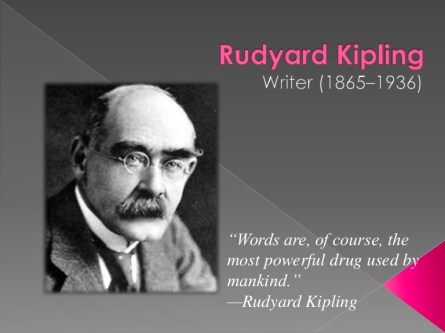
But I will leave you with this real and genuine quote of Kipling, which I have always been rather fond of …

rudyardkipling-150913202246-lva1-app6891-thumbnail-4


Posted in opinion, self-publishing, steampunk, writes, writing | Tagged , , , | 5 Comments