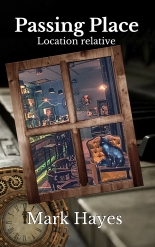
‘Passing Place’ 99p-99c Sale

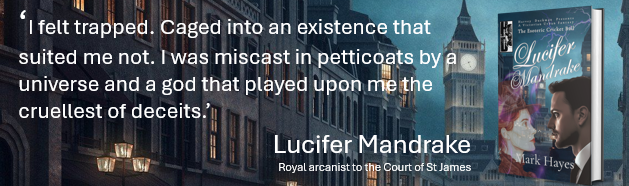
Step in from the cold, through the saloon door of the strangest bar in creation. A place where causality is just a set of rules and the rules can be bent. Where no one knows your name, but everyone has a story to tell. Where the answers to that most impossible of questions may lay, “Why?” In a novel that goes everywhere and nowhere, and is about the journey in-between. Welcome to Esqwith’s Piano Bar and Grill. A ‘Passing Place.’ A place off to one side of reality, where your troubles can just slip on by. An impossible place that bridges dimensions and time itself.

cellar 2 sale

Sonny, the doorman, drinks his brandy and tells a story of death row. A green haired girl sits in her tree and speaks of the wolf of winter. The Weaver of tears, cries her diamonds, and the Gunslinger speaks of death riding in on desert winds. The Greyman tells of his soulless world, before dancing with his mop once more. While in the kitchen the chef bends causality to make the greatest sandwich in the world, and the devil behind the bar tells tall tales while he pours you a drink. A place where stories are told and retold a new, and a place where something lurks unseen, something from the void, something dangerous, something hungry, something red…

facein the dark 2 sale

“The Greyhound pulled away into the thunderous summer storm, leaving in its wake a dishevelled, world-weary figure in the dark, deserted bus station.”

Richard is a man come to an end. Grieving after the death of his wife he has travelled the back roads of America in the search for an answer to that most impossible of questions. Why? Looking for that answer in all the wrong place. In a Hicksville town in the western desert, he answers a want ad for a piano player and finds himself in the Passing Place, an impossible bar, where the patrons all have stories to tell…

Fantasy and sci-fiction collide with horror and the supernatural in a world where reality is a matter of perception…

tree sale2


Format: Paperback Verified Purchase

This book is an (unexpected) gem as far as I am concerned. I read the writer’s first book as well, which was also an enjoyable read, but this one fitted a lot better with the genre I normally read. It’s a very interesting mixture of fantasy, horror, a doorman with a past, a club with a forest attached, an engaging personal journey…all mixed with a bit of suspense.
…oh, and there is a cat. An odd one…
In summary, it combines many different things with a story that goes nowhere and everywhere, and I will be waiting impatiently for the sequel….


For free sample chapters click on the box below….

Posted in books, Passing Place, publication, reads, sci-fi, writes | Tagged , , , , , , , , , , | 1 Comment

The Quest of Iranon: The Complete Lovecraft#25

Some tales are more interesting in the abstract than in the telling. Sad though that may be, ‘The Quest of Iranon‘ is one such tale. While it’s a pleasant enough read, it does not really have anything that grips you in the way you would wish a Lovecraft tale to grip you. It’s a meander, rolling along without much impetus, to a conclusion which is just a little too predictable. Which is one of the problems that you come across with Lovecraft, He has a habit of walking a crooked path through the forest to a destination you can see long before you arrive, yet insisting he follows the path all the way, rather than cut through the trees. Often though the journey is worth it. ‘The Tree‘ for example does much the same thing, but there is a tension in ‘The Tree‘ and a feel of the impending doom-laden ending to it that carries you along the journey which is lacking in ‘The Quest of Iranon‘. This is more a meander for the sake of it, rather than with any great purpose, and when you get to the end, you wonder why you made the journey at all…

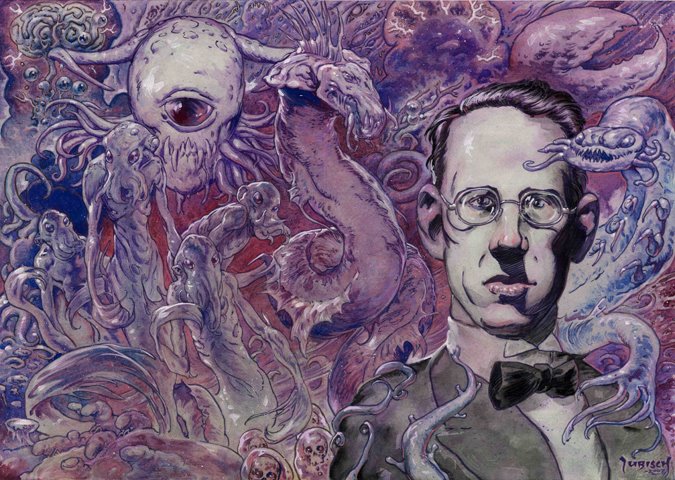
Lovecraft himself may well have thought much the same when he wrote it in early 1921. Indeed I suspect it resided in the bottom drawer of his writing desk for some time, forgotten and uncared for. Certainly, it is far from his strongest work. Much in the way ‘From Beyond‘ this feels like Lovecraft lite, and like ‘From Beyond‘ it did not find its way into print until a decade and a half later when he had achieved a modicum of fame and the appetite for his work in the pulp magazines caused him to delve into his earlier discarded manuscripts. There is, however, something about ‘The Quest of Iranon‘ that sets it apart from ‘From Beyond‘. Unlike the latter, Lovecraft was trying to do something different in this tale, indeed it was also the start of something which helps set Lovecraft apart from other pulp writers.

Through out the early works, which I have already covered, I have been making mention of the later works that refer back to them. It is a common theme, which helps link the stories with reoccurring characters and places, as well as events. Often it is the case that he mentions something in passing that later crops up in another tale or even becomes the seed for the whole of a new tale. In ‘The Quest of Iranon‘ however is the first occurrence of the reverse, with earlier tales being referred back to. For the first time here Lovecraft was mythos building, looking at the stories he has written before and referring back to them. Which may explain much about ‘The Quest of Iranon‘. It meanders around because it is a vehicle built to do so. He was making a deliberate effort to tell a story that was in aspect a travel-log of his own work. It was, in essence, an experimental piece, playing around with the idea of his tales becoming a greater whole. Turning them into a cycle of stories, rather than a series of one offs.

In some regard this is hardly surprising, Lovecraft wrote for pulp magazines with thrived on characters coming back in new stories. Lovecraft’s close friend and fellow writers Ron E Howards ‘Conan’ and ‘Kull’ stories, for example, built on worlds, histories and ideas that carried common threads. Characters that came back time and time again. Recurring stories and themes gave the characters ‘cover’ potential and drew in readers. If Lovecraft had a weakness in this regard before 1921 it was his stories were all one offs with little narrative thread to link them. His tales were unlikely to feature on the covers of the pulps and were regarded as filler by publishers. He might get his name on the cover writer’s list but it was not seen as a draw and usually, he wasn’t mentioned at all on the covers of early pulp magazines. Finding ways to tie his tales together, from a purely commercial point of view, made sense. Readers like to feel a story is part of something bigger. Which is as true today as it was then, which is the reason trilogies and long sprawling series novels like ‘A Song of Fire and Ice’ (the Game of Thrones novels the predate the tv series) and ‘The Wheel of Time’ novels are so popular. Readers like to invest in characters and worlds, and Lovecraft did not give them such investment. Each tale was separate, unique, and had to sell itself on its own merits alone…

So with ‘The Quest of Iranon‘ Lovecraft was in all likelihood looking for ways to link stories together and give his readers something more. Which is what he found as he lay some easter eggs in the text, which is what makes ‘The Quest of Iranon‘ interesting in the abstract, as a writer reading his work in the order it was written, rather than the order of publication.

By the time it was first published Lovecraft’s fan base was not only used to these little references appearing in his work and the greater thread which moved through his stories, they expected it. The greater was more than the sum of its part. the oblique references to Lormar, the land in ‘Polaris‘ and Iranon stating he had “…gazed on the marsh where Sarnath once stood,” a reference to ‘The Doom that Came to Sarnath‘, were the least of connections you would expect in his stories. But when he wrote ‘The Quest of Iranon‘  it was a new departure for Lovecraft as a writer. One that I find interesting as a fellow member of the craft, for all it is a prosaic read in of itself.

valzonline1

The story itself is a simple one about a golden haired wanderer, telling tales about his past as a prince in the great city of Aira as he travels. Tales of a city no one else has heard of, but he claims is full of wonder, which is surely a case of Lovecraft writing Lovecraft… His obsessions with lost and mythical cities run as a thread through many tales after all. In this case, the tales of Aira are ones Iranon has told so often he can not separate truth from fiction. Longing always to return, but some how never doing a great deal about it until his life long friend passes from the world of the living. The ‘Quest’ for the dreaming spires of his lost city, on which he poetically waxes constantly, leads him finally to an old shepherd in a land long fallen to ruin, and the shepherd tells him a truth, one which if you do not suspect long before it is revealed you really have not been reading closely. It is Lovecraft, the style, the verbiage the use of ideas and the way it reads. But is it just Lovecraft by rote, and much like ‘From Beyond’ you would expect something more.

As I say, what is interesting about this tale is when it was written, more than how. That it took so long to be published says much about Lovecraft’s own opinion of it. The context of the experiment it represented in his writing is far more important than the tale itself. If anything it was Lovecraft becoming Lovecraft as we know him now. The weaving of threads between stories and the gossamer links that build the web of the greater whole are what make this tale stand out. But as a read in of itself, it is disappointingly a bit below average, and when it finally became ink in the pulps it is unlikely it even raised an eyebrow.

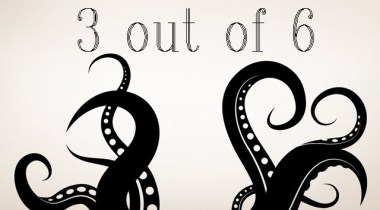
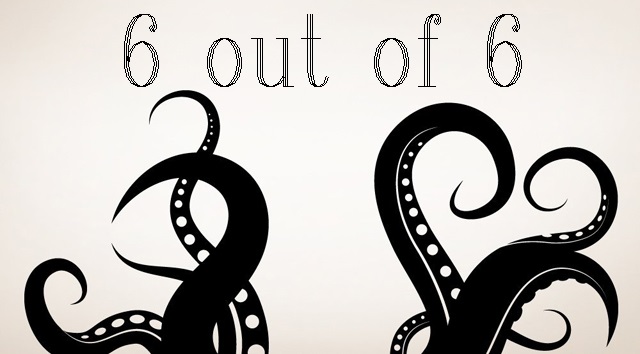
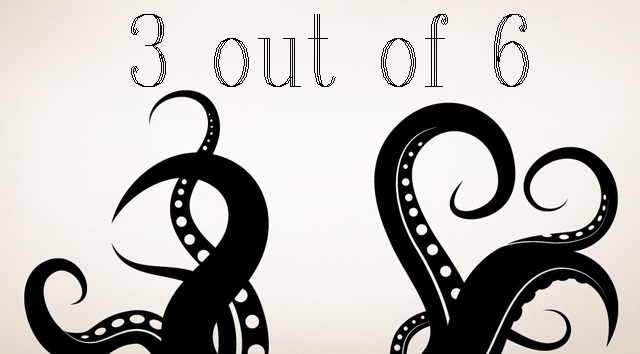
Putting that greater context on one side it rates a measly three tentacles, grasping to be part of the whole, and if I am honest I think I am generous to give it three… If however, I was rating on the tales importance it would probably be a quintet of the little suckers, this is the point Lovecraft began to craft a universe of his own making, rather than just give glimpses of the discontiguous without a greater whole. It is interesting to me that he wrote this just after ‘Nyarlathotep‘. Perhaps the masks of the faceless one guided him to a take this broader view of his tales… It would be strangely discomforting to think so…

3out 6

Further Lovecraftian witterings 

Posted in dreamlands, Lovecraft, mythos, retro book reviews, writing | Tagged , , , | Leave a comment

Physics and the Voodoo Doll…

Occasionally my dyslexic brain and the weird way it makes connections, goes off on an odd tangent and I find my self-thinking about something in a new way. New for me that is, not necessarily new because no one else has ever thought it, but new and decidedly odd all the same.

I have a passing interest in many subjects, among them physics and magic. Not the rabbit from the hat kind of magic, but the ‘real’ stuff for want of a better description. The idea of magic, and the way it has been practised by humanity, hokum though it is for the most part. These are two subjects that should not interact and have nothing in common, physics being the king of sciences ( so physicists tell me at any rate), and magic being well a made up concept to explain the unexplainable, or is that physics again…. Occasionally, in the modern world of quantum physics, you could be understood for confusing the two. A universe made up of 90% dark matter we can not actually explain or point to but we believe is there, well that’s as good description of magic as it is of physics, but what got me down this particular culdesac of thought was ‘spooky particles’  and quantum entanglement…

1cfe8-quantum2bentanglement

For those who don’t know, in quantum physics, entangled particles remain connected so that actions performed on one affect the other, even when separated by great distances. The phenomenon so riled Albert Einstein he called it “spooky action at a distance.” … Entanglement occurs when a pair of particles, such as photons, interact physically.

Meanwhile, according to a basic definition of sympathetic magic, such as, to give the perhaps most well-known example, a voodoo doll… All sympathetic magic is based on two principles: first, “likes produce likes,” or that an effect resembles it cause; and, second, that things have been in contact with each other continue to react upon one and another at a distant even after they have been severed or disconnected. The Law of Similarity, and the Law of Contagion.

So, ‘spooky particles’ behave in a manner to which you can apply the principles of sympathetic magic, and the Law of Similarity and the Law of Contagion can be said to apply to Einstein’s photons, in exactly the way they are supposed to apply to a Voodoo Doll…

download (8)

Indeed, spooky particles are not just a theory its a theory backed up by experimental proof.  Which also means, as my dyslexic brain decided when the thought occurred to me, that’s these same experiments have also proved that the laws of sympathetic magic, the laws of the Voodoo doll, do actually have some basis in the physical universe…

So anyway, I just thought I would share this odd revelation of my dyslexic brain… I am off to make voodoo dolls of Teresa May and Donald Trump … (anyone got access to their finger nail clippings or a strand or two of hair at all?)

Posted in dyslexia, humour, pointless things of wonderfulness, rites | Tagged , , , , , | 4 Comments

Harlem’s Hellfighters…

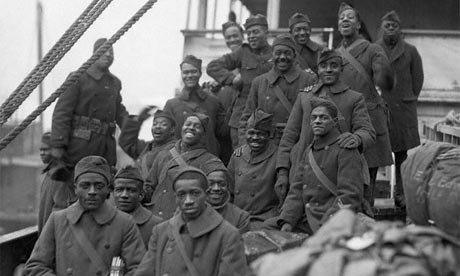
‘The Ballard of Pvt Burbanks’ a pivotal chapter in ‘Passing Place’ tells what you could call the ‘origin’ story of  Sonny Burbanks, the doorman at the very strange bar of the title. ‘Very strange’ is perhaps an understatement when describing the Esqwiths Passing Place, and the relative nature of its local, but I am not mentioning this here in order to sell books. The reason I bring it up is more prosaic, a little on the sad side, and because of events in Charlotteville Virginia at the weekend. Also, I mention it now because it’s a hundred years since the USA entered the first world war and a hundred years since the 15th New York Infantry, which was to become the 369th infantry regiment, was formed.

I came across the story of the 369th while looking around for background for Sonny’s story. research is a blessing to a writer I find, even if what you are writing is a sci-fi/fantasy tale. Not so much because it is good to have a little real history in the mix, but because while doing the research you can find whole new stories hiding in plain sight. Which was the case with the 369th, or as they called they were christened due to their exploits in WW1 by the French, the ‘Harlem Hellfighters.’
blackamericansoldiers2

At the time I was doing a little research into black American soldiers in WW1. As one of a couple of ideas I was playing with for Sonny’s background, and at the time it was just background, I had no real intention of writing ‘the Ballard’ that became the fourth chapter of the novel. I just wanted ground for the character to stand on, a place to set his feet. It’s something I like to do with any major character, though I seldom write these down, nor do they necessarily end up in the finished story. Just because I need to know who they are as a person, does not imply I need to explain these details to a reader. Though a passing reference here and there doesn’t harm. However, with the 369th I hit pay dirt, it was not just character background, it was a story begging to be told. One all the stronger because it is at its heart a real. It gave Sonny a tale to tell about his life which strengthened the character in my own mind, in the novel and for the readers as well. The latter is the most pleasing aspect as the writer because I have been repeatable told by readers how much they like the character. Simply put I got him right, which I could not have done without the 369th I suspect, or at the very least he would have been a weaker character without them.

The history of the 369th is the history of an unwanted black regiment, (unwanted by the general staff that is.) Back in 1917, the view of the general staff was that mix regiments were a bad idea, white soldiers should not have to fight alongside blacks. Such were the unfortunate US social politics of the day. Interestingly no one ever asked black soldiers if they had any issue fighting alongside white ones, but then no one actually asked the black soldiers anything. Even in the killing fields of France, the black regiment of Harlem’s finest were kept separate from their fellow warriors, indeed to the extent they were held behind the lines, doing menial work, because the general staff did not want blacks in the trenches alongside whites. It was not until the French asked for support on their section of the line that the 369th saw action. Even the reason that the 369th was sent to support the French had its roots in the social politics of the time. The US Constitution disavows any US serviceman fighting under the direct command of a foreign power. Indeed this was the reason that Eisenhower, not Monty was in overall command of the D-day landings in WW2. But back in WW1, the general staff decided that there was a loophole when it came to that troublesome black regiment they could not decide what to do with. A black regiment was not covered by the Constitution as they didn’t exist when the founding fathers wrote it… So if the French wanted a regiment under their command, then they could take the 369th, presumably as they were not real US servicemen…

The French, a nation who had no problem with ‘coloured troops’ were happy to take them. They care nothing for the colour of a soldier’s skin, they cared only that a man was willing to shed blood for the cause. Blood is red no matter who sheds it after all. Under the French, the Hellfighters spent more time on the line than any other unit. The French awarded 170 Croix de Guerre, their highest award for any foreign soldier to members of the regiment. Just think about that for a moment. A regiment of black Americas, unwanted by their own commanders, spend more time on the front lines than any other unit allied or axis and are awarded more medals than any other unit by the French. While their own nation treated them like a second class soldiers, they shed blood for the cause, and it took the French to pin medals on them for it… Not that America did not recognise the regiment’s bravery, George Seanor Robb, a white lieutenant with the regiment, was one of only 44 Americans to have been awarded the Congressional Medal of Honor in WW1. Henry Johnson, a black pvt on watch in the Argonne Forest on May 14, 1918, he fought off a German raid in hand-to-hand combat, killing multiple German soldiers and rescuing a fellow soldier while experiencing 21 wounds, was also award the CMoH, it just took 98 for it to be award to him post-humorously by President Obama.

The 369th also caused the French love affair with Jazz, and numbers several notable jazz musicians and composers who would later become famous in their ranks. While many 369th soldiers went on to excel elsewhere. The 369th itself went on to give Americans their first African-American general in world war 2. Its history is rich, full of valour and honour, and blood being shed for the USA. Blood the same colour as anyone else’s, as the French would tell you.

Black Americans make up 12% of the total population, yet around 17% of servicemen in the US forces. Soldiers who put their lives on the line for their country. The army has long been seen as a way out of the poverty trap for the less fortunate members of society, in the US and likewise around the world. Yet it says something that the three walks of life that black Americans are over-represented in, when compared to the percentage of them in the population, is the services, sports and the guests of correctional facilities. What it says is rather unfortunate, and to be clear a gross generalisation, but the life path of too many young black males in America is to be good at sports, join the army or unfortunately end up behind bars one way or another. And yes that is a gross generalisation, it just happens to be one backed up by the statistics is all.

The flip side of Sonny Burbank’s life, both before and after the army was the racially segregated southern states. Which also involves a fair bit of research on my part. It became the story of a black soldier coming back from the war to life in a nation which did not care much for him. Back to low paying jobs on the edge of criminality, working the doors of jazz clubs and bars and moving on when the resentments he carried with him built up too much and he stepped over the line. Until the line stepped over him and… Well, that’s a story I have already written, and not really why I am writing this post, save that having read a lot about the Harlem Hellfighters when I was researching for Sonny character, I believe these is a story that needs telling and remembering.

The reason for the post is the abhorrent events in Charlotteville. Racism is, it has to be said, always something I find abhorrent. The re-emergence of the far-right as a political movement I find frankly horrifying. I am sure that they are a minority, but it is a powerful and growing minority all the same. To see Nazi salutes and flags on the streets of a small American town, whose motto btw is ‘A great place to live for all of our citizens’, is chilling, and I am sure is no reflection of the people who actually live in the town. That there was a death through an act that can only be described as terrorism, saddens me greatly.

charlotteville nazi flag

All the while, just as in WW1, WW2  and every other war of the last century American soldiers both black and white have shed blood for freedom and democracy. The same colour blood, just as it was when the 369th did so in France.

I am no fan of America and Britain’s recent wars or war in general. I believe that they are in part responsible for where we find ourselves in the world today. The war on terror, led to the war on Isis, by creating the political vacuum in which Isis was born. But I will always support the British troops who follow the politician’s orders. Just as I would expect any American to support their boys and girls in uniform no matter what they thought of the wars those troops were being sent to fight and die in. And I sure as hell don’t care a damn about the colour of their skin, I only ever see the uniform.

The 369th Harlem Hellfighters fought in two wars before it was disbanded, the latter of these to rid the world of the Nazi’s and their fascist ideals. Red blood was shed, just like the red blood of every other allied soldier. Britain and America are free nations because of the sacrifice of these men. But Nazi’s are a snake in the grass, and they never really went away. As Charlotteville sadly shows us. But they did not win in the 1940’s and they ain’t going to win now. Least ways that is my hope and my belief that the vast majority of Americans find the events at Charlotteville as abhorrent as I do, it’s important to remember that I feel… But then, to steal a line from old Sonny himself, who has on occasion a philosophical turn of mind…

“What do I I know, I’m just the doorman…” 
 

Posted in amreading, amwriting, fiction, humanrights, indie, indie novels, indiewriter, opinion, Passing Place, politics, rights, writes, writing | Tagged , , , , , , , , , , , | 2 Comments

Sea Glass Revelations

A few miles north of my home are the seven beaches of Seaham. A wild and windy stretch of the County Durham coast line that stretches for several miles either side of the small village come port of Seaham on Sea. As you would expect from the grim industrial wasteland of the North East of England, there was a time when the port was some what busier than it generally is today, when Seaham was home to the largest glass works in the north.

Seaham glass works did not make beautiful things. It was an industrial plant making bottles in a time before plastic and aluminium became the materials of choice for the majority such things. Mass produced soft drink bottles and jam jars were its meat and drink. The aesthetics of pre and post war drinks bottles aside, these were practical things made for a purpose, rather than to be pleasing to the eye, but it was a thriving industry for a time. Sadly, in terms of the employment prospects in the town, the glass works is long gone like much of the industrial base of the north east. Not even a rusting shell of a building is left to mark where it once stood. the only thing to live on in fact was the industrial waste the plant produced and dumped in the spoil heaps down the cliff side. Ever since these spoil heaps have been slowly eroded away by the sea because the glass works existed in a time before ‘environmentalism’ existed. A time when dumping your waste in the north sea was just considered normal business practice. The result of this practice is, however, something surprisingly beautify in its own way that the town is famous for now. Seaham sea glass…

17202894_10202830586601601_1293425095920631905_n

All along the seven beaches around Seaham, the industrial waste of a bygone era is steadily being washed, rounded off and worn down from slag glass to little droplets of sea glass. Glass pebbles not manufactured in factories but by the moon, gravity, and the ever swelling tides of the north sea. Walking along those windswept beaches at low tide and you can pick up glass gems both clear and opaque. Bottle green and blues, red glass tears and others aside. The waste of last century turned by nature itself into the curiosities of today. It is a little bit beautiful, and if you pause for a moments reflection you can think on that and realise that this is nature correcting the world. Taking glass those fully little ape-like creatures made by superheating sand, then chucked away when it was malformed or broken and turning it, ultimately, back into the sand it began as. Sea Glass is just the middle stage as nature does its work after all.

That is the thing with nature, no matter what we funny ape-like creatures may think. It was here before our ancestors first thought it would be a good idea to stand upright and started hitting others with rocks for having ideas they did not agree with. The mountains will out last us, as will the seas. the oceans will rise and fall and a balance will always return to the world eventually. Sand will return to sand, indeed at Seaham, it is doing so in only a few short generations of those up-right ape creatures with their funny little ways, war, murder, religion, fast food, plastic bottles…

There is a thing though, the glass slag heaps of Seaham that are slowly been turned into gemstones are, well, one thing. The plastic bottle generations waste is another. The seas may change broken glass into the gem stones then back into the sand they come from, but plastic will take a little longer for even the power and resilience of nature to over come. Which is becoming something of a problem…

Heres a little reading I did myself after a recent walk along the shore line picking up the odd bit of sea glass as I took the sea air…

https://www.5gyres.org/faq

https://www.plasticoceans.org/the-facts/

http://theterramarproject.org/thedailycatch/sea-trash-upon-ocean-plastic-bags/

The sea glass of Seaham is pretty, as humanities waste goes it’s quite nice in fact, not so the plastic shores….

_85853489_thinkstockphotos-486841118

I don’t wear hemp shoes, I seldom hug trees, I am not in any way an environmentalist… I do however quite like walking along the sea shore, it’s a good place to think. I quite like breathing too, come to that, and while I know that the world will always return to balance eventually. I know that unlike sea glass, plastic will take not a few decades to break down in the ocean but hundreds of thousands of years. The waste of the previous century, its broken bottles in the Seaham slag heaps, that’s just sand returning to the sand. The waste of our generation, those plastic bottles of irony that we made to carry drinking water, will be around long after those funny ape-like creatures have perhaps even finished our evolution and actually realised hitting each other with rocks for having different points of view is probably not a good idea. If they have not choked to death in seas of plastic first.

Plastic, the wonder product of our age, choking our oceans, perhaps we should do something about that… Just a thought, from a walk along the sea shore picking up glass gemstones in the sand…

Posted in opinion, pointless things of wonderfulness, rant, rights | Tagged , , , , , | 1 Comment

Words of Wisdom 3

Words of wisdom from writers a little more famous than myself… Part of a very occasional continuing series of posts with writers quotes about the craft… And because I find myself in need of inspirational quotes as I launch myself into another editing phase on Hannibal Smyth…

“Never underestimate the intelligence of your audience.” ~Jon Scieszka

“You can make anything by writing.” ~C.S.Lewis

“Your intuition knows what to write, so get out of the way.” ~Ray Bradbury

“If I waited for perfection, I would never write.” ~Margret Atwood

download (7)

“A non-writing writer is a monster courting insanity.” ~Franz Kafka

“People think that stories are shaped by people. In fact, it’s the other way around.” ~Terry Pratchett

“The first draft of anything is shit.” ~Ernest Hemmingway

b05ca173d1328d8af297bfca45b13e28--writing-quotes-writing-tips

“Inspiration does exist, but it must find your working.” ~Pablo Picasso

“I can shake off everything as I write, my sorrows disappear, my courage is reborn.” ~Anne Frank

And finally, because it always makes me smile…

“It’s okay. Writers should be strange.” ~Sally McLean


Earlier posts on writer quotes…   words of wisdom  further words of wisdom 


Posted in pointless things of wonderfulness, quotes, writes, writing | Tagged , , , | 1 Comment

Nyarlathotep: The Complete Lovecraftian#24

Nyarlathotep . . . the crawling chaos . . . I am the last . . . I will tell the audient void. . . 

Of all the pantheonic creatures of mythos created by Lovecraft, Nyarlathotep is perhaps second only to old tentacle face himself in its impact upon popular culture. I say ‘it’ because Nyarlathotep is an ‘it’, not a ‘he’. Yet it is also the only old god that appears in human form, though that is but one of its forms, and indeed in other tales, Lovecraft went on to write, Nyarlathotep is referred to or appears in a myriad of ways. From the ‘tall, swarthy man’ who resembles an ancient Pharaoh of Egypt several times. But also appears as, ‘the black man‘ in ‘The Dreams of the Witch House‘, ‘A bat-winged tentacled monster’ in ‘The Haunter of the Dark’ and is mentioned in passing in other tales. My favourite description of him is from ‘The Rats in the Walls‘ where he is mentioned almost in passing as the ‘faceless god in the caverns of Earth’s centre‘. Which in part is what makes him so attractive as an antagonist in both Lovecraft own work and beyond. Nyarlathotep walks among us, whereas the rest of the Outer gods are both utterly alien, exiled to the stars or sleeping fitfully beneath the waves in the case of Cthulhu.

e97245d6eff26110a2dc69f76980151a

Nyarlathotep walks among us, sowing seeds of disorder, a crawling chaos indeed. A creature of a thousand faces and none. Servant of Azathoth, the messenger of the outer gods, a bringer of madness for madness sake. An Outer, who can appear human and interact on a human level in ways that Yog Saraoth, Hastur, Cthulhu and all the rest can never do. Little wonder he has so much appeal to other writers, not to mention computer game designers, role-playing gamers, musicians, filmmakers and much more besides. The impact of Nyarlathotep on popular culture is extensive by any measure. Which is a little strange for a creation that began back in 1920, as the centre of a short piece of prose published in ‘The United Amateur’ in November that year. Though Lovecraft himself went back to Nyarlathotep more than once over the years to come.

With Nyarlathotep having such a huge impact, and tendrils reaching so very far through the Zeitgeist of popular, and importantly geek, culture, it is perhaps a little odd that I must admit until I reach ‘Nyarlathotep‘ in this blog series I had never read the original story. I have previously read most of the other Lovecraft tales in which he makes an appearance. I have also come across him in so many other ways over the years, from Call of Cthulu games, to novels and in pixels all over the place. But never in this first and original form. Which I will admit lent a certain degree of anticipation to reading the tale which has been on the ‘coming soon’ list of the Lovecraftian more or less since I started the blog series, gradually moving down the list as I got closer to it with a strange sinisterness about it. ‘Nyarlathotep‘ has been coming since day one.  What is the saying about ‘never meet your heroes…‘? Would it apply here? Never meet your ‘faceless god in the caverns of the Earth’s centre’?  You’re just asking to be disappointed after all…

So then, what is ‘Nyarlathotep‘ about when it comes down to it? The tale itself, rather than everything that came after it. Did it indeed disappoint? The answer to the latter question is no. The answer to the former… that is more a matter of interpretation. For what it is worth what follows is mine, but it could be read in any number of ways… But my own view stems from this particular passage, early in the prose.

A sense of monstrous guilt was upon the land, and out of the abysses between the stars swept chill currents that made men shiver in dark and lonely places. There was a daemonic alteration in the sequence of the seasons—the autumn heat lingered fearsomely, and everyone felt that the world and perhaps the universe had passed from the control of known gods or forces to that of gods or forces which were unknown.

It is a tale of the end of times, or the end of one age and the beginning of another. A time, to steal a little from elsewhere in Lovecraft’s writings, when ‘The Stars are Right‘ or on the cusp of becoming so, and madness rules. The world of logic and science has had its veils of sanity stripped away and magic of the old, dark, sinister kind is seeping into the world once more, and its harbinger is Nyarlathotep, emerging from old Egypt and walking among us. Everywhere he goes he leaves madness behind. Opening the eyes of humanity to the cosmos it can not even begin to comprehend.

Nyarlathotep_summoning_-_Copy

There is a lurid quality to the tale. In many ways, this is Lovecraft at his most descriptive. Where in other tales he hints, in this, he uses that description as a blunt instrument on the senses of the reader. Yet it is a blunt instrument used with enviable precision.

 A sickened, sensitive shadow writhing in hands that are not hands, and whirled blindly past ghastly midnights of rotting creation, corpses of dead worlds with sores that were cities, charnel winds that brush the pallid stars and make them flicker low. Beyond the worlds vague ghosts of monstrous things; half-seen columns of unsanctified temples that rest on nameless rocks beneath space and reach up to dizzy vacua above the spheres of light and darkness.

This is a masterpiece in creative writing. If you ever wish to know how to get under the skin of a reader, to raise a heartbeat and constantly build to your conclusion, this is the tale to study.   It builds with a slow progression through only 1149 words from beginning to end, but relentlessly as it does so. Like a piece of music progressing towards a crescendo in the final passages.

maddening beating of drums, and thin, monotonous whine of blasphemous flutes from inconceivable, unlighted chambers beyond Time; the detestable pounding and piping whereunto dance slowly, awkwardly, and absurdly the gigantic, tenebrous ultimate gods—the blind, voiceless, mindless gargoyles whose soul is Nyarlathotep.

There is something of terror in this tale. Something of horror, and something primal about it. A fireside tale told by the damned. If you let it seep into you and go with the rhythm of it. Which is why I sought out a public domain audio recording of the tale because it’s a tale to be told, as much as to be read.

Listen to it, if you have the time, but if you listen, really listen and imagine you are sat around a campfire in the ruins of the old times… and I defy you not to feel the chill of the east wind, and perhaps to fear those six tentacles that are creeping towards you through the darkness….

6out 6

As ever Further Lovecraftian witterings 

Posted in cthulhu, horror, Lovecraft, mythos, Nyarlathotep, reads, retro book reviews, sci-fi | Tagged , , , , , , | 15 Comments

The Difficult Chapters…

Every reader has encountered these at some point, more than once I would suspect in most cases. Those chapters that just drag at a readers eyes.  The ones that cause you to put down a book, or more likely not pick it up for a while. The one you get to late at night, and after the first page or so decide to close the book and get some sleep instead, only to find it lurking on the bedside table the next night doing everything it can to drain any enthusiasm you have for opening the book up once more…  I read a lot at night, as I have mentioned before, but the same can apply no matter what your reading habits…

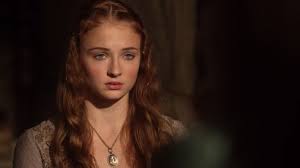
Sometimes, in certain books, it is a POV character that you just don’t enjoy the way you do the others. To give an example from my own experience, the Sansa Stark chapters in the ‘Song of Ice and Fire’ novels (Game of Thrones for those more familiar with the TV series than the books.) With no disrespect to the character on the TV show and the actress who plays her, I hate Sansa. It has little to do with the portrayal on the TV show, and all to do with her POV chapters in the books, and I do mean hate. In book one she is a spoilt brat with no concept of the world not revolving around her.

images (3)

“But you can’t take me back to Winterfell. I am going to marry Joffrey and become Queen and we love each other…”      

She rants at her father, despite everything that is going on in ‘A Game of Thrones‘ and generally brats around for all six of her chapters. By book two, considering how the first book ended and the position she is now in you would think she would elicit some sympathy. Yet somehow she manages to come across as a whimpering brat, for eight chapters, still self-absorbed yet to a whole new degree…  Which holds true for seven chapters in book three ‘A Storm of Swords’ until she becomes a bitchy brat, even in book four ‘A Feast of Crows’ she only has three chapters, interesting chapters that reveal a great deal about the underlying plot of the whole series, yet she remains a chore to read. It’s an utter relief she is not in the fifth novel at all. It’s safe to say I hate Sansa’s chapters, I started to dread them coming up even before she got to Kingslanding in the first novel. She is a Westeros mean girl, I don’t want, and indeed find it impossible to, sympathise with her, and that feeling has never shifted. Indeed that dislike bleeds over into the TV show when I watch it, despite the character being much different on screen. Or at least, not subjecting the audience to her inner monologues… I am not alone in this as other people have expressed similar opinions on the character in the novels to me. Yet I am sure there are plenty of fans of the books who look forward to her chapters yet dislike some other POV character to the same degree.

It is safe then to say, that I find Sansa Stark chapters difficult to read, because I really don’t want to read them, I would much rather be reading Arya…

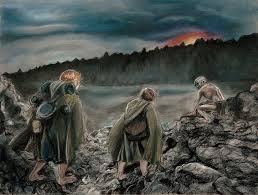
It is not always characters, there are similar issues with other novels. Take good old grandfather Tolkien’s epic, a great many people have read ‘Lord of the Rings’ once, a fair few have read it more than once, but I am sure I am not the only one who has never read the whole of it a second time. I get as far as ‘trudging through Mordor…’ and skip forward a hundred pages. Nothing and no one could entice me to force myself through a hundred pages of miserable, hungry, trudging, hobbits do a travelogue of Mordor a second time.

images (4)

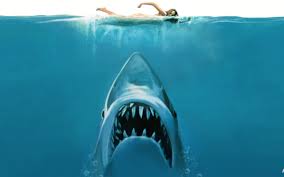
While these are major examples that stick out, they are far from alone. Jaws, for example, is a great novel, a fun read that keeps the story moving and is more terrifying in place than the movie could have ever hoped to be. But that’s only parts 1 and 3. Part 2, which was completely ignored in the movie thankfully, is a 150-page affair between the Chief Brodies wife Ellen and the oceanologist Hooper, which has no impact on the main plot and reads like a Jackie Collins novel. Not that there is anything wrong with Jackie Collins, but what is one of her novels doing sandwiched between the first and third parts of a shark based thriller? If you want to read Jackie Collins, you buy a Jackie Collins, no a sub-genre horror.  The affair has a minor impact on the ending (which differs from the movie version) but otherwise if just sub-erotica fluffy added to spice up a summer beach read, and as sub-erotic fluffy goes, it’s not very good. I suspect the publishers made Peter Benchley add it to spice up a novel they were not sure had a market at the time, which I also suspect is why he wrote the affair out of the movie version which he co-wrote a couple of years after the book became a best seller.

download (4)

Jaws is a great read btw, just skip part 2 is my advice…

The point of this post is that there are always going to be those difficult chapters. (actually, that was not the intended point of this post, it just ended up this way) As a reader, they tend to stop me from finishing a book for a while. I put the book on one side and get some sleep rather than read Sansa’s latest folly, or trek through Mordor, or discover just why Chief Brodie’s wife fancies a bit of fun on the side, and just how the weird little oceanologist gets her to her third orgasm of the afternoon. They are different for every reader I have no doubt. Some LOTR reader somewhere looks forward to the Mordor bits I am sure. Clearly, they are one Hobbit short of a fellowship but what are you going to do.

As a writer, I believe its part of the job to try and avoid ever writing those difficult chapters that people just want to skip over. Unlike skipping Mordor the second time around, skipping Sansa risks missing something important plot wise. Part 2 of Jaws may have some important bits in it too, though it has been a few years since I read it so I will stick with my assertion it doesn’t.

Of course just because I try and avoid writing chapters (or blog posts come to that) which people just want to skip over, I am sure I am just as inept as doing so as any other writer, which is where the actual original point of this post lay. I have been struggling with the working edit of  ‘A spider in the Eye/Hannibal Smyth ‘ because I have hit a chapter that feels like a ‘difficult’ chapter to me as I work on it. Or more to the point continues to be after several reworkings of it. I love all that comes before, and all that comes after, but this chapter still sits wrong with me, and has done for several weeks now.

This is not writer’s block, as I am working on other things perfectly fine, this is more writers swamp. It keeps sucking me in and trying to drown me in my own morass. Every writer I ever speak to has hit a few of these in their time. The chapter that just doesn’t feel right… Yet here is the thing, the thing I am telling myself rightly or wrongly. Some people like Mordor, some people like Sansa Stark, some people I have no doubt like Ellen Brodies middle-life crisis affair and worrying if the black lace bra and pantie set makes her look like mutton dress as lamb…  All readers are different, occasionally you can worry about the feel of that one difficult chapter too much. Sometimes the best way to get past a difficult chapter is to just write it and move on…

Of course, I shall utterly ignore my own advice and continue to pontificate on the feel of 3 pages of a chapter in the middle of my novel, and polish them until I am happy with them even if I am still working on these few pages for another month or three. because when it comes down to it that’s what I do…

And for some reader, the chapter before that I think is perfect will be the ‘difficult’ one I have no doubt…

Anyway back to editing a thousand words that are driving me round the twist

Adios

Mark

FACEBOOK    TWITTER   GOODREADS


Posted in opinion, reads, writes, writing | Tagged , , | 2 Comments

From Beyond: The Complete Lovecraftian#23

You don’t have to read much of ‘From Beyond’ to know you’re in the middle of Lovecraft country. If ever a passage screamed Lovecraft it is this one from the first page of the story…

“What do we know,” he had said, “of the world and the universe about us? Our means of receiving impressions are absurdly few, and our notions of surrounding objects infinitely narrow. We see things only as we are constructed to see them, and can gain no idea of their absolute nature. With five feeble senses, we pretend to comprehend the boundlessly complex cosmos,…“

from-beyond-small

From Beyond is one of those strange little stories which Lovecraft wrote early in his career, that didn’t get published until he had reached the apex of his fame in the later years when he’d reached an audience beyond the amateur press. While he never quite managed to earn a good living from his stories, he had at least gained a following that was consuming his work. Little wonder then that his back catalogue of dusty manuscripts began to find their way to the printed page. Works passed over when he was a complete unknown, he now had a market for, all be it fourteen years after ‘From Beyond’ was written. It does, however, beg the question… Given it was not good enough to publish in the amateur press in 1920, is it really worth reading now? Every writer, and I speak from experience, has the odd dusty manuscript kicking about that should never see the light of day. With this in mind, my expectations were not high

Thankfully ‘From Beyond‘ is better than my expectations allowed, though not as much as I would have liked. It is also one that perhaps benefits more than other from the passage of time. The frontiers of 21st-century physics add a certain credence to words of the bard of Providence. We’re told now that the universe consists of over 80% dark matter. Of which we know next to nothing, beyond a reasonable bit of formulation that predicts its existence. Which is to say, there is far more stuff out there than we can actually observe…

Which is not to claim that Lovecraft predicted Dark Matter all the way back in 1920 as he tapped away with incessant loathing at his typewriter. (I don’t know why I always think of Lovecraft typing away with incessant loathing, it’s just always the image that comes to mind. That of a self-hating flagellant whom fingers bleed a little with each vowelless name he types with hateful resentment… but moving on.)  In fairness had Lovecraft predicted dark matter it would doubtless have been a far darker matter than the somewhat benign stuff physicist imagine. It is, however, moving beyond our mere human perceptions which this tale goes on to explore. As the narrators ‘friend’ the some what oddly named Crawford Tillinghast explains…

‘We shall see that at which dogs howl in the dark, and that at which cats prick up their ears after midnight. We shall see these things, and other things which no breathing creature has yet seen. We shall overleap time, space, and dimensions, and without bodily motion peer to the bottom of creation.’

Of course, this is Lovecraft, and once anyone starts talking about ‘seeing these things‘ things predictably go down hill from there. Indeed there is a wonderfully grotesque description of Crawford Tillinghast at the start of the tale, which suggests quite strongly things have been going down hill in the sanity department among other for him for quite a while. Which does make you wonder why the narrator was so keen to follow him up to his attic to see the strange machine that Tillinghast had spent the last few months perfecting… But then what else would the narrator of a Lovecraft story do when faced with a dark staircase, a decaying friend with sanity issues and a strange machine that allows you to see ‘beyond our mortal senses‘. Which is exactly what the machine does, and then some. Strange worlds open up around the narrator, strange world with strange things lurking all around us, just beyond our meagre senses…

Okay, from the off, this is predictable territory for Lovecraft readers. The servants are all dead, a mad scientist, the cosmos unbound by mortal constraints and a narrator who has clearly never read any Lovecraft…

As I said earlier the story was better than my expectations of a forgotten early manuscript but all the same it is not hard to see why the tale took fourteen years to be published. It opens up no fresh ground, instead, it treads a well-worn pathway, one walked better by ‘Beyond the Walls of Sleep’ to think of the most obvious example. Indeed when compared to other Lovecraft tales of a similar nature it has a certain weakness, while they follow a similar path, they have more gravel to them, if you will. In comparison, this tale is just too straight forward, it moves from beginning to end with nothing to make it stand out from its fellows. It isn’t badly written, it just isn’t really anything new, a rehash of better, more mature tales. Which is not to say it does not have merit, just that it lacks something. It just is… yet it could have been so much more. The premise left open so many possibilities then ignored them all and kept down the well-trodden path. If you have never read Lovecraft this is probably a far more interesting tale, but there is the crux when it comes down to it. I have read Lovecraft, and this tale screams Lovecraft, but that’s all it does.

Perhaps this is best described as Lovecraft-lite. As such, I’ll give it 3 out of 6, because it’s not all that bad to be fair to it, it’s just not ‘Beyond the Walls of Sleep‘ or half a dozen other Lovecraft stories that follow this path in oh so much more interesting ways…

db0d7-3out2b6

As I often make use of it for this blog series, and as it has this story in full upon it a shout out to the Lovecraft archive, and a link to the story should you wish to read it yourself, which you should, just with reigned in expectations…

http://www.hplovecraft.com/writings/texts/fiction/fb.aspx

and as ever Further Lovecraftian witterings 


Posted in Lovecraft, mythos, reads, retro book reviews, rights, sci-fi | Tagged , , , | 2 Comments

The ‘ends’ of Doctor Who?

Just to be clear I borrow most of this. it does however exactly express my own view…

23/11/1963 – Doctor Who begins. Doctor Who dies.
21/12/1963 – Silly robot monsters introduced into informative historical series. Doctor Who dies.
26/12/1964 – Susan, the very person who introduced us to the Doctor, leaves. Doctor Who dies.
22/05/1965 – The terrifying Daleks are depicted as bumbling idiots. Doctor Who dies.
26/06/1965 – Ian and Barbara, the very people who introduced us to the Doctor, leave. Doctor Who dies.
09/10/1965 – The fans are insulted by an episode without the Doctor. Doctor Who dies.
25/06/1966 – A villain refers to the Doctor as Doctor Who. Doctor Who dies.
22/10/1966 – William Hartnell leaves. Doctor Who dies.
01/07/1967 – The final destruction of the Daleks. Doctor Who dies.
24/04/1968 – The series runs out of ideas and uses two monsters twice in the same series. Doctor Who dies.
21/06/1969 – The mystery of the Doctor’s people is ruined. Doctor Who dies.
03/01/1970 – The whole point of the show is jettisoned as the Doctor begins his exile on Earth. Doctor Who dies.
24/06/1972 – The first major retcon is made, as the fate of Atlantis changes just one year after it was established. Doctor Who dies.
30/12/1972 – The first two Doctors are sent to help out their third self in a crisis which threatens Gallifrey itself. While it’s nice to see them again, it tears open the massive plothole of why the Time Lords didn’t abduct and sentence the Doctor to exile far sooner than they did if they knew where he was as early as his first incarnation. Doctor Who dies.
23/06/1973 – Jo leaves, breaking the irreplaceable magic between companion and Doctor. Doctor Who dies.
28/12/1974 – The new Doctor is a goggle-eyed nutjob. Doctor Who dies.
12/04/1975 – Dalek history is retconned for the first time. Unfortunately it won’t be the last. Doctor Who dies.
19/04/1975 – The Cybermen go all rubbish. Doctor Who dies.
23/04/1975 – Billy Hartnell, the first actor to play the Doctor, dies. Doctor Who dies.
23/10/1976 – Sarah-Jane leaves, breaking the irreplaceable magic between companion and Doctor. Doctor Who dies.
30/10/1976 – The Time Lords are depicted as doddery old men. Doctor Who dies.
22/10/1977 – A gimmicky robot dog joins the TARDIS crew. Doctor Who dies.
11/03/1978 – Leela leaves, breaking the irreplaceable magic between companion and Doctor. Doctor Who dies.
15/11/1980 – A whiny boy joins the TARDIS crew. Doctor Who dies.
24/01/1981 – Romana and K-9 leave, breaking the irreplaceable magic between companions and Doctor. Doctor Who dies.
21/03/1981 – The best Doctor ever is replaced by a vet. Doctor Who dies.
04/01/1982 – The Saturday tea-time slot is abandoned. Doctor Who dies.
02/03/1982 – The producers forget to put aliens in a story. Doctor Who dies.
16/03/1982 – The Doctor fails to save a much-loved companion. Doctor Who dies.
01/02/1983 – UNIT continuity gets fucked. Doctor Who dies.
22/02/1983 – The creation of the universe is revealed to have occurred from a spaceship discharging its fuel. Doctor Who dies.
25/11/1983 – The First Doctor is re-cast and Tom Baker doesn’t turn up. Oh, and the Second Doctor’s timeline gets even more fucked up as he refers to Jamie and Zoe’s mindwipe despite having supposedly being killed almost immediately after this occurred. Doctor Who dies.
12/01/1984 – Episode 3 of the universally panned Warriors of the Deep airs, depicting scenes of someone attempting to kung fu fight a laughable-looking monster costume, which was hurriedly glued together because Margaret Thatcher had called a general election and cost the production team a lot of valuable time and resources. Peter Davison and Janet Fielding announce that they are leaving during filming of this serial. Doctor Who dies.
23/02/1984 – A new companion is brought in just to fill a bikini. Doctor Who dies.
22/03/1984 – The new Doctor is a psychopath in a clown outfit. Doctor Who dies.
05/01/1985 – The classic twenty-five minute format is abandoned. Doctor Who dies.
16/02/1985 – The show digs itself even deeper into the plot hole regarding the timing of the Doctor’s exile, by showing the Second Doctor and Jamie on a mission FROM the Time Lords. This leads to hardcore fans having to formulate made up fan theories to explain this plot hole away. Doctor Who dies.
01/11/1986 – Bonnie. Langford. Doctor Who dies.
28/03/1987 – Pat Troughton, the second actor to play the Doctor, dies. Doctor Who dies.
07/09/1987 – The new Doctor is a buffoon in an ugly pullover. Doctor Who dies.
05/10/1988 – We get to see Totter’s Yard again, except the inbreds spell “I.M. FOREMAN” incorrectly. Doctor Who dies.
02/11/1988 – The Doctor fights Bertie Bassett. Doctor Who dies.
06/12/1989 – The show ends its twenty-six year run. Doctor Who dies.
26/11/1993 – Doctor Who’s rotting carcass is briefly revived, plugged into the life-support machine known as EastEnders. Doctor Who dies.
20/05/1996 – SPLINK overlord Jon Pertwee, the third actor to play the Doctor, dies. Doctor Who dies.
27/05/1996 – The Doctor kisses his companion. Americans are involved. Doctor Who dies.
30/10/1997 – Who’s creator Sydney Newman dies, therefore taking Doctor Who with him (it dies).
23/11/2003 – Doctor Who’s 40th Anniversary is a colossal disappointment, with the only noteworthy celebratory productions being a below average animation that was de-canonized midway through production, and an overly pretentious 4 hour long audio drama that almost destroyed the credibility of the company which made it. Doctor Who dies.
25/05/2004 – A former teen singer is revealed as the companion. Doctor Who dies.
31/03/2005 – The Doctor quits after one episode has been broadcast. Doctor Who dies.
16/04/2005 – Fart humour. Doctor Who dies.
25/12/2005 – The new Doctor spends all his time in bed. Doctor Who dies.
17/06/2006 – A Doctor-light episode is an exploration of the notions of fandom and the human experience. Doctor Who dies.
08/07/2006 – An actress with her own sketch show is revealed as the companion for the Christmas special. Doctor Who dies.
16/06/2007 – The Master is turned into a raving loony. Doctor Who dies.
02/07/2007 – A former teen singer is revealed as the companion for the Christmas special. Doctor Who dies.
03/07/2007 – The actress with her own sketch show is revealed as the companion for Series Four. Doctor Who dies.
03/09/2007 – A Christmas special, four specials for 2009 and a whole series for 2010 are confirmed. Doctor Who dies.
22/11/2007 – The original producer of the program, Verity Lambert, dies. Doctor Who dies.
25/12/2007 – For the first time ever, the show is the most watched of the week. It is also the second-highest rated program of the year and the Audience Appreciation index is 86. Doctor Who dies.
29/10/2008 – The best Doctor ever announces he is leaving. Doctor Who dies.
04/01/2009 – The new Doctor is revealed to be a young male actor. Doctor Who dies.
29/05/2009 – The new companion is revealed to be a young female actor. Doctor Who dies.
06/10/2009 – The logo people originally criticized for having too much lens flare is replaced by one that people criticize for having too much lens flare. Doctor Who dies.
17/04/2010 – The Daleks change colour and become a bit bigger. Doctor Who dies.
22/02/2011 – Nicholas Courtney, who played beloved character the Brig, dies. Doctor Who dies.
19/04/2011 – Elisabeth Sladen, who played beloved character Sarah Jane, dies. Doctor Who dies.
23/04/2011 – The Doctor dies. Fuck, you thought 2016 was bad? Doctor Who dies.
04/06/2011 – The season is split so that the latter half is shown in the Autumn, just like the fans had always demanded. Doctor Who dies.
21/03/2012 – The new companion is revealed to be a young female actor who has been in a soap opera. Doctor Who dies.
01/06/2013 – The best Doctor ever announces he is leaving. Doctor Who dies.
04/08/2013 – The new Doctor is announced in a live show in primetime in the UK, simultaneously broadcast in America, Canada and Australia. He is younger than William Hartnell. Doctor Who dies.
23/11/2013 – Christopher Eccleston doesn’t turn up and his era becomes victim of the eraser via a shitty cop out retcon of the Time War. Doctor Who dies.
25/12/2013 – Matt Smith is naked and Capaldiddle doesn’t know how to fly the TARDIS, triggering NuWho scrubs everywhere. Doctor Who dies.
04/10/2014 – The Moon is an egg. Doctor Who dies.
25/10/2014 – The show has the perfect opportunity to do a Krynoid story but doesn’t. Doctor Who dies.
01/11/2014 – The Master’s cock collapses in on itself. Doctor Who dies.
09/26/2015 – Skaro is destroyed by undying mutant sludge healed with regeneration energy. Doctor Who dies.
10/03/2015 – Fucking ghosts? Doctor Who dies.
10/08/2015 – The Doctor Who General Wiki begins recording dates on this page in MM/DD/YYYY format. Doctor Who dies.
14/11/2015 – A deeply unpopular Who writer’s “found footage” episode is complete shit. Doctor Who dies.
05/12/2015 – A companion is saved from dying, becomes functionally immortal, and gets her own TARDIS with which she has lesbian adventures with someone from Game Of Thrones (not you). Doctor Who dies.
22/01/2016 – An official statement from the BBC reveals that the current disliked showruiner is quitting to be replaced by a man that wrote a script about Oods and loos in 2018 whilst confirming no new series will air for 2016. Doctor Who dies.
23/04/2016 – None of /who/’s preferred predictions are cast as the new companion, instead, a black lady that’s not Martha is cast as “Bill”. Doctor Who dies.
25/12/2016 – A goddamn superhero? Doctor Who dies.
25/12/2016 – The Series 10 coming soon trailer is aired and reveals Bill is working in catering, contributing to obesity crisis ravaging United Kingdom. And emoji robots are real. Doctor Who dies again.
27/01/2017 – Beloved War Doctor actor John Hurt dies, putting all War Doctor audios on hold forever. Doctor Who dies.
30/01/2017 – The best Doctor ever announces he is leaving. Doctor Who dies.
06/03/2017 – A picture is revealed on the show’s social media depicting shit(tier) versions of the Cybermen from The Tenth Planet surrounding Capaldi on the set of the Series 10 finale, with the image caption referring to them as “Mondasian Cybermen”. Doctor Who dies.
17/03/2017 – Series 10 is announced to feature a three-parter, which is one-parter longer than normal two-parter, breaking a perfectly good formula. Doctor Who dies.
03/04/2017 – The new Series 10 trailer reveals Missy dabbing. Doctor Who dies.
15/04/2017 – The Doctor and the new homosexual companion spend the whole episode running away from water. Doctor Who dies.
22/04/2017 – Sentient emoji robots become a canon life form in the universe. Doctor Who dies.
06/05/2017 – The Doctor is revealed to be a fan of literal who normie music. Doctor Who dies.
13/05/2017 – They fuckin’ blinded The Doctor. Doctor Who dies.
20/05/2017 – The vault reveal is predictable as fuck. Doctor Who dies.
17/06/2017 – The next time trailer for World Enough and Time confirms that the Tenth Planet Cyber variants are referred to as “Mondasian Cybermen” in-universe. Doctor Who dies.
24/06/2017 – The Master reveal in World Enough and Time is ruined due to him being teased in the trailer before and it being announced before the Series 10 premiere. Doctor Who dies.
01/07/2017 – A puddle breaks into the TARDIS. Doctor Who dies.
16/07/2017 – The new Doctor is revealed to be played by a woman. Doctor Who dies.

To summarise the reason for this post, The Doctor, a fictional time traveller from another planet, who periodically cheats death by regeneration, has in ‘his’ latest incarnation is going to be played by an actor without a penis. This, some claim, will be the death of the show…  presumably because fictional time travelling aliens who periodically cheat death by regenerating into someone else, have always periodically cheated death by regenerating into a male fictional time travelling alien from another planet. Generally, white middle-class male fictional time travelling alien from England or Scotland, which is what fictional time travelling aliens look and sound like… Instead, this time the doctor has a womb, clearly this the death of the longest running sci-fiction show in the world, and we should believe the naysayers because they have been right so many times before…

download (8)

On the other hand, in the ‘unlikely’ event that this is not the death of Doctor Who, but just another chapter in a rich ever changing challenging show that constantly reinvents itself we can all take heart that it is only 46 years to the 100th-anniversary special. So I would venture the more important question is can they carbon freeze Tom Baker so he can be defrosted in time to make an appearance in it…

I look forward to the next series. I look forward to life in the Tardis with ‘Jodie Whittaker’ at the console. A new doctor, a new writer, a new chapter… Frankly, I can’t wait to see what they do with it…

I also look forward to the next thing that is proclaimed to be the ‘Death of Doctor Who.’ as it almost certainly won’t be.


Posted in opinion, sci-fi, Uncategorized | Tagged , , , | 2 Comments