Why Your Day Job could be Good for Your Creativity

banner amy

We’re all familiar with the dilemma. “I’ve just had this great idea and I want to write it down immediately, but I’m stuck at work right now.” If you’re anything like me, when you think about your day job in relation to your ability to write, you’re mostly thinking of all the ways in which it interferes with the time you have available to actually do the writing. I have tried everything to carve out more time for myself; getting up an hour early (too tired to get through the day), writing on my commute (too bumpy), writing on my lunch break (too many interruptions). The list goes on.

But recently, I’ve been thinking about the freedom that comes with having a day job. While, for many of us, the dream scenario is to be paid a living wage for our writing, for me that feels like a double-edged sword. After all, if writing is my only job, then I had better make damn sure that I’m writing something that’s going to sell. And that means spending less time on the story and more time on working out who my target audience are and thinking about the ways in which I’m going to market my book to them. It means changing the way I think about my writing from ‘piece of art’ to ‘product’. I know that some writers already work that way, and if that works for them then great. All power to them. For me though, I can’t put the cart before the horse that way because there is nothing that is more likely to give me a severe case of writers block. I have to tell the story the way I want to tell it. Even if that makes it difficult to find the right pigeonhole on Amazon afterwards.

I read an interview with Adam Driver recently in which he said that he’d taken the role of Kylo Ren in Star Wars because doing one big budget movie every few years gives him the ability to do several smaller indie productions without worrying about where his next meal is coming from. I’m paraphrasing, but that was the gist. And that’s great! In this analogy my job has just become Star Wars (almost certainly the first time anyone has compared ‘accounting’ to ‘Star Wars’) and my indie productions are all the things I want to write that might not interest someone trying to sell commercial fiction.

Just to be clear, there is absolutely nothing wrong with ‘commercial’ writing. Some of my favourite books are ‘commercial fiction’ and I’m not here to be in any way snotty about this. But the truth of the matter is, that indie writers can afford to take risks in their storytelling in a way that might not be possible if you were relying on book sales to be able to pay your monthly bills.

At the moment my writing is just another form of play. If I want to write something, even if there is a little part of my brain that thinks it’s stupid or it’s too weird or no one would ‘get it’, I can. I have the freedom to play and to experiment until I find something that works for me. The ‘work’ starts with the editing, but that’s a problem for another day.

None of this is to say that you will never have either critical or commercial success if you write ‘weird’ fiction. Neil Gaiman, Douglas Adams and many more have all managed it very nicely. But right now, while I’m building both my word count and my experience, I’m embracing my day job as something that allows me to create my (inner) world on my own terms.


About Amy Wilson (by Mark)

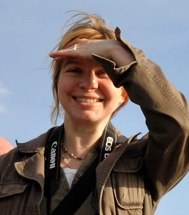
amyAmy Wilson is the author of the short stories ‘By Firelight’ and ‘Gosfeld’ for the Harvey Duckman Presents anthologies. The second of these received so much praise along the lines of ‘that was great what happen next?’ that she has started write a novel based around the central character…  In between taking archery lessons, learning German, and being badgered by writers to Beta read their novels, she is working on a fantasy trilogy, and a stand alone – the first of which is due out this year, I know this to be true because last time she did a guest post in October she said it was due out next year and I am holding her to it …

ER4TU0oXUAA5BPB

Posted in amediting, amreading, amwriting, fantasy, Harvey Duckman, indie, indie novels, indie writers, IndieApril, indiewriter, opinion, reads, sci-fi, writes, writing | Tagged , , , , , , , , , , , , , , , | 2 Comments

Speculating on Emi…

There is nothing wrong with reading something that is predictable, trite, the average fare, boy meets girl, boy hates girl, girl hates boy, boy argues with girl over a foolish misunderstanding, boy goes and does something foolish, girl realises she doesn’t exactly hate boy, boy realises he doesn’t exactly hate girl, boy and girl save world from foul tentacled monster and in the process both realise the other doesn’t exactly hate them. Some spectacular misunderstanding ensue’s. Boy or girl discovers the one person other than the boy or girl they trusted most was actually the master mind who summoned the foul tentacled monster in the first place. Girl or boy comes to the rescue ninth nick of time. Boy and girl discover they really really don’t hate each other, and go on to not hate each other as much as possible (until the sequel when due to a misunderstanding they have a bit of a falling out and oh look there is another tentacled monster and this one has wings…)

Nope there is nothing at all wrong with reading something predictable, trite, of average fare, with the usual boy , girl, tentacled monster plot lines. Except, it’s not exactly that deep, and if every story is the same then even tentacled monsters get dull after a while. Sometimes, just once in a while, what you want is something from further afield… Something a little left field perhaps… Or perhaps, if all truths be told, something from a field so far to the left of the usual pastures that your not entirely sure what crops are growing in its and with beasts that wander there that are a little on the odd side even viewed from a distance… Which is why I love speculative fiction in the truest sense… Fiction that says ‘What if?’ and then adds ‘and what if?’ and then adds another couple of ‘what ifs?’ for good measure and then just starts running off in a strange direction all of its own.

So, ‘what if’ you tell a story from the perspective of the last zombie wandering the earth long after the end of the ‘human’ world? What if the mythical creatures and being of Japanese folklore were real and with humanities end they had returned from the dark places that lurk beyond the edge of humanities collective consciousness? What if this last zombie stumbling through the post-apocalypse world with little that could be considered to be conscious thought, just an implicit drive to keep moving, stumbled across another zombie? What is that second zombie is a little girl, or what was left of a little girl, chained up in a barn by her long dead parents and forgotten about by the world until the this other zombie stumbles across the barn and without knowing quite why unchains her?

What if all of that? What then? What, not to put too fine a point on it, happens next?

As writers we often indulge in ‘What if?’ even if we are only speculation about a boy and a girl who meet each other, decide to hate each other, then eventually realise they don’t actually exactly hate each other after they defeat a tentacle monster summoning evil mastermind… But if that’s the only ‘What if?’ we come up with then we risk being trite, predictable and frankly, the worst sin of all, boring our readers. This is one of the reasons as a writer I try to avoid the trite and predictable, and as a reader I tend to look a little further afield than  the shelves of Tesco’s or Waterstone’s top one hundred… Indie writers tend to play the ‘What if?’ game with a tad more bravery than big publishing house commissioning editors do and I would like to think none of my books fall into the ‘trite predictable’ category. But having said that, while I try to produce something a little different, it has never occurred to me to write a post-apocalyptic odyssey who’s lead characters are a zombie called Christopher, who stumbles across a zombie girl called Emi in a post human landscape populated by creatures form Japanese mythology… But hell I wish it had, because as a concept its speculative ‘what if?’ gold dust. Though if I had I doubt I could have done the concept justice, and frankly its too late now, because one of my favourite speculative fiction writers already has.

emi review

Craig Hallam is one of those rare writers who takes a ‘what if’ and doesn’t just go to town with it but produces something more than the sum of its collective, admittedly odd, parts.

On one level Emi is a simply product of a chain of ‘what if’s’. Japanese mythology, a world post humanity and a couple of zombies one of which happens to be a little girl wandering somewhat aimlessly through this world.

On another it’s a study of what it means to be human, looked at through the perspective of something that used to be human but is now something else. It has layers, it builds on those layers, and then it builds on those layers. As one zombie slowly finds its lost humanity and the other moves further away from it. It’s sorrowful and melancholy but never it a way that mires the reader in that sorrow. It is full of shades, the ghosts of humanity, seen from the other side.

I don’t know if it is profound, perhaps the most profound thing about it is that it feels profound without trying too hard to be so. But then what the reader takes from the tale is I suspect a mirror of what the reader starts to look for within it. To be fair this could often be said to be the case with a great many writers, and I can’t speak for Mr Hallam’s intentions beyond exploring a strange ‘what if’ for all it is worth. Craig however manages the neat trick of inviting the reader to think about what they are reading while never forcing them to do so. It may well be that he set out to merely write an  entertaining oddity, without trying to ‘say something profound’ which if that is the case, is probably why he has succeeded in doing both.

There is beauty here, the beauty of storytelling which can be more than it sets out to be, if only because what each reader takes from it will be different… But what every reader will take from this is at the very least a smile and a few hours of joyful indulgence in a glorious ‘what if’ unlike any other ‘what if’ they have ever read before.

Anyway, read a little of it for yourself… Then if your draw into it read some more. Me I am off to write some trite predictable stuff about boy meets girl fights tentacled monster and discovers they don’t exactly hate each other after all… From the perspective of the tentacled monster which is clearly actually an incarnation of Cupid… As that is the only explanation for why fighting the beast always leads to people not actually hating each other really quite a lot…

Posted in amreading, book reviews, books, dreamlands, dystopia, fantasy, goodreads, Goth, Harvey Duckman, horror, indie, indie novels, indie writers, IndieApril, indiewriter, mythos, Nyarlathotep, pointless things of wonderfulness, reads, sci-fi, supernatural, writes, writing | Tagged , , , , , , , , , , , , , | 1 Comment

All About Hemlock Soames in Six Questions

kemmett banner

Ladies and gentlemen, good evening.

I’m Sharon Kemmett, and I write steampunk, science fiction and fantasy under the pen name, S M Kemmett.

Thank you to our host, Mark Hayes, for the opportunity to introduce to you my friend, Hermia Barrington, also known as Hemlock Soames, in her first adventure into the wilds of Scotland (and Victorian society): Hemlock Soames and The Waterhorse.

Q1: Tell me about your book:

The Waterhorse is set in an alternative Victorian Britain, mostly London and Scotland. Some history has been altered to fit my steampunk world, and some plausible liberties were taken with some of the geography.

Book Blurb:

waterhourse

Hermia Barrington isn’t content with keeping house or hosting endless tea parties. She wants adventure.

It’s 1894 – the height of industrialism, an era of unprecedented scientific discovery. Hemmy is determined to join her husband’s expedition in search of the legendary creature, the Waterhorse. Nothing will stop her; not a secret society bent on stealing the Waterhorse for profit. Not even her own beloved husband.

It’s time for Hemlock Soames, Hemmy’s childhood alter ego, to return!

But is Society ready for Hemlock Soames?

Q2: How did you come up with the idea for a Cryptoid-chasing heroine?

The idea for Hemlock Soames and The Waterhorse began with the Hemlock Soames character, herself. Hemlock was originally a minor character in a TV script on which I was working with some fellow volunteers at local Adelaide TV Channel 44. As the story grew, so did the character. When the project ended, I kept my two (copyrighted) characters and transported them back in time 150 years – and steampunk’d them.

The kelpie was inspired by a sculptured prop I made for the same series. Having studied Archaeology and Traditional Literature, I also had more than a passing interest in Mythology. Fortunately, Cryptoids are popular in the steampunk genre.

The name of the main character, Hemlock Soames (known as Hemmy to her close friends) was really just a place keeper for the TV script. I scribbled it in so I could write the story down before it evaporated.

Originally, Hemmy was meant to be just a voice on the telephone, a Miss Marple type. The director saw the name, liked it, and suggested we keep it for the show. I complied. When the part was cast, the actress was much younger than I’d expected, so my book character is young, too.

In The Waterhorse, we discover the origin of her Hemlock Soames nickname: As a child, Hemmy’s big brother, James, was teasing her about her fascination for Sherlock Holmes. He got the names muddled, and Hemlock Soames was born. (I consider she is named after the American Hemlock tree not the smaller, poisonous plant.)

Q3: Why steampunk?

Hemlock Soames and the Waterhorse was not the first book I wrote, only the first to be finished to an acceptable standard. I thought it was a short story, at first. But the characters had other ideas.

The Steampunk ambience was a surprise.  I always thought I would write fantasy.  My early reading years centred on Fantasy, including Tolkien. When I got older, I re-read Lewis’s Narnia Chronicles.

Or I thought perhaps I’d write historical YA, like Rosemary Sutcliff. My short story ‘Dragonheart’, published in Specul8 Publishing’s Hoards of the Great Fire Wyrms is part historical, part fantasy. I also wrote short Science Fiction as a teen.

I’d never heard of the steampunk genre until shortly before I joined my first writing group – a speculative fiction writing group – and Karen J Carlisle invited me to join. Best creative thing I ever did! So, I re-purposed Hemmy. (Re-purposing is also very Steampunk.)

The more I researched the Victorian world, the more it resonated with me, and the more parallels I found between Hermia’s generation and our own times. Rapidly changing technology, the ingrained idea that God and science are incompatible, questions of the place of women in society. And change. Rapid, confusing change.

Q4: Tell me more about Hemlock Soames and the Waterhorse characters.

Hermia and Elias Barrington are a well-to-do, recently married young couple, with well-connected friends. They’re unconventional, and thought of by some of their peers as a bit odd.

Hemmy is not your typical Victorian Lady. She’s educated in Science, like both her parents. She’s curious, investigative, and definitely too independent. As a woman, Hemmy isn’t afforded leniency for her eccentricities (as her husband is), and is encouraged to hide her true nature from Society.

Q5: Why make Hemmy a married woman?

Why did I Hemmy a married woman? Well, why not?

I was told once: The Steampunk heroine usually ends up marrying her love interest at the end of the book. But why does the story have to centre around her finding a man? While her marriage provides a foil to explore society’s opposing gender expectations, the story was about Hemmy’s adventure, not whether she would get married. (And nobody told me I couldn’t.)

Her husband, Elias, is a secondary character. He’s an inventor, explorer and Cryptozoologist. He travels the world, hunting for mythological creatures, much to Hemmy’s dismay. Someone has to make sure he stays out of trouble, and Hemmy has volunteered.

Q6: How do you create your stories, and will there be more books?

I’m a ‘by the seat of my Pants-er’ by instinct. Then I plot, once I’ve got more of the story down. Then I notice if there are themes. Then I do lots of re-writing and editing.

Hemlock Soames’, recurring themes of disguises, facades, appearances, expectations and gender roles (The Angel in the House, The Empire Builders), as well as science vs religion and technology vs nature all resonated with issues that still face today’s world.

What’s next? I’m working on the dozen fantasy novels under my bed. The next one will be a fantasy, then I plan to work on sequels for Hemmy. And probably interrupt myself with short stories now and then.


About S M Kemmett

kemmetSM Kemmett scribbled her first story at age seven. She flirted with various careers, but her true passion is wordsmithing. Sharon graduated from Flinders University with a BA in English and Archaeology. She writes speculative fiction, preferring science fiction, fantasy and steampunk, and dabbles in historical fiction. She previously volunteered as a tour-guide at the South Australian museum. She’s currently volunteering at her neighbourhood library as Local History research editor.

Sharon lives in sunny Adelaide with her ‘feline domestic symbiont’. Both are in voluntary isolation until the resolution of these current difficulties.

Where to find Sharon:

Where to buy Hemlock Soames and The Waterhorse (paperback):

Or you can buy the paperback direct from the author (if for postage within Australia) – https://smkemmettwordtailor.wordpress.com/buy-books/

Hemlock Soames and The Waterhorse will be available as an eBook via Smashwords and Amazon soon.

Posted in book reviews, books, fiction, indie, indie novels, indie writers, IndieApril, reads, steampunk, writes, writing | Tagged , , , , , , , , | 3 Comments

First World Problems…

guest post andy

What matters is all relative. Half the world’s population worries where’s tomorrow meal will come from, the other half worries about wifi. I’m one of the fortunate half who worry about the latter and ironically end up wincing on to some poor soul in a Philippine call centre about it, who is in the former category.

With our relativistic stall set out, I will commence.

I have, well strictly now had, two fake poos. They have over many years given me an immense amount of pleasure. They deceive the unwary, in an off guard moment they deceive myself. My favourite one has been with me since the 80’s. A beautiful, exquisite  swirl of papier mache, hues and flecks or brown and mould green. So real, so fresh, so repulsing the mind’s eye sees steam wafting into the ether, like twas freshly deposited  just moments earlier. Through house moves and the ups and downs of life, it has been my faithful companion. At times it spent months nay years in some wardrobe or drawer, to re-emerge in my glinting eye and never utter a word of rebuke to me for my neglect and insouciance.

Then one day passing a joke shop in the nearby seaside report of Scarborough, this plastic effigy caught my eye. Nowhere near the quality and charm of my gritty paper based poo, it nevertheless felt a  modern day pound shop style companion to my old fecal friend. I felt squalid and cheapened dallying with this cheap imitation of an imitation. Hopefully they would get along well and share amusing stories during this long winter nights.

Yesterday all that changed, my world of detritus for charlatans gone forever. In a fit of hubris and carelessness, I stuffed maximal portions of sweaty socks and pullovers into the front loader.

Mr Zanussi clanked and banged and moaned and wept. I thought it was just a zip or a toggle. Little did I know my favourite beloved friend of false excrement had been intertwined with a pair of Tesco value jeans.

Smashed, shattered, maimed and dessicated  into a myriad on mini plops, I had become devil of the doo doo. My beloved shit of the imagination was wrecked. The waste was wasted. Material things matter little to me but somehow this pointless inanimate object meant too much.

In all the time we spent together I have not one photo, one diary entry, one paltry social media entry. It’s like he never existed. I took him for granted and in the end led him to his untimely unturdy death. The shame.

I say now, to the world, Mr Plastic poo, I’ll never treat you like shit.


About Andy Hill

andyBased in North East England, Andy works as a freelance writer and capital market consultant. In other words, a hand to mouth existence scrabbling for paid work. These skills lend themselves with aplomb to the overcrowded world of direct publishing.
Andy’s first work “I Saw You” rocketed to number four, in the prestigious Kindle Love Poetry Top 100 Free chart. Bettered only by Shakespeare, Keats and Shelley in a flush of ego and hubris, Andy splashed out on a new fridge and fly crib, only for those fifteen minutes of fame to evaporate in sixteen minutes.

He has also written for the Harvey Duckman Anthologies, the latest of which is out now.

EK9aYtfXUAEbpzX

Posted in amreading, amwriting, indie novels, indie writers, IndieApril, indiewriter, opinion, reads, sci-fi, Uncategorized, writes, writing | Tagged , , , , , , , , | 3 Comments

Indie April, Harvey online

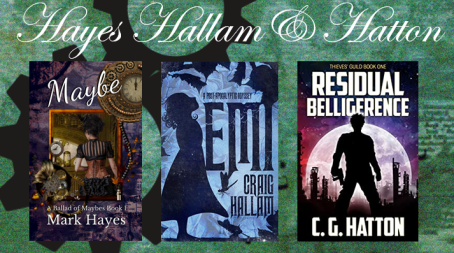
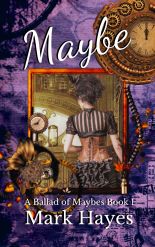
Last weekend should have been Scarborough sci-fi , which was also hosting the Harvey Duckman writers conference. It was also going to be the launch of Harvey Duckman Presents volume 4, Craig Hallams, Emi (which is brilliant and I will be reviewing it shortly), and indeed my own latest novel, Maybe, was intended to be officially released there as well.

None of this happened (though all the books have been released) But instead Sixth Element Publish who produce the Harvey books and work with lots of authors, including myself, organised an on line get together, part of which was broadcast on Facebook and is now up on You Tube, because if you are going to get a bunch of authors to step outside there comfort zone and talk to the world, then you may as well stick it on as much of the internet as possible…

In all seriousness, it was great fun to be a part of, and if your interested in writers, writing, or the questionable sanity of humanity (in the best possible ways) then its worth a watch or just a listen to in the background while your doing something. Its very much a talking heads production…

Disclaimer: this is not a slick, edited, professionally produced video, its is raw footage of a bunch of writers chatting about writing, their books, the prevalence of cats that turn up in novels, publishing and a a whole host of other stuff.  Its very raw in places, oddly I find it so much more interesting because of that…


hd and maybe

Posted in amreading, amwriting, fantasy, fiction, goodnews, Harvey Duckman, horror, humour, indie, indie novels, indie writers, IndieApril, indiewriter, novels, pointless things of wonderfulness, reads, sci-fi, steampunk, writes, writing | Tagged , , , , , , , , , , , , , | 1 Comment

Indie April#5: Of a man and his rat

As it is once more Indie April I am rebloging the original Indie April posts from last year over the coming month, as well as as a series of guest posts from various writers and creatives. Not all information will be entirely update on the re-blogs, but all the links will still work and its always a joy to blog a little of the indieverse … there are a great many fine writers and artists out there to discover. And of course you can always buy my books as well… But putting mine on one side for a moment…
Here is A tale of one author and his cuddly toy rat…. Teesside’s answer ti Jim Butcher, Peter James Martin, who is currently finishing he new full length Brennen and Rix novel which will be out later this year along with more short stories for Harvey

Mark Hayes's avatarThe Passing Place

It’s Indie April, a celebration of all things Indie, be it novels, movies, music or art. The idea being to encourage interaction between indie creatives, and that most elusive of beasties the wider audience, and it is a time to celebrate all those wonderful indie creatives and their work.  As a writer, my focus (yes I know you have read this bit before…) is on bringing indie writers to your attention. So for the rest of the month, I will be periodically featuring some of the best the independent scene has to offer. Some of these will be names familiar to those who read my blog, some will be new, but all of them are undoubtedly wonderful and deserving of a wider audience. So take the plunge and invest in some indie goodness, give an indie writer a try, I guarantee you’ll not regret it.

The Brennan and Rix Stories…

View original post 426 more words

Posted in amreading, amwriting, book reviews, books, fantasy, fiction, goodreads, Harvey Duckman, indie, indie novels, indie writers, IndieApril, opinion, sci-fi, supernatural, writes, writing | Tagged , , , , , , , , | Leave a comment

Harvey Live, podcasts, and the writers list

authors list

I’ve been involved in a  couple of on line things to do with writing in the last few days. First there was the Harvey Duckman writers on-line get together  and broadcast as part of Scarborough scifi on-line (which replaced the convention for the obvious reasons this year). This was tremendous fun to be part of, and makes for good viewing too, if you are a writer or reader of genre fiction. With a lot of writers giving out advise and views on a whole host of subjects.

It can be found here on the Harvey Duckman presents page if you missed it live and want to catch up. https://www.facebook.com/harveyduckman/

On top of that, I was invited to be a Guest on Mark Adams ecliptic daily lock-down pod cast ‘Don’t say the C word‘, where me and Mr Adams and a fascinating chat about indie publishing.  The episode with me in it (which I have not listened back to myself yet) is due to be broadcast on Friday. I’ll talk more about it, and Mr Adams show then.  But these little half hour pod casts are fun, entertaining and cover a really broad set of subjects so if you have a little time to spare check them out.

One theme that came through both these events was what makes the difference between having written a book, and actually having written a book… Or to be more exact what the difference between having a first draft and having a finished published novel is. Not in a long details explanation of the process involved (it varies for everyone and for every novel in my experience) but as a general guide to give people an idea of what kind of process to follow, so what follows is a check list, of sorts, its not holistic, its just a general guide to give the writer with a first draft on there hands an idea of what they need to do next…

  1. Read your first draft critically and make lots of notes on everything. Every inconstancy, every idea, every character,  what seems to work, what doesn’t. But don’t change anything as you go, just read and take notes.
  2. put the damn thing down, do something else, write something else, learn to tap dance, read everything you can find on the internet about honey bees, play some games, develop an interest in Equus asinus sanctuaries. Whatever, just leave the novel alone for a while to come back at it fresh.
  3. start a second draft, use your notes, put all those clever things in that make it seem like you knew what you were doing and where the story was going all along. Those bits where the character that turns up in chapter ten (because that is when you came up with them when you ere writing the first draft)  is passed in the corridor in chapter two, and gives the main character a look that feels unsettling.
  4. having done a second draft rep[eat steps 1 and 2, then do a third
  5. find an editor, be it a friend or a professional ( or if your lucky both of those in one person) and unleash them on your darlings
  6. repeat step 2 while you wait for your editor, by now you should know everything there is to know about Equus asinus… (and if you haven’t looked that up then no I am not going to explain what they are)
  7. Listen to your editor, listen to what worked , what didn’t work, but bare in mind its your novel. It is fine to disagree with your editor, (though I seldom do) it is fine to ignore their advise (though I seldom do), its also fine to decide you need another editor (again, I am extremely lucky in mine, but I know writers who have had there books slashed by editors who didn’t ‘get’ the novel or ‘get’ the writer. So don’t make the mistake of thinking they are always right) (except for mine who generally is)
  8. do a forth draft, working through all the edits and fixes , and working out if they are the right edits and fixes.
  9. read through again
  10. find beta readers, a small group of them, and unleash them on your darlings, preferably with printed copies of proofs ( I use amazons proof  copy service for these)
  11. read your own proof copy, with a highlighter pen and notes in the margin ,, but by this stage your just fixing small things , typos, the odd bad sentence, the odd grammatical fuckadoodle…
  12. take all the notes from all your beta readers and your won form the proof copy read and go through the whole document one last time…


And that is it. Well more or less. You can always take a break and study a little more on the subject of  Equus asinus if you want. But by this point what you have should be as done as it is ever likely to be and you probably hate it just a little… But you love it a little more…

Then its just a case of publishing… covers.. marketing.. finding an audience.. writing the next one… buying a Equus asinus and keeping it in the garden….

promo 1


Posted in amediting, amreading, amwriting, editing, fiction, goodreads, Hannibal Smyth, Harvey Duckman, indie, indie novels, indie writers, IndieApril, indiewriter, publication, reads, sci-fi, self-publishing, steampunk, Uncategorized, writes, writing | Tagged , , , , , , , , , , , , , | 2 Comments

Indie April#3: SimCaviler

As it is once more Indie April I am rebloging the original Indie April posts from last year over the coming month, as well as as a series of guest posts from various writers and creatives. Not all information will be entirely update on the re-blogs, but all the links will still work and its always a joy to blog a little of the indieverse … there are a great many fine writers and artists out there to discover. And of course you can always buy my books as well… But putting mine on one side for a moment, here’s the ever intellectually intimidating Kate Baucherel, who after taking time out to write non-fiction is back to writing fiction with the third sim-caviler novel in the works along with most short stories for Harvey

Mark Hayes's avatarThe Passing Place

It’s Indie April, a celebration of all things Indie, be it novels, movies, music or art. The idea being to encourage interaction between indie creatives, and that most elusive of beasties the wider audience, and it is a time to celebrate all those wonderful indie creatives and their work.  As a writer, my focus (this will come as little surprise) is on bringing indie writers to your attention. So for the rest of the month, I will be periodically featuring some of the best the independent scene has to offer. Some of these will be names familiar to those who have read my blog before, some will be new, but all of them are undoubtedly wonderful and deserving of a wider audience. So take the plunge and invest in some indie goodness, give an indie writer a try, I guarantee you’ll not regret it.

The SimCaviler Novels of Kate Baucherel

View original post 388 more words

Posted in amreading, amwriting, book reviews, books, indie, indie novels, indie writers, IndieApril, sci-fi, writes, writing | Tagged , , , , , | Leave a comment

Choosing Names for Your Characters

maddy guest

One of the most important decisions you can make about a character is their name. Whether it’s their first, middle, or last name, it imbues your character with the very essence of who they are. There are so many names to choose from, but where do you start? Or do you create your own naming culture? Do they even have a first, middle, or last name? All these questions and more go hand-in-hand with your world building.

Is your character and story set in the past or an alternate history? If the answer is yes, then I would suggest researching names that were popular during that time period and the root meaning of the name.  I like to add subtext to my character names, so I find it important that the root meaning of their name be an essential part of who they are.  But be careful. There are some names that were popular a century or more ago that are popular today and will sound too modern.

A good example is the name Tiffany. It is actually a biblical name, but to readers it will sound and feel too modern and put them off. Jessica is another example. It is Hebrew in origin and was used in Shakespeare’s, Merchant of Venice, though it sounds like the name of your neighbor’s daughter.

As your character grows and evolves, will their name change or alter in some way? You can approach this question in a number of ways depending on your story and world building. If your story is set in a culture where a person’s name changes after a certain age, ritual, event, etc. then you need to make sure you develop a naming system before you start writing and keep it consistent. If your root language is human-based, then I’d again suggest you study the root meanings of the names you choose to make sure they fit the character.  An exception to this is if the name is meant to be ironic.

An example of this is in the movie, Dirty Dancing. “Baby” is the pet name given to an intelligent teen girl by her parents. Obviously, it’s sexist and infantilizes her; however, everyone calls her that until the end of the movie when she has gone through some life changing moments. She has grown up and made adult decisions, which leads the male lead to call her by her given name, “Francis.”

Fantasy and science fiction novels create their own naming system that is unique to the world they are building. These can be particularly difficult, time consuming, but yet rewarding to the reader.  Many writers generate names using ancient languages or non-Romance languages.  Others mix and match consonants and vowels until you come up with a naming system that feels right for your world.

Whichever why you choose, be sure you are consistent unless there is a logical reason for you not to be.


6470435About Madeleine Holly Rosing (by Mark)

Madeleine is the author of the award winning steampunk supernatural series, Boston Metaphysical Society (graphic novel and prose).  The original six issue mini-series is now available in trade paperback from Source Point Press.

A Storm of Secrets, Her first novel I reviewed last year,the review can be found here. She has also written anthology’s, and short stories  in the BMS universe which are available on Amazon and all ebook platforms.

Madeleine is also incredibly generous with her time and support for other indie authors on social media, for we (if I may speak for the community as a whole) are ever grateful.

Social Media:

Posted in amediting, amreading, amwriting, books, Canadian steampunk, fantasy, fiction, goodreads, indie, indie novels, indie writers, IndieApril, novels, opinion, reads, steampunk, writes, writing | Tagged , , , , , , , , , , , , , | 3 Comments

Indie April #2: The Adventures of Alan Shaw

As it is once more Indie April I am rebloging the original Indie April posts from last year over the coming month, as well as as a series of guest posts from various writers and creatives. Not all information will be entirely update on the re-blogs, but all the links will still work and its always a joy to blog a little of the indieverse … there are a great many fine writers and artists out there to discover. And of course you can always buy my books as well… But putting mine on one side for a moment, here the Honorable Craig Hallam, who it is worth mentioning also has a new novel out tomorrow… Emi 

Mark Hayes's avatarThe Passing Place

It’s Indie April, a celebration of all things Indie, be it novels, movies, music or art. The idea being to encourage interaction between indie creatives, and that most elusive of beasties the wider audience, and it is a time to celebrate all those wonderful indie creatives and their work.  As a writer, my focus (this will come as little surprise) is on bringing indie writers to your attention. So for the rest of the month, I will be periodically featuring some of the best the independent scene has to offer. Some of these will be names familiar to those who have read my blog before, some will be new, but all of them are undoubtedly wonderful and deserving of a wider audience. So take the plunge and invest in some indie goodness, give an indie writer a try, I guarantee you’ll not regret it.

The Alan Shaw Novels of Craig…

View original post 428 more words

Posted in Uncategorized | Leave a comment