Self-publishing: A Guidebook for the Tourist#5: ‘Free’ books

The internet is full of ‘Free’ books, you can’t go on writers forums without finding them all over the place. The Facebook groups are full of them, Twitter will throw them at you, readers sites like Goodreads and other book sites overflow with them. Amazon and other resellers even encourage it to a degree. The E-book revolution has brought about an avalanche of ‘Free‘, which like all good avalanches has crushed and destroyed everything in its path. Lots of writers have complained about it, blog posts are full of opinions on the negative impact it has had on the book market and the profession as a whole. These are opinions I agree with… But I am going to utterly ignore for an hour while I write this because instead of telling all the reasons ‘Free’ is bad, I am going to explain the reasons it can be good for you. With a caveat, however, that being why while you may want to consider making a book free for a short time, it has to be at the right time…

freebooks

First off, however, if you have written your first novel and are thinking of making it free, even just free on a kindle countdown type deal… STOP NOW… Seriously, don’t do it, you’re making a grave error. It may seem tempting, giving your novel away for a while to get a lot of readers quickly, build up reviews, find an audience, get it ‘as it were’ out there. But that is not what is going to happen. Remember this important adage, ‘No one values that which they get for nothing…‘ and if they don’t value it, they may not even read it anyway. Kindles around the world are full of ‘free‘ books that got downloaded when they were on sale for nothing and are just left to collect virtual dust on the ram, before been deleted to sit on the cloud to make space for the next few free books that will never get read. Mine I may add is as bad as anyone else for this. So if you have written one novel, and are even considering making it free for a few days on Amazon, stop now. If you are going to give something away, give it with purpose.

Giveaways competitions and ARC freebies at this stage make sense, but not open house Amazon free book sales.

Giveaways because you offer to give away say, five copies of your novel, to random entrants to your competition will get people to sign up with their email addresses to your mailing list. At which point you can send them flyers, with the reasonable assumption they signed up with a degree of interest in reading your work. Or having signed up have a degree of interest now. It’s a good way to get readers to at least look in your direction, and if you do them through a site like ‘Goodreads‘, you are pulling them towards you. On ‘Goodreads‘ the giveaway competition service they run is tied to people marking your book ‘to read’. Which puts it firmly on their radar, and on the radar of their friend’s list as well. It also adds to the number of people who have marked your novel ‘to read’ so if someone looks at it on ‘Goodreads’ it looks popular. While everyone who doesn’t win a free copy is at least aware your book is out there now, and, by the law of averages, a few of them at leats will buy a copy, having had their interest spiked in the first place.

ARC freebies are giveaways with the express intent of getting reviews. They are an unspoken contract between writer and reader, ‘I give you a free copy, you give me a review.’ It’s a tried and tested formula, and if you’re going to give your work away, at least your going to get something back. There are dangers, be careful who you ask, and make sure if you’re giving out e-books you’re doing so safely with copy protection via kindle mail. But go for it all the same.

But, and I can not stress this enough, if you only have one novel, do not give it away in general… All your doing is adding to a flooded market and by the time you write your second novel 99% of the readers you found will have forgotten your first book and have no inclination to buy your next one. No matter how good the first one was…

The time to consider going down the ‘Free’ road is after you have a few books in print. Especially if you have a series written because readers read authors as often as they read books. Hook them with a free copy of your first novel, and while you have them on the line, they are far more likely to buy the second, third and forth. It is a truism that you will find repeated by most advice sites. I have read more than one publishing article that advises a writer to not even bother spending time promoting books till they have three or four written for this exact reason. Sad as it may be, it is true that readers are less inclined to buy the first novel if the writer has only written one book. Even heavyweights like ‘George R R Martin‘ and his ‘Game of Thrones‘ are subject to this rule. Long before the TV show came out, the first novel only really began to reach high sales after the third came into print. And that was not Martins first novel, he already had a large following, but the novel became a real best seller when there was a series of books on the shelf. Readers like to know they can read the next, and the one after that, before they commit to the first book. Even if your novels are unrelated to each other and not even in the same genre, such as my own ‘Cider Lane‘ and ‘Passing Place‘, having more than one book out there makes the first novel all the more attractive to a reader.

With this in mind, giving away the first book in a series makes a certain amount of sense. Many authors discount the first novel, putting it in the 0.99 bracket. Then give it away for short periods in the hope of hooking readers into a series, and as a tactic, it works. The same can be said for short stories and novella’s that lead into your novels and are permanently free on your website, or through Kindle, etc. Free is not a bad sales tactic. Indeed it is a damn good one. It has got me to try a new author on more than one occasion, and I have no problem with ‘Free’. Just use it wisely is my advice. If you’re giving something away, make sure it is to get something in return. Make sure it is to get a reader or two, to reach your audience.

I have never made one of my novels free, I have however made one of Kram Seyah’s free as an experiment. Kram, as you may know from reading my blog, is a writer of nihilistic erotica with swords and the occasional touch of sorcery thrown in. It’s a niche market within a niche market and was an experiment to start with. Written as much to satisfy my curiosity as anything else. As ‘A turn of the glass: Passions of the dragon queen: vol 1‘ is a novella, with a narrow target audience, it does, however, serve to illustrate the  ‘free’ market…

untitled

When I first released ‘A turn of the glass‘ at the strip end price of 0.99c it did not sell many copies. It is short even for a novella, just over 20000 words it barely qualifies as more than a short story in some respects. It would not be unreasonable to consider the minimum price you can sell for on Amazon to never the less be something of an over pricing of the book. Yet despite this, its is erotica and sex, as the old saying goes, sells. So I expected I might sell a few copies, and after a little bit of publicity, it did just that. It was not uprooting trees, but it was selling in dibs and drabs, a copy here and copy there, not enough to make me rush to write a sequel. The original was written as much to allow myself a break after the first draft of ‘Passing Place’. It would have to sell a lot more than half a dozen copies a week to make it a priority, and as with all book sales after the first month or so that half a dozen a week started to tail off. Remember this is a niche market within a niche market and a short novella, and I only did minor publicity work on it. The occasion facebook post, or mention on a forum in passing, and that’s about it. But part of the experiment was ‘volume one‘. As ‘Kram’ intended to add volume two and three etc. at some point. So I decided to put it on ‘sale’ for free through Amazon on a Kindle book deal and see what happened, and did a little (though only a little) publicity work on erotic writing forums and fantasy forums a day or so before.

In a week I sold over 400 ‘free’ copies of ‘A turn of the glass‘. Which was four times as many copies as I had sold previously in the three preceding months. Bare in mind when I say minimal publicity I mean just that, I was not trying hard to sell this. I relied almost entirely on the lure of ‘free’ and Amazon own internal publicity algorithms that go into action when a book goes on ‘sale’.

If you’re interested in the maths of how much ‘A turn of the glass‘ has made me, and how much money the ‘free’ giveaway cost me, here are some rough maths for the first 4 months it was in print.

General price 0.99c  giving a royalty per sale of 0.17c     100 sales

100 sales  = $17   or  $13 when its declared on my tax return.

Which is quite a bit less than I make for an hour at my day job… and ‘sales’ of 400 free cost me $52  after tax …   Clearly I have conned myself out of early retirement here…

The important figure though is 400 in a week as opposed to 100 in three months, and when I repeated the sale a few months later, it sold another 300 with no publicity at all apart from the inherent Amazon promotion.  In all free sales now stand at about 1200. Whereas I have sold about 300 in the 18 months or so it has been on sale. Which is not bad for something I make no actual effort to sell.

The point here is that if Karm Seyah wrote a few more volumes, all those free sales would have some benefit to him. If everyone who had bought volume 1 and only a quarter of those free sales went on to buy volume 2, sales of volume 2 would double. 600 rather than 300, and a quarter is conservative because readers read authors. Anyone who got volume 1 for free, then bought volume 2 because they enjoyed V1, is likely to also buy V3, V4, V5, etc.. even with the law of diminishing returns (a drop off of readers as you go through the volumes happens to all writers of series). So giving away volume 1 to attract readers can pay back multiple times in sales. Well as long as they enjoy your story, the writing is good, and it is enough to make them willing to pay for the next book.

Have faith in your writing …..

As I have said ‘A turn of the glass’ was an experiment, and as it is not really what I want to write its an experiment I have taken no further. It has however shown the power of the ‘free’ book and hopefully shows when it is worth using.

I know a few authors who’s single drive is to make money from writing. They are nice enough people, but I am not over enthused by their books. Perhaps because I know they care more about making money than the craft. I care more about finding readers than making money, but I resent the idea of all my hard work bene given away without purpose, and you should too.  ‘That which is given freely holds no value‘ as someone once said. I want people to read my work, but I also want them to recognise it has value, if only as entertainment. So should you with your own writing.

Kram Seyah may write volume 2 of ‘Passions of the dragon queen‘ one day. As I enjoyed the act of writing and it gave me a break from my other work which I needed at the time. Having given his work away for free, he may well sell a few more copies of volume 2. If those readers the ‘free’ fished up have not forgotten volume 1. In fairness, they most likely will have done by then, but the amazon algorithms will not have done so they may well see it pop up in feeds all the same.

When I publish the first two Hannibal Smyth novels I am writing, I will probably use the same tactic to boost sales. (I am deliberately planning to release them both within a couple fo months of each other.) My drive, as always, is readers not profit, and free books is a way to find readers. I just advise you use it wisely… because there is no such thing as a free book, it cost you more than a slither of your soul and a whole lot of time to write it in the first place.


Adios for now.

Mark


For more on Self-publishing and writing:  https://markhayesblog.com/publishing-and-writing/


Posted in opinion, self-publishing, writes | Tagged , | 1 Comment

Beyond the Walls of Sleep(movie): The Complete Lovecraft #15

In a slight detour from the written word, I am going to look beyond Lovecraft’s stories to someone else’s interpretation of one of them. If you remember back to my review of Beyond the walls of sleep‘ you will remember that a 2004 movie of the same name directed by Barrett J. Leigh and Thom Maurer exists. It has somewhat woeful reviews on imdb. A movie that beyond sharing the same name, and the odd reference within it, has little to do with the Lovecraft story. Indeed was roundly pounded by fans as well as movie buffs… In a spirit of genuine inquiry though I set out to find a copy. Only to discover not only was it truly awful according to IMDB, it was also so bad it did not get a UK DVD release. It was going to cost me a small fortune relatively speaking to get an import from the US, for a movie that was going to be awful by all accounts. So I dropped the idea entirely.

However, I also discovered but did not mention, that Nathan Fisher made a short film with the same name in 2009, which draws more directly from the Lovecraft story. It also happens to be available on YouTube for nothing, which made it a far more inviting prospect than spending £25.00 plus shipping on a region 1 DVD for a movie no one had much of a good word for. As Nathan Fisher’s movie was free (he put it up on YouTube himself so I am sure he will not mind it been linked here), and had better reviews, I thought I may as well give it a shot. Besides which indie movie makers deserve a break once in a while so here goes…

I know some people are put off by black and white movies. It always seems an odd choice in this day and age of digital photography. There was a time black and white film stock was cheaper to make, these days it is purely a stylistic choice for the most part. Personally, however, I have always had a bit of a passion for black and white. Though as a die hard goth who’s wardrobe is mostly monochrome I guess this would come of little surprise to anyone who knows me. Some of my favourite movies are in black and white, Kevin Smiths ‘Clerks‘,  Coppola’s ‘Rumblefish‘, Mel Brooks ‘Young Frankenstein‘… So a bit of Monochrome does not put me off. Besides which, the monochrome in ‘Beyond the walls of sleep‘ is used to good effect because all the dream sequences are in colour. Which makes for a stunning contrast given the budget Fisher was working with here.

All the same, shoestring budgets tend to lead to shoestring acting, and so I was a little reticent going into this. Checking it out on IMDB before I watched it did not inspire me greatly either. Though it got a respectable 4.9/10 which isn’t bad for a movie like this. It was, however, the list of actors I found worrying, because the majority of them including the two leads had no picture in the cast list section, a sure sign that they had not played Hamlet on the Broadway stage…

So let’s get past the acting, shall we? It not as bad as I feared. Some of the minor roles are played by actors with more than a little ham about them ( the full pig in some cases if I am honest), and that extends in part to Jason Finley who plays the main lead, Dr Kaufman. Though the dialogue doesn’t help much at times. After a while, though Finley’s mildly wooden delivery gets better, or possibly the dialogue he is working with does. It rarely becomes cringeworthy, though slips towards it on occasion. While the bit part actors are a mixed bunch at best, some of their lines are delivered without any feeling, or way too much. But none of that really matters much. If the movie was a full length, it might jar more, but for half an hour it’s easy to lose yourself to it and just go with the story. The colour visuals in the dream sequence, with its mix of the bizarre the disturbing, stock footage flashes of war, atomic bombs exploding, the wreathing mass of humanity and starscapes, as well as a Cthulhic worshiping ritual which was filmed for the movie. These are a beautiful contrast to the black and white of the majority of the movie. It is a neat visual trick and backed up with a disturbing monologue from beyond the stars.

There are a few cringeworthy moments, the interplay between the doctor and his nurse is straight out of the 1950’s  B-movie school of misogynistic ham. The scene where Joe Slater is harassed by his fellow Catgill mountain folk is a tad painful, and almost as painful as the first scene of Slater tied to his bed screaming out in his nightmares. But if you can get past the occasionally bad dialogue, and bad acting, the movie is a small piece of joy.

It isn’t the greatest movie the world has ever seen, but it is an homage to the original Lovecraft text. It follows the story closely and is done with a genuine love for Lovecraft’s work which shines through. It’s that love for the subject matter that let me forgive the imperfections,  and I found myself carried along with it and the directors own passion for the subject. Truly I found it a joy to watch, then watch again, then a third time as I wrote this post…


Anyway, all this said, you can watch it yourself, and enjoy the madness of it. Forgive the dialogue and just enjoy it is my advice…

oh and tentacles, well I was tempted not to score it, as it’s not Lovecraft’s work, but just an interpretation of it. But it is a good interpretation and fun, so I’ll give it a respectable four.

ec0ce-4out2b6

Further Lovecraftian witterings 


Posted in Lovecraft, movies, pointless things of wonderfulness | Tagged , , , | Leave a comment

Life in the Passing Place

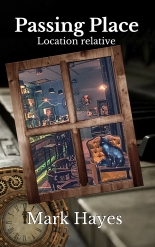
Step in from the cold, through the saloon door of the strangest bar in creation. A place where causality is just a set of rules and the rules can be bent. Where no one knows your name, but everyone has a story to tell. Where the answers to that most impossible of questions may lay, “Why?” In a novel that goes everywhere and nowhere, and is about the journey in-between. Welcome to Esqwith’s Piano Bar and Grill. A ‘Passing Place.’ A place off to one side of reality, where your troubles can just slip on by. An impossible place that bridges dimensions and time itself.

Sonny, the doorman, drinks his brandy and tells a story of death row. A green haired girl sits in her tree and speaks of the wolf of winter. The Weaver of tears cries her diamonds, and the Gunslinger speaks of death riding in on desert winds. The Greyman tells of his soulless world, before dancing with his mop once more. While in the kitchen the chef bends causality to make the greatest sandwich in the world, and the devil behind the bar tells tall tales while he pours you a drink. A place where stories are told and retold anew, and a place where something lurks unseen, something from the void, something dangerous, something hungry, something red…

“The Greyhound pulled away into the thunderous summer storm, leaving in its wake a dishevelled, world-weary figure in the dark, deserted bus station.”

Richard is a man come to an end. Grieving after the death of his wife he has travelled the back roads of America in the search for an answer to that most impossible of questions. Why? Looking for that answer in all the wrong place. In a Hicksville town in the western desert, he answers a want ad for a piano player and finds himself in the Passing Place, an impossible bar, where the patrons all have stories to tell…

Fantasy and sci-fiction collide with horror and the supernatural in a world where reality is a matter of perception…


tree2

Format: Paperback Verified Purchase

This book is an (unexpected) gem as far as I am concerned. I read the writer’s first book as well, which was also an enjoyable read, but this one fitted a lot better with the genre I normally read. It’s a very interesting mixture of fantasy, horror, a doorman with a past, a club with a forest attached, an engaging personal journey…all mixed with a bit of suspense.
…oh, and there is a cat. An odd one…
In summary, it combines many different things with a story that goes nowhere and everywhere, and I will be waiting impatiently for the sequel….


For free sample chapters click on the box below….

Posted in book reviews, books, cider lane, Esqwiths, goodreads, Passing Place, pointless things of wonderfulness, publication, reads | Tagged , , , , , | 7 Comments

The Statement of Randolph Carter: The Complete Lovecraft #14

This is one of those tales you come across in Lovecraft’s mythos that leaves you with no more than a half-hearted um… It’s just simple and straightforward without any real depth to it. A run of the mill tale that never quite steps out beyond itself. If it leaves you with anything, it’s a mild sense of disappointment, a vague feeling it could have been something more, though it never really tries that hard to be so.It’s a workaday pulp magazine story at best that could have some from any of two dozen writers who contributed to the east coast amateur press at the same time as Lovecraft. The other twenty-three of which no one remembers and unless someone delved through the archives of a collector are less than likely to ever read because no one does reprints of authors no one remembers to start with. If this seems an over harsh criticism, that’s because it is. It is a criticism from someone also a hundred years after the story was written because actually, it’s a rather neat little story feature a rather neat idea that may well have been very original at the time. It is only my 21st-century eyes that are jaded when I read this early 20th-century tale…

thestatementofrandolphcarterbrosnatch1924565


So let’s take a step back and consider this a moment or two. Let’s consider the main element of this tale, the witness statement of a man who listened to all the really interesting stuff happening to his friend on the other end of a telephone line. A portable telephone line of the type that while famlier to Lovecraft’s readers in 1920 as a field telephone, was still something strange and rare that they would not often have come across. The idea of listening to someone fighting for there life against some nameless horror. Screaming at you to go, to run, to get yourself safe, forget them, seal them in, seal there fate and just go. All the while you are listening to them describing in broken segments the horror they are seeing.

Randolph Carter himself is an antiquarian and one-time student of the Miskatonic University. In this first tale involving the character, he is the nice but dim sidekick, left at the top of the tomb, that leads down to catacombs of some kind, talking to his compatriot Harley Warren down the field telephone as the other man wanders deeper into the unknown. The character of Carter comes back in five later stories and is to a degree Lovecraft’s alter ego, but in this tale he is in shock, recounting his tale to the police who suspect him or murdering Warren or being otherwise involved in his disappearance. His tale is stuttering and disjointed but is ultimately the survivors’ tale of a horror he witnessed down a telephone line as the person on the other end is lost to the unknown terror that remains off stage.

It’s a plot turn we have all seen a hundred times. It’s the mid-season episode of a crime show that is just ticking over. A ‘B’ movie plot point. It’s not a major stretch from the opening ten minutes of scream. It’s unoriginal at best, a cliche, in the same way as ever, found footage movie is just a bit too much like Blair Witch, whereas what made Blair Witch original, new and exciting was that it was original… Except to my children, it is just another found footage movie…

There then is the crux of ‘The Statements of Randolph Carter’ is it was an original idea. It is just an original idea that has been copied so many times now it seems the most unoriginal story ever. It makes it hard to review now without been caught up in how unoriginal it seems to be, a hundred years after it was written. So it only gets a measly two tentacles now, where bad when it was a fresh new idea it would, I am sure, have scored a more sucker-tastic rating….

2out-6

Further Lovecraftian witterings 


Posted in Lovecraft, mythos, retro book reviews, Uncategorized | Tagged , , , | 4 Comments

Oswald Bastable: The Original Steampunk Trilogy

H.G.Wells and Jules Verne share the honour of being amongst the father’s Science Fiction, and retrospectively the fathers of Steampunk. There is little doubt the Verne and Wells influence on Steampunk is huge, though their tales are set in a present of which they were a part, rather than the imagined past of Steampunk. If you’re looking for the origins of actual Steampunk in literature, then you have to look a little less far back than Victoria’s reign, to the 1960’s and 70’s and a handful of writers who paid homage to Verne and Wells and the days when steam and empire went hand in hand. (Though the term Steampunk itself sprung from a humorous comparison to Cyberpunk in the 80’s which was considered the new big movement in Scifi at the time.) In that 60’s / 70’s cadre of writers, there are a few who might be claimed to be the true fathers of Steampunk, Peakes ‘Titus aAlone’ the third of the Gormagast trilogy is considered by some to be the first real Steampunk novel. Though for me it is Micheal Moorcock’s ‘Nomad of the Timestreams‘ trilogy that holds that honour, even though it was, admittedly, influenced by Peake’s work. It is also,  coincidently, where I first encountered the genre, way back in the dark days before the internet, or the 80’s as we knew them…

moorcock

I was a Moorcock fanboy, long before I was a Steampunk fanboy. He was the first of a long line of authors I have devoured over the years, and with him, it started both early and rather oddly. The first Moorcock I read was ‘The Sailor on the Seas of Fate‘ because the title intrigued me, and I loved the cover of the 1980 pulp paperback edition I still have kicking about at home.  As an introduction to Moorcock and the Eternal Champion series, it’s probably both the best and worst of books to chose. The best because it throws the four big eternal champion incarnations all together at once, the worst because as a 10-year-old understanding what the hell is going on when the four who are one merge together to fight an alien, that is a city that may be a chaos god, is a bit of a challenge. It was weird has hell, and I was certainly not in Kansas anymore… I loved it, did not understand half of it, and started feasting my way through all the other Elric novels, then Corum, Eckrose and Hawkmoon over the next couple of years till the big four incarnations had run dry. Then I started on any other Moorcock I could find, which lead me down some strange roads, ‘The Fireclown‘ and ‘The Brothel in the Rossen Strasse‘ were particularly odd books to read as a thirteen-year-old… But Moorcock is a well that takes a long time to run dry, and somewhere along the way I came across Oswald Barnstable, in a three-book compendium entitles ‘Nomad of the Time Streams’. The cover of this compendium proclaimed itself to be the first Steampunk Novel.. (as this was a 1984 edition that was published just after William Gibsons Neuromancer and the birth of cyberpunk )  This was how a fascination with all things Steampunk was first germinated within my id…

I have read a lot of Steampunk since, both the good, the bad and the just plain awesome. Much of it takes the basic concept of ‘fun with cogwheels’ and runs off in strange directions. Yet I am hard pressed to think of a single Steampunk novel that has influenced me in the way the three ‘Nomad of the Timestream’s‘ novels had. Perhaps this is because I was still young at the time, still forming my own ideas about the world, how it should be and my place within in it. That said, I would venture it has more to do with the way Moorcock uses these fast-paced boys-own adventure stories to talk about a whole range of ideas and concepts. This is not to say the Steampunk of writers after Moorcock have not touched on big subjects, but often it’s is more a genre of pure escapism than a genre used to expound an encompassing set of political ideals. Indeed, it is one of my niggles with Steampunk fiction on occasion, as some writers make great use the setting but do so in ways that ignore the issues of an Imperialist world, and the darker side of Victorian-era Britain and America. Not that every novel should be an education, or that adventure and fun for the sake of itself are anything to be sniffed at. But an awareness of racism, imperial dominance and other significant issues that come along with the 19th-century, set a novel apart from just being ‘fun with cogwheels…’

Moorcock’s trilogy, unsurprisingly given Micheals political leanings and the 1960’s as a backdrop to those views, does not shy away from any significant issues. Indeed it embraces them and uses his protagonist’s wanders through alternative worlds to explore them in some depth. The first novel, and undoubtedly the most out and out steampunk of the three, ‘Warlord of the Air‘ sees Edwardian soldier Oswald Bastable wanders into a cave in the below the temple of the future Budha. Seeking refuge after an ambush by Afghani bandits. When he finds his way out it is into an alternative world in the latter half of the 20th century. A world where the sun has yet to set on the British Empire as world wars were avoided and the age of colonialism has never faced the crises that drew it to its conclusion. Enter a world of airship armada’s, anarchists, and imperial powers dominating the world. Without the first world war, Russia remains under the stranglehold of the Tsar’s, America and Japan never came to blows. China and India remain in the thrall of imperial powers. To the patriotic Edwardian soldier, thrust by fate into this new world, it seems at first a utopia, until he starts to see how the imperial powers maintain order. Crushing any dissent beneath iron-shod boots, aerial bombardments, and brutally imposed oppression.

the_iron_orchidUna Persson, a name that I knew from other Moorcock books when I first read ‘Warlord of the Air‘, is among the leaders of a group of anarchists seeking to end imperialism as a force. She is as much an incarnation of the Eternal Champion as Oswald himself. Though his actions play the greater role in these particular events, at least from the perspective of the narrative. Miss Persson, however, has a far wider role in Moorcocks wider universe as a whole. She is probably one of his most recurring characters, she is often cast as something of an Edwardian character herself, though a rebellious one. You get the feeling if she had been a suffragette she would probably have pushed other people under racehorses and tried to blow up Parliment. Peaceful protest is not her thing at all. As a proto-steampunk Heroine Una has a lot to recommend her, though she has many guises through the many novels she appears in It is easy to imagine her in a loosely fitted corset, fascinator, bandola hung with hand grenades and sporting a Tesla pistol. She is also a woman of singular opinions, and never afraid to voice them.

Though Una’s escapades entangling Bastable within them, Oswald starts to see that the empire is not the shining light he imagined it to be. Eventually, he ends up converted to the anarchist cause, helping them fight the empire… But history has a way of creating mirrors throughout Moorcock’s alternative universes. The odd real person crops up in the narrative, Enoch Powell as an airship major with a particularly brutal approach to keeping order, Churchill as a former Viceroy of India, Lenin as a failed revolutionary, and, of all people, Mick Jagger as a junior army officer. There are more chilling mirrors, however, in this case with the climax of the novel when the anarchist plot to force the imperial powers to relent their control. By setting off a new weapon in a little-known town in imperial Japan by the name of Hiroshima…

Oswald turns up once more in ‘The Land Leviathan’, after suffering a breakdown due to his part in the Hiroshima bombing at the end of ‘Warlord’ he found his way back to the cave hoping to find his way home. Instead, he finds himself somewhere far stranger. It is a 1904 which has already witnessed a world war more devastating than any of our own. Barbarism has replaced western civilisation and only the nations of Africa, freed from colonial oppression when the western world imploded, escaped relatively unharmed. Bastable falls in for a while with a submarine captain, Joseph Korzeniowski (the real name of Joseph Conrad the writer who coincidentally or not.. in his early life spent some time as a sailor). The submariner is loosely in the employ of the president of the Marxist Republic of Bantustan, (A South Africa that never had apartheid and is referred to more than once as the ‘rainbow nation’, which given the novel was written  in the early 70’s is just a little on the spooky side.) The president, one Mahatma Gandhi who migrated from India, has charged Joseph to deliver aid where possible to the ruins of the west. While the president attempt to dissuade General Cicero Hood, who rules the rest of Africa, from persecuting a war against the ruins of the west, enslaving the white race as his own race was once enslaved.

Bastable has many issues with Hood’s plans, considering the self-styled ‘Black Attila’ to be a force for evil. Yet is surprised when hood visits South Africa to find Miss Una Persson at the general side. He is equally surprised to find despite Hood’s reputation for savagery he is a highly educated man of refined tastes and manors. Hoods plan’s to enslave the white races of America and Europe he discovers are revenge for hundreds of years of exploitation, but Hood intends to enslave them for one generation only. A suitable revenge, in his opinion. It is the exchanges between Gandhi, Bastable, Una and General Hood that lift this above run-of-the-mill alternative Earth fiction. There is a philosophical standpoint been taken by each of them, as the land leviathan slowly crawls its way across the shattered remains of the United States. The Leviathan itself is a for all intense and purposes half a dozen battleships nailed together and plonked on top of a set of tractor treads half a mile wide.

The third of the trilogy, ‘The Steel Tsar‘ introduces a world where the Confederates won the civil war, before striking an accord which left the northern states independent of the south. The first world war and the October Revolution never happen, and imperial Japan bomb Singapore rather than pearl harbour. Most of the action, however, involves Oswald joining the Imperial air navy of Russia, due to his experience with airships. History repeats itself, and in time Oswald is part of a mission to drop the first atomic bomb again ( how often can one man drop the first atomic bomb…) Bastable, however, had grown as a character since the events of ‘Warlord of the Air‘. He sides more with the anarchists than imperialists. Eventually, he turns the weapon against the tsar’s forces instead, leaving the anarchists victorious…

If you like your Steampunk to be ‘fun with cogwheels‘ and nothing more then this trilogy is possibly not for you. Which is not to say it isn’t just that, but like much of Moorcock’s work there are undertones. Throughout he deconstructs 19th-century imperialism, racism, socialism, Marxism and the concept of anarchy. It is this subtext of underlying philosophical arguments, that make this such an engaging read. Which is not to deride its descendants in modern Steampunk, plenty of it both tries and succeeds in being more than just ‘Fun with Cogwheels‘ but few do it with the same eloquence and design as Moorcock does in ‘Nomad of the Timestreams’.

images-1

There is plenty of other Moorcock with roots in steampunk, the Hawkmoon novels are full of cogwheel goodness, the dancers at the end of time, the Cornelius novels .. but only this trilogy is out and out steampunk. It is also an example of what can be done with a genre which gets labelled by some to be nostalgic fluff, with impressive cosplay, that makes for eye candy game worlds in computer games. Steampunk is no more limited by its genre than novels in any other genre are. You can posit questions on the human experience, politics, religion, ethics, sexuality, morality and any other big subjects you care to name, just doing so with airships, cogwheels and brassy ladies with Tesla pistol’s hidden beneath their corseted skirts…   Moorcock showed us what could be done with the genre way back in the early 70’s, before it was even a genre at all…

That said I am off now to work on the final draft of Hannibal Smyth and the Wells of Time, which is nothing more than ‘Fun with Cogwheels‘ . As is the novella ‘A Scar of Avarice’ which is out now. But hey, we all need a little ‘fun with cogwheels’ now and again.

ASOA pres8 banner


Posted in amreading, book reviews, Hannibal Smyth, novels, opinion, pointless things of wonderfulness, reads, retro book reviews, sci-fi, steampunk | Tagged , , , , | 2 Comments

The Doom That Came To Sarnath: the complete Lovecraft#13

Thirteen is an ominous number on occasion. This being the thirteenth post, it is perhaps appropriate that it is ‘The Doom That Came To Sarnath’. For more reasons than one. As the subject is an impending doom befalling a city, the number seems appropriate. But more than this ‘The Doom That Came To Sarnath’ is a tale of omens. It is also the beginning of Lovecraft’s Mythos, in a way none of the previous stories were. A varied bunch they may have been so far, but from here on in things get stranger. To have a Mythos, you need a Mythology to build it on. And mythologies require myths, Sarnath is Lovecraft’s first great myth…

odlgyb4


Mythologies always have a few things in common, other that is, than the urban kind. They happened a long time ago before the histories were written or kept, they happened in some other place, and they happened in the memories of cultures only half remembered. ‘The Doom That Came To Sarnath‘ ticks all those boxes. It is also a myth told as myths are told, in hints and partly remembered truths.

There is another thing that myths have in common, in that they are referenced in passing throughout our culture. Just as a writer may make mention of Icarus to illustrate a character pushing beyond the bounds of the expedient, or ‘a face that launched a thousand tweets…’ is someone was trying to be witty on social media. Lovecraft was clearly aware of this in 1920 when he wrote ‘The Doom That Came To Sarnath’, it is a clear attempt to create a mythology of his own with which to frame his stories. Unlike the earlier fictions I have covered in this blog, this is a tale that his other stories reference. Mentions of Sarnath and of Id crop up in ‘At The Mountains of Madness’, ‘The Nameless City’, and ‘The Quest of Iranon‘. It is the first story to actually make mention of the ‘Old Ones’, and ‘Old Gods’, beyond just a bit of colourful cyclopean architecture in Dagon. In short, it is the first tale that starts to tie in others to create a greater whole. Lovecraft, from here on in has gone beyond telling stories and started world building, or perhaps cosmos-building to be more exact. Pre-1920 his stories from only a loose collection of mostly unrelated creepy tales in comparison, while plenty Post-‘The Doom That Came To Sarnath’ fit that description too, you can start to feel that behind it all Lovecraft has a bigger story to tell, a greater ‘truth’ for want of a better world. Mankind is not adrift in the uncaring cosmos, there are other things out there, and some of them are hungry….

The story sets the myth sometime in prehistory, probably even before the rise of Egypt in its most ancient form, near the dawn of man, and civilisation. A time when he still shared the world with the last vestiges of older races. Like all good myth, it makes no attempt to set itself in time beyond a vague ‘more than 10000 years ago…

A race of men who will become the Mnar, but are little more than wandering tribe’s, is starting to found cities among the fertile river Ai, but some travel further craving fresh land and founds a city on the shores of an isolated lake. So isolated that further around its shores lays a city of strange folk, folk that are not human in any way we would recognise. The men of Mnar do not take kindly to these others. They find their aspect unpleasing, which is a wonderful euphemism for fish faced, proto-deep ones, left behind by mankind’s ascent to dominance. The city is Id, its populous strange mist dwelling humanoids, who worship a giant lizard god called Bokrug, who’s idol sits in the centre of their greatest temple. The men of Mnar unite in a common cause, killing every one of the denizens of Id. Then they make a point of celebrating it every year afterwards with a huge festival. Because when you have committed a genocide, it’s just what you do. At the first of these festivals, however, the high priest dies and writes the words ‘DOOM’ on the pedestal where sites the stolen idol of Bokrug, which in turn disappears.

OLYMPUS DIGITAL CAMERA

As this is a myth, we are then treated to a thousand years of the accent of Sarnath to become the greatest of cities. Rich with description and mythic foreboding. You can feel the rise to power, and the slow descent into decadence that follows close behind. As time passes only the priests remember that forewarning of ‘DOOM’. More time passes and the many cities of the Mnar all pay homage to the greatest of cities. Men from all over the world come for the festival of the raising of Id on the thousand anniversary of the genocide. But on the night when the festivities reach their height, a great mist comes down upon the lake and the city of Sarnath. The ‘DOOM’ has arrived…

This is good myth, what is more important is, it’s good Lovecraft Myth. It sets up so many other tales and so many concepts, ones Lovecraft refers back to time and again. It is also myth that is used in roleplaying games and board games like ‘Call of Cthulu’ which are many people’s first introduction to Lovecraft. Idea’s found first in this story crop up everywhere. Without ‘The Doom that Came to Sarnath‘ it is hard to imagine where the wider mythos would have come from. It is a rock on which the foundations of Lovecraft’s wider universe are based. So it is difficult to stress how important this story is to the mythos. They may have existed without it, but it is the first of the rock on which Lovecraft wrote which led to such tales as ‘At The Mountains of Madness’, ‘Call of Cthulu’ and all the rest.

In it he established the ‘Old Ones’, the idea of none human civilisation that pre-date humanity. The ‘Old Gods’ and the idea that they are still a force in the darkness waiting to return. Then right at the end, he puts in modern man, examining the ruins of the past, and the thought that there are some things best left undisturbed… Which are exactly the things that an inquisitive man will awaken..

If there is a story that signifies all that is to come, that ‘the stars will be right’ some day, this is the one. So no surprise then that it gets a full six tentacles of impending doom….

6out-6

Further Lovecraftian witterings 


Posted in book reviews, Lovecraft, pointless things of wonderfulness, rites | Tagged , , , , , | 4 Comments

Self-publishing: A Guidebook for the Tourist#4: Covers: a judgement call…

As the old saying goes…

‘Don’t judge a book by its cover…’

Unfortunately, the reason it’s a saying is that everyone does. It is a truism that you can not escape as an author. It is also one where so many self-publishers make mistakes, myself included. It is also an exception to my golden rule and one of the few area;s where the ‘For a small fee‘ people of the internet can actually be of help. While they are still looking to make money out of you, in the majority of cases they are selling something of worth. Though I still advise caution and doing a bit of research before you part with your hard earned money, because there are those out there not above making a fast buck by selling the same artwork serval times over, or by selling artwork that is not theirs to sell. There is also another option which you can go with and make your own, one which requires as much caution, for similar reasons, and a little bit of basic knowledge of copyright law before you start. The second option is only really viable if you’re artistically gifted and/or know your way around some computer software.

book-by-its-cover


Buying in a cover…

I am going skip over the first option a little, but I will put some links at the bottom for cover artists I know of, who are legitimate and do interesting work. The word of caution is this, avoid sites like ‘Ffiver’ and other cheap ass options. If you are going to pay for a cover, then pay a reasonable amount for one. There are lots of sites that do deals on premade covers, where the artist has made something they think will be a good cover for someone. These are worth a browse if you’re really lucky the right cover may jump out at you. But make sure the cover will be exclusive, and that they will do the graphics for you, and work with you to get them right. You can expect to pay between $50 and $100 for a good premade. Or $100 for a bespoke, minimum. Given how hard it is to sell books when you’re trying to establish yourself that may not sound like the soundest investment. Self-made covers and self-publishing often go hand in hand because of this…

The golden rules if you go this route and buy a cover are:-

  • Make sure they are a legitimate site and own the rights to the work they are selling you.
  • Make sure you get exclusive rights once a cover is sold to you.
  • If it’s dirt cheap, on something line ‘Ffiver’, it’s probably neither of these, and the last thing you want is a lawyers letter through your door from an artist demanding payment for their work that someone else has used. Copyright law exists for good reasons, stay the right side of it, if in doubt walk away.


Making your own, a path of many pitfalls.

Making your own cover can be a rewarding exercise, after all, who knows your novel better than you? Who knows if a cover really speaks about your story more than you do? Who could tell if the picture of the girl on the cover actually fits your main character if not you? Clearly, you are the best judge of your cover… right?

No, you’re not… I know that may sound counter-intuitive, but no one is closer to your subject than you, and being that close is a problem. You see something that speaks to you about your novel, because you have read it, probably more than anyone else ever will. You have read it again and again. Turned it over in your mind and found every small detail. Things within it will speak to you, in ways they never could to someone else, and so any cover you chose on this premise will talk to you the same way…

That is not what you’re trying to achieve, what you are trying to achieve is a cover that will speak to someone who has never read your book. Someone who has never even read the blurb on the back… And what you want it to say is, ‘README’.  So the best way to judge if your cover does that is to ask someone who has never read it for their opinion. You need to know if:

  • It makes them want to read the book.
  • It draws them in.
  • It tantalises them with the possibilities.
  • If it’s a genre book, does it say ‘this is hard- Scifi‘ or ‘this is a crime fiction‘ or ‘this is’ whatever the genre it is.
  • Importantly, does it catch the eye and invite the prospective reader to take a second look

Because if it doesn’t do those things, you’re going to miss out on the very readers you’re trying to attract because believe me, they do judge a book by its cover.

The best advice is to take your time, mock up a few different options and ask people what they think. Engage with the community, they are sure to offer advice and suggestions and answer the simple question ‘out of these two options, which is best?

As I mentioned earlier, that I have made mistakes in this area. Indeed all the posts in this series are based as much on my mistakes as they are on anything else. Which is fine, I am happy to admit them, and I have never been afraid of making mistakes, I just endeavour to make sure I learn from them. You’re going to make a few yourself, believe me, we all do. Hopefully, however, I can help you avoid making the same ones I did. Of all the mistakes I have made in self-publishing getting the cover of my first novel wrong was biggest one.

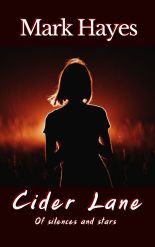
These are a bunch of covers my first novel has had at one point or another. And my first novel is something I love, as it was and remains a little slice of my soul. It’s not the first one I wrote, it is, however, the first one I published, and the first one that was truly completed. The cover’s above are all the ones I made for it…

Now the first one, or the ‘black‘ cover as I like to call it, was made entirely by myself. With nothing more sophisticated than MS publisher. With MS fonts, using word art, and a picture of a bright shiny apple, that was all but begging to be eaten, upon it. I am tremendously fond of the imagery, an apple, the fruit of the first temptation, a symbol for the innocence to be lost with the first bite… It really speaks to me of some of the main themes of ‘Cider Lane‘. It says interesting things about the novel inside the cover, to me at least…

It is also, let’s face it, utterly awful.I mean it’s really terrible, with its crappy fonts and it’s slung together quality. It just screams amateur hour. I never actually published it with this cover, which is a blessing. Not least because as my girlfriend at the time pointed out to me, ‘It looks like a rip-off of the ‘Twilight’ cover and a bad one at that.‘ Which would not have been so bad if I was trying to write a rip-off ‘Twilight’. But that isn’t what ‘Cider Lane’ is. It’s not even close to what the novel is about.

The second cover, or the ‘apple tree’ cover as it is known among, erm, well just by me… Is the original published cover for ‘Cider Lane‘, and again I like it and it speaks to me about the themes within the novel. Which is why after a lot of different attempts to put together a cover I was happy with, this is what I went with it. It was built in CreateSpace’s cover builder, the art was purchased over the internet from a photo supplier for a few quid, so it’s legitimate and unique. The version of the cover you see here, with the book of the month award it received stamped on it, was a later version made after the award, but is otherwise exactly as published both in paperback and ebook. The novel was for sale with this cover for over a year before I changed the cover design. It did not sell well… In no small part, this was down to the cover that ‘spoke to me‘ about the novel, because it may have ‘spoken‘ to me, but its said sweet bugger all to anyone else. Let’s face it, it tells the casual viewer nothing about the novel at all, except there may be an apple tree involved, and when the title is ‘Cider Lane‘ that is probably a given…

The last of the three is the current cover, which if you are viewing this you can probably also see on the side of the blog, above ‘Passing Place‘ my other currently available novel. You may well see they are similar in design. A vanity on my part I will get to it in a moment or two.

The important thing about the ‘Girl in the sunset’ cover, as I call it, is that it tells the prospective reader something. At least something more than ‘Apples‘ does. It has some mystery to it, some draw. How much, well that’s a matter of opinion. I do know that it has sold more copies than the ‘Apples’ cover did if you ignore the first month of release spike. In short, the cover has drawn more interest. It has also lead a few people to confess to me how much that first published cover turned them off buying a copy. “it looked like some non-fiction local history book” as one friend told me…

So ‘Passing Place’ and ‘Cider Lane‘ have covers that are similar, As I mentioned, this was due to vanity on my part. What writer doesn’t want to have a bookshelf at home with all their novels on it? Why would you not want them to have similar covers, a linking theme of some kind… That way Errol the Bookcase dragon can lay across them looking all dragon-like….

untitled

For those who are trying to guess, yes he is called Errol because I am among other things a fan of Terry Pratchett, so as I have a bookcase dragon I call him Errol. So sue me… But back to my point…

Vanity is all well and good, and if you’re a best-selling author who’s fans line their own bookshelves with your novels, then having a theme to your book covers is wonderful.But if you’re reading this, and you are even vaguely interested in my opinion, then I suspect you’re not Neil Gaiman, Stephen King, John Scalzi, Jim C Hine, Patrick Rothfuss, or indeed a whole lot of other authors I read regularly …  (If I am wrong and you are, Hi, I love your work you’re awesome, and what the hell are you doing reading this blog,,,, Yes… I’m looking at you, Pat… I know we don’t want to pressure you, and your charity work is wonderful, but seriously I don’t want to die before the third in the king killer series comes out …. and yes Neil if you’re reading this I know Pat is not my bitch … but… but … ahem, where was I )

Oh yes vanity, here is the thing, I have made the same mistake with ‘Passing Place‘ I made with ‘Cider Lane’ originally. I made a cover that says nothing about the novel, and I did it because of vanity. That and to give Errol a nice place to sit for a photo op before I send out a load of signed copies to readers who requested them from me…

The ‘Piano‘ cover looks great to me, having matching covers looks great on my bookcase and occasionally when I publicise the novels together. But they are not part of a series, they have no links at all in any real sense, apart from a couple of things buried deep in the text. They are not even in the same genre. And ‘Piano’ tells the reader nothing about the novel, except they may be a piano in it. What it doesn’t say is this is a Scifi fantasy horror novel. One that questions reality as a perception of the mind explores’s strange, fascinating characters in a multiverse-travelling bar and grill. A place where causality can be bent by the chef, there is a forest in the cellar, a talking cat, a grey man who dances with his mop, a barman that has more than just a devil’s smile, a waitress who talks to trees, and listens when they talk back to her, which just happens to have an opening for a piano player grieving over the suicide of his dead wife and advertises it in a bus station window in the middle of no-where….

Instead, it says ‘Piano‘…

I love this cover… It is, however, exactly the wrong cover for the novel… and as I said, I have made mistakes. If you are going to use covers that take the same theme, then do so with good reason. ‘Passing Place‘ is the first book in a series, it should share a common theme with other books in the series as that helps to identify it as a brand… ‘Cider Lane‘ is not a part of that brand. With the exception of sharing an author and a certain degree of style, they have nothing in common, not even sharing a genre. Which is a shame because …

Themed covers work really well at making your novels stand out from the crowd, as a random example, take a look at the ones below:-

cghbooks

C.G.Hattons Thieves Guild series (which I highly recommend and have reviewed before on my blog here and here) does an excellent job of covers that catch the eye and have a running theme. I know they catch the eye because that’s how I ended up reading them, though her wonderful titles helped to grab me as well. But the common theme works well and draws you in. (C G’s website is here if you want a look) C.G may have designed the cover herself, I really have no idea if she did. But if she did then she is far more talented than just being an exceptional wordsmith, universe builder and title-thinker-upper of books. I suspect she had advice, help and found a talented artist who could work with her to make her covers really stand out. Which is why she is doing really well in the indie sci-fi genre.

The point I am stumbling towards is this. You are more than likely not all things to all men. I certainly ain’t. While I can string words together in a fluid narrative, I am not best placed to judge my own covers or design them, and neither are you. The point of a good cover is to make people want to read your words. So know your limitations, and do as I advise (not, blatantly, what I do). If you really want to design your own covers, go for it. CreateSpace, KDP and every other self-publishing all have cover design software that could help you. There are also plenty of other blogs full of advice out there in the community. I have a link to William King’s ideas on the subject below.

I intend to change the cover of ‘Piano‘ when I have the next book in the series written and ready to publish. I would do it now, but I am waiting to find the right cover or the right cover artist. More importantly, I am waiting till I have more than a working draft of book 2. Which, as I don’t even have that as yet, is going to be a while. Because if my books are going to judged by the cover (and they will be) I am going to try to make those covers as good as possible, and if that means spending some money I will do just that.

 Further reading and self-creation.

If your only publishing an ebook you only need a front cover and if you want to try making your own William King has a great guide for the vaguely computer literate here. Which I used when my old friend Kram Seyah needed an ebook cover. ( which was featured in the last post) It is best, or at least the most straightforward, tutorial on making an ebook cover I have come across. The cover of ‘A Turn of the Glass’ may not be perfect, but it suits the ebook and works well. It’s a small cheap novella, and I never expected it to sell quite as well as it has, as it was just an experiment, so I did not want to spend much money on it. But unless old Kram writes some more its never going to get a new cover. Mr Kings guide was a huge help in designing it.

Here as promised are some links to good cover designers sites that are well worth a look

There are a lot more out there so shop around, and find the cover you want, or the designer you want to work with. Really there is no substitute for doing your legwork with this.

Alternatively, you can make your own, though if you do, then I advise you make a few options and ask people for opinions. Makes sure the art is available, and you pay for it if you need to. Put as much time and care into it as you do your second, third and fourth drafts. Because if you don’t get it right then, you will find selling the book all the harder. Because people really do judge a book by the cover first and foremost…


Adios for now

Mark


Self-publishing: A guidebook for the tourist, will be back with another informative and occasionally rant post in the near future, feel free to follow the blog so you don’t miss a post

The previous posts for those who missed it can be found here.


Links to my own social media, by all means, connect with me on them.

FACEBOOK    TWITTER   GOODREADS


Posted in publication, self-publishing, writes | Tagged | 5 Comments

The Street: The Complete Lovecraft#12

The first time I read this story I was left feeling a little uneasy, and not sure why. If I had read it in the past, it escapes my memory, so it was one I came to fresh for this blog. It did not leave me feeling uneasy for all the good reasons a Lovecraft story sometimes leave you with a sense of unease. This was not an unease at considering humankind’s place in the cosmos. Nor was it an unease about what the shadows of my room might hold, that itch at the back of your mind after being drawn into a tale. This was another form of unease and one I could not quite put my finger on at first reading. So I read it again, despite some misgivings as it is not a story that grabs me, at the end the feeling of unease remained.

lovecraft-66-collegest-1918

The Street‘ is the story of a street, so bonus points for the title telling you exactly what to expect. It is told from the perspective of a timeless observer, which may well be the street itself, and follows its beginnings as a few rude huts as the first European settlers arrive in North America, up to Lovecraft’s own time. It is also, beyond that, the story of the rise of the United States from the humble beginnings of those original British colonies. Through the wars of independence, the civil war, and the first world war. As well as how the nature of the street and its inhabitance changed over time. The sense of place its installed within them, the pride of young men marching to war. The sacrifices paid along the way.

While it is never mentioned directly, it is safe to assume ‘The Street’ would be found in what becomes a New England city. The general consensus is that it is Boston, on account to Lovecraft taking inspiration from the Boston police strike of 1919, just after which the story was written. By the time it reaches what to Lovecraft would have been the present day, ‘The Street’ has gone from been the fashionable heart of the city, to a down at heel part of town in slow decay, cheap rents have made it the haunt of immigrant families clustered in small communities. Accents no longer native to the city are heard in the street and attitudes too. And this is where my own sense of unease begins, with echoes of an attitude and a zeitgeist that can be seen today.

They went in pairs, determined-looking and khaki-clad, as if symbols of the strife that lies ahead in civilisation’s struggle with the monster of unrest and bolshevism.

The above quote is from a letter Lovecraft wrote to the fellow author and early collaborator Frank Belknap Long. He was talking of the national guardsmen drafted in to keep the peace due in the strike. But it is the latter part of the quote that holds the most interest, and disquiet. This was after all only 1919, two years after the October revolution in Russia. Fear of the ‘Red Menace’ was an influential force in the American body politic, as it remained up to and throughout the second and cold wars. But it is the xenophobia of Lovecraft that stands out, rather than his anti-communist stance. Or rather the projection of that anti-communism upon the Russian immigrants who inhabit the street.

There is an irony here, that apparently bypassed Lovecraft, much as it’s echo’s by-passes too many people today. The Russian immigrants in Boston in 1919 would have been for the most part, if not entirely, refugees from the October revolution. People fleeing the same red menace which they were being accused of championing. If they were Bolsheviks they would have remained in the new Russia they had won. While there was terrorism being perpetrated in the USA at the time by the far left, it was being committed not by Russian immigrants but by homegrown extreme Marxist’s. It seems inconceivable that those who fled Marxism in Russia having suffered through the revolution would wash up in Bostons poor districts and plan the destruction of the United States from within. The Russian immigrants were the ones who had taken the brunt of political upheavals in their motherland. What they sought was peace, work and a chance to rebuild their lives.

The Russians in Lovecraft’s ‘The Street’ however are planning a new revolution of their own, to bring down the United States from within and strike on Independence Day. They fall foul of the street itself. A place that has become entwined by the souls of all who have dwelt there from its humble beginnings, and taken on their nature, their independence and fighting American spirit of pride and patriotism. So when the nation is threatened by the evil Bolsheviks its rises up to defend its people, its nations and collapses itself upon the Russians plotting in its cellars, killing them all. Which answers a question posed early in the narrative, can places and things have souls? Clearly, for Lovecraft’s street, they can and do. And it is the soul of, to Lovecraft’s mind, a ‘patriot…’

That Lovecraft was xenophobic is hardly a new realisation. There are examples of his early poetry that reveal his strong anti-immigration stance, and his leanings towards the right side of the political aisle are well known. That he expressed these concepts so firmly in ‘The Street.’ is not what gives me a sense of unease when reading it. For all my own more left of centre political beliefs I do not have any problem with stories written by those whom politics are at odds with my own. It is, however, the parallels to the political situation in the new Trump era of American politics I find sending a shiver down my spine rather than the more traditional reasons to feel uneasy when reading Lovecraft.

Rather than the ‘Red Menace’ it is ‘Islamaphobia’, and once again it is as often as not the greatest victims of the terrorists, the ones fleeing war and destruction, in the hope of a new life, or just plain a life that are painted by the xenophobes as the menace itself. Almost a hundred years have passed since Lovecraft penned this story, and still we find the victims who have lost the most, are often hated, distrusted and vilified.

This blog, at least the Lovecraftian parts of it, aren’t supposed to be about Lovecraft’s politics, any more than they’re supposed to reflect my own. I intended from the start to focus on his writing, the world’s, ideas and concepts he created, but there are points in reading his work it is impossible to put his politics to one side. The issues with some of his stories, latent racism, inherent misogyny, and indeed his politics, can be pushed aside as indicative of the time he lived and wrote in, others are more reflective of the world as it is today. ‘The Street’ is one such tale, with echoes of sentiments that still exist as a force in the world today, all be it in new forms. Indeed had I read ‘The Street‘ a few years ago it would perhaps have had far less of a negative impact for me, but it is hard to not be repelled by xenophobia in a world where it has becomes so prevalent of late. With a rising far right in Europe, a Trump presidential campaign that first pushed the USA to the right a little then split the nation with wounds that three months after the election show no sign of healing. Mexicans, African Americans, Muslims are all becoming the ‘others’ for an increasingly powerful religious right that has a figurehead in Trump.

fear-of-the-unknown

With a rising far right in Europe, a Trump presidential campaign that first pushed the USA to the right a little then split the nation with wounds that three months after the election show no sign of healing. Mexicans, African Americans, Muslims are all becoming the ‘others’ for an increasingly powerful religious right that has a figurehead in Trump. It is hard not to see parallels in this story and the world as it is today.

Xenophobia is fear of those who are unknown, and fear of the unknown if often at the very heart of Lovecraft. It is then perhaps not a surprise to find xenophobia within Lovecraft’s tales. The story itself is worth a read, for its descriptive nature, it an excellent exploration of the growth of a nation, but the message within it is one humanity would do well to grow beyond. As it is that perhaps shades my opinion and I give it only 2 tentacles, but then it is not the Lovecraft I wish to read.

edb55-2out2b6

Further Lovecraftian witterings 


Posted in Lovecraft, mythos, politics, retro book reviews, rights | Tagged , , | 1 Comment

Self-publishing: A Guidebook for the Tourist#3: Unlimited Questions..

“There are a whole lot of people out there in internet-land trying to help you become a self-publishing genius. The vast majority of them have one thing in common. They are trying to make money out of you.”

But this time I am going to talk about something more complex and certainly more controversial than the ‘for a small fee’ merchants. Instead, I am going to talk about a company that wants to make lots of money out of you, though as a by-product if they are successful you will make money too. The self-publishers biggest champion, Amazon, who I have extolled the importance of before, but they have critics, and they have their dark side. It is important to remember Amazon is not your friend, it’s a business pure and simple, what interests Amazon is making money out of your hard work, and if they can do so at the expense of their competitors all the better in their opinion. So they have been known to try and stack the deck in their favour, which is where the controversy begins.

fire-hardware3

Kindle Unlimited: Friend or Foe…

Everyone and their pet cat it would seem has an opinion on kindle unlimited, it’s a topic which crops up on social media in writers circles all the time. Some hate it, some plain revile it, but as many claims to use it or even love it. I have no grounds for claiming my opinion is more valid than anyone else, beyond having researched the subject to a greater degree than most. That is if reading Facebook and Goodreads comment threads is anything to go by. That said we all know the scary monsters which sometimes dwell in the bottom half of the internet are not always entirely rational in their opinions. Though you can find out a lot about people opinions by reading them, it’s always helpful to do your own research. With Kindle Unlimited, like everything with Amazon, there are pro’s and con’s, and you’ll have to decide if which for you outweighs which.

When Kindle Unlimited was launched, it was touted as ‘Netflicks for books‘, which is an apt description in some ways. ‘Amazon Prime for books‘ would be a better description, because it has more in common with its corporate sibling (I have subscriptions to both, so I know of what I speak). Netflicks is a simple subscription service, and once you pay the subscription, you have all the content you could desire if it is on Netflicks you have it. Amazon Prime, on the other hand, has lots of content but is also the shop window for Amazons pay to stream service, and it often seems that what you really want to watch you have to pay for. Kindle Unlimited, likewise, has lots of content, but the stuff you most want to read is unlikely to be available on it. That is true at least if you are looking to read a successful mainstream author’s novel. There is no Neil Gaiman on Kindle Unlimited, or Stephen King or James Patterson for that matter. This has been pointed out to me more than once as a reason for a self-published author to stay clear of it. Which always strikes me as a somewhat flawed logic.

Successful Mainstream authors don’t have books on Kindle Unlimited because their publishing houses don’t need to break their writers. They are not looking to build an audience, they already have one. Their novels will appear on supermarket shelves, be reviewed in national newspapers, if you’re a fan, or even if you only have a passing interest, you will know the new Stephen King is coming out months before it does. In short, they are not looking for those elusive fish in readers lake with a rod in hand, they have trawlers ploughing the waves of readers seas and the fish jump into their boats. Which is why they don’t fish in Kindle Unlimited waters, it’s too small a pool…

If it is a pool however it is a pool that is growing into a lake. While figures for how many subscribers it has are harder to find than an Amazon tax return, we know the lake is growing simply because of the portion of the waters which are syphoned off to writers. In 2014 the monthly payout pool stood at under two million dollars ( See, there was a reason for all the water metaphors, if bad jokes offend then for an orderly line at the bottom half of the internet.) By the end of 2016 on average, it was closer to 14 million a month. So for all its detractors, it is an increasingly popular way for readers to get their book fix. The occasional big fish has dipped its toes in the pond in recent times as well and offered books on Kindle Unlimited for short periods. Generally when Amazon makes a deal with a big publishing house for a few stars to headline for them, and Amazon knows if the lake keeps growing the big fish will swim in it more often.

You are not a big fish, any more than I am a big fish. If you were, I am not sure I can see any reason you would be reading this blog post. But it’s a safe bet you want to grow into a bigger fish someday, and to do that as a self-publisher you need readers. Kindle Unlimited is one of the ponds and one which for now at least is one you get to swim in without too many of the big fish crowding you out. It also offers a few perks along the way which can help build an audience. One of which is if you sign your book up to Kindle Unlimited you can also use Amazons Kindle marketing bait, which comes in two shades. The short-term shiny sale price, and the short-term glittering  ‘giveaway’. The former may seem depressing, after all, why would you want to drop the price of your novel, you worked so hard to write it, you know is it worth the price you’re asking. The latter… well giving it away is almost soul destroying as an idea.

The simple truth, unfortunate though it is, is no matter how much you know your book is worth the money you’re asking for it at a normal price those readers your fishing for don’t and getting them to take a chance on your novel is very hard at times. But human nature being what it is, everyone loves a bargain, and they love something for nothing even more. If you have a novel out there for $3.99 and you use the Amazon sale bait to put make it less than half price for a week $0.99 you will sell more books. You will still get your 70% royalty, though 70% of the sale price clearly. But you will sell more books, for two reasons. Firstly Amazon push books that are on sale this way and secondly you will tell people, loudly, visibly and a lot… (well you should do, at any rate, I know a writer who didn’t then complained no one brought his book at the sale price.)

Simple fact, if you advertise on all the mediums, you usually advertise on and say the Kindle edition of your book is on sale for this week and this week only at less than half price you will sell more copies than at any other time after the first month you released it. When I have done it, I have trebled or quadrupled sales in that week compared to the whole of the previous month.

A confession: I have no interest in making money out of writing, I have a full-time job that well paid, and much as I would like to make my living as a full-time writer right now that is not an option unless I start selling in big fish numbers. I do not measure my success as a writer based on money made, I measure it on the number of readers I gather. The number of fish hooked from the lake if you like. That said option 2, the ‘giveaway’ I still find unpalatable because my novels are slivers of my soul, and I strongly believe people only value that which they pay for, at least when we are talking about things like books. However, this personal position is probably foolish, because the only thing people like more than a sale is a free lunch, and if you play it right, put in your work promoting, a giveaway week, where you book is free on Kindle could net you a whole lot of fish. And once you have them hook, you can hopefully get them to bite at the other bait you offer…
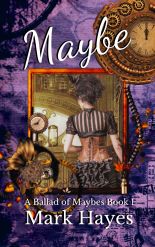
In a spirit of general inquiry, I once wrote a short erotic sword and sorcery novella. (It is a whole 50 pages, but short erotica is a popular marketplace, and I was curious if I could find a niche at the time and needed something to write between drafts of Passing Place). As it is very short, it is on Kindle for the absolute minimum price you can set at $0.99. I don’t actively advertise it, nor is it under my real name, it was purely an experiment and a surprisingly successful one considering how little work I have put into trying to sell it.

If you’re really curious you can find it by writing my first and last names backwards, I can only promise you a few people have found it an interesting read. At the time I thought I might write a few more, a short series of short novella’s then collect them in a single edition in paperback. I may still do so at some point as it has netted a fair few fish on its own, with little work from me. Another great human truth, sex sells… and people like Game of Thrones, dragons, swords, political machinations etc, but also because they like reading the bits about incest George R R Martin wrote…

untitled

The reason I have told you this is simply to illustrate a point. I have sold a couple of hundred copies at $0.99 without trying to do so in the couple of years it has been out there. My original plan was to try and get as many readers as possible with the first book in a series and then sell lots of Passions of the Dragon Queen vol2 / 3 / 4 etc … So I tried putting on a one-week giveaway via its Kindle Unlimited membership and, again without really advertising at all, it ‘sold’ about three hundred copies in that week. Then it did almost as many the next time I did it when the renewal had gone through ( you can only offer books on sale or give away once every 90 days, as you sign up a book for Kindle Unlimited in 90-day periods. So 200 sales in two years, but around 1200 free giveaway copies have gone out. It would probably be more, but I have never pushed it and often forget to do a giveaway in a 90-day slot…

The point here is if Kram Seyah actually wrote a few sequels, he has a readership who just might buy them because they enjoyed the first, and importantly they are aware he exists (in theory at least) having read the first novella. Side note: to go back to an early post, guess how many reviews Kram Seyah has got for his little book … yep, none what so ever… getting reviews is hard. Though it is entirely possible that people are less inclined to put their name to a review on an erotic novel of this kind.

There is another point old Kram can help illustrate. His ‘novel’ is cheap on Kindle, $0.99 cheap. And the kindle unlimited page count is only 51 pages. The way Kindle Unlimited works as far as authors are concerned is the payout pool is separated into $0.005 a page ( it varies each month, but that is the average last year). So if someone reads Karm’s opus on Kindle Unlimited, it pays me very little. Less than the $0.19 I get for someone buying a copy ( 30% of 60% amazon maths are weird but let’s not go there.) So KU is a bad bargain for Kram. However my first novel ‘Cider Lane’ I have had set at $0.99 on Kindle for the last 6 months. It has been out a long time, and I just want to catch readers by selling cheap, (again a whole different conversation). It is a real novel, however, and a respectable 301 pages. So if someone reads it on Kindle Unlimited, I actually make a dollar more than I would if they bought it on kindle… Passing Place is a grand opus of 500+ pages, and the royalties work out about the same either way at normal price.

So if you are selling your novel cheap in order to attract people who might take a chance on it. Then having it on Kindle Unlimited makes sense. You get the sales tools, and you actually could earn more per reader on KU…

Kindle Unlimited also has every Amazon Prime member (if they own a Kindle), as they can all access one book a month free from Kindle Unlimited. (The slightly unscrupulous among you may want to think about that… and I will tell you why. A friend of mine bought a copy of Passing Place direct from me as he wanted a signed copy, but because he had Amazon Prime, he could read it on his Kindle and showed as a verified purchase with his review. I also technically got paid twice for the book. The verified review was what I was actually after however, it is entirely genuine as a review but rather than risk it being rejected due to him not having bought his paperback copy on Amazon he reviewed the Kindle version…)

Now, the downside.

Amazon, as I may have mentioned, is a business, and they use Kindle Unlimited to try and control their access to the market. If you sign up a book for 90-days, part of the agreement is you can ONLY sell your novel on Kindle. That’s no Smashwords, no Barnes and Noble (Kobo), no ibook sales, no other marketplace at all…  Ain’t that a kicker…

Well maybe, maybe not. Kindle, as I have said before, is the biggest market for self-publishing. And Kindle Unlimited is growing as a platform. All the same, you have to weigh that against having to withdraw from other platforms. You can however just sign up for 90 days then drop out of it again. So you can use the benefits for short periods if you want. Though unlisting books from other retailers is a pain.

There is also the controversy’s, and there is a lot of them. Mainly because Amazon, much in the way it tries to clean up reviews has sought to clean up Kindle Unlimited, and tried to do so in the wrong way half the time. I could fill a lot of posts talking about them, but it comes down to this, the ‘for a small fee’ brigade infest Kindle Unlimited in much the say way as they do other aspects of self-publishing. It is a system that is built for exploitation, and Amazon keeps trying to stamp on the exploits.

To give an example or two, as authors get paid by pages read, Some ‘writers’ fluff there books out with lots of blank pages at the end, as readers will flash through them to find what’s behind them. There are ‘books’ out there with 60 pages of story and another 200 pages of excerpts from other books, which may be a marketing tool for their other work but also twists the system. There are also the straight out cons, because Amazon’s algorithms find the page count by the point a reader gets to, so unscrupulous people put hyperlinks at the front of mostly blank pamphlets that go to the last page.. instant 200 pages read…  or 300 or whatever they want. Amazon tried to stop that by setting up a system that banned books that had hyperlinks to the back, which screwed over genuine writers who just happen to have an index there… Then Amazon tried to combat that flaw by making page counts work by time, so you could not flip to the end of a book and rack up a page count, but the system was flaky as hell and screwed up page counts for a couple of months before it was withdrawn.

The main reason for wanting high page counts is not even for the $0.005 a page but the Amazon rewards for best sellers on Kindle Unlimited which pay out large bonuses if you are a top seller there as an inducement. Get in the top sales on Kindle Unlimited, and you can net thousands, sadly criminal gangs realised this and rigged the system with the kinds of methods above and Even Amazon admit, quietly, that the fraudsters have got most of the prizes in the last year or so.

In my opinion, Amazon is trying their best to sort out all the issues with the system of rewards for writers. They just keep breaking it in new ways as the cheats are faster on their feet and find new exploits. A lot of writers are put off by this, understandably.

You have to decide for yourself. Hopefully, this blog has helped you get a grasp on it a little at least, but I would advise reading more on the subject on the Amazon forums. My view is that Kindle Unlimited is here to stay and its another way to find readers, readers actively looking for books. The pro’s for me outweigh the cons, though Kram Seyah likes it more than I do, but he fishes in different ponds…

And as always, Kindle Unlimited is not a shortcut, it still requires engagement with your readers if you want to be a success, something Kram may do if he ever writes a few sequels to his novella….


Adios for now

Mark


Self-publishing: A guidebook for the tourist, will be back with another informative and occasionally rant post in the near future, feel free to follow the blog so you don’t miss a post

The previous posts for those who missed it can be found here.


Links to my own social media, by all means, connect with me on them.

FACEBOOK    TWITTER   GOODREADS


Posted in opinion, self-publishing, writes | Tagged , | 7 Comments

The White Ship: The Complete Lovecraft#11

Mankind seeks utopia, or arguably it should, it often seeks its own destruction instead, and when it finds utopia, it fails to recognise it for what it is and seeks something else. This is the core idea behind H.P.Lovecrafts ‘The White Ship‘.  The story is presented as an allegory for the human condition, or at least Lovecraft’s rather damning view of it. That may not have been his intent when it was written and published in 1919. Indeed I have both read and been told (presumably by people who have read the same commentaries) that Lovecraft succeeds in taking the humanity out of everything. It a common complaint about his fiction, which I suspect is often as not reiterated rather than actually believed. Usually, it seems to be repeated by people who admit to haveing read little actual Lovecraft. In my own view, if this lack of humanity were true ‘The White Ship‘ would never have been written by him, as it is the most human of stories.

200w

Basil Eaton, our narrator, is a lighthouse keeper, stands vidual on a lonely shore, year in year out, watching the ships sail past, and dreaming of the exotic distant shores they visit. He is, oddly enough, a third generation lighthouse keeper, which suggests that at least sometimes the shore is not as lonely as he would have us believe. But still, he stands his lonely vidual watching the tall ships pass by in declining numbers each year. It’s small surprise he dreams of something more, and that those distant shores speak to him, offering him their wonders.

Then one night ‘The White Ship‘ comes, and its master, a bearded man, beacons the lighthouse keeper to join him aboard his craft.  So he does just that as the ship sails off to other lands, Lands that do not exist in any real world, lands with strange names and their stranger in habitats.

Lovecraft’s choice of his vessels name may be inspired by the infamous real ship of the same. ‘The White Ship‘ having the distinction of causing more death, destruction and war than any other vessel in history, when it sunk with all hands bar one while crossing the English Channel, taking with it the heir apparent to the English throne in 1120. Its fate brought about a period of civil war in England known as ‘The Anarchy’, and British folklore would have it that seeing ‘The White Ship‘ abroad in the channel at night is an ill-omen of the worst kind. Which is a nice thought in its own way, though it’s more likely he just thought the name sounded eerie and fitted into the supernatural nature of his tale.

Upon ‘The White Ship’ Eaton sails past many lands, strange places with names like Zar, a green and remarkable pleasant seeming land where ‘“dwell all the dreams and thoughts of beauty that come to men once and then are forgotten’,  Thalarion, a city of a thousand wonders, and an unfortunate number of demons. Xura, the land of ‘Pleasures Unattained‘ which view from a distance seems nice enough, but reeks of death and plague as they sail close to its shores. Each of these places Eaton is warned by the bearded captain, as being lands that ‘those that enter them, never return.‘Each of them could be translated to some portion of the human ide. Which I would posit is the writers intent, though they seem as much to be ideas of different dooms that could befall a man, as states of mind themselves.

‘The White Ships’ course follows the flight of a blue ‘celestial bird’ which adds to the eerieness and dreamlike quality of the journey. Then finally, as they travel westward they come upon Sona-Nyl, the ‘Land of Fancy’. Sona-Nyl is also a perfect society, a utopia of sorts where ‘The White Ship’ and its passengers stay for ‘many aeons’. Living lives that are full of joy and wonderment. ‘Land of Fancy’ may seem an odd name for a Utopia, but what I take from this is that it is a land where you have what you need. Rather than what you lust for in Xura, grasp for in Zar, or search for in Thalarion or any of the other cities ‘the White Ship’ has passed by. In the ‘Land of Fancy’, you can be whimsical for you have all you truly need…

But, and here is the human failing behind this tale, what you truly need is never truly enough. In time, in this happy utopia, Eaton learns of Cathuria, the ‘Land of Hope’. A land that is more perfect still. Where the grass is no doubt greener. Which I believe is Lovecraft’s true message. No matter how perfect things may become, man will always long for more. Even there in his utopia, Eaton is haunted with his desires. Eventually, he convinces the bearded captain to take to ‘The White Ship’ once more and sail on westward, following the celestial bird. They sail on through storm dashed seas till the ages spent in utopia are a distant memory till the ship takes them to the edge of the world, and plummets to its doom. As it was always apt to do, chasing the ego of men.

Of course, this is a Dreamlands tale, and like all such tales, the twist is Basil Elton wakes at the end. Yet, as is also often the way of such tales, he finds himself not in his bed but on storm-lashed rocks next to his lighthouse. A lighthouse with no light, as its keeper has forgotten it. Though it seems to be only moments after he first embarked the white ship. There is a great wreck, caused by the light going out, yet in the morning nothing remains.Except, as again is the way of such stories, the corpse of the celestial bird ‘The White Ship followed ever westward, and a single broken wooden spar. White, of course.

200

To sum up, ‘The White Ship‘ ends with a typical, it was all a dream or was it, ending. Yet the tale is better than that. It is the journey, the imagery and the analogy behind it that make this such an interesting part of Lovecraft’s work. It has something of a parable to it, and for me is one of his most human stories, as it is a tale about humanities soul in many ways, the quest for utopia that can never be satisfied, even when it is achieved.

As such I give it 5 out of 6 of the old Kraken suckers. But then I am a bit of a sucker for this kind of tale…

b89f9-5out2b6

Further Lovecraftian witterings 

Welcome to the Lexinomicon, a bluffers guide to the writings of H P Lovecraft
Posted in dreamlands, Lovecraft, pointless things of wonderfulness, retro book reviews | Tagged , , , | 7 Comments