Mandolins and the 0.2 percent

For complicated reasons, this is a bit of a rant. If you are offended by rants about politics, you may want to read other, more entertaining posts, like the last one I posted with fictional rules for tea duelling earlier in the week. I can’t say I blame you if that’s the case, go off and enjoy yourself…

Okay, for everyone who didn’t run to the hills let talk Mandolins… Yes I know I said politics, I’m getting to politics, but we have to start with Mandolins. Mainly because I just bought one, an electric Mandolin to be precise, with a dark read/ black sunburst sound box, mahogany fret board, polished chrome fittings, its a beautiful thing…

Here it is on my mantlepiece, next to my drinking horn. Isn’t it pretty…

Now here’s the thing, of the drinking horn and the Mandolin there is only one of these items I have a hope in hell of using properly. I hands made for pit shovels and quaffing, which is like drinking but you spill more. I have big hands, and thick fingers. Not the kind of fingers you need for delicate fretting. So while I bought a Mandolin, I did so in the full knowledge that while I might wish to learn to play it like the troubadours of old… I am more likely to tune it for a slide and hack at it on occasion for larks and giggles.

That said, as both my guitar amps are apparently shot and need some TLC, I tried it through my Bass amp and by the gods the low roll of thunder had a quality of awe to it…..

The point being, I can’t really play any of the guitars, and assorted other instruments of that ilk, I have around the house. They spend most of their time gathering dust and my owning them is the epitome of frivolous. Yet I have a large collection of such things to which my beautiful new mandolin is but the latest addition. So you may ask, why do I buy them?

The simple answer is they make me happy, they are good for my mental health. I like having them around, in much the same way I like living in what is effectively a library these days. The more complex answer is because I am lucky, because unlike many of my friends and people I know, I have no real debts except a small mortgage, and through the day job I earn more than I need to live, and have few aspirations to move to a bigger house or buy a faster car. In short I have a reasonable proportion of that mythical thing oft referred to as disposable income. This allows me to buy musical instruments I can’t really play because they look nice…

It also allows me to spend my money supporting good causes both in terms of charities and individuals though things like patron, Kickstarter campaigns and occasionally whimsy’s like buying them a coffee, or just buying books and other things… In short, while I chose where to spend my money, I try to spend it in the cause of joy, both my own and trying to bring a little joy to others.

I would be also equally happy if I had a little bit less, because I paid a little more tax, if those taxes went to things like the NHS, and decent wages for working people who aren’t moderately well off in the way I am. I wrote on that subject a few elections past, just after I had bought the cherry red Epiphone guitar which is my pride and joy (and deserves an owner who can actually make it sing rather than me). My argument then, much like now, is that the reasonably well off can afford a little more tax. The rich and company’s like amazon can afford a lot more tax, but the reasonably well off can afford a little more too. I’m not talking about taxing us into oblivion, but if I had to put off buying a new guitar, or electric mandolin by a month to save up rather that just buy it impulsively, that would not be a terrible thing…

Surprising as you will doubtless find it my impassioned plea to tax the reasonably well off a little more fell on deaf ears that time round. The Tory party was duly elected and kept right on blaming the problems of the poor on the poor… Giving tax cuts to the rich and the reasonably well off who are their base…

In the next few weeks the UK will get a new prime minister, who will be in power for almost two whole years before they face the electorate, as the next election is likely to be in May 2024. Certainly with the Torys flagging in the polls, but sitting on a huge majority, they are not going to rush to have an election early. So our new prime minister is going to be chose by the 160000 members of Tory party. Which in case you are wondering is where the 0.2 percent in the title of this blog post comes from.

0.2% of the population of the UK will chose the next prime minister and while I can not say for sure I suspect the majority of the 0.2% are people not entirely unlike me, in that they are fiscally secure and of a certain age. There however I suspect the similarity ends. I doubt a single Tory party member is going to elect anyone who would increase taxes on them for the benefit of the masses. I suspect they will look to their own interest and expect ( and get, which they have ) candidates who don’t care about the poor and the working classes, or about the middle classes struggling in an increasingly hard economy.

This is not an election for the soul of the country, this is an election for who gets to keep on punching down, and keeping the masses in place, and the better off better off.

So what’s my point?

Well there is an argument to be made that I could do better things with my money than buy musical instruments I can’t play just because I like to have them around. I would argue that I already do just that, but its not an unfair point.

However, I think there is a much bigger argument to be made that the governance of a nation and its leadership on the world stage should not be decided by 0.2% of that nations population.

Now all that said, I’m off to play my new Mandolin badly and not read the news for a while, because playing the mandolin badly will be good for my mental health in the way thinking about the tory leadership constant will not be…

Posted in big questions, blogging, depression, humanrights, humour, pointless things of wonderfulness, politics, rant | Tagged , , , , | Leave a comment

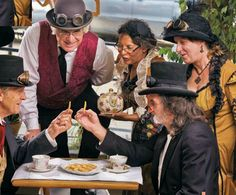
Yorkshire Professional Tea Duellists Union Rules

Being here in the rules for undertaking of Tea Duelling under the YPTDU rules for professional and semi profession divisions, short form, full rule book available upon request.

1/ Only Tetley, English breakfast, Yorkshire or a reasonable Earl Grey, with a dash of milk and one sugar may be used for competition purposes. On no account can green, herbal, or fruit teas be substituted. (supermarket own brand teas are allowable for training purposes but best avoided if superior brands are available.)

2/ A regulation tea cup of 150 ml or 5.2 uk fl oz must be used. For our cousins across the pond who wish to engage in gentlemanly entertainment that is 5.7 US fl oz.*. Bone China preferred but not stipulated.  Mugs may not be used except for training purposes, or for duels talking place on building sites.

3/ The correct way to hold a duelling cup must be observed in all competitions. This is stipulated as being with the handle, between the thumb, fore and index fingers, with the ring finger loose and the pinkie extend at right angels to the cup.

3i/ In order to further aid worldwide expansion of the sport however exceptions to this rule are allowed for Yakuza.  

4/ Biscuits should be rich tea,

  • 4b/ Other types and brands are available and may be used in a adhoc fashion by agreement of the event officiators provided all combatants use the same biscuits. Combatants may not bring their own biscuits, and biscuit tampering will be deal with ruthlessly.
  • 4b i/ hobnobs are now allowed but considered a tad poncy   
  • 4b ii/ chocolate digestives, bourbons, custard creams and all forms of ‘fancy’ biscuits are forbidden as they can ruin the consistency of the tea.
  • 4b iii/ no jaffa cakes, they are legally deemed to not be a biscuit for tax purposes, the YPTDU will be lead by HMRC in this regard.

5/ Biscuits shall be held in tea to a depth of one half their length for the minimum extent of the officiants count, normally three and must not exceed five, after which the combatants may chose to remove the biscuit at any time.  

6/ Subcommittee agreed rules for shin kicking.

  • 6i/ Any combatant may instigate a single shin kick in as given round. Said combatant may not kick again until their opponent has kicked back.
  • 6ii/ Gentlemen combatants may not kick the shins of a lady first.
  • 6iii/ Shinpads are acceptable for ladies, as are knee length boots. Gentlemen should wear brogues or oxford.
  • 6iv/ Pit workers boots are only allowed for pit workers in work vs worker teatime duels. Iron shod boots not allow, excepting prior agreement from all parties.
  • 6v/ Ladies with pointed toed boots are politely reminded to aim for the shins only.
  • 6vi/ All shin kick will cease for all remaining round on a declaration of ‘Sufficient’ by either party.          

*We have no idea why the Americans retained the Imperial system but failed to keep to the imperial standards. I mean why call it Imperial measurements if you’re just going to make up the numbers as you go along.  

Posted in amreading, amwriting, pointless things of wonderfulness, rights, steampunk, writing | Tagged , , , , , | 1 Comment

Survivors cover.

I have seldom being shy about my love of the work of Nimue and Tom Brown both in terms of the world of Hopeless Maine the have created between them, Toms gorgeous art and Nimue’s writing in general, and what lovely, supportive, people they are as well.
As such I thought I might share this here, both the cover the the next and final volume in the Hopeless Maine saga… and Tom’s thoughts upon it…

Its wonderful.

The only disappointing news is that Hopeless Maine: Survivors will not be out till next year…. Personally i can not wait

gothicmangaka's avatarThe Hopeless Vendetta

Hello again people! (and others)

It’s a strange and interesting time for us. We are finishing up the final volume of the Hopeless, Maine graphic novel series and this is the conclusion of something that has been a huge part of our lives (Sometimes too much a part of our lives, sometimes not enough) It brings up memories and associations that I could not even begin to list or describe adequately. It’s been woven into the last decade of our lives (plus a bit) inextricably and it’s a big part of how we got together in the first place!

So, finding an image that would feel right to us and also, hopefully, to all of you for the final graphic novel cover was a pretty big thing. We’ve had a theme in the Sloth Editions for the covers. It’s always Sal performing magic of some sort. We needed that element…

View original post 135 more words

Posted in Uncategorized | Leave a comment

Irrational typesetting hatreds

Bad typesetting irritates me, though that is an understatement. I should make a point of saying typesetting is a subjective matter. There is no such things as the ‘right way’ to typeset a book, and just because I consider something ‘bad typesetting’ doesn’t mean it is. However, that said, there are certain rules around typesetting that are the norm. If the typeset of a book doesn’t follow these rules then for me ‘subjectively’ it is badly typeset. So when a indie book is typeset without adherence to those norms it irritates me for a couple of reasons.

The first reason is simple enough, I am of the opinion that a self publish or indie book should be indistinguishable in quality and to look at from a book published by a mainstream publishing house, because indie books that way it is judged on the merits of the writing alone. Rather than judged by poor cover design or subjectively bad typesetting. So for any indie book, having it typeset in a way that follows the norms of the publishing industry is important… in my opinion.

That is of course just my opinion.

The second reason however is not simple, or subjective. It is massively complex and to do with the way my brain works and how I read. It is not subjective but personnel, and I may be the only person in the whole world whom this effects, because frankly how could I know if that is the case one way or another. The nature of consciousness being what it is.

To try and explain though, let me start by stating that I am dyslexic.

because of my dyslexia I learned to read the hard way. That is to say, it took me a lot longer to learn to read and how I read is measurably different to the way most people do. It’s the reason I don’t do readings, as reading aloud terrifies me, mostly because I can not read ahead of what i am reading out in the way most people do. I also read slowly compared to most people, though for the most part not noticeably so, which has a lot to do with pattern recognition. The way I read involves accessing careful laid neuron pathways in my brain that were trained by the sheer belligerence of my sainted mother who made me read to her every night for the better part of a decade.

I learned to read, and do so well, several years later than most kids, and though by high-school I had an advanced reading age and read anything I could get my hands on, in those early years it was an up hill battle to get me to read at all. In short, reading did not come naturally to me and even now it still doesn’t. A lot of reading for me, more than most I suspect, is pattern recognition and because of this I need what I am reading to have a certain structure, because without structure the act of reading becomes measurably harder for me, and painful, after a fashion.

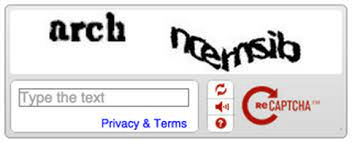
To try to give you a glimpse of what I am talking about, I am sure you all know, and detest, these things…

Captcha’s like that above, I cannot read at all. I get them wrong 9 out of ten times and the tenth is a guess, because it has no structure my dyslectic brain can recognise…

Now I will admit this is an extreme example. But it is the best way I can think of to explain what reading something with what I would subjectively call bad typesetting is like for me to anyone who doesn’t have my dyslectic brain. bad typesetting if for me what reading a book printed like a captcha robot checker is for everyone else…

I can do it, but it hurts to do so and it takes a while to get my brain to adjusted to read something with typesetting that is subjectively wrong, and because of this I have a somewhat visceral reaction to bad typesetting. Saying it hurts is not hyperbole, trying to read something with bad typesetting is a sure way to give myself a stress headache. Sometimes I will struggle on because the writing and the story is worth it, but as often as not, unless I it is an authors I know I will just put the book aside and read something else.

I had a bit of an unfortunate disagreement with a fellow writer this week. The unfortunate nature of the disagreement is entirely my fault because I am, as you may be aware, given to hyperbola, verbosity and on occasion have the tact of… Well… Me.

Typesetting is subjective. It is about choices, and what I might consider to be bad typesetting may no more than seem slightly odd to someone else, if they notice at all.

Most people are not me. For which the world is doubtless grateful… However, there are some basic rules for typesetting that authors self-publishing should follow, or at the very least be aware of. So as a quick guide, here are the basic rules for the industry standard in 99% of major publishing house novels.

  • The main body of test should always be set to justified.
  • There should be no extra spaces between paragraphs
  • All paragraphs should have an indent on the first line
  • Indents should be between 5 and 10 mm , no more
  • Preferred font for main text should be Garamond 11 or 12 point (or 16 in ‘large type’ editions)
  • fount of the book should be formatted with a title page , a legal page , two blanks and the first page

There are a whole bunch of other very subjective rules, that don’t really matter. In fairness the last couple are subjective as well, Garamond is just the most common font used in most books, and how the fount of the book is laid out is a matter of choice. The first four rules are the important ones for me.

My best advice is go to a book shelf and pick any random book, flick through it just to familiarise yourself with the typesetting style , then pick out another. You’ll find most of them are the same. Oh there will be differences, some books will have fancy graphic’s at the start of chapters. Or have every chapter start on an odd numbered page (which will be the one on the right) even if it leaves a few left-handers blank. Some will even have pages that are not numbered (though why I have no idea) But for the most part every mainstream book will have the same basic typesetting rules in place.

As i hopefully have explained, I am an extreme case when it comes to my irrational typesetting hatreds, because my brain isn’t ‘normal’ for want of another word. But even people who aren’t me will notice when typesetting seems a little off, just not quite what they expect to find in a book. So I would argue that following the basics is a must if you are looking to self publish. You want people to judge your book on your words, not on how they are presented after all.

Posted in amediting, amreading, amwriting, indie, indie writers, indiewriter, reads, writes, writing | Tagged , , , , , , , , , | 2 Comments

Whitby, Witchcraft, and Goth-boots

Whitby, the north Yorkshire coastal town that’s half fishing village, half haven for everything alternative, strange and draped in black crushed velvet. The once quite little harbour below a cliff top abbey first gained a reputation as something more than just another small coastal town because of two famous figures one real who’s connection to the town is some what spurious, one fictional who’s connection to the town is also somewhat spurious.

The first was James Cook, who wasn’t born there, lived there for only a short time, and who’s connection is mainly, he sailed from there on his more famous journeys. The second is of course Count Dracula, who isn’t buried in the graveyard at the abbey as he is the fictional creation of Bram Stoker who once visited Whitby a couple of years before he wrote his most famous creation.

It is the latter that is responsible for all the crushed black velvet you can find in little shops around the harbour. He’s also the main reason that the twice yearly Goth festival takes place in Whitby and the reason its always a good place to by a new top hat.

Whitby has a reputation for ghosts in much the same way as cities like York and Gloucester, possibly for much the same reasons… It has a reputation for spiritualism and for attracting residents of a certain alternative bent. Even the local semi-precious stones, Whitby Jet, are black…

Whitby Jet roses…

I’m sure it will come as a shock to all of you that I quite like the town… Who’d of thought it? And that’s aside the stormy north sea and the long beaches and brooding cliff’s.

All of which means that Whitby makes a great setting for a modern urban fantasy. You know the kind of thing, witch covens, magic, drinks party’s around a bonfire on the beach… Which brings me to an unexpected literary gem to cross my path.

Dormant Magick: The Whitby Witches Book 1

By Lillian Brooks

Lillian Brooks is a practising pagan, living in north Yorkshire with her partner and a cat. This may well be true, I could not possibly say otherwise, and it would be wrong of me to do so. As such I will only say her writing style bares a certain resemblance to that of Amy Wilson who’s book of short stories I have previously reviewed.

But mysterious authors aside this was not the book I expected it to become when I read the first couple of chapters. This was a pleasant surprise because what the first couple of chapters led me to expect would have been a more predictable but less accomplished novel. What I expected was a paranormal romance against the backdrop of the occasionally haunting, always moody, and often brooding backdrop of Whitby on Yorkshires east coast. There would be nothing wrong with a paranormal romance on the cliffs by the Abbey overlooking the harbour. But such is not really my cup of herbal tea.

To be fair, herbal tea is not really my cup of herbal tea either, the cup is always coffee, but lets not get side tracked on hot beverages, or indeed carrot cake (though there is a recipe for carrot cake at the end of the book for reasons that are Lillian’s own no doubt. Not being much of a baker I have not tried it).

The story in the novel is told to us by Alyssa Bright, who grew up in Whitby in a family ‘blessed’ with elemental magick. Ayyssa herself is a water witch, her mother and grand mother were a fire witches, and as a child she lent towards friendships with other members of Whitby’s witch community Before rejecting it and her magick and running off to find herself on the other side of the pond… The novel starts several years later when Alyssa, living in New York and engaged to an American discovers to her horror that her magic has started seeping back..

At this point this could easily have become the kind of urban fantasy for adolescent’s that I generally avoid. But it doesn’t. What follows is everything you might expect from adolescent urban fantasy without the adolescent bit. Magic is just something that exists in Alyssa’s world, most people just don’t know its there. The relationships between Alyssa and her former coven feel grounded and real in the way adolescent Urban Fantasy relationships never really do. The absence of teenage angst, and its replacement with real emotional attachments and relationships is what makes the novel.

That and the brilliant writing, the pace, the feeling that you are on a journey with Alyssa, all add to this. This is short for a novel, but its short because words are not wasted. The story is told without getting bogged down in melodrama. Its fresh, fascinating and has plenty going on between its slim covers. This is a novel that reads much like the novels of Agatha Christie would if Agatha wrote witch coven urban fantasy. Its not so much a who-done-it and a Who’s-doing-it with the same kind of urgency and pace you don’t get in most novels these days because they are often 20000 words longer than they need to be. When Agatha wrote novels 50k was the norm not the 70k to 80k of today, which led to a certain brevity or perhaps more importantly less filler.

Despite this brevity there is also plenty left, even after everything is resolved. There are plenty of hints and the laying of ground work for further books in the series. there is more going on that Alyssa realises that is for sure, and plenty she knows she doesn’t know too. All with the joy that is dark brooding moody Whitby as a setting.

Ultimately, and importantly thought, its perfectly paced, eminently readable and just fun.

And we all need a little fun now and again… As well as black jewellery.

Posted in amreading, book reviews, books, fantasy, fiction, indie, indie novels, indie writers, indiewriter, pagan, reads, rites, sci-fi, writes | Tagged , , , , , , , , | 6 Comments

Witchcraft and Aether

Sometimes when you start to read a book you get the feeling you have read it before. To be fair in my house there is always a good chance I have read it before, as I reread old books all the time… However that is not the experience I am talking of here. Sometimes you start a new book, and the opening reminds you of books you have read before.

This is occasionally comforting. There is something to be said for walking the well trodden path on occasion. Even a path you know well can have sights you have never witnessed upon it. You never know where you going to find once you put your foot out the door, to paraphrase a hobbit of some renown. So while I tend to look for different journeys, older paths have a certain joy to them.

What is more joyful, however, is a book that starts down a well trodden path that then ventures off the well beaten path into something else entirely. I recently encountered a book of this kind.

Engines and Amulets : The Aethertide Saga Book 1

By Craig Hallam

For a book that starts firmly on well-trodden pathways, Engines and Amulets veers sharply off in a couple of unexpected tangents.

It opens with a grim-dark steampunk London, and a scientist whom for reasons of gender and ethnicity is hiding away in an attic in the unfashionable, dirt-poor end of town. Olivia Heward is a delightfully drawn character but I would expect nothing less from one of Craig Hallam’s characters as he is an artist in characterisation. But I knew where all this was going from the off. Genius inventor fighting the twin poisons of privilege and position granted to less able scientist who would be only too happy to take credit for her inventions… Its a well trodden path in the steampunk genre after all.

Except… While that may well be part of the greater plot of what I hope will be a long series that builds upon this first novella… that is not the well trodden path we are following here. We and Olivia, swiftly leave London behind for elsewhere, and things become strange and complex. There’s strange creatures, wizards and odd tribes, in-another world. There is more as well , hints of stranger things, older things, of things long forgotten as well as newly discovered.

For a novella Craig packs a whole lot into this tale. Unpacking it in a review would be a disservice, because half the joy of this is the strange and a complex little path it all follows. Its not what you expect it to be, certainly not what I expected from the opening chapters.

It is, however, as beautifully written, rich, vibrant , strange and fascinating as always when your reading a story by Craig Hallam and I look forward to seeing where the Aethertide Saga goes from here.

Posted in amreading, book reviews, books, fantasy, fiction, goodreads, indie, indie novels, indie writers, reads, sci-fi, steampunk, supernatural, writes, writing | Tagged , , , , , , , , , | 1 Comment

Tentacles

Regular readers will be aware I review indie books when I read them. Or at least do if I love the books. If I don’t I keep quiet about it, because if I don’t like something it doesn’t mean others won’t and frankly life is too short for negative bullshit.

The world is a dark scary place full of evil corrupt things that seek to make peoples lives a misery, I’ll be damned before I add to that. If I review someones hard work, blood, sweet , tears and art, its because I love it and think more people need to know about it. If I don’t like something, I keep that to myself.

Of course, my innate paranoia means that whenever someone doesn’t post a review or tell me they love one of my own books I automatically assume everyone hated it… But such is the cross one bares when one puts slithers of your soul out into the world in the hope people will find some joy, or meaning, or whatever, in them. You just have to hope they do and try to ignore any negative bullshit that arises from doing so (because there are always people who will be negative about it).

Anyway, once in a while someone posts a review that helps make it all worth while. Sometimes I even feel the need to share such a review with a wider audience, despite been the worlds lest self focused self publisher who would rather talk about other great indie authors than myself. This is one such time, one of my piers the incomparable Mat McCall who’s books are an absolute joy btw and reviews for which can be found here, here and here, wrote this about my somewhat eccentric non-fiction work , the Lexinomicon.

The Lexicromicon by Mark Hayes

A review by Matt McCall

Okay, so I’m a Lovecraft… liker… I can’t say I’m a fan, but I have found myself drawn to his milieu over and over again.

I like most of my generation first encountered Lovecraft’s stories through the RPG “Call of Cthulhu,” and ever since, like so many authors, have found myself drawn into the dark insanity of the worlds he created. The reason I can’t say I’m a fan is that I have only read a few of his stories, in their original form. Oh yes, I’ve read the graphic novels, watched the films, read a biography, and watched a couple too, etc but not sat down and read everything he wrote in his short and generally unfulfilled and unhappy life.

Why? Because some of what I have read has been excellent and some of it is utter stodge, the story is lost in layers of extravagant verbosity and obscure rambling sentences.

I have always wanted a guide to the best of Lovecraft, something, as an author myself, that will point me to the ‘meaty bits.’ The really good ideas, the core of the Mythos, without having to wade through the chaff. I suppose there exists out there several worthy academic treatises that may have served as guides, but life is too short to wade through those things and they are often as dry as rice cakes with a topping of shredded cardboard.

And so, when Mark told me of his project and upcoming book, a The Lexicromicon A Bluffers Guide to the Writings of H.P. Lovecraft, I was truly interested. Mark, I hope he doesn’t mind me saying, is a fan. Not a blind adherent, he is more than able to cite the issues with old Howard Phillips’ work; his racism, insular attitudes, sexism, and repressed homosexuality, without it clouding his judgement of the quality of Lovecraft’s work. And how that quality varied throughout HP’s short writing life. There are gems of utter genius to be discovered deep in the piles of rat poo, and it is those gems that have kept HPL’s light alive throughout this century.

And so, Mark challenged himself to read all HPL’s published works and comment on each, an exploration over decades, that saw a blog evolve into a book. I fear Mark may have lost a few sanity points on the journey, but, like us all, he probably wasn’t playing with a full set, to begin with.

The result; well, it’s a triumph, as far as I am concerned. I loved it. Written in Mark’s inimitable accessible sardonic style it is a joy to read. This is a great guide to what should be read and what should be avoided at all costs. It’s full of titbits, asides, and meanderings, and is, in many places, laugh-out-loud funny. However, it is touched with sadness at what, or more rightly who, HP could have been having he been born at a later age outside of his musty cloistered environment in a more challenging age. In his short career, H P Lovecraft was a major innovator in Science Fiction and Horror, but born thirty or forty years later, in a more permissive and enlightened age, with that imagination, he could have been one of the great titans of both genres.

I would heartily recommend this book to anyone interested in Lovecraft’s works or just in the man himself.

I’d love Mark to write more guides like this to other authors, maybe King or the likes.

Wasn’t that lovely, I mean apart from the suggestion at the end that I read the complete works of Stephen King… I mean seriously that never going to happen… I love you Mr McCall but seriously King has as many 500 page novels as Lovecraft wrote short stories…

Edgar Alan Poe’s complete body of work on the other hand….

But anyway, you can buy the Lexinomicon on Amazon and elsewhere, if your interested. Its available on kindle, though the print version has all the fabulous artwork and graphics that the kindle doesn’t really allow for, so I recommend the print copy, for you, or the geek in your life.

Mat thinks it’s worthy a read, I’d be a fool to argue clearly, he has a pirate hat…

Posted in amreading, amwriting, blogging, book reviews, books, cthulhu, fantasy, fiction, goodreads, horror, indie, indie novels, indie writers, IndieApril, indiefriday, indiewriter, Lovecraft, mythos, novels, opinion, pirates, reads, steampunk, writes, writing | Tagged , , , , , , , , , , , , , , , , , | Leave a comment

Dinosaur wisdom

When you grow up, people stop asking you what your favourite dinosaur is. They don’t even care.

This is perhaps the most heart breaking, horrific, and depressing things you can realise as an adult… Okay that maybe an exaggeration, but on the other hand, maybe not.

The world we must navigate as adults is a world of bills that need paying, which requires jobs to be done, budgets to figure out, choices to make that often are finding the lesser of several evils.  All the while, unless you’re a psychopath and an utter narcissist, or a tory minister, you are bombarded with the world’s problems and have to navigate a wealth of feelings about what is going on out there in the big nasty, non-play-safe world, almost all of them awful.

All in all being an adult has few compensations, and on top of that, no one ever asks you what your favorite dinosaur is…

This this in mind, even though nobody asked me, it’s Stegosaurus…

On this subject, it is my firm belief that the world is a better place if you ask people about their favorite dinosaurs and we all should make more of an effort to do so.

We should also indulge in other childish nonadult pursuits like art, poetry (yes even poetry), books, films and creative things of all kinds. And if you can, consider supporting an artist, a musician, a poet (yes even a poet) or a writer, or a couple, on something like patreon. Because frankly the world needs more childishness (or as you might know it fun) and less adultness (everything else).

I sponsor a couple, Nimue Brown and Craig Hallam I even occasionally go and look at the wonderful stuff they put up for pateron’s (well actually I almost never do as I forget to go look, been a very inattentive pateron, but I don’t patronise them for what I get out of it but because I have a little spare cash in my monthly budget and decided to do something useful to put back with it a couple of years ago, and then roundly forget about it most of the time, but get a warm glow on the odd occasion when I remember…)

You can support them, if you have a spare couple of quid each month, or someone else entirely, find an artist you love and give them a little help to keep being the artist you love

Artists of all kinds (even poets)  all need a little help sometimes As does the world…

Sometimes, the world just needs you to ask it what’s its favourite dinosaur is…

Posted in amreading, amwriting, dyslexia, errol the bookcase dragon, fantasy, fiction, humour, indie, indie novels, indie writers, indiewriter, mental-health, opinion, pointless things of wonderfulness, rights, writing | Tagged , , , , , , , , , , | 1 Comment

Apocalypso…

Occasionally when you write you are asked if you would like to write something specific for an extended project. Something outside the realms of the norm. Such invites are always gratifying, sometimes lead to other things, and tend to be interesting challenges. They also tend to come with the proviso that their is no money in it, but then since when did I write for the money…

I generally say yes, not least because it is nice to be asked.

I also, almost without fail, then forget about it until the last minute, then panic… It’s call a process. Last minute blind panic is mine… Which is why comes the Apocalypse I’m probably not going to survive very long. No one could ever accuse me of being prepared, or the cavalry sabre mounted above the telly would have a live blade, and I would have more tinned goods in the house. I’d also have a tin opener on my key chain as well as the bottle opener that is always there.

Side note: I once wrote a novel about the importance of tin-openers…

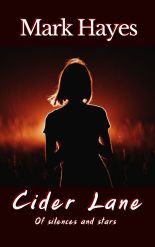
Actually that’s not entirely true, I wrote a novel about two people who were lost to, and broken by, a society they fled, finding solace and understanding in each other. It was in effect a tragic romance doomed at it’s inception, which spent much time on the matter of sharing silences and talking of stars, and love, loss, grief and horror. As well as coping with the worst things the world can throw at you by withdrawing both from yourself and away from the world…

It also featured a chapter of sorts on the importance of tin-openers.

Cider Lane, the novel in question , won awards and everything. I rarely mention it, as its neither steampunk, Lovecraft or scifi. But the rule about tin-openers would extend to the apocalypse, and to get back on track the apocalypse was what i was asked to write about…

The specific Apocalypse my friend, editor and occasional wrangler of writers C G Hatton roped me in to write about was a Lovecraft inspired one. My brief was more or less that in fact…

‘Can you write a short story about a Lovecraft inspired apocalypse in Teesside.’

Now for those who are unaware Teesside is a region on the north east coast of the UK, famous among other things for inspiring the opening to Blade-runner. This is because of the large ICI plant, with its large flaming towers that framed the skyline… This is to say there are parts of Teesside that have something in common with a grim post industrial wasteland and, through a certain lens, figuratively speaking, bits of it look a tad post apocalyse as well…

As it turns out, the reason CG Hatton was asking me to write a story, along with a group of other writers, was down to a not so figurative orange len, mounted on the camera of Ian Robinson a local Teesside artist, writer and photographer who CG had met last summer mutual acquaintance and Head-mistress/senior lecturer/dean/inspired, if questionably sane, arch-chancellor Lisa Lovebucket of The Post Apocalypse School of Teesside. (no I am not making any of this up)

The Post Apocalypse School of Teesside seeks to teach the youth of today how to survive the apocalypse of the future, with courses on making fires, throwing axes, foraging, making scrap journals, rudimentary crossbow design, cooking, generator repair, gas mask construction, water purification… And whatever else young adults need to survive the end of civilisation ( or Tuesday week as I like to think of it.)

Ian has a thing about urban decay and the apocalypse, and what happens when you use an orange filter. The results of which are frankly art. Beautifully disturbing art, but art none the less. CG suggested he take all his photos and make a coffee table art book out of them and then set about wrangling authors to write short pieces of poetry and story to go with Ian pictures. The result of which is just a thing of beauty that it is a pleasure to have been involved with….

And you know. it was fun to write a Lovecraft inspired walk down through a hell-scape version of the village I live to the famous transporter bridge in the company of ‘He who came out of Egypt.’ It was worrying how little I had to change however…

Ian’s art is inspired, as are the story by other writers. It is a little expensive, because its an art book with beautifully glossy pictures of the end of everything (or home as I call it) and you can find it on Amazon.

If you want to know more there is an interview with Ian HERE and you can follow both Ian Robinson and Archchancellor Lovebucket of The Post Apocalypse School of Teesside on twitter and else where.

Oh and in case your wondering about the importance of tin-openers, try being hungry to the point of near starvation, having nothing to eat but a tin of beans and no tin opener… There then is the importance of tin-openers, having one when you need one…

Posted in amreading, amwriting, book reviews, books, horror, indie, indie novels, indie writers, Nyarlathotep, reads, writes | Tagged , , , , , , , , | 1 Comment

The problem with Eddings

As is often the case my nightstand is looking slightly dishevelled with the number of books currently sprue across it in random piles. This is because, as well as been an eclectic reader in taste, I read eclectically. My life is a series of open books, many of them open at the same time, in various places around the house, or piled on top of each other waiting to be read.

This is, I will admit, not the best way to read books, the best way to read books is laying on the sofa, be it one in the front room or the one in the garden, just reading with some light music playing in the back ground, Kate Bush, Alanis Morrissette, The Dresden Dolls, Puke Sidon And The Zombie Plague Rabbits, etc… With a fresh coffee from the machine, or a tall margarita….

Sadly due to the complexity of life, long sofa days are few and far between, unlike margarita’s. So it is rare I read a whole book in entire isolation. That is to say I do not often read a whole book in one go, and without reading something else at the same time.

Currently, among several other books that are open on the night stand, I have just started rereading The Eddings fantasy series The Elenium Trilogy, the first of the two Sparhawk trilogy’s, which were less successful than his 12 book Belgariad series which I reread last year and love with a passion. Despite how much I love Eddings other series I’ve never actually finished the Sparhawk novels. I’ve always come unstuck with them somewhere around the middle of the second trilogy. Possibly because of the usual problem I have reading a long series. Possibly because the second Sparhawk trilogy is just the definition of an author wringing every last cent out of an idea and writing for money…

To be fair, my assessment of Eddings reasons for writing the second Sparhawk trilogy are somewhat backed up by another book on my bookshelves, The Rivan Codex. A book David and Leigh Eddings wrote about writing in general and the writing of their fantasy novels in particular. I highly recommend The Rivan Codex to any aspiring writer, as it is full of great advice. There is however also a certain amount of it I have always found a little dispiriting. First among which is in it the Edding’s explain the reason they started writing fantasy in the first place…

After writing a couple of not particularly successful contemporary novels the Edding’s were wondering around a book store and saw that LOTR’s was on its 50th printing and this inspired them. That is to say, they started writing fantasy novels for no other reason than they thought there was money to be made in doing so… A motivation that goes some way to explain why the Eddings also admit they ‘don’t read in the genre’ which they claim keeps their pallet cleansed, as it were. Which may well be true, but it and the ‘write for profit’ motivation possibly also explain why the second Sparhawk trilogy has never worked for me. Maybe its just not very good… But as its almost a couple of decades since I last read it I’ll withhold judgement on that and see how it goes.

The whole ‘don’t read in the genre’ argument may have some merit though. It’s possibly very easy to have your own idea polluted by other writers if you read extensively in the genre in which your write. Though personally I don’t think that’s the case, provided you don’t read exclusively in one genre. The advice of another writer who wrote a book about writing more or less bares out my point of view in this. In ‘on Writing’ Stephen King says , ‘To be a writer you have to do two things , write a lot, and read a lot.’ Which tends to be my view.

My view is read every genre, but then I also write in many genre’s for all a large portion of my output in the last few years has been Steampunk, it is not ‘my genre’ so much as one of them. I do however not read as much steampunk as people may imagine for someone who moves in steampunk circles. But then Steampunk in of itself is very eclectic, encompassing Victorian urban fantasy, romance, weird west, and many other weird and wonderful things.

All of which, somewhat long-windedly even for me brings me round to my point. Which is to say a review of a steampunk novel I recently read and read I may add in the best way. On the sofa, with coffee, and later a tall margarita or two, in one long sitting on a long lazy day of the kind I seldom get to spend due to life… Which got me thinking about the Eddings book on writing, as I had started The Dimond Throne the evening before and it was laying on my nightstand…

So yes, convoluted but I was reading in ‘my genre’ so to speak. Which is I must admit not always a rewarding experience. I have read too many bad steampunk books, which relies too heavily on ‘I’m a steampunk book look I have cogwheels and airships…’ That said, the good ones make up for it, and this one proved to be one of the good ones…

This is a good old-fashioned detective novel, following the rules of good old-fashioned detective novels. The hero is a ‘down on his luck’ ‘bit of rough’ who finds himself trying to unpick a murderous plot more by bad-luck than ill-judgement. There is an old-flame dredging up old feelings, and old enemies to contend with as the mystery deepens. The authorities and far from convinced there is even a case in the first place and the bloke who hired the hero doesn’t survive the first act. And finally like all good old-fashioned detective novels their is the sarcastic sidekick, who keeps the hero grounded, points them in the right direction and watches their back…

Admittedly the sidekick is a talking steam powered mechanical cat, who occasionally needs connecting to a hose to resupply them with steam…

The important thing is, while this is a very good steampunk novel, full of wit and humour as well as strange and wonderful inventions and oddities it is first and foremost a very good old fashioned detective novel. The kind that keeps you guessing, even when you’re sure your know who the villains are, because while you may be utterly sure, there is just enough doubt to keep you wondering.

Even if you turn out to be right about the villain having guessed it was them half way in, (which I did) you kept read because you can’t be completely sure, and besides the journey is worth it. Its a fun entertaining, humorous read full of clever jokes and well pitched observations.

In short its a really good read, a long lounge on the sofa with a tall margarita* read, I highly recommend it.

(*other cocktails and indeed non-alcoholic drinks are also available).

While this is a steampunk novel, if your not a fan of the genre in general its still well worth a read. At its heart its a humorous detective novel that just happens to have cogwheels, steampower and airships thrown in. In the same way the way the best steampunk generally is something else which just happens to be set in a steampunk environment.

But then steampunk is not really a genre in that respect so much as a setting against which you can pitch any other genre you want. Keith’s novel does that perfectly. or possibly purrrfectly with a slight grinding sound of gears…

Posted in amreading, books, fiction, indie novels, indie writers, novels, pointless things of wonderfulness, reads, sci-fi, steampunk, writes | Tagged , , , , , , , , , | 3 Comments